


 54 / 112

REPORTAGE
Fertigation
: “
precision
” intervention
Fertirrigazione
:
interventi “
di precisione
”
a cura della Redazione
U
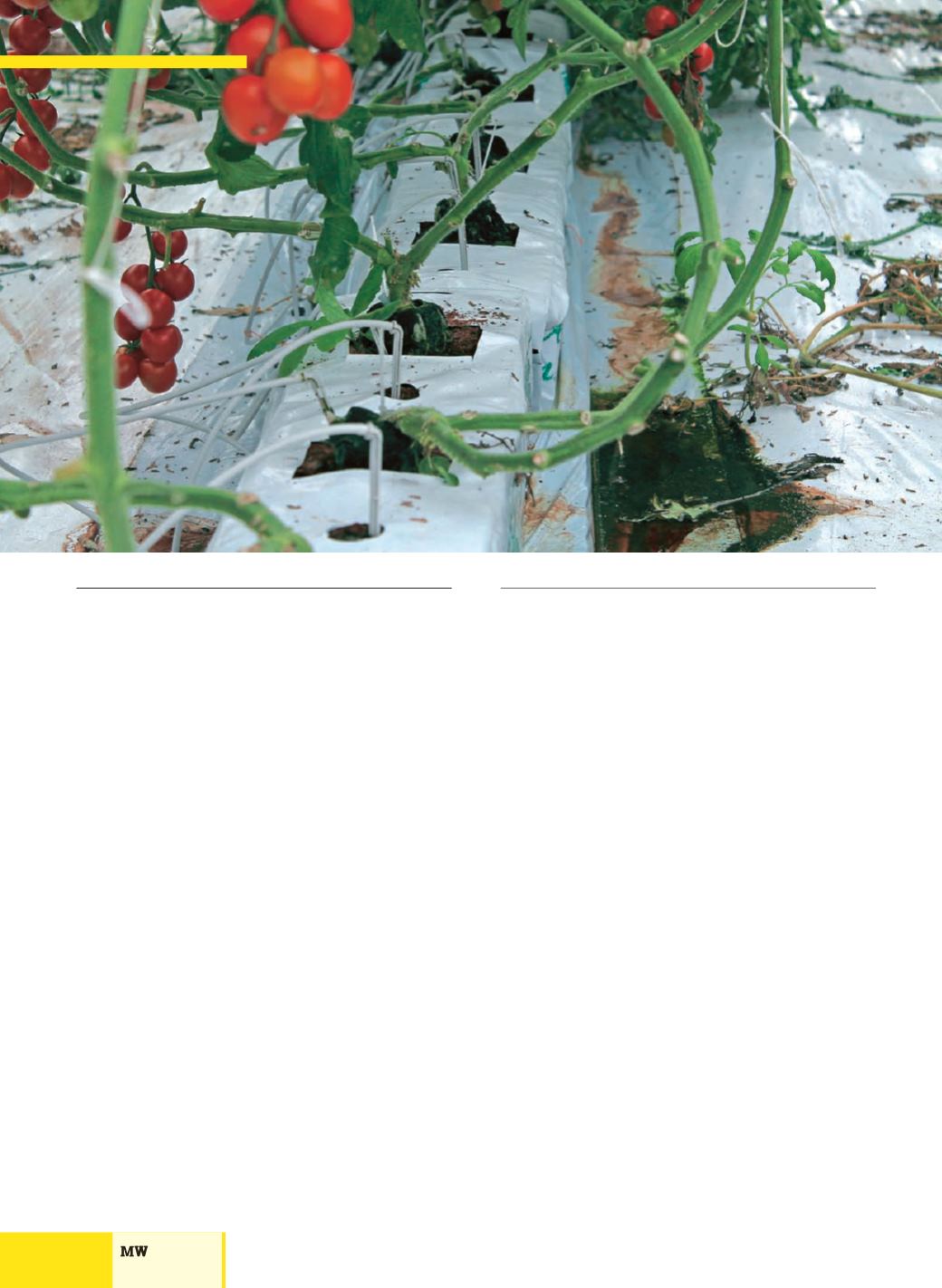
n nuovo modo di concimare che migliora le rese e riduce le quan-
tità di sostanze impiegate per ettaro, abbassando i costi di ge-
stione, e i tempi d’intervento, e diminuendo l’impatto ambien-
tale a vantaggio della competitività aziendale. È quello che permette di
fare la fertirrigazione di precisione, un sistema di tubi interrati tra i filari
di vigneti e frutteti che distribuisce le sostanze nutritive disciolte in ac-
qua. Di questo si è parlato nel workshop dal titolo “Fertirrigazione di pre-
cisione: aspetti pratici e innovazione” organizzato da Edagricole e svol-
tosi a EIMA International, la fiera della meccanica agricola svoltasi alla
Fiera di Bologna. Esperti di questa tecnica innovativa e imprenditori agri-
coli che la stanno utilizzando nelle loro aziende hanno descritto le po-
tenzialità di una pratica che per essere efficace deve essere eseguita
con la massima cura. Uno degli aspetti più delicati di questa tecnica è
la preparazione delle soluzioni nutritive concentrate da iniettare nel si-
stema microirriguo. Il modo più efficace per garantire i giusti apporti nu-
tritivi alle piante è l’utilizzo di concimi idrosolubili in forma solida (cristalli
o polveri), ma questo impone di calcolare con esattezza il tempo ne-
cessario alla loro completa solubilizzazione. L’utilizzo di specifiche at-
trezzature chiamate “dissolver consente di ottenere i migliori risultati in
termini di solubilizzazione dei concimi. Sono piccole cisterne da 1.000
a 2.000 litri di capacità dotate di un sistema in grado di rimescolare la
miscela contenuta all’interno, favorendo così lo scioglimento dei conci-
mi. Altro aspetto importante per ottenere risultati ottimali da questa tec-
nica è il corretto dimensionamento dell’impianto. C’è poi da calcolare la
giusta concentrazione delle varie sostanze da distribuire e la portata del-
la pompa che dovrà spingere la soluzione nell’impianto, nonché i tempi
del trattamento. I vantaggi della fertirrigazione sono la distribuzione unifor-
me degli elementi nutritivi vicino alle radici, la massima assimilazione
dei concimi da parte delle colture e la possibilità di un apporto in linea
con le esigenze delle piante, che esalta le potenzialità produttive. Inol-
tre, si hanno ridotte perdite di sostanze per dilavamento o volatilizza-
zione, minor consumo di concimi fogliari, non si danneggiano le radici e
si riduce la presenza di infestanti (perché i concimi vanno solo alle col-
ture). E ancora: si riducono i costi per le operazioni di distribuzione del
concime e le emissioni di CO
2
e si può anticipare l’entrata in produzio-
ne di frutteti, vigneti e oliveti.
by Editorial Staff
A
new way to fertilize crops and improve yields while reducing
quantities of the products used per hectare, lower managements
costs, cut the time taken for operations and impact on the en-
vironment, all to the advantage of the farming enterprise, is precision
fertigation. This method requires the use of pipes buried under vineyard
and fruit orchard rows for the distribution of nutritional substances along
with irrigation water. Fertigation, a neologism combining fertilizer and ir-
rigation, was the topic under discussion in a workshop sponsored by Eda-
gricole, Precision Fertigation: Features, Practices and Innovation, held at
EIMA International, the great exposition of agricultural and gardening
machine underway in the Bologna Trade Fair Center. Experts in the field
of technical innovations and farmers applying fertigation described the
potential of the practice which must be carried out with great care to be
effective. One of the most sensitive points in this technique is the prepa-
ration of the nutritional concentrate solution for the plants to inject into
the micro irrigation system.
The most effective method for guaranteeing the correct dosage of nu-
trition to send to the plants is with the use of water soluble fertilizer in
crystals or powder which requires a calculation of the exact time for com-
plete solubilization. The best results for this procedure can be obtained
with the use of a specific piece of equipment called a dissolver. There
are small tanks with capacities of 1,000 to 2,000 liters with a system
for the remix of the contents to help the fertilizer to dissolve. Another
factor for achieving excellent results with this technology is having a plot
with the correct size. Then there is the right calculation of the concen-
trations of the various substances to distribute and the capacity of the
pump driving the solution through the plant as well as the timing of these
treatments. The advantages of fertigation are a uniform distribution of
nutritional substances close to the roots of the plants and maximun as-
similation of the fertilizer by the plant crops to enhance their production
potential. Morever, the method reduces the loss of substances due to
washout or drift, less consumption by foliage, does not damage roots
and reduces weeds because the fertilizer arrives only to the crop. Then
too, the costs of these plant treatment operations with fertilizer are low-
er, as are CO
2
emissions and fertigation can also speed up production
in fruit orchards, vineyards and olive stands.
52
n. 12/2016