10
n.10_11/2014
S
PECIALE
diGiacomoDiPaola
C
onto alla rovescia per l’entrata in vigore della normativa europea sulla circo-
lazione stradale dellemacchine agricole, che, attesa per il 2016, prevede tra
l’altro il via libera all’uso dei freni ad inerzia nell’UE. Utilizzati nel settore au-
tomotive, e basati sullo sfruttamento dell’energia prodotta dalla massa del rimorchio
sul timone quando la motrice frena, attualmente i freni inerziali sono poco diffusi in
agricoltura a causa dei divieti e delle limitazioni vigenti in molti Stati dell’Unione. Ma
non in Germania dove sono ammessi sui rimorchi agricoli conmassa fino ad otto ton-
nellate e dove hanno contribuito a migliorare la sicurezza conferendo una buona effi-
cienza frenante anche ai trattori sprovvisti di freni collegati al rimorchio. Nel 2016 si
apriranno dunque scenari interessanti per il comparto della meccanica agricola ed è
proprio per non farsi trovare impreparati a un appuntamento così importante che l’A-
DR di Uboldo (Varese) ha scelto la rassegna bolognese per entrare nel mercato di que-
sto innovativo impianto frenante, che potrebbe presto essere usato sui rimorchi adibi-
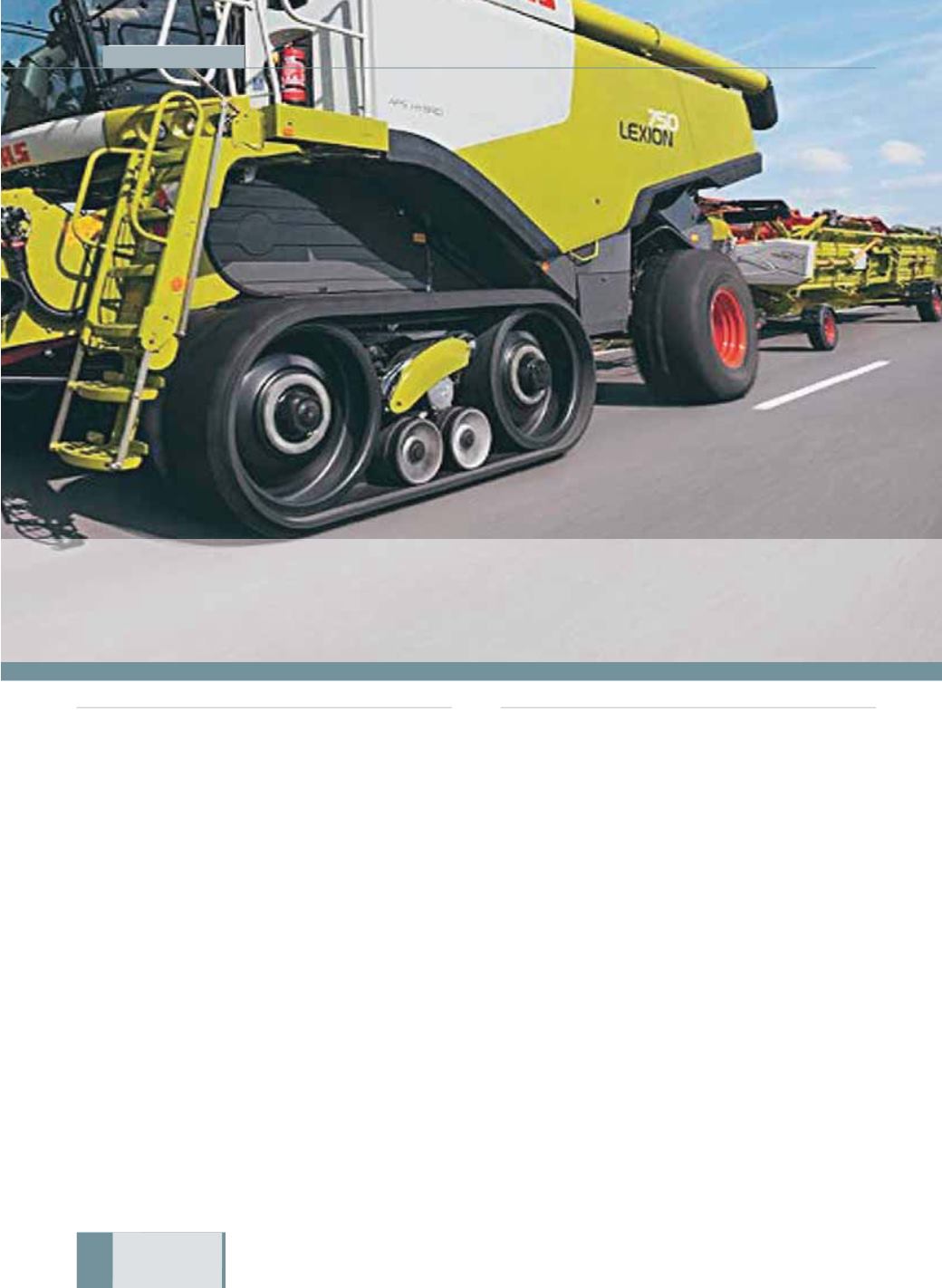
ti al trasporto delle barre falcianti delle mietitrebbiatrici. In Italia, Paese per il quale
ADR ha studiato una versione “su misura” con occhione Cuna, i freni ad inerzia po-
trebbero essere impiegati anche su altre categorie di veicoli, come i rimorchi per il la-
voro nei frutteti. «Il principio di funzionamento – spiega con una nota tecnica la casa
varesina – è piuttosto semplice: l’impianto è costituito da freni a comandomeccanico
e da un timone telescopico e durante la frenata l’interazione tra il trattore e il rimor-
chio si traduce, attraverso la meccanica del timone, in una forza che agisce sui freni
del rimorchio per mezzo di tiranti. L’efficacia del sistema frenante è strettamente le-
gata al rapporto tra lemasse dellamotrice e del rimorchio». L’abilità dei progettisti sta
dunque nel tarare la risposta del timone, per assicurare la massima efficienza con la
più ampia gamma di accoppiamenti tra lamotrice e il rimorchio. Al riguardo, il gruppo
ADR ha sviluppato, basandosi sull’esperienza maturata in decenni di attività nel mer-
cato tedesco dellemacchine agricole, tre diverse serie di timoni adatti a coprire tutta
la gamma di rimorchi compatibili con i freni a inerzia (sia ad assi centrali sia a due as-
si con ralla),mentre la linea di freni spazia dal “piccolo” 300x60 al 300x90, in attesa
del vigoroso 350x90 ancora in fase sperimentale.
byGiacomoDiPaola
F
inal countdown to theentry into forceof EU legislationon road traffic of agri-
cultural machinery, which, awaited for 2016, provides, among other things,
the green light to the use of overrun brakes in the EU. Used in the automo-
tive sector andbased on the exploitation of energy producedby themass of the trail-
er on the drawbar when the towing vehicle is braking, this type of brakes is currently
not very common in agriculture, due to its prohibition and restrictions inmany states
of theUnion.But not inGermany although,whereareallowedagricultural trailerswith
mass up to eight tons and where they have contributed to improve security, by con-
fering a good brake performance evenwith tractors without brakes connected to the
trailer. In 2016 new interesting perspectives will be open for the sector of agricultur-
almachinery and soADR fromUboldo (Varese) has chosen theBologneseevent inor-
der to get prepared for sucha relevant appointment and toenter themarket with this
innovative braking system, which soon could be used on trailers transporting cutter
bars for combine harvesters. In Italy, a country for whichADR has studied a custom-
mademodel with Cuna lunette ring, overrun brakes could be used on other types of
vehicles, such as trailers for fruit harvesting. “The operating principle – explains in a
technical note thebusiness fromVarese – is quite simple: themachinery is formedby
amechanical brake control and a telescopic drawbar. During the braking, the inter-
actionbetween tractor and trailer results, through thedrawbar’smovement, ina force
that acts on the brakes of the trailer by means of tie rods. The effectiveness of the
braking system is tightly connected to the ratio of themasses of tractor and trailer”.
The engineers’ ability consists in calibrating the response of the drawbar, in order to
guarantee the highest efficiency with the widest range of coupling between tractor
and trailer. In this respect, theADRGroup has developed, on the base of the experi-
ence gained indecades of work in theGerman sector of agriculturalmachinery, three
different series of drawbars suitable for all kinds of trailers and compatiblewith over-
run brakes (both to central axles and double axlewith thrust block), while the line of
brakes ranges froma “small”brake (from size300x60 to300x90), looking forward to
the robust one, with size 350x90, which is still being tested.
| EIMA INTERNATIONAL 2014 |
ADR
ahead
of the timeswith“
overrunbrakes
”
ADR
anticipa i tempi
con i “
freniad inerzia
”


