


 84 / 112

odori e soprattutto le dinamiche relative al carico di azoto
dei terreni.
Di conseguenza, anche il macchinario agricolo deputato
alla distribuzione in campo ha subito una rilevante evolu-
zione, per minimizzare i problemi accennati e al contem-
po aumentare la capacità lavorativa, al fine di operare al
meglio entro le finestre temporali consentite per l’inter-
vento di campo.
Il carico di azoto e le finestre temporali di distribuzione
La Direttiva 91/676/CEE, meglio nota come “Direttiva ni-
trati”, che mira a ridurre e prevenire l’inquinamento delle
acque causato direttamente o indirettamente dai nitrati di
origine agricola, ha comportato nel tempo l’emanazione a
livello nazionale e poi regionale di una serie di provvedimenti
atti a disciplinare anche i possibili periodi di distribuzione
in campo dei fertilizzanti azotati, specie di natura organica.
Senza entrare nel dettaglio, ogni anno è predisposto a li-
vello locale un preciso calendario delle distribuzioni, il co-
siddetto “bollettino nitrati”, anche in relazione alla sensibi-
lità dei terreni agricoli all’accumulo di azoto, tale da disci-
plinare in maniera rigorosa l’entrata dei mezzi in campo.
Il problema degli odori
Parallelamente, la distribuzione di concimi azotati, soprat-
sideration that these procedures are often covered by highly de-
tailed regulations such as those on logistics, management of the
tanks of the contents, the environment as regards odors and es-
pecially the nitrogen content of the soil.
As a consequence, the agricultural machinery used for dis-
tribution in the field has undergone significant development
for minimizing the problems referred to while increasing work
capacities for improving the operation completed within the
window of time allowed for this field procedure.
Nitrogen content and time window for distribution
The European Union Directive 91/676/ECC, better known as
the Nitrogen Directive, is aimed at reducing and preventing di-
rect or indirect pollution of water by nitrates of agricultural ori-
gin. Over time, the Directive has also led to national and re-
gional measures to regulate the periods when it is possible to
distribute organic types of nitrogen fertilizers in the field. With-
out getting into details, these measures provide a precise an-
nual calendar for local distribution, called the nitrates calen-
dar, associated with the nitrogen content accumulated in farm-
land for a rigorous discipline on allowing machinery in the fields.
The problem of odors
Running parallel to the distribution of nitrogen fertilizers, es-
pecially those in slurry form, raises another problem of lim-
82
n. 12/2016
FOCUS
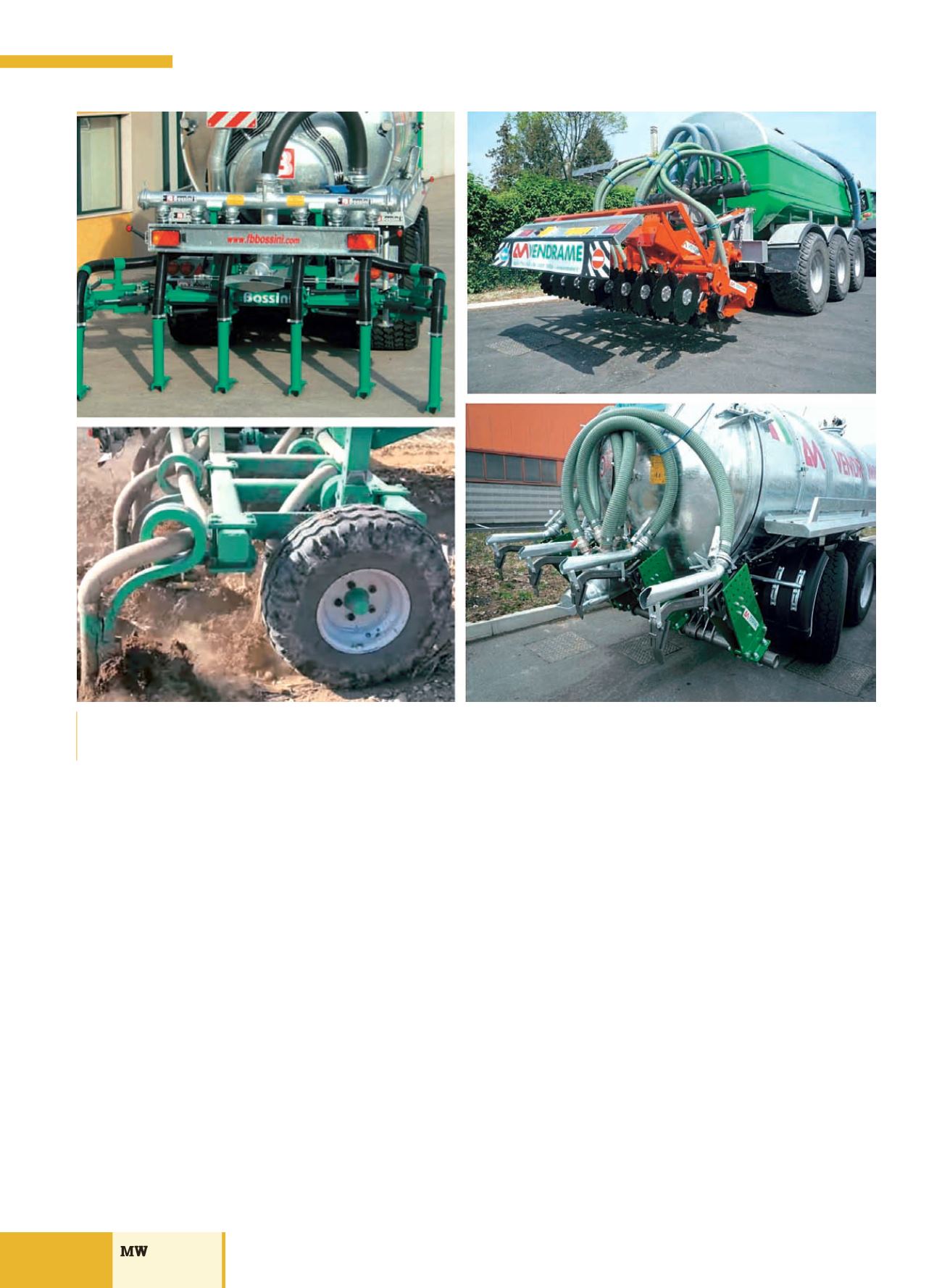
L’interramento, superficiale o profondo, dei liquami è realizzato tramite organi di lavorazione del terreno fissi o rotanti. A sinistra alcune soluzioni di Bossini, a destra di
Vendrame
Superficial or deep burying of slurry is performed with fixed or rotating components. On the left are some solutions produced by Bossini and on the right by Vendrame
on the left