



 87 / 112

getto, con conseguenti fenomeni di deriva e intensa emis-
sione di odori.
Per ovviare a questi problemi, di recente sono stati intro-
dotti sistemi a getto oscillante, a piatto deviatore oscillan-
te e a barra con getti deviati.
Un’importante alternativa è costituita dall’interramento (su-
perficiale o profondo) del liquame, grazie ad una lavorazio-
ne più o meno fine dello strato di terreno interessato alla
deposizione del refluo, ad opera di utensili fissi o rotanti.
Tale soluzione limita gli odori, riduce le perdite di azoto am-
moniacale e la contaminazione della parte epigea della col-
tura, elimina i rischi di contaminazione delle acque super-
ficiali da parte del refluo e migliora le condizioni fisiche del
suolo, rendendo in definitiva possibile la distribuzione del
prodotto anche in prossimità di abitazioni. Gli svantaggi ri-
guardano la maggior complessità della macchina, un signi-
ficativo aumento della potenza richiesta per l’esecuzione
della lavorazione (e quindi dei costi energetici) e la tempo-
ranea impraticabilità del terreno dopo la distribuzione.
Oltre alla distribuzione a rateo variabile, se del caso anche
“sitospecifica”, l’evoluzione recente dei carri spandiliqua-
me è sostanzialmente orientata ad un miglioramento della
capacità operativa, grazie al progressivo aumento della ca-
pacità del serbatoio e alle più elevate prestazioni delle pom-
pe per il carico e la distribuzione del refluo, nonché all’a-
which breaks up the jet. Though these plates are simple com-
ponents, they post various problems in operations due to a
lack of uniformity in transversal spreading because of the sig-
nificant fragmentation of the jet leading to drift and the re-
lease of strong smells. To avoid these problems, an oscillat-
ing jet system has been introduced with an oscillating brake-
up plate and a bar which breaks up the jet.
Superficial or deep burying is an important alternative for
spreading thanks to a more or less fine deposit of the slurry
in the soil working with fixed or rotating components.
These solutions limit odors, reduce loss of nitrogen ammonia and
contamination of the epigeal areas of the crop while eliminating
risk of contamination of surface water by the slurry, improving the
physical condition of the soil and making it possible to spread in
proximity to housing. The drawbacks include more complicated
machinery, a substantial increase in the power required for these
operations and thus higher energy costs as well as the need to
temporarily stop work on the land after the slurry operation.
Other than the distribution of a variable accural if the case is
also site specific, the recent developments of slurry spreaders
are aimed mainly at improving the performance capabilities
thanks to the progressive increase in cistern capacities and
higher pump operations for loading and spreading slurry. Also
involved are the introduction of automated functions for man-
aging routine work remotely. These changes have led to adding
85
n. 12/2016
CARRI-BOTTE
|
TANKER LORRIES
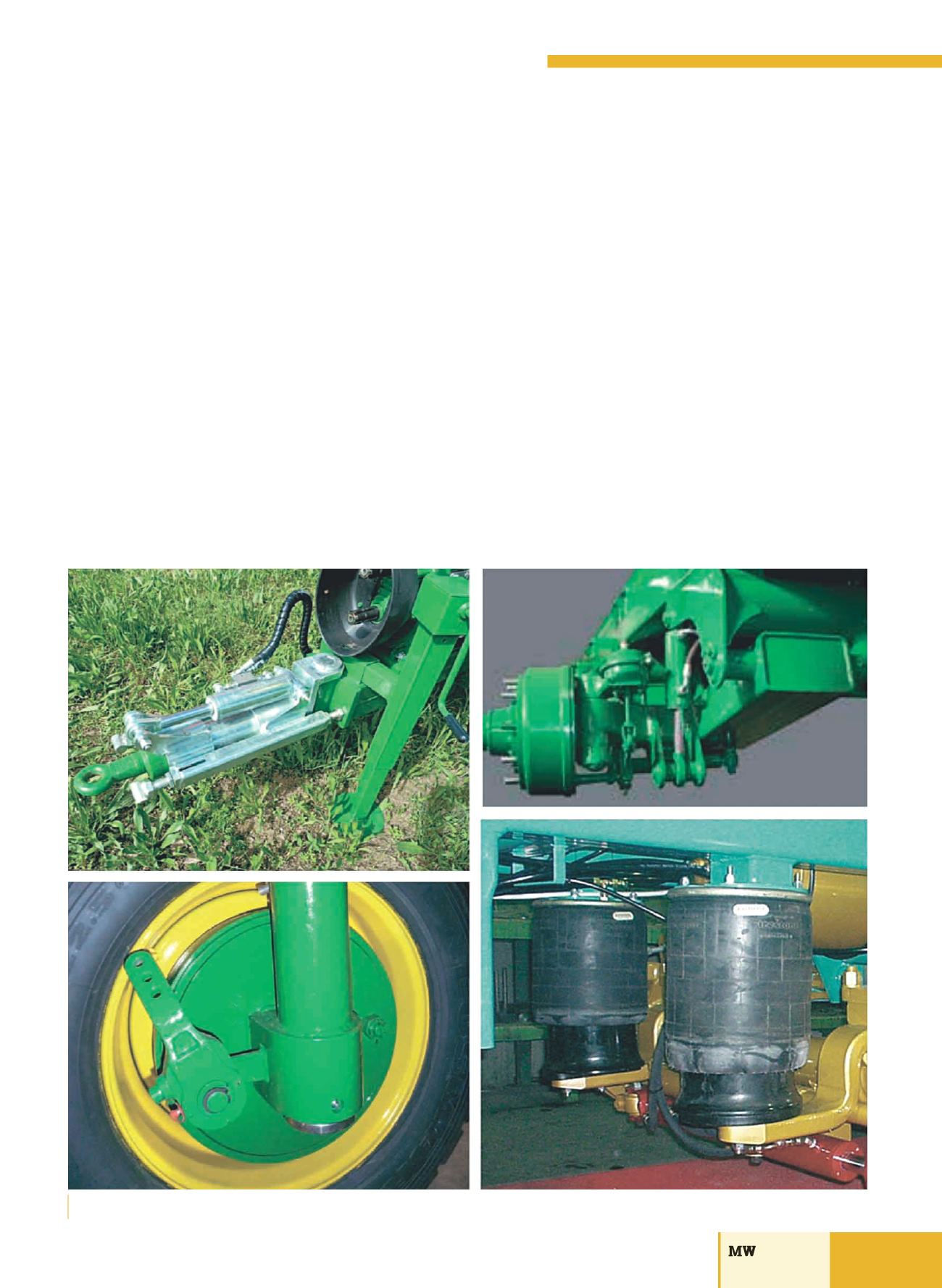
A sinistra: timone e ruote sterzanti di Vendrame; a destra: in alto, le sospensioni idrauliche di Zaccaria e, in basso, quelle pneumatiche di Al.Pa.Car Pagliari
Drawbar and steering wheels by Vendrame on the left; above right hydraulic suspension by Zaccaria and, below, pneumatic suspension by Al.Pa.Car Pagliari