Stiamo, come associazione Comacomp, guardando con sempre più interes-
se al Medio Oriente, all’Africa Sub-Sahariana e all’Africa mediterranea”.
La componentistica rappresenta, come lei ha detto, un fattore di innova-
zione fondamentale nei prodotti della meccanica. Quali strategie vengono
adottate dalle imprese, non soltanto quelle grandi ma anche quelle medie
e piccole, per mantenere alti i livelli di Ricerca e Sviluppo?
La crisi che ha colpito il nostro paese ha portato uno strascico di “credit crun-
ch” che non accenna ad allentarsi. Questo ha fatto sì che le imprese avendo
meno capacità di investimento (limitata in gran parte all’autofinanziamento), si
siano ingegnate a trovare altre strade, come gli accordi con Università e centri
di ricerca, come la creazione di reti d’impresa, come investimenti di filiera (clien-
ti/fornitori/subfornitori) a beneficio di tutti. La crisi ha fatto sì che siamo di-
ventati un po’ meno gelosi del nostro piccolo orticello, anche se la strada ver-
so una collaborazione stile “nord-Europa” è ancora lunga.
Sistemi meccanici, elettronica applicata, nuovi materiali, robotica… in qua-
le di questi ambiti si registrano i trend di sviluppo più significativi?
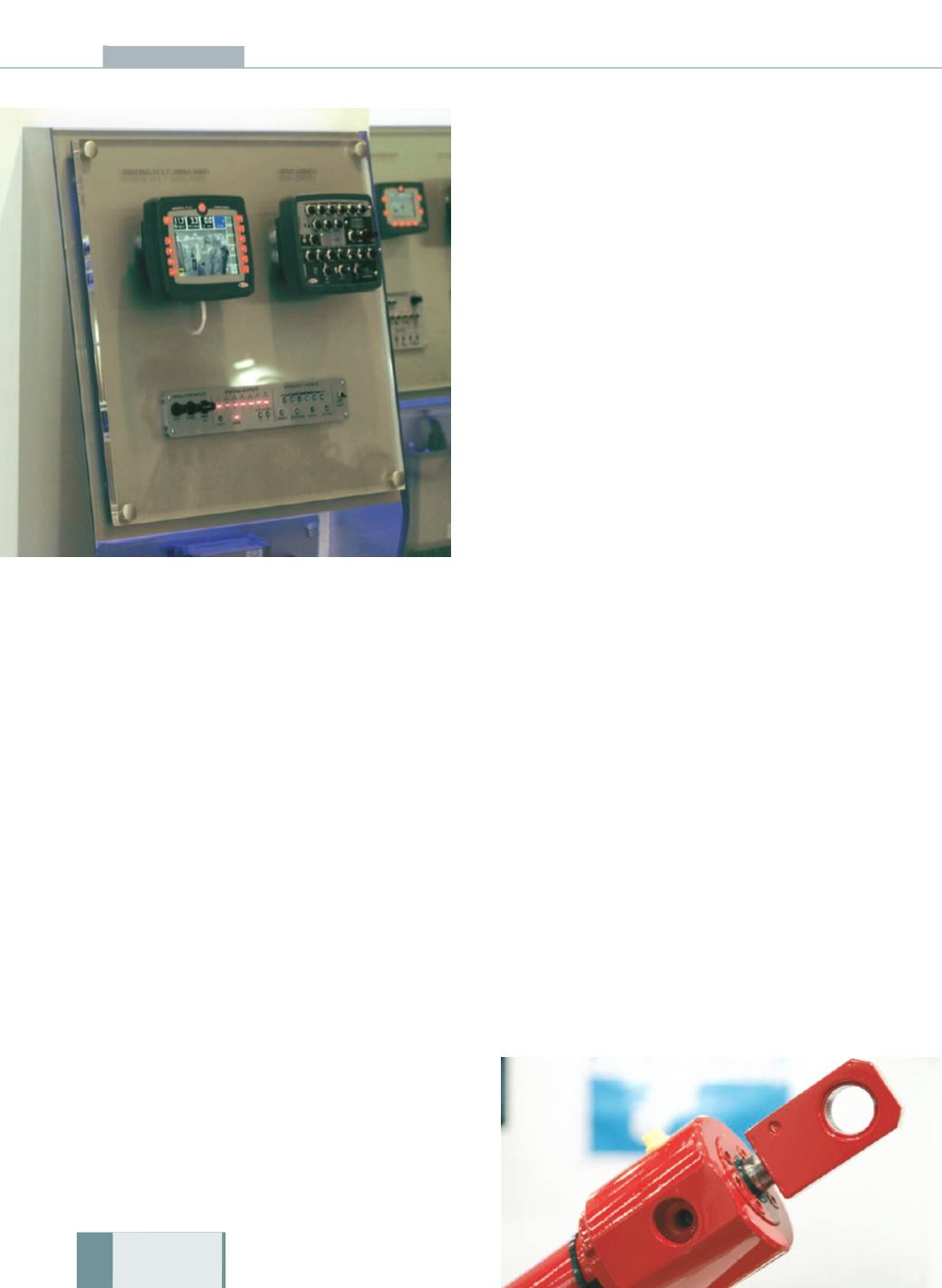
Senza dubbio, l’elettronica applicata ha avuto un vero boom negli ultimi an-
ni. L’ISOBUS - il protocollo di comunicazione trattore-attrezzatura agricola - di-
venterà predominante nella meccanizzazione agricola nel giro di pochi anni,
così come ci sono evoluzioni interessanti sull’High Voltage - la sostituzione
di trasmissioni di potenza meccaniche o oleodinamiche con trasmissioni elet-
triche con elevati voltaggi - applicato alle attrezzature agricole e alle macchi-
ne semoventi. Sui nuovi materiali, derivati soprattutto da studi sulle nano-
tecnologie, si sono cimentate ancora poche aziende anche se prevedo che
si vedranno nei prossimi anni innovazioni significative.
Alcuni settori della meccanizzazione, vedi fra gli altri quello delle macchine per
giardinaggio e la cura del verde, subiscono un danno molto grave dalla contraf-
fazione e dalla copiatura dei brevetti che molte aziende estere, soprattutto di
Paesi emergenti, fanno dei prodotti italiani. In che misura il fenomeno è presen-
te nella componentistica? Quali strategie per contrastarlo?
Per fortuna questo fenomeno tocca la componentistica solo marginalmente.
Più rilevante per noi è la contraffazione dei marchi di qualità o di omolo-
gazione di prodotti extra-europei, oppure l’immissione sul mercato di pro-
dotti di scarsa qualità non marchiati che spesso confondono l’utilizzatore
finale. Una grossa mano potrebbe venire, per questo problema, dall’ap-
4
MW
n. 10_11/2013
S
PECIALE
tric, nor even Euro-centric. Now our reference markets are South America, Southeast
Asia, eastern Europe, and things have still not settled down again. As Comacomp, we
continue to look with interest on the Middle East, Sub-Saharan Africa and Mediter-
ranean Africa.
Components are, as you noted, a fundamental factor for innovation in machinery
production. What sort of strategy do small and medium, as well as large firms fol-
low to maintain high levels of R&D?
The crisis in Italy has sparked a credit crunch that shows no sign of easing.The result
is that firms with lower investment capacity, limited in large part to self-financing, have
worked hard to find alternatives such as agreements with universities and research
centres and the creation of networks such as product line investments for everyone’s
benefit, customers, suppliers and sub-suppliers. The crisis has meant that we are a
little less possessive about our little personal plots, even if there is still a long way to
go before we achieve North European levels of cooperation.
Where are the most significant trends – in mechanical systems, applied electron-
ics, new materials, robotics?
Undoubtedly, applied electronics has seen a real boom in recent years. The Isobus
protocol governing communication between tractors and the machines they tow will
become predominant in agricultural machinery within a few years, just like interest-
ing developments in high-voltage applications - the replacement of mechanical or hy-
draulic power transmission by high-voltage electrical transmission, in agricultural and
self-propelled equipment. Only a few companies have so far plunged into new mate-
rials derived primarily from nanotechnology research, even if I expect this to produce
significant innovations in the coming years.
Some agricultural equipment sectors such as gardening and park maintenance ma-
chinery suffer serious harm from counterfeit and imitation patented products, es-
pecially in emerging countries and as regards Italian products. How far does this
apply to the components sector and what strategy can be used to fight it?
Luckily, this phenomenon only concerns component manufacture marginally. More im-
portant for us is the counterfeiting of quality marks (guaranteeing quality) or the ap-
proval of extra-EU products, or else the marketing of low quality products without qual-
ity marks, something that often confuses final consumers. The EU can give a big hand
on this problem by approving ‘Made in’ quality rules. A recent Nomisma study for
FederUnacoma showed that many Italian agricultural enterprises cannot afford new
machinery, but tend to update what they have by using spares and replacing compo-
nents and accessories.This means your manufacturers should have been able to buck
the trend in the machine market. Unfortunately not. Most of our turnover comes from
the first-use market (in new machines). Only some used products are big in the post-
sales market. In Italy, the equipment fleet is among the oldest in Europe, with enor-
mous work safety problems, not least thanks to parliament’s failure to give incentives
for turnover in the machinery in use, unlike what they have done in France and Ger-
many, for example.The lack of incentives for machine turnover remains a weak point
for the whole Italian machine industry, and also in the agricultural sector. The lack of
any specific financing instruments for the sector has meant that, on the one hand,
our farms haven’t had to make investments at a certainly very difficult time like the
present one and, on the other, unfortunately, has condemned them to be being rela-
tively uncompetitive in food production compared to Italy’s European partners and the
emerging countries. Our Italian customers who produce tractors and machinery have
suffered an awful lot, and we with them. Just remember that last year 20,000 fewer
tractors were registered in Italy, something we hadn’t seen since the 1960s. Luckily,
we component makers have managed to compensate through exports, to areas where
food production is growing step in step with world population growth.


