di AndreaPezzuolo
Dipartimento TerritorioeSistemi Agro-Forestali
Universitàdegli Studi di Padova
L’
attuale, e sempre più importante, strategia di ri-
duzione dei costi da parte delle aziende agricole
sta riguardando, in questi ultimi anni, anche una
delle voci colturali più
importanti ovveroquel-
la relativa alle lavora-
zioni del terreno. Le
lavorazioni del terreno
hanno da sempre l’o-
biettivo di creare un
ambiente favorevole,
in grado di agevolare
la riuscita della coltu-
ra specialmente nelle
sue prime fasi fenolo-
giche; tuttavia, se ta-
le obiettivo viene rag-
giunto semplificando
il numero di interven-
ti necessari, oltre a
positive implicazioni
byAndreaPezzuolo
Departmentof LandandAgro-forestrySystems
UniversityofPadua
S
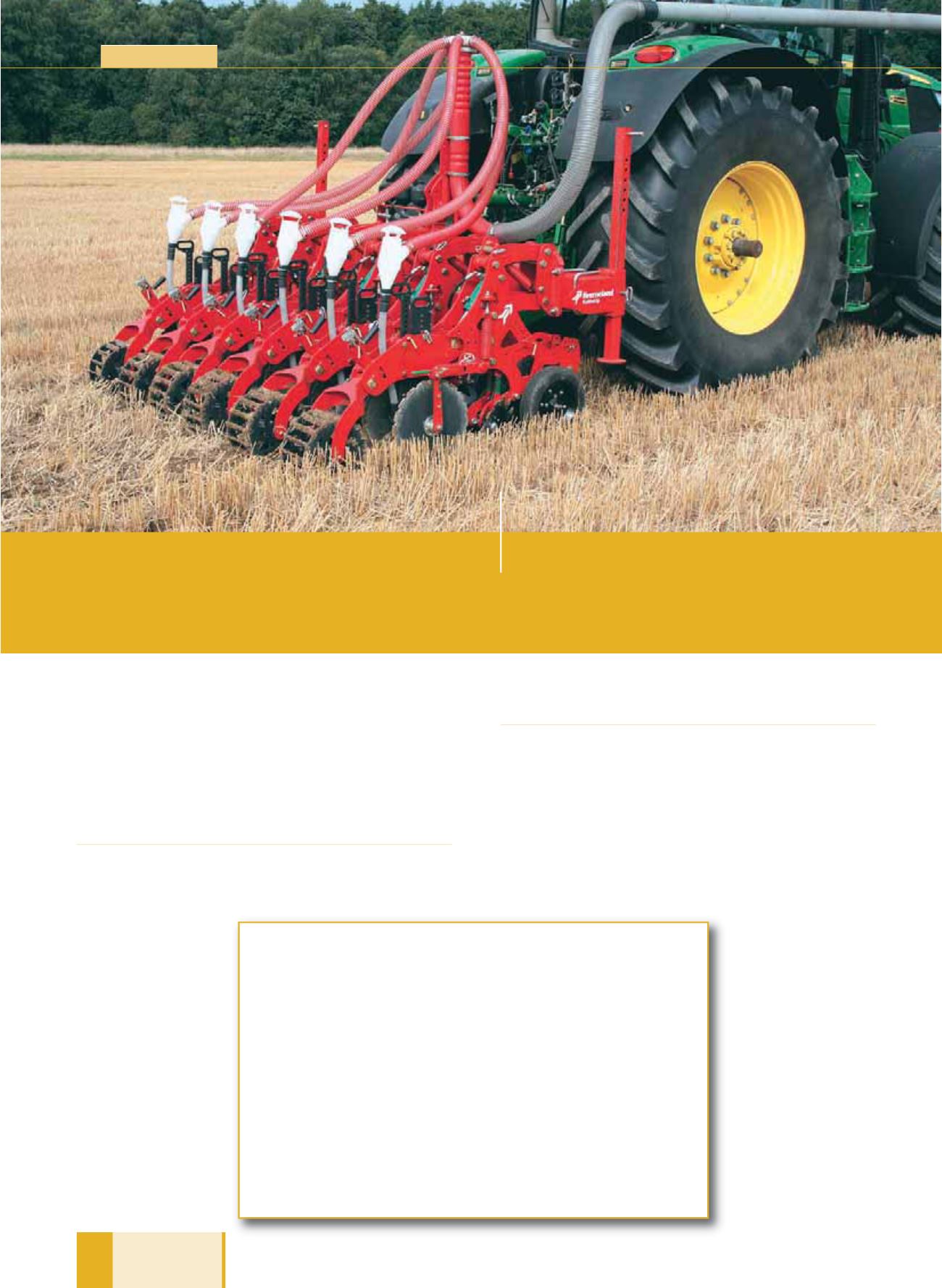
trip-till (abbreviation of strip-tillage or strip cultivation)
allows to concentrate the tillageexclusively on “strips”
of land within which the subsequent sowing of the
crop will take place while maintaining unaltered surfaces
between rows.
Thebands of soil, generally tilledat depths rangingbetween
15 and 25 cm, have a width of 15-20 cm and a space be-
tween rows that varies between 40 and 75 cm depending
on the needs of the subsequent seeding operation.
With the strip-tillage technique, the soil is tilled over about
30-40% of its surface,
while the rest is cov-
ered by crop residues
of the previous crop.
The current and in-
creasingly important
strategy to reduce
costs for farms is, in
recent years, also in-
volving one of the
most important culti-
vation aspects, name-
ly the tillage of the
soil.Tillagehas always
had the aim of creat-
ing a favourable envi-
ronment, capable of
facilitating the suc-
110
n. 10_11/2014
T
ECNICA
Strip-Tillage
: ibeneficiagronomici
diuna
nuova tecnica
di lavorazione
La tecnicadello strip-tillageè inquesti ultimi anni in
fasedi sviluppo in Italiae inEuropacon risultati
interessanti, specialmentedove lecondizioni
pedoclimatiche rendonomenoagevole lacorrettae
continuaapplicazionedella semina su sodo
Lo strip-till (abbreviazione di strip-tillage o coltivazione a strisce) permette di con-
centrare la lavorazione esclusivamente su “strisce” di terreno entro le quali av-
verrà la successiva operazione di semina della colturamantenendo inalterata la
superficie interfilare. Le bande di terreno, lavorate generalmente a profondità com-
prese tra 15 e 25 cm, presentano una larghezza pari a 15-20 cm e uno spazio in-
terfilare variabile tra 40 e 75 cm a seconda delle esigenze della successiva ope-
razione di semina. Con la tecnica dello strip-tillage, il terreno viene lavorato per
circa il 30-40% della sua superficiementre il resto rimane coperto dai residui del-
la coltura precedente.
Strip-till (abbreviation of strip-tillage or strip cultivation) allows to concentrate the
tillage exclusively on “strips”of landwithinwhich the subsequent sowing of the crop
will take place whilemaintaining unaltered surfaces between rows.
The bands of soil, generally tilled at depths ranging between 15 and 25 cm, have
awidth of 15-20 cm and a space between rows that varies between 40 and 75 cm
depending on the needs of the subsequent seeding operation.
With the strip-tillage technique, the soil is tilled over about 30-40% of its surface,
while the rest is covered by residues of the previous crop.


