di Davide Facchinetti
DI.S.A.A. Universitàdegli Studi diMilano
N
ella coltivazione delle olive, ancora oggi la raccolta è
una delle principali voci di spesa, tanto che la sua in-
cidenza variamediamente dal 25 al 50% nel costo di
produzionedell’olionei nostri impianti di tipo tradizionale,ca-
ratterizzati da olivi spesso secolari e talvolta (specie nel Sa-
lento) addiritturamillenari. Peraltro,oggi sonodisponibilimac-
chinesemoventi conproduttivitàelevate,come la vibro-scuo-
titricedaaccoppiareal trattoreoppureai sollevatori telesco-
pici e le raccoglitrici semoventi derivate dalle vendemmiatri-
ci. All’opposto,bisogna considerare che la raccoltamanuale
è stata praticamente abbandonata, eccezion fatta per alcu-
ne rare varietà di elevato pregio, destinate all’industria con-
serviera. Quindi, di fatto l’opzione oggi maggiormente prati-
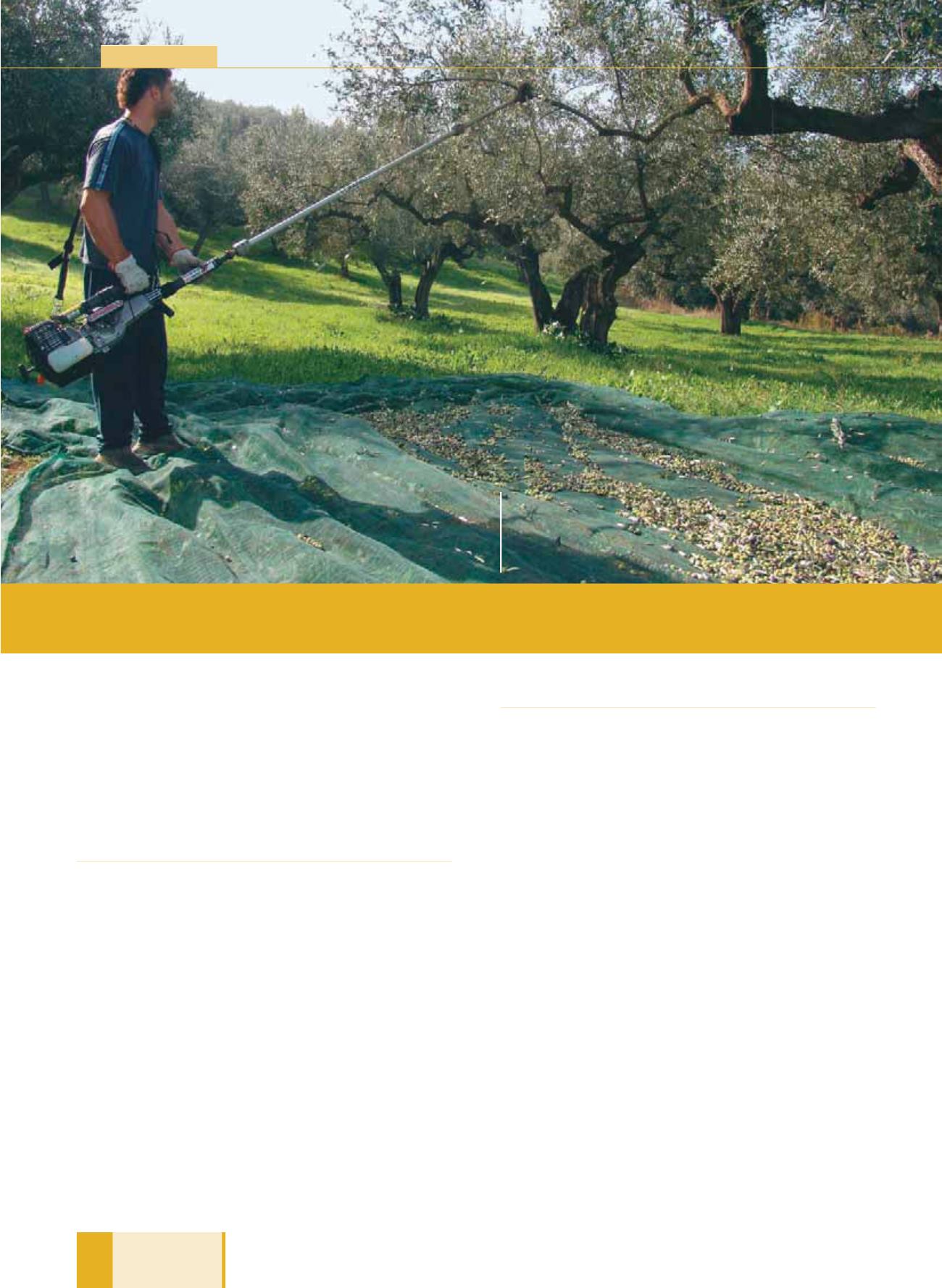
cata consiste nell’impiego delle piccolemacchine agevola-
trici, già introdotte sul mercatoallametàdegli anni ’70, dal-
lequali sono statepoi derivate leattuali attrezzature, piùef-
ficienti, affidabili edeconomiche. Tecnicamente vengonode-
finite in vari modi: pettini scuotiolivi, abbacchiatori o scrolla-
tori; in ogni caso, sono gestiti dall’operatore e permettono
di aumentare notevolmente la resa della raccolta rispetto a
byDavideFacchinetti
DI.S.A.A. UniversityofMilan
I
n olive cultivation, harvesting is still today one of themain
items on the expense list, so much so that on average it
representsbetween25and50%of the total cost of oil pro-
duction inour traditional plants,which involveolive trees that
are often hundreds and at times (particularly in the Salento
region) thousands of years old. Currently,movingmachines
are now available for high production levels, such as vibrat-
ing shakers that canbe fitted to tractors, or telescopic lifting
devices andmoving harvesters that derive from grape har-
vesters. On theother hand, itmust benoted thatmanual har-
vesting has beenmore or less abandoned, with the excep-
tion of certain rare varieties of high value, destined for the
table. Thus, in effect, the preferred option today consists in
the use of small hand-held tools, which were introduced to
themarket in themid-Seventies, fromwhich thecurrent,more
efficient, reliable and economical, tools derive. From a tech-
nical point of view they can be described in various ways:
olive shaker combs,beatersor shakers; thesearemanaged
by the operator and allow a considerably higher harvesting
yieldwhen comparedwith the hand-pickingmethod.
Electric or compressed air beaters are commercially available,
alongwithmotor-poweredshakersorolivebeaters; the latterare
generally higher powered, but also involvemore problems than
the former.Thespreadof thisequipment in Italyencounteredcer-
taindifficulties,substantiallybecause theiruseonlybecomescost-
effective inolive farmswithover3-4000plants,whereas thesit-
uation inourcountry featuresmuchsmaller farms. Itwould there-
fore be necessary to create dedicated systems from scratch to
takeadvantageof the full potential of thesenewmachines.
116
n. 10_11/2014
T
ECNICA
Olive
,una raccolta“
agevolata
”
Fra le tecnichedi raccoltaamano tradizionali, da
unaparte, e lemodernemacchine semoventi
dall’altra, si collocauna tipologiadimezzimeccanici
per la raccoltadelleolivechepuòessere
considerataappunto “intermedia”. Si trattadelle
attrezzatureagevolatrici, particolarmentediffuse in
Italiapoichéadattealleparticolari esigenzedella
localeolivicoltura


