17
MW
n. 7_9/2014
striale – ha rilevatoGoldoni – comporta grandi oneri per le im-
prese costruttrici che rischiano tuttavia di essere vanificati da
unsistema chenonpremia le impresemeccaniche virtuosee
chespessomancadi sostegni finanziari, inprimo luogoper la
ricerca». Nell’introdurre i lavori del convegno, Domenico Lom-
bardi –direttoredelGlobal EconomyDepartmentpresso ilCen-
tre for InternationalGovernance Innovation (Canada) –ha ricor-
dato come «crescitaeambientenon sonoelementi in compe-
tizioneperchénonsarebbeoggi concepibileun’economiasen-
zasensibilitàecologica,così comenonsarebbeconcepibileuna
politicaecologica chenonabbiaunadeguato ritornoeconomi-
co». «Laculturadell’ambienteè talmentecresciuta inquestian-
ni –haosservato ilministrodell’AmbienteGianLucaGalletti –
cheèoggi possibile chiudereun’aziendaperché carentedi re-
quisiti di eco-compatibilità, ponendo così il valore dell’ambien-
tealdi sopradel valoredellostesso lavoroedellaproduttività».
«Èquestouncontestonuovo–haaggiunto ilministro–nelqua-
le i problemi ambientali vanno affrontati non più sulla scorta
dell’emotivitàma con spiritopragmaticoe con il supportodel-
lascienza».Sugliaspetti sistemici siè incentrato l’interventodi
Paolo Fantoni, presidente di Fantoni S.p.a. e vicepresidente di
Federlegno, ilqualehasottolineatocome ilnostroPaesesiaog-
gi all’avanguardianelle tecnologiedi riciclodel legnocon lapro-
duzionedipannelliutiliper l’industriamanifatturiera,vedi inpar-
ticolare quella dell’arredamento,ma come questa eccellenza
nonsiaancorasfruttatasul pianodelmarketingedell’immagi-
ne del prodotto, anche laddove la qualità ecologica dei proce-
dimenti adottati èevidenteemisurabile.Suquestoaspetto in-
| MEETINGRIMINI |
Agriculturalmachinery
:
governance for the
environment
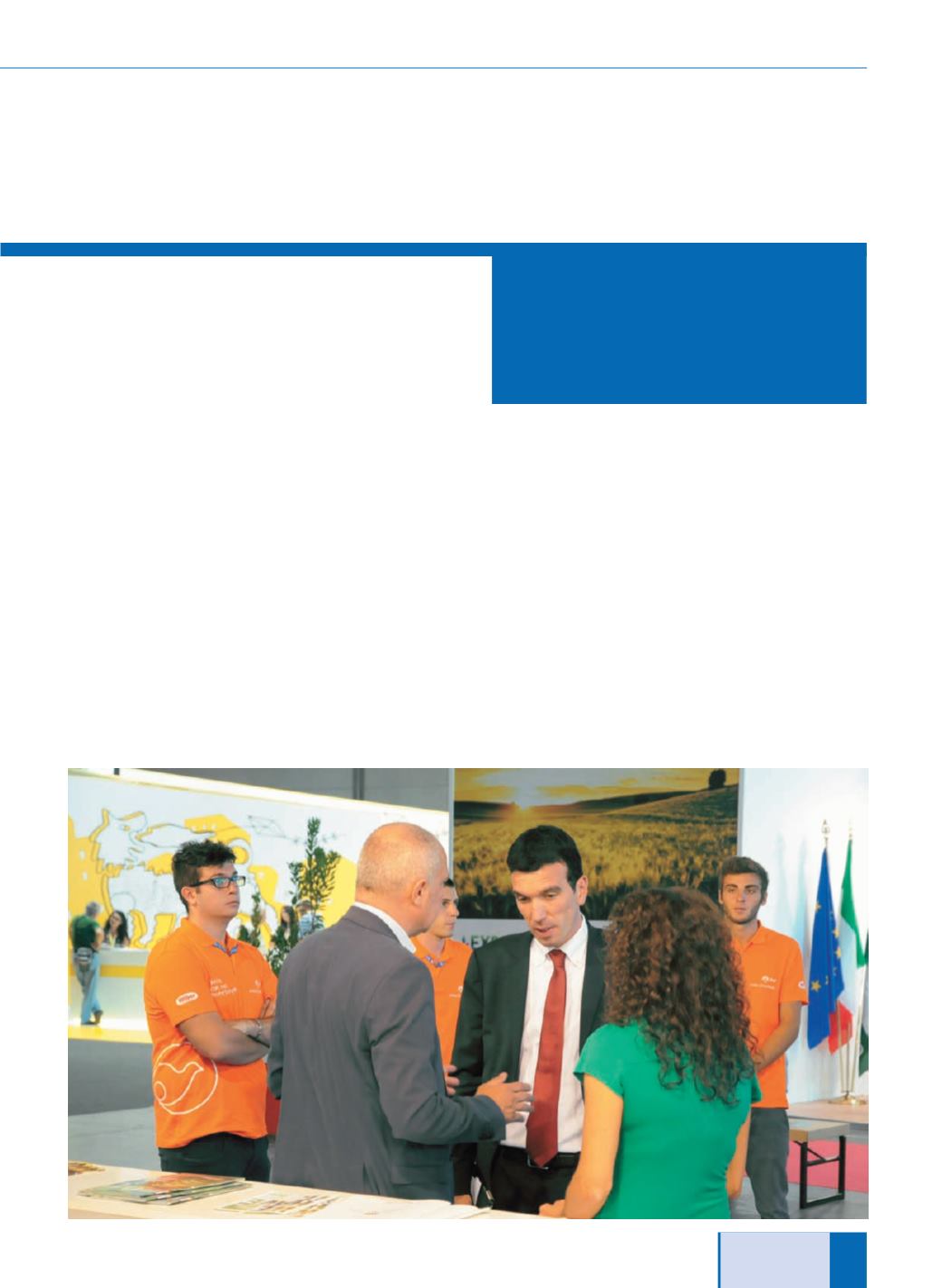
MassimoGoldoni theFederUnacomapresident
hostedatmeeting inRimini for discussing
relations between theeconomy andecology and
defining thecontributionof the Italianagricultural
mechanization industry to solving theproblems
associatedwith theexploitationof natural
resources
torsbecauseaneconomywithout ecological sensitivitieswould
be inconceivable just as an ecological policy without an ade-
quateeconomic return couldnot be conceived.”
Italian Minister for the Environment Gian Luca Galletti af-
firmed, “The culture of the environment has grown somuch
in these years that today it ispossible toaska company why
eco-compatible requisites are lacking to raise the value of
the environment over the value of the work itself and pro-
ductivity. This is thenewcontext inwhichenvironmental prob-
lems are no longer dealt with through a leftover of emotion
but ina spirit of pragmatismandwith the support of science,”
theminister added.
Paolo Fantoni, the CEO of Fantoni S.p.A. and vice president
of Federlegno, focused on systemic characteristics to un-
derscore that “Italy isnow in theavantgarde in recyclingwood
technologies for the production of panels formanufacturing
industries, especially for furnishings, but this excellence has
not yet been taken advantage of at the level of marketing
and product image or even where the ecological quality of
the procedures adopted is evident andmeasurable.”


