trattori emacchineagricole, chedeve garantireperformance ideali sot-
to vari punti di vista: elevata capacità di carico e di trazione, bassa re-
sistenza all’avanzamento, bassi livelli di slittamento e compattamen-
to del terreno stabilità durante la guida nelle varie condizioni operati-
ve e non ultima una lunga durata.
I criteri di scelta dello pneumatico
Di base si trovano due categorie di pneumatici: convenzionale o ra-
diale. Gli pneumatici convenzionali sono costituiti da tele incrociate e
sovrapposte che durante il rotolamento risentono di elevate tensioni
con possibili perdite energetiche. I radiali, oramai ampiamente affer-
mati nell’usoagricolo, hannouna carcassa costituitada funi disposte
radialmente che conferiscono unmaggior angolo di deflessione sotto
carico, con il risultato di unaminore sensibilità agli urti nella zona del
fianco e di unamaggior stabilità su strade in pendenza. I radiali inol-
tre danno, a parità di dimensioni, unamaggiore superficie di contatto
col terreno garantendo quindi una corrispondenteminore pressione e
quindi unminore compattamento del suolo.
Oltre al tipo di struttura, molto importante per la performance dello
pneumatico è il suo profilo. Cinque sono i principali profili riscontrabi-
li sul mercato: tre di tipo agricolo (R1, R1W, R2), e due da tappeto er-
boso (R3) o da trasporto (R4).
I battistrada di tipo R1 sono i più adatti per un uso ordinario con di-
verse tipologiedi terrenoe condizioni di umidità variabile. Gli R1W so-
no simili agli R1,ma con un’altezza del profilo generalmente superio-
re del 20%, pensati soprattutto per trattori che lavorano in condizioni
particolarmente umide ma garantendo al tempo stesso una buona
performance nella fase di trasporto.
I profili di tipo R2, con costolature alte anche il doppio e più inclinate
27
n. 10_11/2014
preferred for agricultural use, havea
carcassof cordsof polyester, steel or
other materials inlaid radially with
several layers of rubber to confer a
greater deflection angle under load
resulting in less sensibility to shocks
on the sidewall and greater stability
on steep roadgradients.Moreover, si-
zebeingequal, radials featurebetter
ground contactwhich corresponds to
lower tirepressureand thus less soil
compaction.
Other thanstructure, theprofileof the
tire is highly important for its perfor-
mance. There are fivemain tire pro-
files on the market: three types for
agriculture, R1, R1W, R2; two for
grass cover, R3, and transport, R4.
R1 type treads are themost suitable
for ordinary use on various types of
terrain and in various conditions of
humidity.TheR1Wsare similar to the
R1 but with a profile height generally
20% greater designed for tractors
working in conditionswhichareespe-
ciallyhumidbut also for ensuringgoodperformance in transport.
The R2 type profile has a high central groove or rib, the areas
between the treads, even doubled, andmore inclined that that
of the R1 to guarantee good traction and continuous cleaning
of the tread during operations inmuddy conditions, as in rice
paddies.Thisprofile isnot suitable for conventional full-fieldope-
rations because of the lack of traction provided and the risk of
breaking the central groove if the tire is subjected to high tor-
sion. On the R3 profile, the grooves account for 70% of the ti-
re’s external surface to provide ideal distribution of the load on
the ground.TheR3 type is suitable for useon trailers aswell as
machinery for groundskeeping. The grooves on the R4 profile
are generally 30% lower compared to the R1 and take up 50%
of theexternal surface.These tiresare largely usedon industrial
machinery for earthmoving thanks to their excellent traction on
paving and adequate performance on unpaved ground.
What themarket is offering
There isactuallyanextremelywide variety of tireson themarket.
Anexample is that theTerlleborg cataloguealoneoffers140mo-
dels of tires for drive wheels for agricultural tractors. An analy-
Tires:
technicality
and
innovation
at theserviceof
agriculture
Suitable criteria for choiceandoptimum
management of inflationpressurenot only ensurea
better performanceof tires from thepoint of view
of techniques,mechanics andeconomy but also
substantially reduce their impact from the
agricultural point of view.The industry puts on the
market anextremelywide rangeof tires for all
work requirements
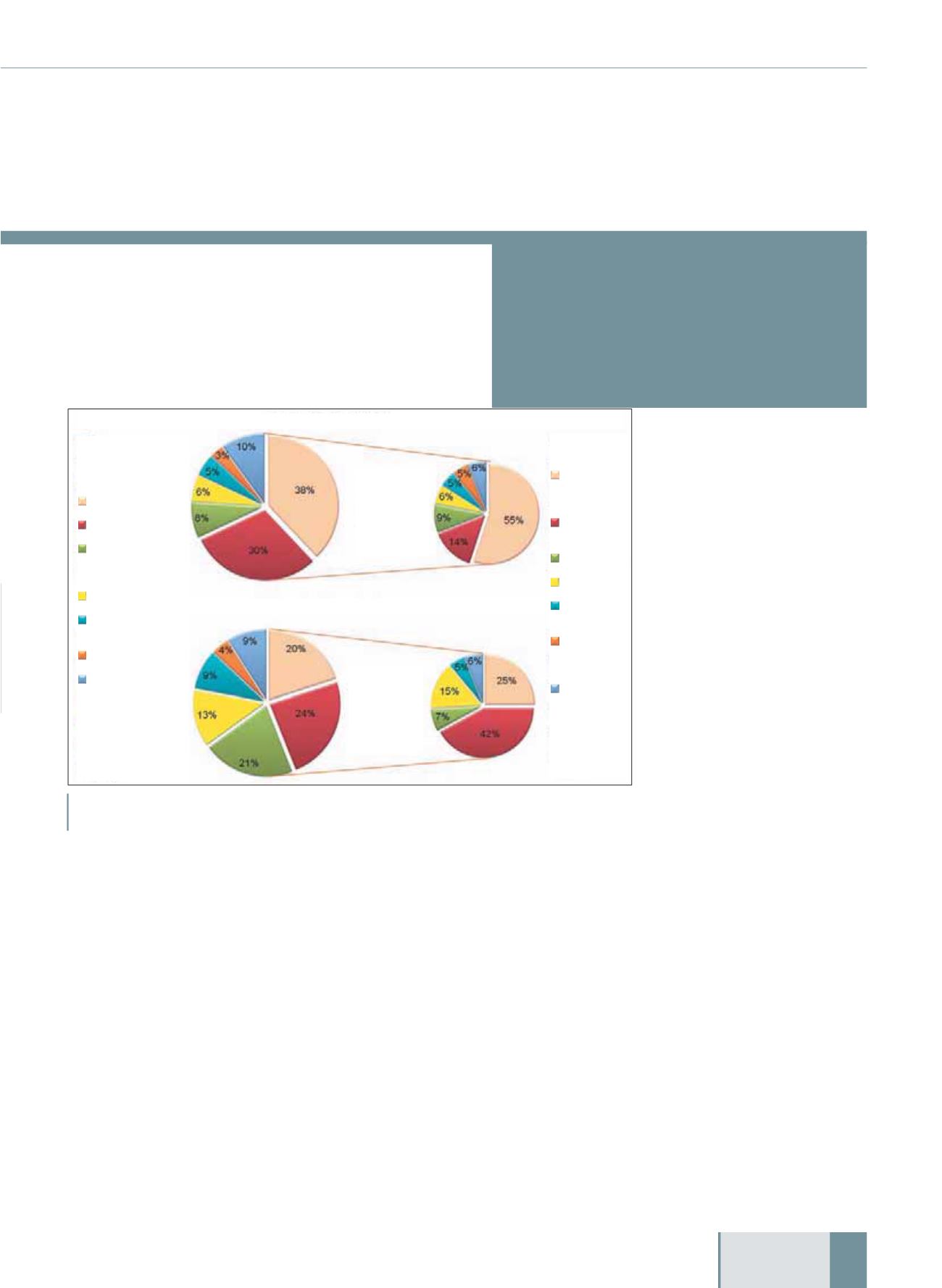
Valutazioni sulmercatodegli pneumatici da trasportoe aduso agricolo.
Fonte: ETRMA/Eurostat/
Market evaluationof tires for transport andagricultural use.
Source: ETRMA/Eurostat
RUOTEDATRASPORTO / TIRESFORTRANSPORT
RUOTEAPROFILOAGRICOLO / AGRICULTURALPROFILETIRES
Cina / China
India
ASEAN (Nazioni sud-est
asiatico) / (Association of
South-Est AsianNations)
Turchia
AmericaLatina / Latina
America
Israele / Isrlael
Restodel Mondo / Other
parts of theworld
Le importazioni
sono18voltepiù
altedelle
esportazioni /
Imports18 times
more that exports
Le importazioni
sono6voltepiùalte
delleesportazioni /
Imports6 times
thoseof exports
Paesi europei
nonnellaCE /
Non-EU countries
NordAmerica /
NorthAmerica
Africa
Turchia / Turkey
AmericaLatina /
LatinaAmerica
Australi eNuova
Zelanda / Australia
andNewZealand
Restodel Mondo
/ Other parts of
theworld
| EIMA INTERNATIONAL 2014 |


