20
MW
n. 10_11/2013
S
PECIALE
di Alessio Bolognesi
N
onostante la crisi del settore delle macchine agricole, che si ri-
scontra nel nostro Paese e in altre realtà europee, c’è un merca-
to comunque in crescita, quello delle tecnologie per l’agricoltura
di precisione. Il tempo sta dando ragione a quei costruttori che hanno in-
vestito per poter proporre ai propri clienti soluzioni adeguate alle neces-
sità. Esse sono basate su di un concetto fondamentale: il futuro non sta
nelle tecnologie in sé, ma nei dati e nelle informazioni che attraverso di
esse possono essere raccolti, analizzati, trattati ed utilizzati. Attualmente
il mercato propone sistemi all’avanguardia che, grazie allo sfruttamento
dei dati raccolti da sensori di svariate tipologie, aiutano i clienti nel loro
by Alessio Bolognesi
I
n spite of the crisis in the agricultural machinery sector afflicting Italy
and other areas in Europe, there is a market which is continuing to
grow and that is technologies for precision farming. Time passing has
shown that those manufacturers who invested to be able to offer their
customers suitable solutions for these needs were right. These solutions
are based on a fundamental concept: the future lies not on technologies
on their own but on the data and information these technologies are ca-
pable of collecting for analyses, treatment and utilization. On the market
at present are avant-garde systems which, thanks to their exploitation of
data collected by various types of sensors, help customers in their daily
work with agricultural machinery. The availability of massive doses of da-
ta combined with information provided by a Global Positioning System
opens the way to countless opportunities which were, however, limited up
to the present by costs. Up until five or six years ago the cost of equip-
ping machinery with advanced technologies for precision agriculture could
reach
€
10,000 for GPS sensors with accuracy of about 10 cm, auto-
matic drive and sector control and up to
€
60,000 with high precision D-
GPS, self-steering systems, the automatic control of seeding, fertilization
and so on. Today, these figures have been halved and same levels of
spending make it possible to purchase technologies offering, for exam-
ple, advanced wireless sensors for the remote analyses of the chemi-
cal/physical parameters of the soil, and plants and systems for automating
work processes and the like.
Analyses conducted in the United States and Australia in 2007 and 2008
have made it possible to quantify the financial advantages brought in
through the use of technologies based on GPS and the systems for pre-
cision farming. These analyses were carried out on three types of crops
GPS
e agricoltura di precisione:
un passo nel
futuro
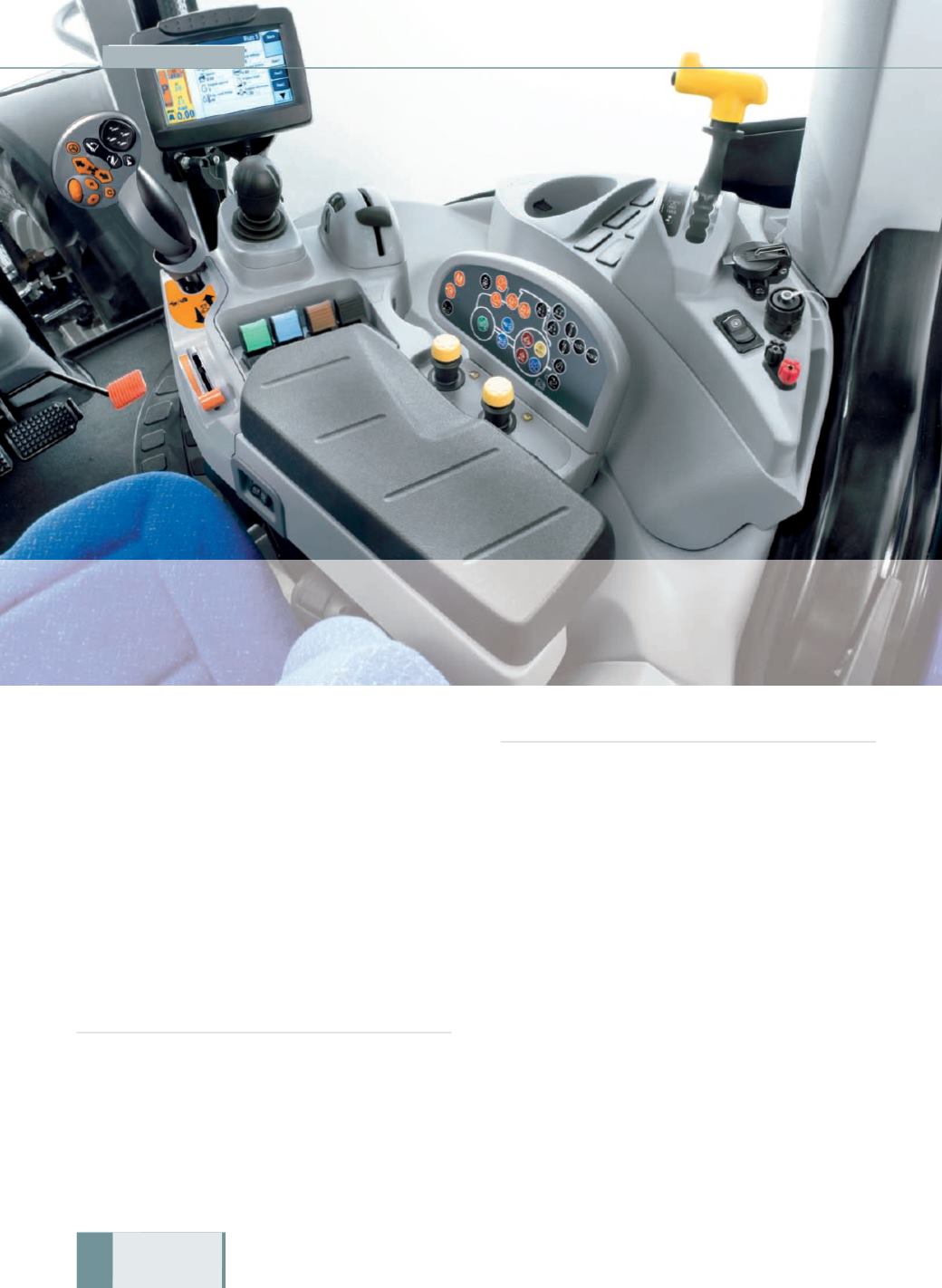
Disponibili sul mercato sistemi elettronici e
informatici che consentono di analizzare una grande
quantità di parametri e di monitorare le lavorazioni.
Le nuove tecnologie permettono di eseguire
lavorazioni a rateo variabile per ottimizzare i
trattamenti, utilizzare il controllo sezioni, monitorare
l’applicazione della semina o dell’irrorazione ed
evitare sovrapposizioni, effettuare l’autoguida o
l’autosterzatura per seguire i percorsi programmati.
Disponibili, fra l’altro, sensori in grado di analizzare
visivamente le piante al fine di ottimizzare il
trattamento in tempo reale in base alla loro
condizione, forma e colore. Un contributo
importante, ai fini della compatibilità dei sistemi,
viene dalle applicazioni ISOBUS


