DeliSoil, a project for the use of sustainable biofertilizers
The European initiative aims to make use of by-products from the food processing industry and residual agricultural biomass in order to counter soil depletion through a typical circular economy approach
The DeliSoil project has been undertaken with EU funding as part of the Horizon Europe program with the aim of developing effective procedures for the production and agricultural use of safe and sustainable biofertilizers obtained from the recovery of residual biomass. To this end the project addresses two urgent challenges: making use of the by-products of industrial food processing and combating soil deterioration in terms of organic matter and biodiversity.
By taking a circular bioeconomy approach DeliSoil contributes to improving soil health and productivity, supporting the EU Mission “A Soil Deal for Europe", the "Farm to Fork” Strategy, and other measures for sustainable development. There is no doubt that healthy soils play a fundamental role, continuously producing food and biomass and effectively storing carbon. Currently, over 60% of EU soils are considered degraded, with an alarming annual loss of organic carbon, leaving arable land - essential for agricultural production - facing serious depletion problems. To address this issue, the adoption of safe, sustainable and socially accepted soil improvers becomes essential. One promising solution is to reuse the by-products of food processing, which are rich in organic matter and nutrients but often cause environmental problems if wasted or mismanaged.
Transforming waste into soil improvers allows them to be valorized, contributing to the sustainability and overall safety of the food supply chain. However, to fully exploit its potential, it is essential to conduct detailed technical and economic feasibility assessments, as well as foster a holistic understanding of the environmental impacts. The four-year project (2023-2027), coordinated by the Finnish research institute LUKE, involves 14 partners from 10 countries (Austria, Denmark, Finland, Germany, Ireland, Italy, Norway, Poland, Spain, Switzerland) with representation from academia (ENEA and CINSA for Italy), industry, and public institutions.
To achieve the project's objective it is essential to identify not only the technological, financial, legislative, and social enabling factors, but also the obstacles that may prevent its accomplishment. To this end, several operational tools are envisaged, such as the creation of regional "Living Labs" and "Lighthouses" to enable researchers, farmers, industries, and citizens to co-create innovations for healthy soils, and the establishment of systems to monitor project progress.
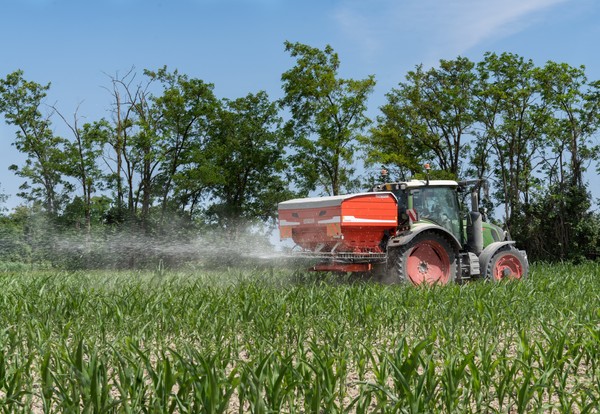
DeliSoil's five regional Living Labs are located in five different countries (including Italy) with stakeholders from the entire food supply chain, who are using innovative technologies to convert waste from the food processing and production industries into soil improvers 'tailored' to the specific needs of crops. A key activity of the Living Labs is the experimental testing of the different technologies employed and the vehicles used in the field for the distribution of soil improvers. This activity is based on a clear division of management responsibilities between research partners and companies, who evaluate soil improvers in state-of-the-art laboratories, and farmers who test the solutions in the field. In particular, the soil improvers produced undergo stability, biosafety, and molecular parameter testing to evaluate their impact on soil health, agronomic performance, and environmental risks.
Furthermore, measuring the environmental footprint of some selected products is also envisaged. Alongside of the participants, stakeholder communities and networks have been created to facilitate knowledge sharing related to DeliSoil's key transferable outcomes.
The Italian Living Lab is coordinated by CINSA and operates at the Stuard Farm in Parma, where the effects of pelletized biochar distribution on various crops is being evaluated. The Living Labs share their solutions for the use of secondary flows coming from operators in multiple sectors (fruit and vegetables, meat, insects and mixed food products). In order to maximize the impact of its activities, Delisoil works closely with other EU projects and the European Soil Observatory (EUSO) to ensure the coordinated achievement of the objectives of the EU Soil Mission. Another key aspect for the effective dissemination of good practices in agriculture is the organization of study visits. This past June, the “Delisoil” Project Partners took stakeholders on a technical visit to the Agro Energy Hohenlohe plant, a pioneering example of the biogas-biomethane production sector in Germany.
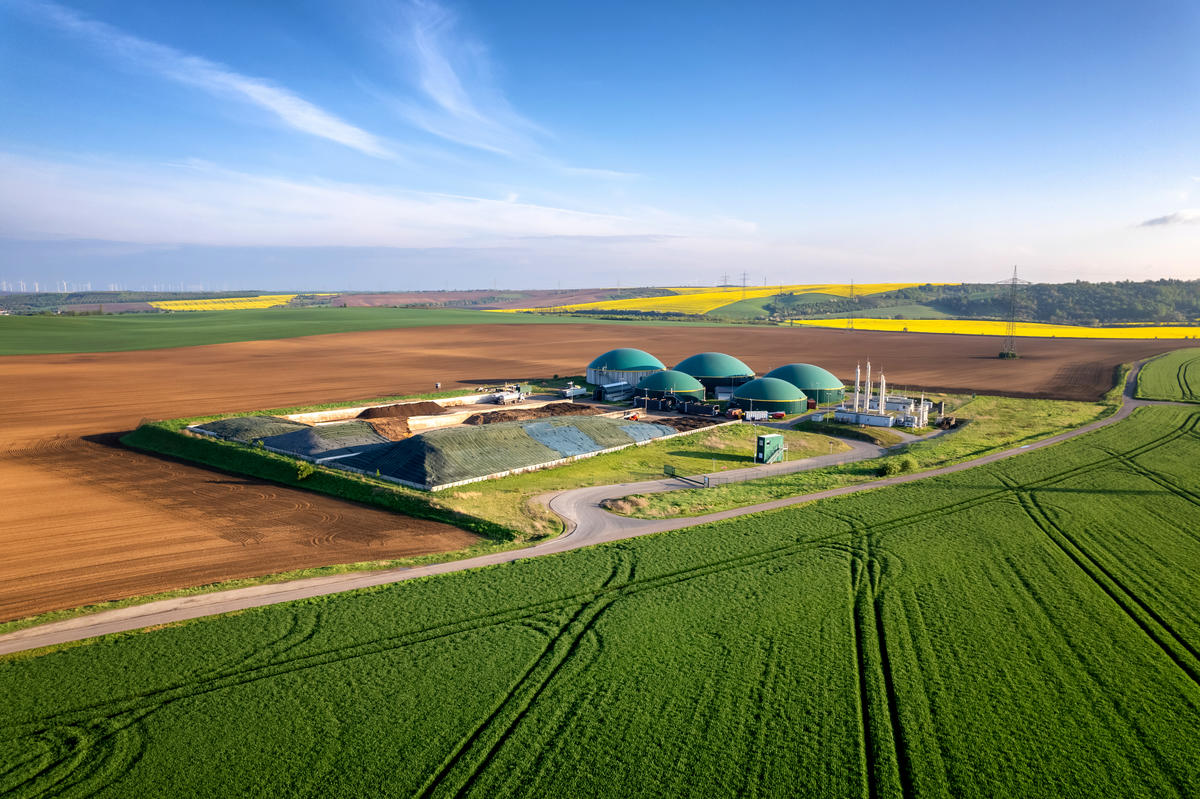
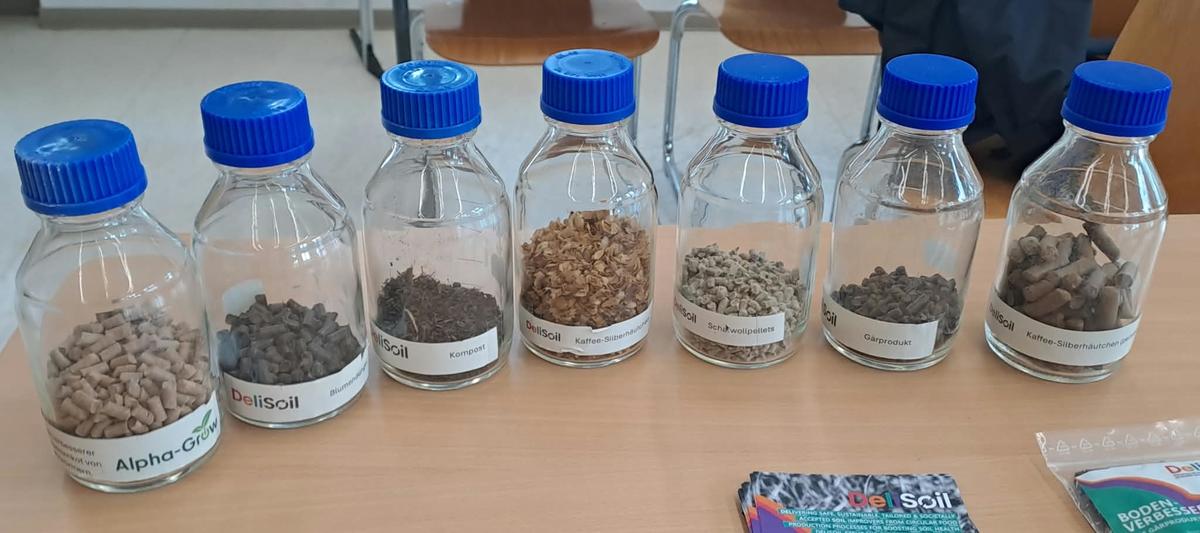
This plant, which has been in operation for over 20 years, is located in Kupferzell in the Baden-Württemberg region, north of Stuttgart. It is - explains Nicola Colonna (ENEA researcher) - a large-scale technological system that, in addition to producing biogas, electricity and heat, has implemented solutions that make it a true flagship of the German circular bioeconomy. First of all - a simple, but not so obvious example - the excess heat produced by the system is partially released to the nearby village by means of a district heating network about a kilometer in length. Another part of the heat is used to dry the digestate in a large greenhouse and then pelletize it, with or without the addition of micro and macro mineral elements that transform it into organo-mineral fertilizer.
The development here is the large investment made to recover important nutrients such as phosphorus and nitrogen from the liquid fractions of the digestate to produce ad hoc fertilizers. The facilityt is owned by Thomas Karle, who began biogas production in 2001 with a rather simple technology consisting of a 600 m³ digester and a 55 kWel cogeneration unit, which at the time was below average (190 kWel) and which today exceeds 1 MW of power in a continuous growth process.
Other interesting activities of the Delisoil Project will be on display at a specific workshop scheduled for the next edition of the Eima Energy Exhibition coordinated by ITABIA, which will be held in Bologna as part of the Eima International Fair.