The agricultural machinery industry: a complex economic scenario
From the competition between the United States and China to conflicts in the Middle East and Eastern Europe, geopolitical tensions are redrawing trade routes, balances of power, and industrial strategies, and also forcing Italian agricultural machinery manufacturers to make new choices on global markets
The agricultural machinery industry is greatly export oriented and is present in markets throughout the world, which, as is well known, account for a significant share of national production, contributing significantly to the sector's trade surplus. However, strong international instability is penalizing global trade flows and also affecting trade in agricultural machinery, particularly with those countries that traditionally have great demand for Italian-made technologies. The turbulent geopolitical landscape has prompted Italian manufacturers to explore new markets and launch technical and commercial cooperation initiatives with countries with great potential, such as those in Southeast Asia, Africa, and the Americas. However, exploring and then realizing business opportunities in alternative settings requires considerable investments in building a sales network, technical assistance services, and sometimes on-site production facilities. Investments that, already risky in and of themselves, can become even more so in an uncertain scenario such as the current one. Gaining an increasingly in-depth understanding of target countries and the economic, geographic, and political variables that can influence global trade trends is therefore key to improving the competitiveness of the Italian agricultural machinery industry. This topic, now more relevant than ever, was the focus of the public session of the FederUnacoma Annual Assembly, held on June 22 at Palazzo di Varignana (Bologna). The session included geopolitical analyst Dario Fabbri, Federico Fubini, deputy editor of Corriere della Sera, and Massimo Panarari, professor at the University of Modena and Reggio Emilia and Luiss Guido Carli University. The meeting was moderated by Sky TG24 Deputy Director Alessandro Marenzi and opened with a welcoming address from FederUnacoma President Mariateresa Maschio. Disruptions to value chains, rising raw material costs, energy prices, and logistics challenges - as President Maschio noted - continue to put pressure on the agricultural machinery sector, especially in countries like the United States, Germany, Canada, and France, which have great demand for highly innovative technologies and therefore play a driving role for the entire sector.
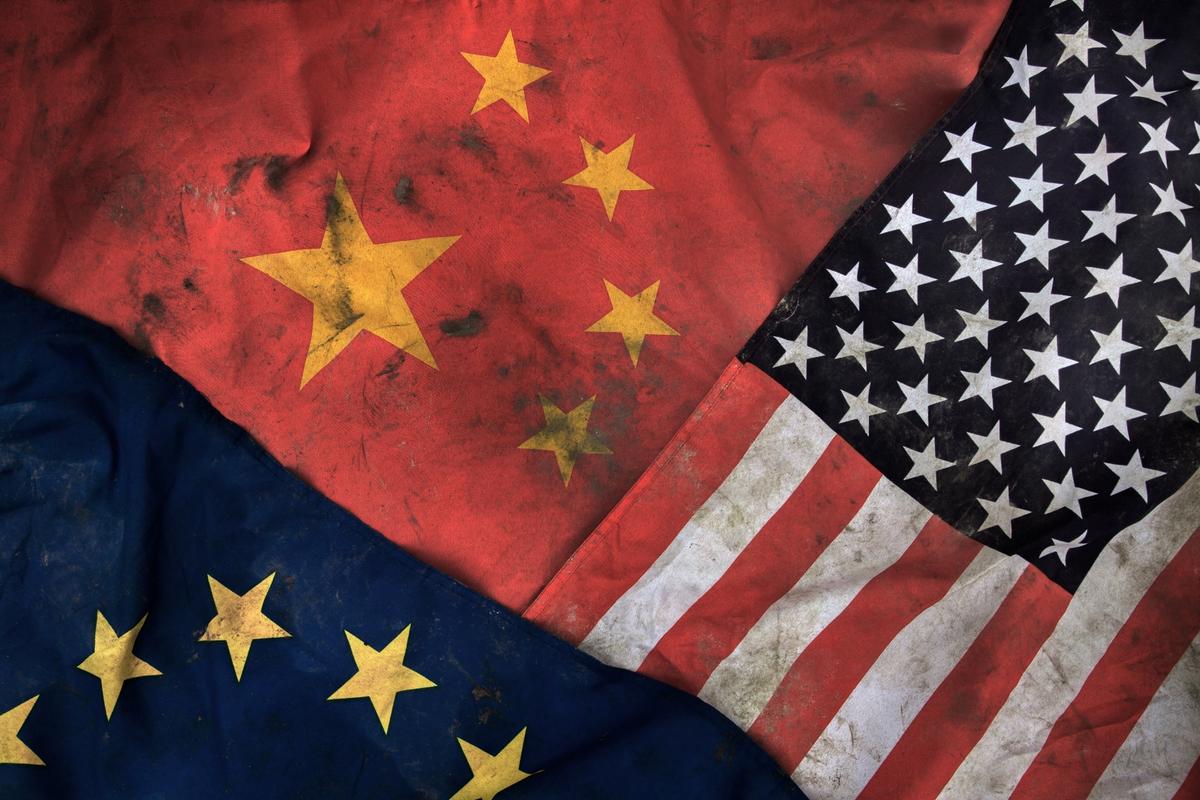
In the short and medium term, the scenario does not appear likely to change, and the global economic picture is expected to continue to be influenced by geopolitical tensions. It was from this perspective that analyst Dario Fabbri emphasized how the main ongoing conflicts, those in the Middle East and Eastern Europe, are interconnected and fit within the broader context of the confrontation between China and the United States. The competition between the two powers is multi-dimensional and involves multiple areas of confrontation: political, ideological, economic, and military. But this competition also takes on a maritime dimension, as indicated by the US military operations against Iran (also) over the issue of the Strait of Hormuz or China's ambitions for the island of Taiwan, which represent a geographical obstacle to the projection of Chinese power beyond the Strait of Taiwan, towards the Pacific Ocean. The war against the Islamic Republic, which the US has not won to date, could turn into a strategic defeat for Washington – Fabbri explained – since US power is based on control of the seas and especially on control of 'choke points', straits and sea passages that are essential for global trade routes. Failure to exercise such control over Hormuz, one of the most important choke points on the planet along with Bab el Mandeb, Malacca, Panama and Gibraltar, weakens American prestige and risks undermining its hegemony as a superpower.
While the war effort is creating many difficulties for the United States, the most significant issue for China is the performance of its economy, which, as Federico Fubini emphasized, is showing signs of slowing. In a climate of growing tensions and trade restrictions, Beijing's government is concerned not only about the decline in domestic investment, particularly foreign investment, but also - as the deputy editor of Corriere della Sera explained - the decrease in household consumption, as evidenced by the decline reported this past May. The difficulties, both structural and cyclical, that are slowing the progress of the 'Chinese giant' should not, however, be misleading. The People's Republic still represents a fierce and aggressive competitor for Western countries, while also being able to make the most of a formidable competitive advantage in foreign markets: that of being able to operate with no or very low margins, unlike Western companies. Internationalization incentives provided by the central or local governments allow Chinese companies to operate at a loss – the deficit is covered with resources provided by government subsidies – and to gain oligopolistic, if not monopolistic, positions in target markets. European manufacturing countries are especially suffering from Chinese competition. Under pressure from China's aggressive trade (as well as the US administration's tariff policies), the 'old continent', which has lost the competitive advantage afforded by high-tech production, does not have many strategic options to respond to the challenges coming from the East. Any potential direct clash is certainly not desirable, as demonstrated by the experience of the United States, which essentially lost its trade war with China. Having ruled out the possibility of an open confrontation, in which the People's Republic could implement various types of retaliatory measures (see, for example, the ban on rare earth minerals), the European Union could instead pursue a negotiating path - as suggested by the deputy editor of Corriere della Sera - opening certain sectors to free trade, subject to Beijing's recognition of specific trade guarantees to protect European companies.
The turbulence that has been shaping the global landscape in recent years does not only concern relations between nations, but also calls into question fault lines within those very same nations. In short, there is a theme linked to the crisis of the forms and formulas of representation, which – said Massimo Panerari – has not just come up today, but is the consequence of a process that began in the second half of the last century and accelerated with the application of storytelling techniques and purposes to political marketing. This, according to the Luiss professor, is the cornerstone on which populism rests. The crisis of representation has since intertwined with other phenomena, such as – for example – the cognitive mobilization resulting from the mass education of the 1960s. However, the acquisition of higher level skills has weakened the intermediation function performed by representative bodies. Political parties, trade unions, associations, and institutions that up until then had been a point of reference for understanding reality and had played a role in guiding political and social behavior, lost these prerogatives. Cognitive mobilization allows each person to independently make sense of what happens in the world, thus eliminating the need for meaning mediators. The territories abandoned by representation are occupied by communication, while political parties end up losing what was once their social base. Today this phenomenon is exacerbated by digital technologies, which – Panerari stated – produce a hyper-narcissistic and hyper-subjectivizing drive, and with it the illusion of omniscience.
The scenario facing agricultural machinery companies is thus extremely complex, as it presents fracture lines that refer not only to the macro-state dimension but also to the micro-social dimension, at the level of individual relationships and micro-groups. In this context, in order to meet the challenge of increasingly fierce competition agricultural machinery manufacturers must hone their ability to understand social and economic trends and be able to anticipate competitors' moves, reacting promptly to those changes in the scenario that arise with ever greater frequency.