Italian-Indian cooperation, the success of EIMA Agrimach
The exhibition of agricultural technologies from India and Southeast Asia, organized by FICCI and FederUnacoma, wrapped up on November 29th. There was a great visitor turnout, with over 41,000 in attendance. The 2027 event is scheduled for December
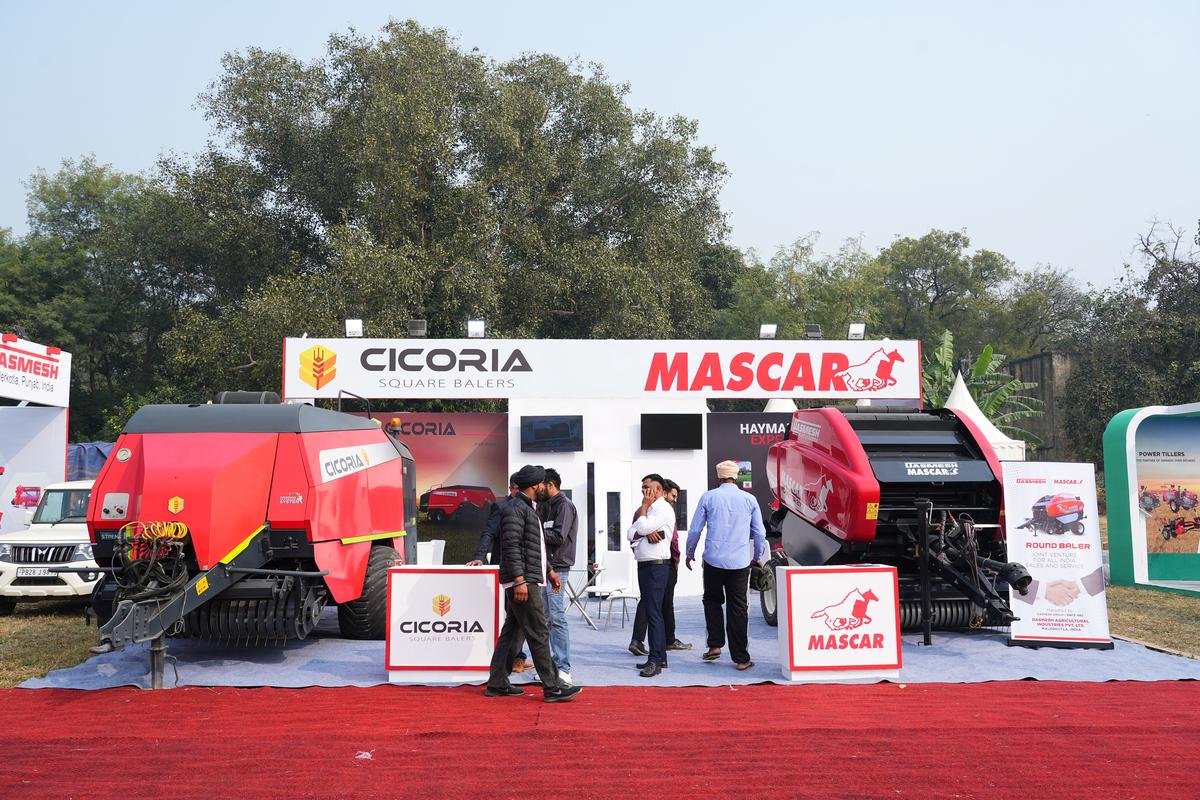
The ninth edition of EIMA Agrimach, the international exhibition of machinery for the agricultural economy of India and Southeast Asia, held from November 27th to 29th in New Delhi on the university campus of the IARI (Indian Agricultural Research Institute) Pusa, ended on a positive note. Over the three days of the event, organizers from the Indian Federation of Chambers of Commerce and Industry (FICCI) and the Italian Federation of Agricultural Machinery Manufacturers (FederUnacoma) recorded a total of more than 41,000 attendees, a figure that confirms the significant interest the New Delhi event has generated among Indian manufacturing and neighboring countries. Progressive farmers, distributors, and dealers of agricultural machinery (24,000 employees in total) were the most represented categories in New Delhi, but EIMA Agrimach also saw a large presence of institutional figures, representatives of the academic world, technicians, industry associations, and buyers. Visitors, coming from various Indian states, such as Punjab, Haryana, Odisha, and Telangana, had the opportunity to observe new-generation machinery and systems specifically designed by manufacturers to increase the yields of the subcontinent's agricultural economy, improve the sustainability of production, and optimize the use of production factors. There were also numerous economic operators present at the event in New Delhi. Alongside of buyers from Nepal, Ghana, Uganda, Zimbabwe, Morocco, South Korea, Burkina Faso, Algeria, and Oman, there were also foreign delegates from Sri Lanka, Malaysia, Vietnam, and Thailand, whose incoming was organized by ICE in collaboration with FederUnacoma. According to FederUnacoma organizers, during the first two days of the event foreign delegates took part in around one hundred business-to-business meetings with Italian exhibitors, demonstrating the technologies best suited to the needs of their respective agricultural economies.
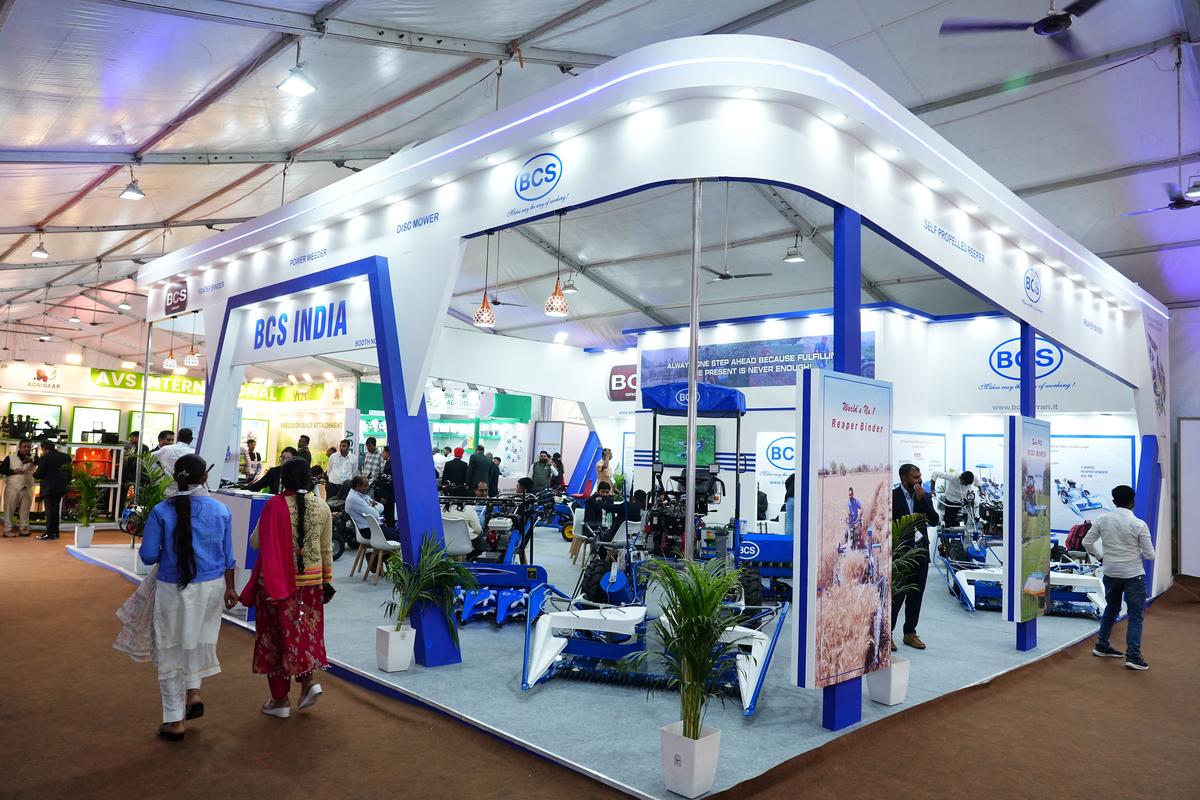
Each crop has its own technology. The 2025 edition of EIMA Agrimach thus marked the return of the event to its “natural location” of New Delhi after the interlude in Bangalore, which hosted the 2022 and 2024 editions. The two events held in the southern Indian city – explain the FederUnacoma organizers – came from the need to respond to a specific demand for the mechanization of high-value-added crops (such as pomegranates, tomatoes, peppers) that are widely grown in the southeastern and southwestern regions of the country. And it was, as FICCI and FederUnacoma said, a return in grand style. For the occasion, the IARI Pusa spaces – more than 33,000 square meters, including 3,000 located outdoors – hosted more than 180 Indian and international agro-mechanical brands, 18 of which were Italian, which presented a full range of solutions designed to meet the needs of India's agricultural economy. And this, as is known, is characterized by a great variety of cultivation practices, soil and climate conditions and production models. From tilling the soil to sowing, from plant protection treatments to irrigation systems, and even harvesting equipment, EIMA Agrimach displayed a wide range of agricultural machinery, capable of adapting to both the micro-farm, primarily focused on subsistence, and the large-scale agricultural enterprise that adopts industrial-level logic and methods.
Focus on irrigation and digitalization. With tractors, tillage equipment, harvesting machinery, crop protection solutions, components, and more, EIMA Agrimach 2025 focused particularly on irrigation systems and next-generation digital systems, whose use is proving increasingly strategic, even in India, to increase yields, improve productivity, and ensure the sustainability of production processes through the timely use of inputs. Self-driving vehicles, drones, satellite mapping systems, and Agriculture 4.0 applications were on display not only at the manufacturers' stands, but could also be seen in action in the 3,000-square-meter test area set up specifically for this purpose at IARI Pusa. Of particular interest, with specific reference to irrigation, were the technologies being exhibited by the industries at EIMA Agrimach to optimize water consumption and conserve resources. This is a truly crucial issue for an agricultural economy like India's, which is extremely dependent on climatic conditions and rainfall. Only 53% of the subcontinent's arable land is served by irrigation systems, while the remaining 43% has no access to irrigation resources and is therefore closely tied to uncertain rainfall occurences.
The Modernization of Agricultural Practices. The multiple production configurations of the Indian agricultural economy – ranging from subsistence to industrial cultivation – all share the need to invest in state-of-the-art machinery to fully exploit the potential of the primary sector. The subcontinent boasts excellent positions with reference to numerous types of crops (it is the main producer of milk and legumes, the second of cereals, fruit and vegetables), and has long been the top market in the world in terms of number of registered tractors (over 910,000 units sold in 2024). Over the course of 40 years, that is, between 1976 and 2016 – as stated in the report entitled “Farm Mechanization: A Catalyst for Sustainable Agricultural Growth”, produced in 2024 by FICCI and analysts at PwC – the overall availability of mechanical power for the agricultural sector increased by 600%, rising on average from 0.36 kW/ha in 1975–76 to 2.48 kW/ha. Despite the undeniable progress made in this period, which attests to the technological renewal of the agricultural sector, the mechanization of the primary sector cannot be considered complete. From this perspective, India's agricultural economy still has significant room for improvement, linked to the need to bridge the gaps that still exist between the country's different regions and different crop types. The systematic use of agricultural machinery tends to prevail in the northern regions to the detriment of the north-eastern and central-southern regions, and in cereal crops (wheat, rice, corn), while it is still not in sufficient use in horticultural crops or for legumes, cotton, and sorghum. According to estimates by FICCI and Pwc, demand for machinery, encouraged by central government policies, is expected to grow further over the next three years, reaching a total value of USD 22.1 billion in 2028 (+32.8% compared to 2023).