Italian-Indian trade, financial instruments
The Indian banking system comprises more than 150 institutions. Those specializing in foreign operations can be either state-controlled or private. Even in the financial field Italy and India can boast consolidated relations, which facilitate trade between the two countries
Indian banking system consists of around 150 banks with different operational characteristics and purposes. There are cooperative, rural, and regional banks. As far as foreign activities are concerned, these are substantially concentrated in a group of state-controlled and private banks (Indian and foreign). The main Indian bank is the State Bank of India (SBI), not to be confused with the Central Bank (Reserve Bank of India). The Indian banking system's interest in providing services to foreign operators and investors was confirmed by the recent (May 2025) GTR India 2025 Mumbai, the leading international trade finance event, which was attended by over 600 delegates. Financial sponsors of the event include India's ICICI Bank and Kotak Mahindra Bank. There was also a large presence of International Groups: HSBC Bank, Standard Chartered, Barclays, BNP Paribas, Citi, FAB First Abu Dhabi Bank, and Japanese banks, including SMBC (Sumitomo Mitsui Banking Corp.) and Mizuho Bank.
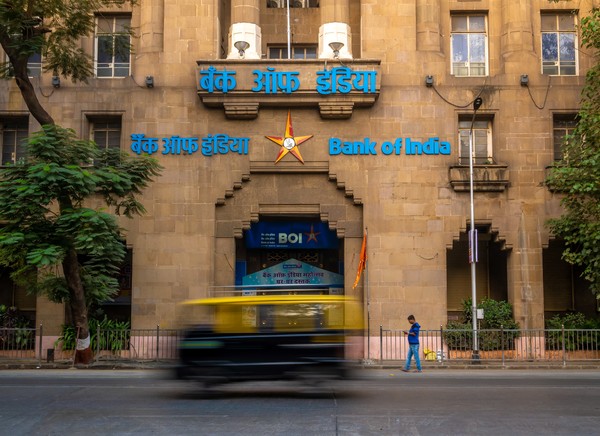
The relationships between the Italian and Indian banking systems are significant. In recent years, the local banks most active with Italy – besides the SBI – have been both state-controlled (nationalized) banks such as the Bank of Baroda, Bank of India, and Canara Bank, and private banks. Among the latter are Axis Bank, ICICI Bank, IDFC, Kotak Mahindra, and YES Bank.
In their relationships with the banking system, several Italian companies report bureaucratic issues and the consequences they have on the timing of transactions (for example, opening an account, checking documents, or the speed of their response to customers and Italian banks). The local financial system and the Reserve Bank of India are however making a great effort to develop digitalization, to modernize the structure of so-called cross-border payments (money transfers between different countries) and to expand settlement in rupees internationally - where possible. An example of this process is the Gujarat International Finance Tec-City (GIFT City), which, following the model of other Asian countries, aims to be a center of excellence in the sector.
Let's try to focus on some points of interest for Italian companies. Choosing a local bank for export and import operations it is the responsibility of the counterparty. However, there may be some room for negotiation, depending both on the Indian side's willingness to offer multiple options and on its Italian bank's preferred counterparts. This latter point should not be underestimated, as the greter the relations between the two banks (Italian and Indian), the more effective the support provided will be. Generally speaking, the Indian private banking system shows greater proactivity, but in other cases, especially due to the location of the counterparty, it may be appropriate to refer to the SBI or to publicly controlled banks present in the region.
A second issue is the difficulty for Indian companies, even those doing business abroad, in accessing working capital and factoring (credit transfer) instruments. This is reflected in the payment instruments used with counterparties. We can take the example of the LC Import (letter of credit), which is often requested from Italian importers with two specific clauses: transferability and deferred payment. This allows the Indian exporter to obtain financing from his bank and, if necessary, to pass the credit received on to his suppliers. This entails, and it is best to anticipate it, an additional cost for our importer (e.g. bank commissions on LCs related to the duration) and also some operational issues for the document management of the transferability.
The issue of financing also impacts our exporter's side. In essence, the Indian buyer-side market is very sensitive to a payment offer that includes deferral. Here too, the classic case is an export LC in favor of our supplier with deferred payment (for example 90 days). In this case, the Italian company may consider requesting the inclusion in the LC of a sight payment option, in which the Indian will pay through his bank within 90 days while the exercise of the sight payment option to the exporter will be exercised by the Italian bank with a discount transaction cost that occurs without commitment of the exporter's credit facilities (as in the export advance). Here the focus is on the commercial added value of the proposal.
Still in terms of Trade Finance points of attention, we mention the international guarantees, for example Performance Bonds and Advance Payment Bonds which can be requested by the Indian importer especially in the supplies of plants, machinery, and vehicles. From this perspective, it is possible to operate with international bank guarantees under the URDG (Uniform Rules for Demand Guarantees) rules of the International Chamber of Commerce in Paris – ICC, which are internationally recognized by the banking system. However, this alone does not constitute absolute protection, especially given the differences between the Indian legal system in this area, and that of the EU.