India speeds up the modernization of its agricultural economy
The subcontinent is accelerating the modernization of its agricultural economy. By 2025, tractor sales, which are still on the rise, could potentially reach the hyperbolic figure of one million units. Technical cooperation with Italy in the agricultural machinery sector continues to strengthen
In a global agricultural mechanization market that is taking a breather and, in many countries is seemingly stifled, there are still some taking deep breaths: India. In 2025, sales of new tractors in the subcontinent are on the rise. In the first eight months of the year they totalled 615,000 units, an increase of nearly 15% compared to the same period in 2024. Barring any unlikely shocks the year will close with around or, even more likely, above 900,000 vehicles sold. In order to provide a meaningful comparison it's worth pointing out that registrations of new agricultural tractors across Europe in 2024 came in at 144,000 units and are unlikely to exceed 150,000 in 2025.
Unlike the European, American, Japanese or South Korean markets, the market in India is characterized by the prevalence of low power, “basic” tractors, and not always high-tech solutions. These characteristics do not undermine the continued growth trend of Indian agriculture as a whole and, more generally, of the world's most populous country, with its 1.5 billion inhabitants. The data show how the subcontinent is poised to become the world's fourth-largest global power as early as 2026 and the third within the next three years. And some even go further: Goldman Sachs Research predicts that India's GDP will surpass that of the entire Euro area within 25 years (approximately 2051) and that of the United States within 50 years. These projections are not at all far-fetched if we consider that since 2021, GDP – currently approaching 4 trillion dollars – has grown by an average of 7% annually and that it will increase by 6.3-6.5% in 2025, recording similar increases for the next three years as well.
Short- and medium-term trends are thus positive, as analysts indicate; however, the country still faces significant social imbalances and great differences between urban and rural areas. But even in this context, the expansionary trend should be noted: according to the World Bank, per capita GDP has risen in the last three years from around USD 2,300 in 2022 to USD 2,700 in 2024. With projections in excess of $3,000 in 2026. Over the past 10 years, India has significantly reduced poverty, with extreme poverty – the World Bank notes – falling from 16.2% in 2011-12 to 2.3% in 2022-23, empowering 171 million people from poverty conditions. In an ad hoc report the same international organization acknowledges India as being one of the world's agricultural powerhouses, contributing 7.5% of global agricultural production and being the leading producer of milk, spices, and legumes. it is also the second largest producer of wheat, cotton, sugarcane, farmed fish, fruits, vegetables, and tea.
In such a scenario, agriculture remains a more than strategic sector: it contributes 18% of the GDP and still today employs more than 45% of the indian population. Out of a gross surface area of over 200 million hectares, 140 million are sown, and more than half of this amount is irrigated. Cereals dominate (over 40 million hectares are used for rice), to which are added 25 million hectares of oilseeds and approximately 20 million hectares for fruit and vegetables. Narendra Modi, who began his third five-year term as the Prime Minister of India in June 2024, is aware of the importance of the primary sector. The Prime Minister, in addition to having brought unemployment (5.1% in August 2025) and the inflation rate (1.5% in September 2025) to historic lows and significantly reduced the public debt-to-GDP ratio (just below 60%), has activated a series of specific measures through the Ministry of Agriculture and Farmers' Welfare to expand the Indian agricultural economy. These measures include the government's PM-Kisan program, which provides direct financial support to small farmers across the country. The amount - 6,000 rupees per year, equivalent to about USD 100 divided into three equal installments - may seem modest at first glance, but it represents concrete help and a sign of interest for many small businesses. Increasing attention is also being paid to the organic sector, in which the Npop (National Programme for Organic Production) has been active for several years, and which plans to convert several hundred thousand hectares to organic farming, particularly in Punjab and the Chandigarh area.
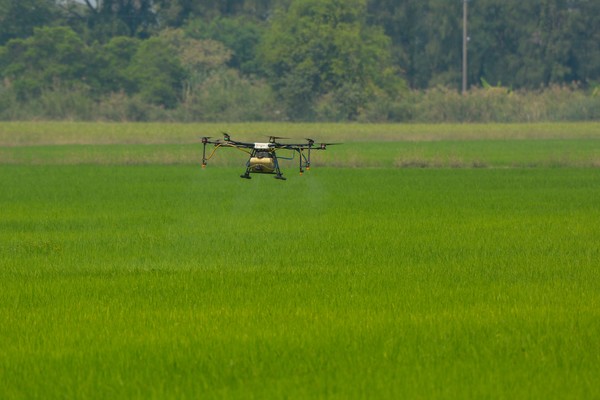
An important step was taken on the innovation front in 2024 with the launch of the Krishi DSS, a public digital infrastructure for geospatial innovations in the agricultural sector. It is a cloud-based platform that will allow agricultural producers to access a wide range of satellite imagery and other datasets. It will provide operational assistance for better information management and serve as an initial concrete step towards digitalization and precision agriculture, both of which are strategic for the Indian agricultural machinery sector.
This is a market that is growing rapidly, not only in terms of units sold but also in terms of value. According to the Italian Trade Agency (ICE), which has prodiced more than one report on India, at the end of 2023, the sector was worth a total of USD 13.7 billion and is expected to grow significantly over the next 8 years, reaching USD 31.6 billion in 2033 with an annual growth rate of approximately 9%. The positive sales trend will be a consequence of a greater variety of equipment required by agricultural businesses. The ICE study points out how the current market is dominated by agricultural tractors, which alone account for 86% of the market, followed by other types of tractors (8%) and trailers (5%). Other categories of machinery, including harvesting machinery, claim an overall share of 1%. Again, the Italian Trade Agency emphasizes that the range of technologies is destined to expand considerably over the next 10 years, since the subcontinent's agricultural system requires modernization of equipment in all production segments. Newly developed equipment is needed for tillage and sowing, but also for irrigation systems and the spraying sector. Many of the new agricultural vehicles – concludes the ICE report – will be equipped with digital systems.
This is a clear opportunity for construction companies. Major companies (Argo Tractors, Maschio-Gaspardo, BCS, to name a few) have long owned factories in India or have signed production agreements. Other companies have significant commercial contacts in a market that due also in part to global geopolitical instability, has become one of the main development targets for Italian-made agricultural machinery. The latest ISTAT data show that Italian imports of tractors and agricultural machinery from India will be worth just over EUR 70 million in 2024, with 2025 expected to close with similar figures. Of great interest in this regard is a very recent (November 2025) study by FederUnacoma based on data from exportplanning.com, which analyzes the market prospects for agricultural machinery and the trend of trade between Italy and India up to 2028. Imports and exports are expected to increase significantly: imports will increase by an average of 8% per year, while exports are expected to rise from the current 26.4 million (with an Italian market share in India of 3.6%) to over 38 million in 2028 (a 4.2% share). If this trend continues, as suggested by the increasingly close technical and commercial cooperation between the two countries in the agricultural machinery sector, Italy could become the third largest exporter after China and Thailand. This is also why the interest aroused by EIMA Agrimach and by India's economic trends.