FederUnacoma Think Tank, a focus on the wine supply chain
New technologies for vineyard management and high-end production were the focus of the FederUnacoma, which took place during the 58th edition of Vinitaly. The digitalisation of farming is a tool for lowering production costs and optimising the use of production factors
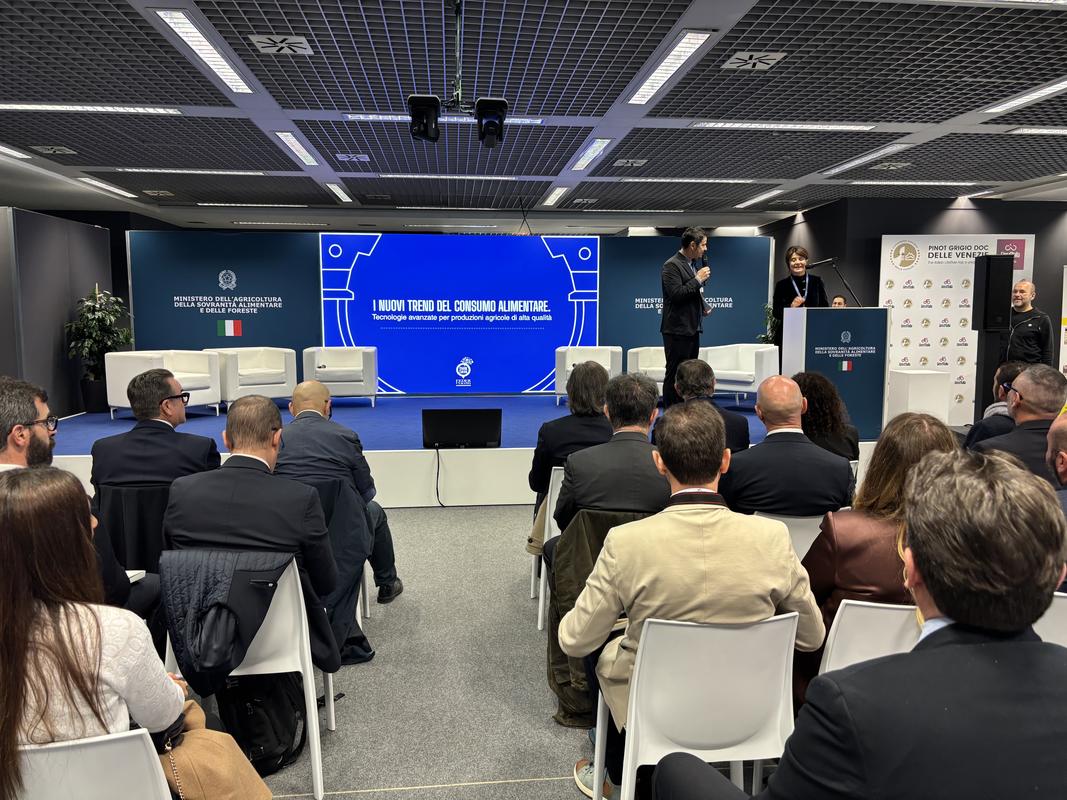
The spread of new consumption patterns that place greater emphasis on product quality and health is altering global demand for foodstuffs, increasingly favouring high value-added production in the fruit, vegetable and wine sectors. This is a widespread phenomenon affecting not only countries with a strong industrial tradition but also emerging economies where the role of the middle class is growing. In the medium and long term, the global agricultural economy is therefore called upon to promote high-end production whilst ensuring food security in a context characterised by strong population growth. To meet this challenge, the sector must boost its production capacity both by bringing new land into cultivation – often in marginal areas – and by rehabilitating degraded land, and by adopting innovative farming systems that increase yields, improve sustainability and raise crop health standards. These were the topics addressed by the speakers at the Think Tank entitled “New trends in food consumption. Advanced technologies for high-quality agricultural production”, which took place on Tuesday 14 April in Verona as part of the 58th edition of Vinitaly. Organised by FederUnacoma, the meeting was moderated by presenter and author Nicola Prudente (Tinto), and featured contributions from Andrea Segré, Professor of Circular Economy and Policies for Sustainable Development at the University of Bologna; Marco Vieri, professor of Agricultural Mechanics at the Department of Agricultural, Food, Environmental and Forestry Sciences and Technologies at the University of Florence; and Matteo Matteucci, professor at the Department of Electronics, Information and Bioengineering at the Polytechnic University of Milan.
At the opening of the proceedings, FederUnacoma President Mariateresa Maschio highlighted the contribution of mechanical equipment to increasing yields and optimising production standards, including in the high-end product segment. “Mechanisation, which in the early decades of the 20th century mainly concerned the cultivation of cereals and fodder, has since the 1970s also become fully established in specialised crops, with flexible machinery designed to ensure quality. The solutions proposed by Italian manufacturers - emphasised the president of FederUnacoma - are designed to limit the use of chemical inputs, improve product safety and shorten the supply chain by reducing processing costs”. Costs are one of the most critical issues for the specialised crops sector - as explained during the Think Tank - given that they directly affect consumer prices and thus purchasing behaviour. As the World Bank also points out, a healthy diet costs on average 70% more than a conventional one. “Today there is a great deal of focus on food quality, yet the market appears polarised between those consumers who have access to healthy, sustainable and locally sourced products, and those consumers who - as Andrea Segré stated - are forced to compromise on quality for economic reasons.” A solution to this crisis comes precisely from agricultural machinery, particularly from new-generation equipment - such as automation and artificial intelligence - which enables a reduction in inputs and a cut in costs (by up to 30%, according to the research firm McKinsey & Company). The development of mechanical equipment, however, must be compatible with the development of cultivation techniques and, especially in the case of a complex system such as a vineyard, must adapt to the varying geometry of the rows. “From this perspective, it becomes essential to design the vineyard layout in such a way as to achieve optimal configurations that make the best use of the mechanical equipment’s performance. With georeferencing and vectorisation technologies, it is possible to create digital models of the vineyard, which allow not only for the best possible planning of machinery use but - as Marco Vieri emphasised - for the implementation of the entire crop management process, anticipating, for example, potential erosion issues”. Artificial intelligence and decision support systems, together with the most innovative monitoring technologies, enable vineyards to be managed in an increasingly efficient and scientific manner - Vieri further highlighted in his presentation - for example, by preventing the onset of diseases or intervening promptly to combat pests and weeds. Matteo Matteucci spoke about artificial intelligence, digitalisation and robotics, highlighting how new-generation technologies, particularly in the agricultural sector, are designed not to replace labour but to make it even more efficient. Highly automated systems, in fact, allow for the optimisation of production factors, reducing their cost and making sustainable operations that had been relocated due to low profitability. Digitalisation, therefore, is not in competition with but complementary to human labour. “AI and robotics applied to agriculture,” said Matteucci, “make up for a labour shortage that is particularly acute in this sector, due to the ageing of the rural population, the lack of generational renewal and the shift of the workforce towards other economic sectors.” Innovation therefore represents an “efficiency multiplier” and appears set to play an increasingly strategic role in the near future. This is also confirmed by a survey conducted during the Think Tank among manufacturers affiliated with FederUnacoma who attended the event.
The vast majority of the companies surveyed - 84% - believe that next-generation systems will have a decisive influence on the development of primary agriculture and, in particular, on that of specialised crops, where the use of new technologies has seen a rapid acceleration in the recent past (according to 93% of manufacturers). In this scenario, it is a priority to create an ecosystem that fosters not only research and the development of innovative systems but also their application in field operations. A systemic effort is needed - it was noted at the conclusion of the proceedings - involving governance, the education sector and companies in the industry, with a particular focus on the upskilling and development of human capital.