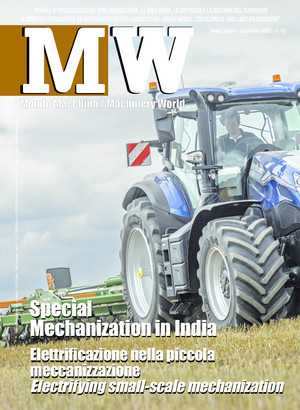

The main themes of the event
Innovative technologies for the agricultural sector, access to the agromechanical market, as well as training and new skills for the primary sector. EIMA Agrimach provides a space for discussing the most pressing issues for agricultural purchasing in India
The New Delhi event is not only a commercial and promotional platform, but also an opportunity for technicians, stakeholders, and public decision-makers to discuss the most important issues for India's agricultural economy. With this in mind, FICCI and FederUnacoma have scheduled several in-depth technical conferences during the three days of the event. The event kicked off on November 27th with a meeting entitled "Technology at the Service of Farmers' Challenges in a Global Context". It focused on the strategic contribution that next-generation systems can make to the sustainable growth, productivity, and resilience of Indian farmers, the initiative features case studies and insights into the specific territorial realities of the subcontinent, with a particular emphasis on water resource conservation. Through the use of new-generation mechanical means and systems – it was explained during the talks – the agricultural economy of the Subcontinent can not only increase productivity and resilience, but can also ensure the sustainability of production. Technology therefore constitutes a formidable growth accelerator, all the more important given the major challenges that the agricultural world has been called upon to face in recent years, from the increase in the global population to countering the effects of climate change.
Mechanization Startups. November 28th was dedicated to the topic of startups with an event entitled “Agromechanical Startups: Driving Innovation and Accessibility in Indian Agriculture”. The speakers noted that the difficulty in accessing efficient after-sales services as well as sources of credit financing are holding back investments in agricultural machinery, particularly that of the latest generation. Yet – it was emphasized during the conference – these are precisely the machines the primary sector needs to improve efficiency and sustainability. An initial response to these critical issues comes from a new generation of start-ups created with the aim of facilitating small farms' access to the agricultural machinery market. From agricultural machinery sharing to equipment rental, from AI-based solutions to digital platforms, these startups offer a range of services designed to innovate the production profile of companies left on the margins of agricultural mechanization. Of great interest in this regard was the speech by FederUnacoma Deputy Director Fabio Ricci, who focused on the experience gained in Italy where technological innovations have been aimed at reducing the impact of agricultural activities on the field, increasing productivity and protecting natural resources.
Training is a key issue for Indian agriculture. New professional skills and training were discussed on the third day of EIMA Agrimach. The topic is of great importance for a country that is modernizing and digitizing its agricultural economy. It was the focus of the conference entitled “Skilling Rural Youth and Farmers for a Mechanized and Digital Agriculture Future”. Mechanization and digitalization are the two drivers driving the transformation of Indian agriculture, which today sees the growing use of drones, software platforms, and AI-based services. To be used truly effectively, these cutting-edge technologies require highly specialized professional profiles that are not always available. The subcontinent's workforce, the conference speakers stated, is still predominantly rural and lacks the ability to use modern machinery and digital platforms, and is not always able to fully capitalize on agribusiness opportunities. The training deficit is widespread across the entire sector and also affects younger age groups, those who should be more inclined to innovation. Closing the gap is therefore essential to increasing the productivity of the agricultural economy, but also to improving living conditions in rural areas and ensuring inclusive growth. Precisely for this reason, it is necessary not only to identify innovative training models, the result of partnerships between industry, universities, and institutions, but also to draw up a roadmap that—as was explained at the conclusion of the meeting—will allow farmers to contribute even more actively to the modernization of Indian agriculture.