Agricultural machinery, a complex landscape
The U.S. and Canadian markets are declining. In Europe, Germany and France remain stable, while Turkey is experiencing a sharp decline
The data currently available on the performance of the global agricultural machinery market in the first four months of the year paint a mixed picture, characterized by significant differences among the major national markets. During the period in question, global tractor sales exceeded 512,000 units (compared to 433,000 in the same period of 2025), marking a 18% increase. The largest share of this increase, however, is attributable to the performance of the Indian market, which, with 375,000 units sold - that is, 92,000 more than in 2025 - is on track to reach a new all-time high. On a positive note, albeit at volumes much lower than those in India, the Japanese market is also performing well, where new tractor registrations exceeded 8,500 units, marking a 33% increase compared to the first four months of 2025. The picture changes radically when we turn our attention westward, to the Americas. Here, in both the North and the South, the trend is negative. Both the U.S. market, which fell by 9% over four months (from 59,400 units to 53,800 in 2026), and the Canadian market, which dropped by 8% (from 6,650 to 6,110), are in decline. In Latin America, Brazil saw a 15% decline (from 14,400 to 12,300 vehicles sold), while Argentina recorded a more significant contraction of 31%, though this refers to a smaller number of registered vehicles (1,360 versus 940). The European market, on the other hand, is moving at two different speeds. Italy (+4.5%, from 5,030 to 5,260), the United Kingdom (+25%, from 3,650 to 4,550), and Spain (+6.7%, from 2,820 to 3,010) are growing slightly; Poland is down (-15% from 3,130 to 2,670), while France (+1% from 7,260 to 7,340) and Germany (-0.6% from 9,300 to 9,240) are holding steady at last year’s levels. Not so Turkey, which drops sharply, losing 51% and falling from 15,000 units registered in the first four months of 2025 to 7,250 in 2026.
Geopolitics and Energy: The Variables at Play. With the exception of India - which is experiencing strong demand for initial mechanization amid ad hoc government programs and robust economic growth (+6.3% in 2026 according to the OSCE) - the performance of the major national markets is affected by the conditions of uncertainty currently shaping the macroeconomic landscape.
Once again, the global economy is being shaped by geopolitical factors, with the conflict in the Middle East having upended the trend forecasts from the start of the year. In the first two months of 2026 - the European Commission notes in this regard - despite the complexities of the global geopolitical landscape and uncertainties regarding U.S. tariff policies, the world economy was gaining momentum thanks to slowing inflation and strong investments in the Artificial Intelligence sector. The scenario changed radically on February 28: the joint Israeli-U.S. attack on Iran caused one of the most severe disruptions in the global energy supply, leading to a sharp rise in the cost of energy commodities. Between February 27 and April 29, as the European Commission reports, gas prices rose by an average of 50% and crude oil prices by 65%. The protracted conflict has weakened the global economy’s growth outlook, which has been revised downward by major international organizations. The OECD’s estimates for global GDP growth have fallen from +2.9% last March to +2.6% in June, while those of the International Monetary Fund have dropped from +3.3% in January to +3.1% in April. In Europe, the slowdown in growth is expected to be even more significant, falling from the 1.4% estimated in October 2025 to 1.1% last May.
Agriculture: Output and Production Costs Rise. 2025 saw an increase in production for all major agricultural commodities. With a total output of 3,010 million tons (+6.1%), the cereal sector reached record levels, particularly for rice (556 million tons, +1.2%) and wheat (819 million tons, +2.5%). Production of oilseeds also rose, with the United States Department of Agriculture estimating it at 698 million tons (+1.7%), as did meat production, which rose to 383 million tons (+1.4%) according to FAO data. This upward trend is expected to continue in the current year, with the exception of the cereal sector, which - according to estimates by the UN Food and Agriculture Organization - is projected to decline by 2%, totaling 2,982 million tons, while still exceeding the volumes of the 2022–2024 period. The increase in output, however, was not sufficient to bridge the gap with the growing demand for foodstuffs, leading in 2025 to a price increase for the main commodities in the primary sector, starting with the vegetable oil sector (+17.1%) and the livestock sector (+4.3% for meat, +13.1% for dairy products). The trend in cereal prices has been the opposite; according to the FAO index, they have fallen by 5% over the past twelve months, thereby reducing the sector’s profitability.
In the coming months, food prices could see further upward adjustments if the crisis in the Middle East does not find a definitive peaceful resolution and the Strait of Hormuz remains closed to maritime transit. In short, the current scenario - in which global inflation is estimated at 4.4% (IMF), with particularly significant increases for energy commodities (+24%) and fertilizers (+31%) - could see further upward adjustments, with inflationary pressures also rising in the primary sector.
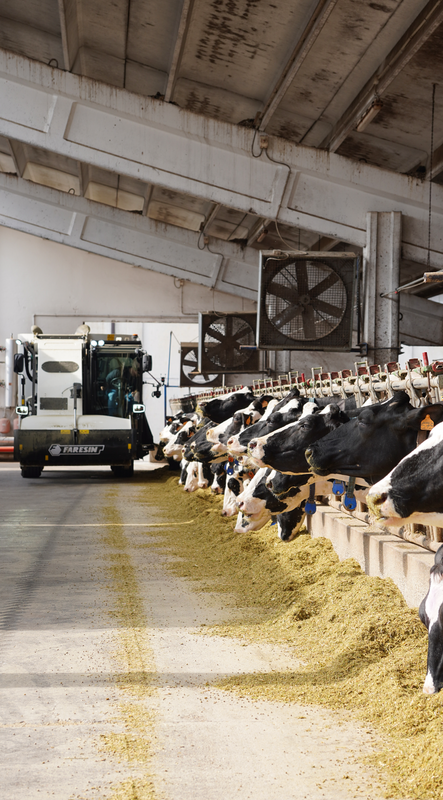
Agricultural machinery, an uncertain picture. In such a fragmented and volatile context, it is difficult to identify a short- and medium-term trend for the global agricultural machinery market. However, we can point to some factors that have characterized sales trends in key countries during these first months of 2026. In the U.S., as noted by the American Farm Equipment Manufacturers Association (AEM), companies in the primary sector have prioritized purchases of low-horsepower machinery, given the greater profitability of the livestock sector compared to the grain sector. This trend, albeit to a lesser extent, has also characterized the Canadian market and, on the other side of the Atlantic, the British market, where tractor sales have returned to positive territory. France has also seen an increase, albeit slight, in purchases of agricultural technology. According to Axema (the French Manufacturers’ Association), rather than a true recovery in the sector, the growth in registrations seen at the start of this year could be a rebound following the declines of recent years. In short, the outlook remains uncertain in France as well. As is the case, moreover, across the rest of the European continent, where - as the European Manufacturers’ Committee (CEMA) points out - machinery for livestock farming has shown greater resilience compared to that used for cereal cultivation.
Giovanni M. Losavio