Visibility from the tractor driver's seat
Drivers of self-propelled agricultural machinery, require optimal visibility in all operating conditions, especially when maneuvering in confined spaces. Advanced technological and design solutions can significantly reduce the risk of accidents related to so-called "blind spots"
Despite the recent significant technological evolution of new tractors, now characterized by ever-increasing levels of power, automation, and driver well-being, visibility from the driver's seat remains one of the factors that still reveal several critical issues in terms of comfort, particularly during maneuvering.
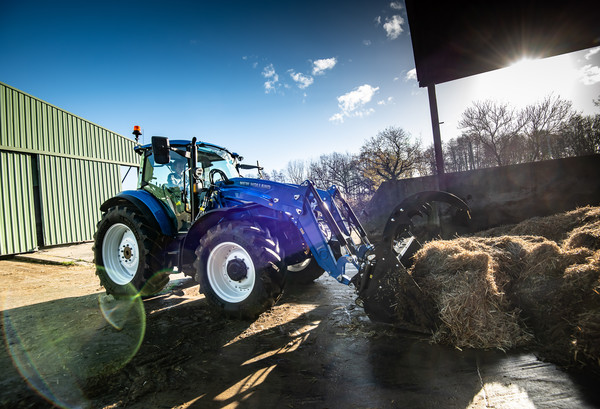
Accident data still show that a significant proportion of serious (and unfortunately sometimes fatal) accidents on farms are due to collisions with or impacts against people who were standing near the moving vehicle. These accidents occur mainly around farm buildings and are mainly due to insufficient visibility for the operator from the driver's seat. The most common scenarios involve low-speed maneuvers, often in reverse, during coupling with equipment, near buildings and mixed-use company areas, where the presence of operators on the ground is frequent.
The Driver's Seat and Blind Spots
The main parameters influencing visibility are the shape of the cabin and the position of the driver's seat, the overall dimensions of the engine compartment and front wheels, the presence of mounted equipment (which is increasingly mounted not only at the rear but also at the front), the coupling with towed equipment, which, especially when maneuvering, follows different trajectories than the tractor, and travel on sloping, rough, and uneven terrain.
Comparing the cabs of modern tractors with those of models from a few decades ago shows that there has been significant evolution in terms of architecture and dimensions.
Increased interior space, sophisticated climate control, improved sound and vibration insulation, and optimized control and monitoring devices are the aspects focused on to make the tractor driver's job less demanding. However, the installation of numerous additional devices (including some components to combat polluting gas emissions) has in many cases further reduced the operator's field of vision, inevitably increasing so-called blind spots.
The result is that in many recent models significant portions of the space immediately adjacent to the vehicle are not directly visible to the operator, especially when turning or reversing.
It is precisely in these contexts that the most serious accidents occur, where the risk is often underestimated because the vehicles operate at low speeds.
Maneuvers, Interference and Accident Risk
Farms are characterized by extreme differentiation both in terms of production (size and access points to the plots, width of headlands, etc.) and logistics (production orientation, size and construction characteristics of the buildings, open areas, maneuvering spaces, etc.). So agricultural activities rarely take place in standardized environments. Unlike road conditions, farm workspaces are extremely variable, with unmarked obstacles (both on the ground and in the air), uneven surfaces, and frequent co-presence of people and machinery.
Similar to what happens in the trucking sector and with large vehicles (e.g. buses), rear-view mirrors, although useful, are not always sufficient to ensure a complete and continuous view of the area surrounding the vehicle.
This problem creates a number of risk areas, especially when visibility is further hampered by dust, vibrations or poor lighting.
The Limits of Traditional Applications
To improve visibility from the driver's seat, several large, adjustable and extendable rearview mirrors (often motorized, heated, etc.) and additional mirrors have been installed, complemented by larger windows, height- and position-adjustable seats, etc. Despite the progress made, these measures show significant limitations when the operating context becomes complex.
Furthermore, a direct view of the surroundings of the construction site depends heavily on the driver's posture, his level of attention and the environmental conditions. Dust, rain, backlit perspectives or night work can drastically reduce the effectiveness of visual perception.
Furthermore, the need to simultaneously monitor the vehicle's trajectory, equipment operation, and the surrounding environment increases cognitive load, with inevitable repercussions on safety.
Technologies for Improving Operational Visibility
In recent years, both indirect vision solutions, based on video cameras installed at strategic points on the vehicle, and proximity sensors, already commonly used in the automotive sector, have become widespread.
These sensors are capable of signaling the presence of obstacles within a certain distance from the vehicle. These solutions are suitable for low-speed maneuvers and in confined spaces, where reaction time is necessarily reduced, such as when operating in confined areas or in farmyards.
More advanced approaches involve the integration of multiple information sources, combining data from local sensors and georeferencing systems, so as to not only detect an obstacle but also contextualize it with respect to the maneuver in progress, providing the operator with more effective, easily interpretable information.
Visibility and Confined Spaces: The Case of Specialized Tractors
Visibility issues from the driver's seat become even more important in the case of specialized tractors for orchards and vineyards, designed specifically to work in environments with very limited space and the presence of numerous obstacles. It is often necessary to operate in narrow inter-row spaces, with the wheels a few centimeters from the base of the vine stocks, making turns at headlands that are sometimes reduced to a minimum to maximize the planting density of the crop. This highly complex operational context has necessarily led to an extremely compact vehicle architecture, which undoubtedly worsens visibility from the driving position, further compromised by the presence of vegetation and support structures (e.g. poles and wires) and weather protection structures (anti-hail nets).
All this leads to frequent, repetitive maneuvers performed at low speed, conditions that can induce a false sense of security and lead to underestimation of the risk.
To make matters worse, there are towed or semi-mounted equipment that, frequently placed behind the tractor, follow trajectories that do not always coincide with those of the tractor, increasing the areas of potential interference and consequent risk. When there are operators on the ground, the risk of being hit or collided increases significantly, especially during turning and maneuvering at the headland.
To improve awareness of the surrounding environment, it is undoubtedly useful to integrate critical area monitoring solutions, for example by installing a series of video cameras that ensure a 360° view of the area around the tractor, integrated with proximity sensors equipped with audible alarms.
Augmented Visibility
Direct visibility depends exclusively on the geometry of the vehicle and the driver's perceptive abilities, while so-called "augmented visibility" involves the integration of (almost always electronic) systems capable of providing additional information about the surrounding environment.
The main purpose of augmented visibility is to select and report what is relevant for operational safety in a given work phase. Numerous sensors and signaling devices of various kinds convert complex data into simple, immediately understandable alerts, reducing the risk of lack of awareness.
It is a decision-making aid, not a form of automation: control always remains with the operator, but is strengthened by tools that compensate for the physiological limits of human perception, especially in complex and dynamic environments, such as agriculture.
The “SirTrack” Project Funded by INAIL
Funded by INAIL as part of the BRIC 2022 call for research, and implemented by 5 Operational Units of Italian Universities, the “SirTrack” project's main objective was to develop an integrated system for improving safety when operating self-propelled agricultural machinery, capable of compensating for the limitations of the driver's direct visual perception and supporting the resulting decisions.
The solution developed integrates static and dynamic information. First of all, the definition of georeferenced risk maps allow for the identification and localization (with high precision) of fixed obstacles present in the work environment (for example, trees, poles or power lines), through the use of GNSS systems with RTK correction. Subsequently, real-time monitoring of ground operators was made possible by wearable devices based on Ultra-Wide Band (UWB) technology, capable of ensuring high localization accuracy even in complex environmental conditions.
This information is supported by the use of proximity sensors and advanced vision systems. Depth cameras integrated with LIDAR sensors have made it possible to detect obstacles and changes in the surrounding environment at both short and medium distances, generating a three-dimensional representation of the operating space. This made it possible to identify not only the presence of objects, but also their relative position with respect to the vehicle.
Another key element of the system is the analysis of the vehicle's blind spots. Through 3D modeling and numerous experimental tests, the visibility limits from the driver's seat were defined, allowing the areas at greatest risk to be identified and the detection systems to be appropriately integrated.
All of these technologies come together to form an on-board decision support system that provides the operator with clear and timely warnings, improving situational awareness and thus reducing the risk of collisions and accidents.