Microgreens: a growing industry
The cultivation of young seedlings from various botanical families, typically harvested between 7 and 21 days after sowing, is becoming an increasingly widespread and promising production model that requires customized cultivation systems and techniques
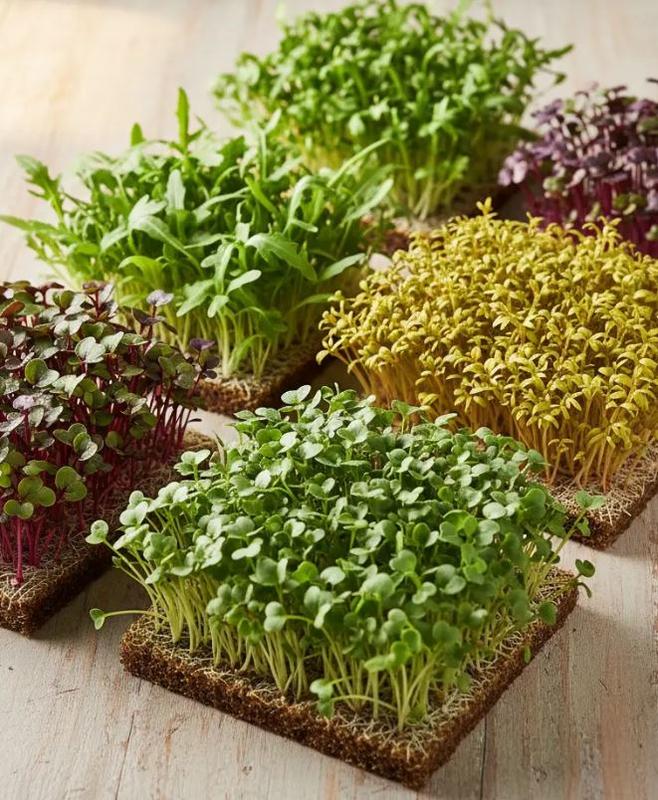
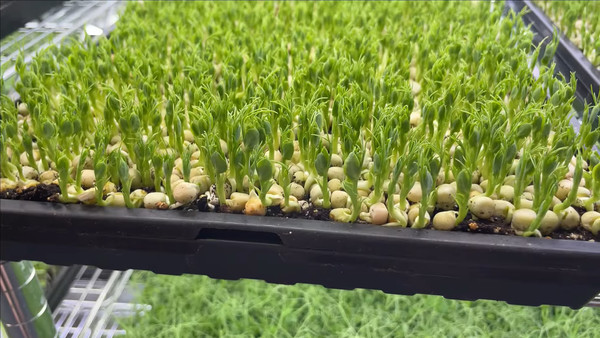
In horticulture, microgreens are one of the newest forms of horticultural crop production. This involves cultivating young seedlings from various botanical families, including the Brassicaceae (radish, arugula, and red cabbage), the Fabaceae (peas and clover), etc., which are generally harvested between 7 and 21 days after sowing, that is, when the cotyledons are fully expanded and the first true leaf begins to emerge. At this stage of growth, the product exhibits organoleptic characteristics that are particularly valued by the market, as well as high levels of vitamins, minerals, and bioactive compounds.
Consumers’ growing interest in fresh, functional foods produced according to sustainability criteria has fueled rapid expansion of the sector, leading to the emergence of specialized companies that operate primarily in greenhouses or other controlled environments. In this context, technology plays a central role. The short growing cycle, high production intensity, and the need to ensure consistent quality standards make it essential to use automated systems and mechanical solutions capable of optimizing every stage of the process, from substrate preparation to final packaging.
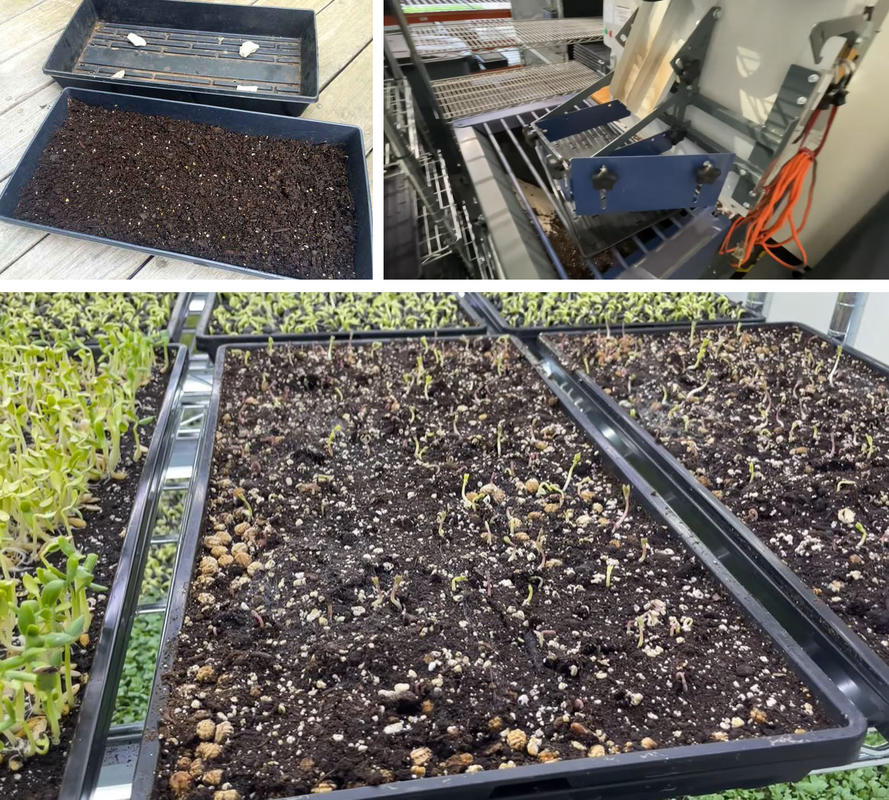
Substrate preparation and seeding lines. Microgreen cultivation requires growing media with high physical uniformity and excellent water-holding capacity, without compromising proper oxygenation of the root system. For this reason, mixtures are used that include peat, cellulose, coconut fiber, hemp, jute, as well as biodegradable plant-based mats derived from plant-based materials. The growing focus on environmental sustainability is also driving the gradual replacement of peat with growing media made from agricultural byproducts and renewable materials. In more structured operations, growing media preparation is handled by automated systems that include storage hoppers, dosing systems, mixers, and humidification units. The goal is to obtain a material with uniform particle size, with consistent characteristics and a moisture content suitable for germination. The growing medium is then transferred to the tray-filling lines, where volumetric dispensers and leveling devices ensure uniform thicknesses and volumetric dispensers and leveling devices ensure uniform substrate depth and repeatable conditions within each crop, adjusted to species-specific requirements.
Given the high seeding densities used (even exceeding 10,000 seeds/m²), seeding requires a high degree of precision: this operation is performed using pneumatic or mechanical seeders that prevent localized clumping, which could compromise the quality of the crop. In many facilities, the steps of filling the trays, depositing the seeds, and covering them are integrated into a single automated line with a production capacity of several hundred trays per hour, drastically reducing labor requirements while improving process standardization.
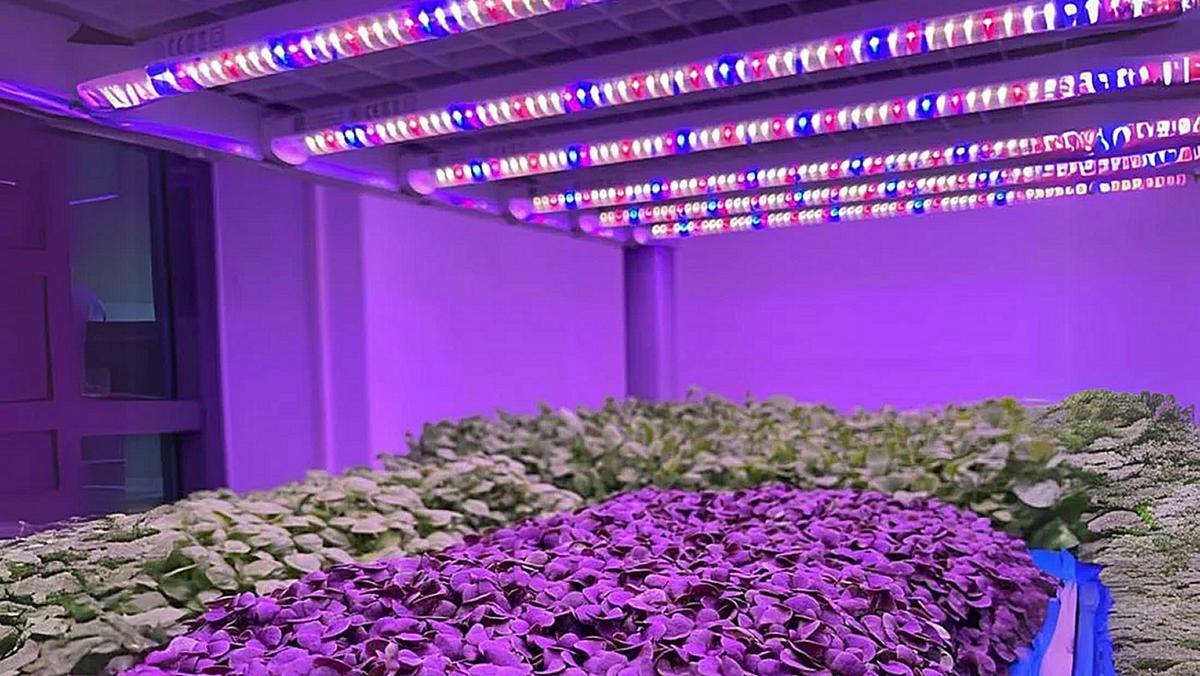
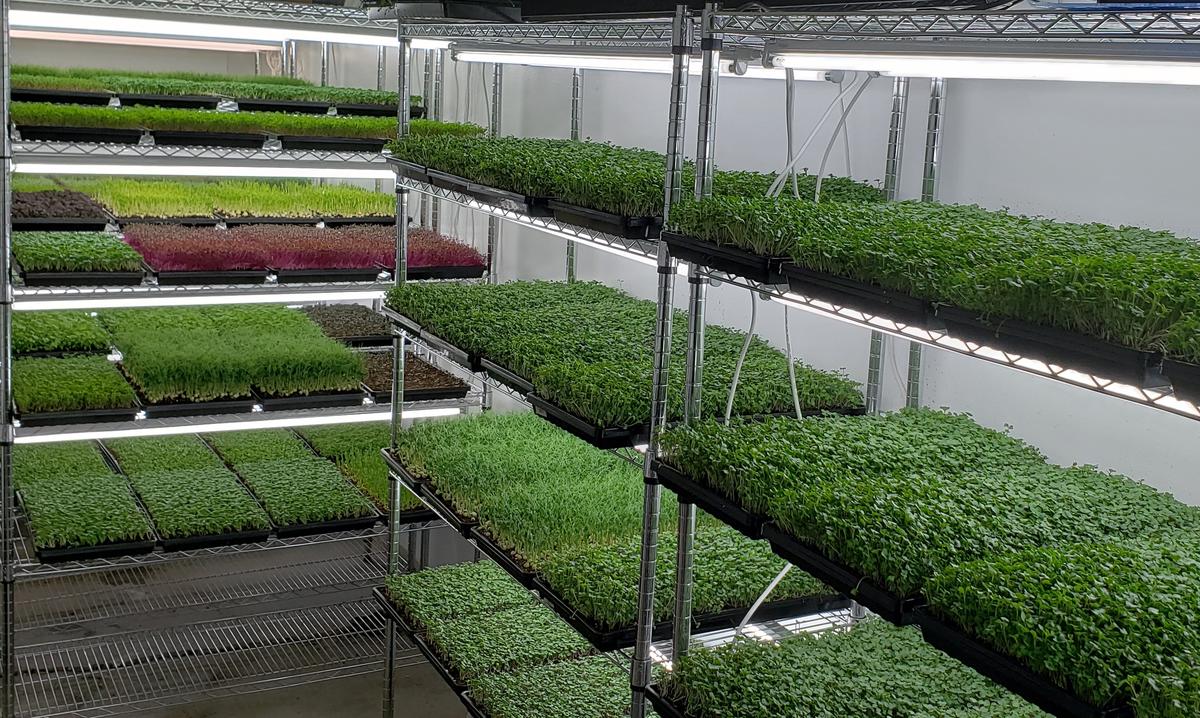
Controlled environment, lighting, and crop management. After sowing, the trays are transferred to germination areas and subsequently to growth areas, which consist of multi-level metal shelving, in order to make optimal use of vertical space, significantly increasing productivity per unit area.
Lighting is provided by systems high-efficiency LED lighting systems, specifically designed to deliver optimal spectral combinations tailored to the needs of different plant species. Compared to traditional light sources, LEDs reduce energy consumption, minimize heat generation, and allow for extremely precise modulation of light intensity and photoperiod. The ability to adjust the light spectrum also makes it possible to optimize plant growth and the biosynthesis of nutritionally relevant compounds.
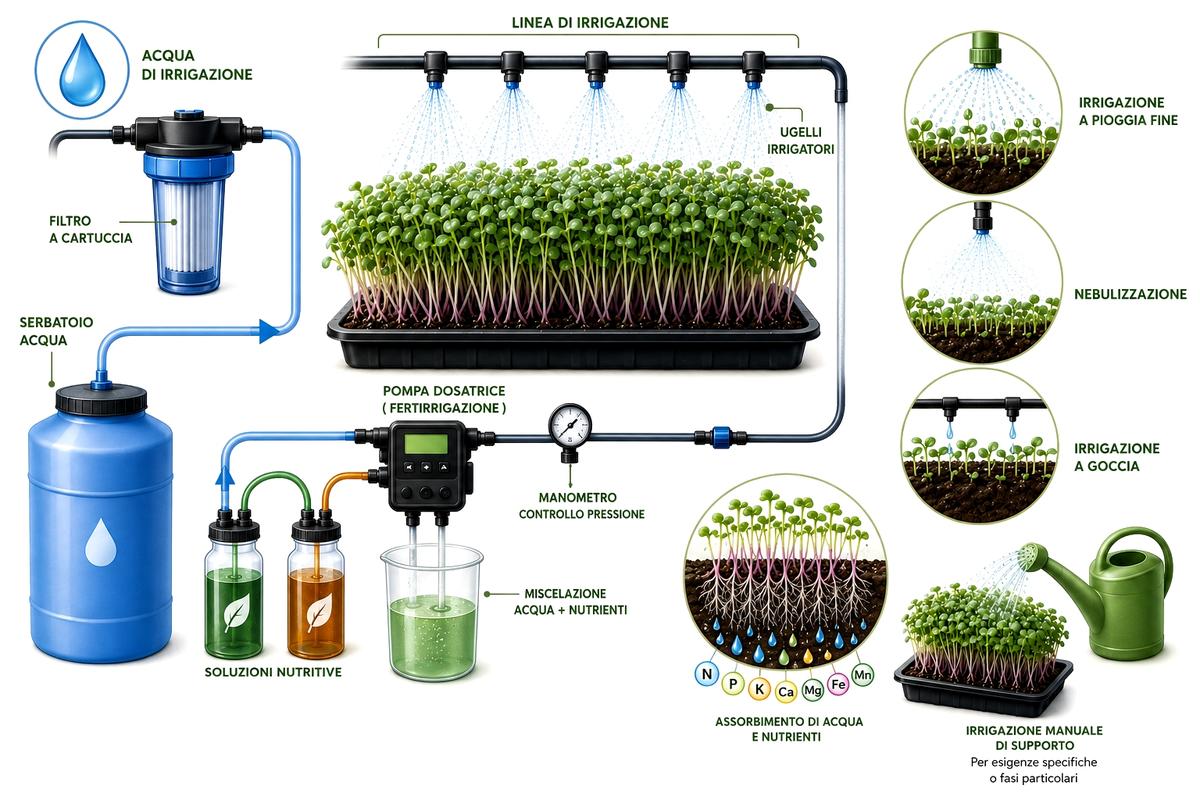
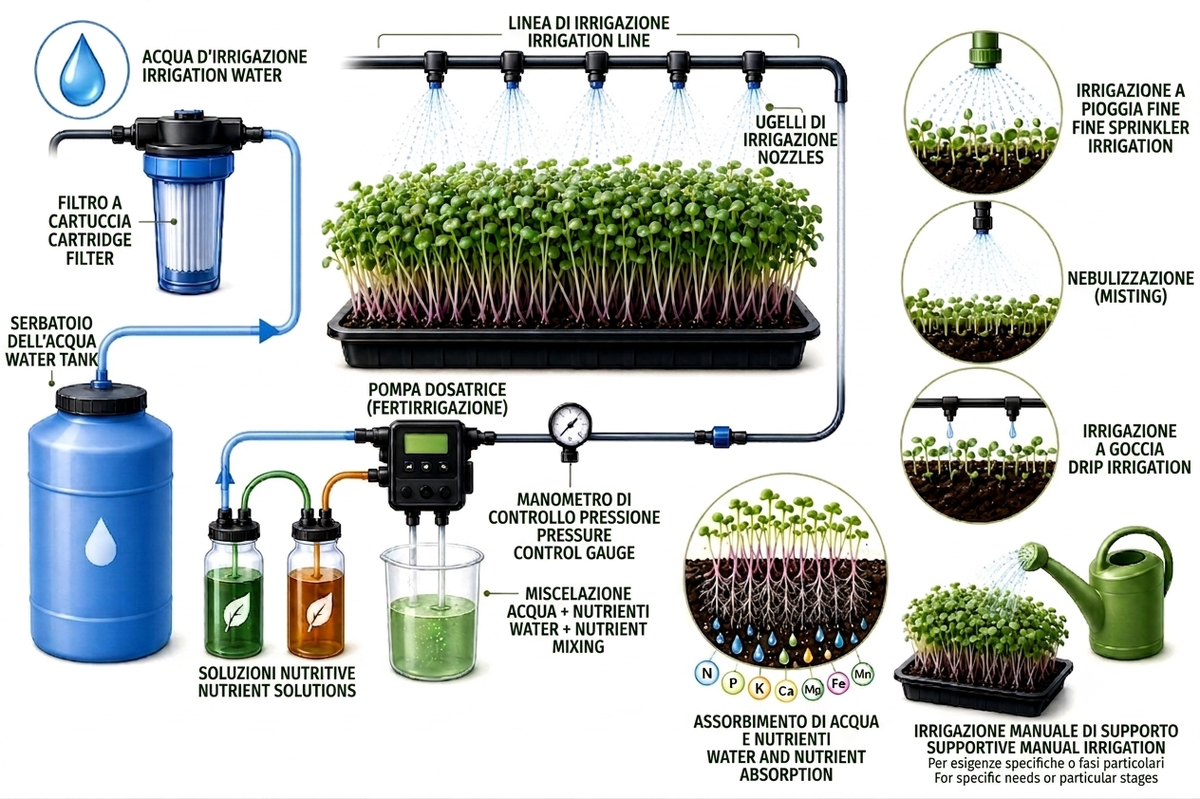
Proper management of irrigation and nutrients is essential to prevent rot and product loss; automated irrigation and fertigation systems are used, overseen by control units that rely on a network of sensors measuring temperature, relative humidity, carbon dioxide concentration, pH, and electrical conductivity.
This digitalization enables a high level of automation, where each parameter can be constantly monitored and, if necessary, adjusted in real time.
Automated material handling and internal logistics. The large number of trays typically found in these facilities makes internal logistics particularly important: material handling is, in fact, one of the main components of operating costs and can significantly impact overall production efficiency. For this reason, automated transport systems equipped with conveyor belts, vertical lifts, motorized carts, and autonomous vehicles are being implemented with increasing frequency. Automating material handling offers benefits beyond just productivity: reducing manual handling helps minimize the risk of microbiological contamination and product damage, aspects that are particularly important in a supply chain characterized by strict hygiene and food-safety standards and a relatively short shelf life. The integration of transport systems, management software, and sensors also allows for real-time monitoring of tray locations and crop conditions, improving traceability and the organization of production activities.
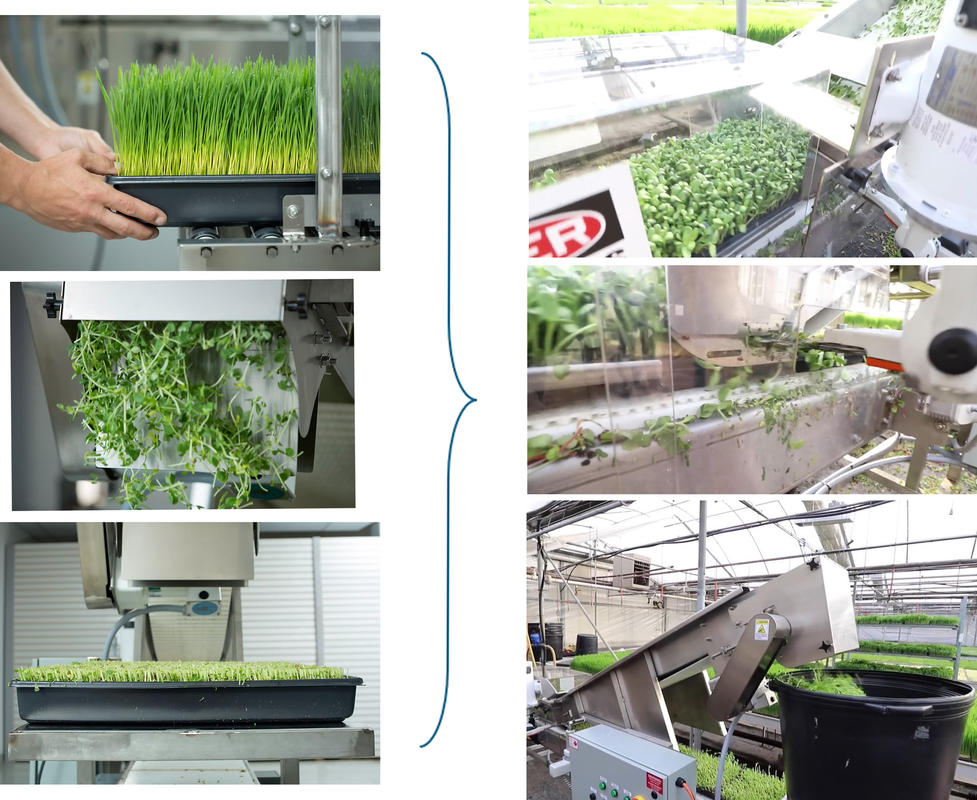
Mechanized harvesting and packaging. Harvesting is one of the most delicate stages of the entire production cycle. Microgreens must be cut with great precision, primarily to minimize contamination of the plant material with substrate residues. This operation can be performed manually, using blades that cut the product at the base, or through an automated process that employs mowing bars with alternating linear motion, characterized by high hourly throughput. The trays are then placed on conveyor belts that move them toward the oscillating blade, which cuts the product at a constant height.
The cutting phase can be integrated with systems that convey the product to the weighing, packaging, and labeling lines, thereby reducing exposure time to the environment, which enhances freshness. The automation system ensures precise portioning of the product, tailored to various commercial formats, for distribution to large-scale retail and the foodservice industry. In many cases, modified-atmosphere packaging (MAP) is used to slow respiration and senescence and extend product shelf life. Machine vision systems and quality control devices also make it possible to verify the uniformity of the harvest and identify any defects before the product is released to the market.
An increasingly automated supply chain. Automation cannot be separated from the development of robotic solutions, machine vision systems, and the application of artificial intelligence. In this scenario, machines and equipment will no longer be merely tools to support agricultural activities but will become the primary driver of innovation, combining sustainability, high productivity, and the quality of the final product.
Why microgreens are gaining ground in the market
A combination of agronomic, nutritional, and economic factors is the key to their success. The very short growing cycle allows for multiple crop cycles throughout the year, resulting in high levels of productivity, even in limited spaces. Furthermore, their significant content of vitamins, antioxidant pigments, and bioactive compounds has helped increase interest among consumers and the foodservice industry.
The sector’s growth is closely linked to the development of agriculture in controlled environments. Indoor and vertical farming, in fact, allow for continuous production throughout the year, optimizing the use of water and other production inputs. The practical possibility of growing crops near urban centers also reduces transportation distances and promotes the availability of fresh produce. In this context, automation and mechanization are key elements in ensuring efficiency, consistent quality, and sustainable production.