Technology and agronomic practices for rice 4.0
From water management to field robotics, Italian rice farming is evolving to become more efficient and sustainable, reducing energy consumption, emissions, and chemical inputs without compromising productivity and quality
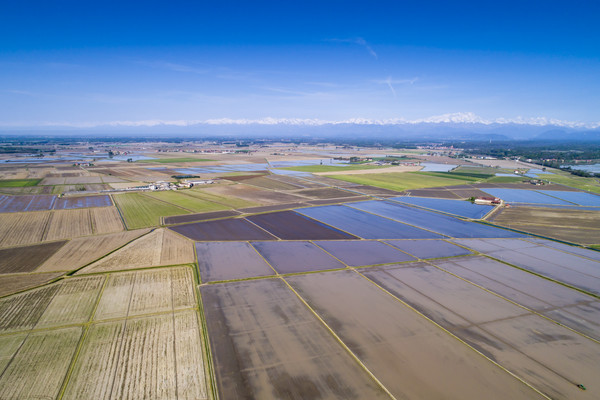
Rice farming today faces multiple challenges due to climate change, increasing water scarcity, and the imperative to reduce the environmental impact of production. Based on the integration of agronomic expertise and advanced digital technologies, with the use of IoT sensors, agro-meteorological stations, satellite systems, drones, and software platforms, Agriculture 4.0 allows for real-time monitoring of crops and environmental conditions, transforming the collected data into useful information to support farming decisions, offering clear advantages in terms of irrigation, fertilization, and plant protection.
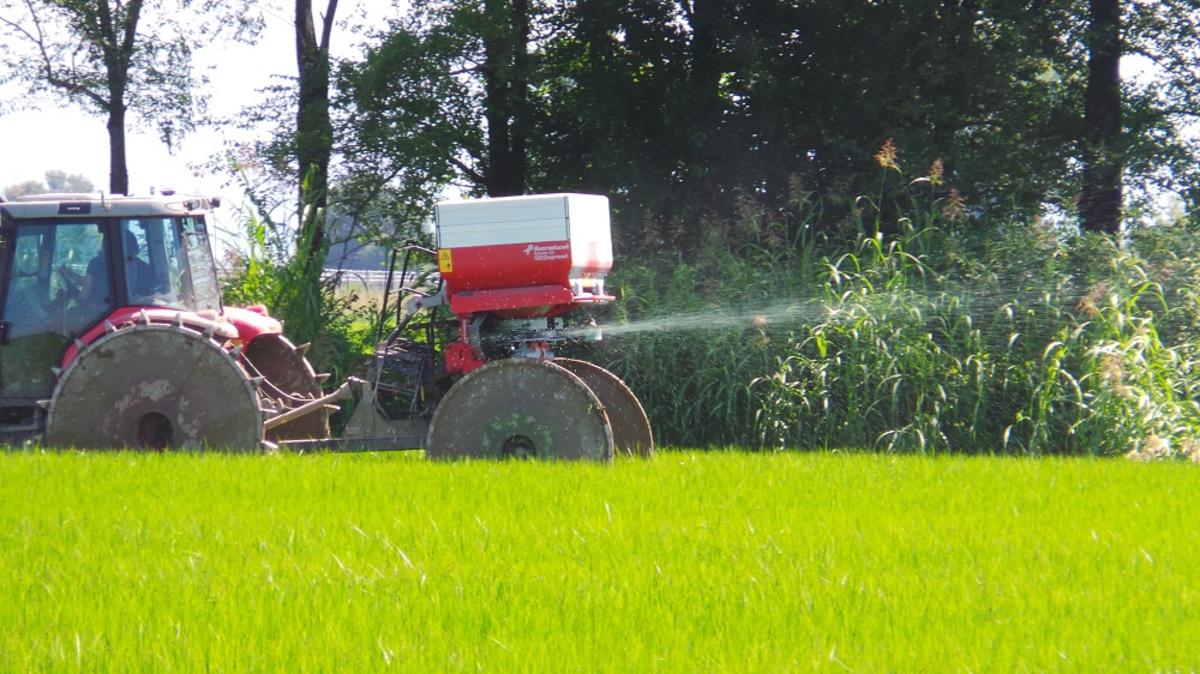
In particular, water management uses sensors, monitoring systems, and forecasting models, which increase irrigation efficiency, reduce waste, and limit greenhouse gas emissions associated with submergence. At the same time, agricultural robotics – particularly automated mechanical weeding – reduces the use of herbicides, while variable-rate fertilization is an established modus operandi. Perhaps the most interesting aspect of Agriculture 4.0 is that innovation is not limited to improving business efficiency: reducing water consumption, chemical inputs, and emissions makes rice farming not only more competitive, but also more environmentally sustainable.
Technological Solutions for Precision Rice Farming. The focus is primarily on analyzing and managing the spatial and temporal variability of cultivation. The main solutions available today include high-precision satellite guidance systems (RTK-GNSS), remote sensing using satellites and drones, distributed IoT sensors, and digital platforms for decision support (Decision Support Systems, DSS). Satellite guidance, which now commonly results in absolutely negligible trajectory errors, allows for sowing without overlaps or failures, making the use of highly automated systems and agricultural robots effective. Georeferenced data is the basis for creating prescription maps for the variable-rate application of fertilizers and other crop inputs. Multispectral images acquired by Sentinel-2 satellites or drones make it possible to develop vegetation indices useful for assessing the nutritional status of the crop, identifying areas characterized by uneven development, and identifying stress conditions early. This information permits crop monitoring, allowing for efficient and timely planning of farm operations. IoT systems and sensor networks deployed in the field monitor temperature, humidity, precipitation, water levels, and soil conditions. When incorporated into forecasting models, this data forms the basis for developing appropriate DSS to better support irrigation, fertilization, and crop protection management.
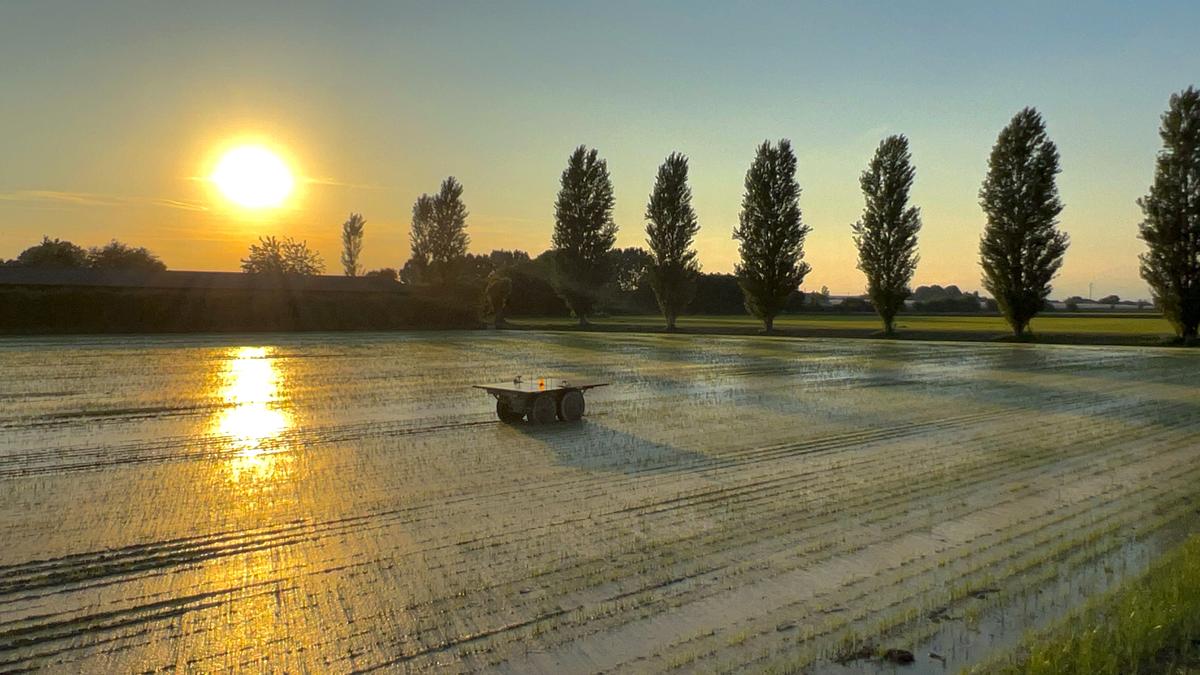
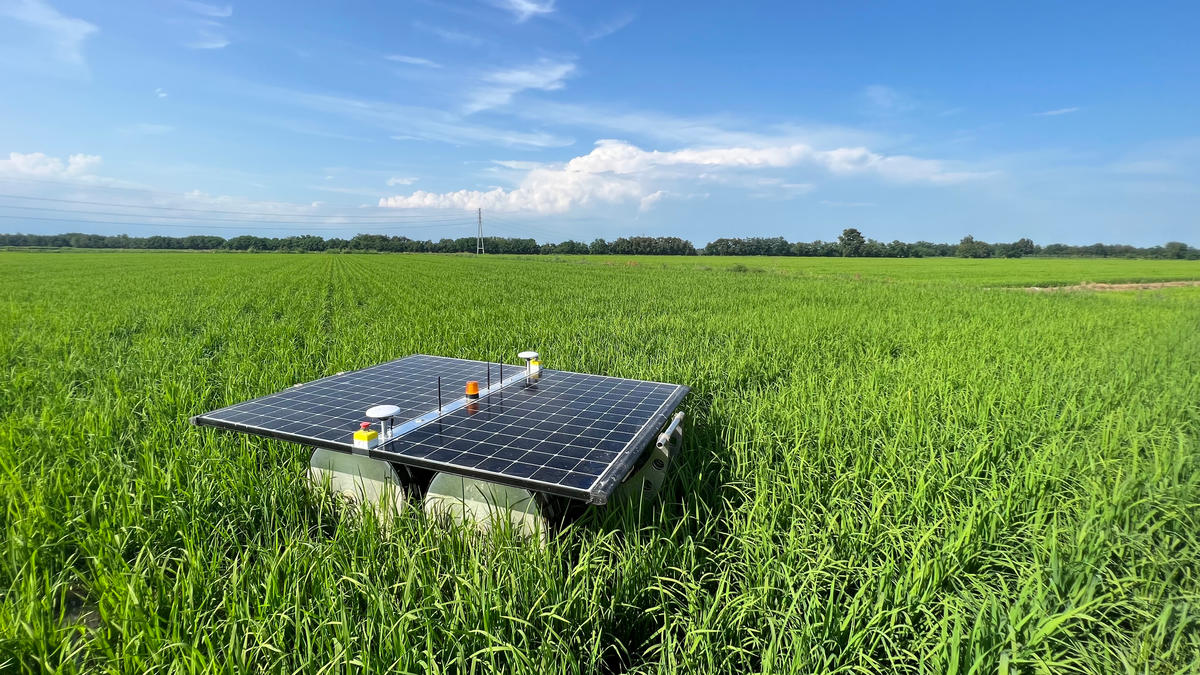
Moondino: Robotics and Automation for Weed Control. Among the most interesting innovations developed specifically for the Italian rice sector is Moondino, an autonomous robot built by Arvatec of Rescaldina (Milan) for the mechanical weeding of rice fields, which is a concrete example of the integration of precision agriculture, robotics, and environmental sustainability. Thus tool can perform weeding with satellite guidance at centimeter precision, both on dry and submerged soil, a valuable feature for rice cultivation in Italy. The vehicle is equipped with two 660 W electric motors each to drive the 72 cm diameter drive wheels, powered by a lithium battery pack that is recharged via two 400 W solar panels, or via an external power supply. The trajectories are plotted by means of special software. In addition to the mechanical elimination of weeds, the robot's continuous passage through the submerged rice fields causes increased water turbidity, limiting germination by reducing light irradiation in the mud. This dual action significantly reduces the use of chemical herbicides, an aspect of particular interest for organic farms, but also for those aiming to reduce their environmental impact.
LCA in the Rice-growing Environment. Alternative agronomic practices were evaluated using Life Cycle Assessment (LCA), a method that makes it possible to measure the effects of a production process on the environment. The LCA takes into account crop productivity, resources used, and emissions generated during the various stages of production. These include, for example, emissions from the combustion of diesel used for agricultural processing and nitrogen losses caused by leaching and volatilization. Combining all this information, the method calculates a series of indicators that describe the main environmental impacts, including climate change, soil acidification, water eutrophication, fossil fuel consumption, and the ecotoxicity of aquatic environments. The main strength of LCA is that it provides a comprehensive assessment of the sustainability of a production system. By simultaneously considering different environmental aspects, this method avoids focusing on a single impact, reducing the risk that an improvement in one area is achieved at the expense of another.
Alternative practices evaluated include the introduction of additional dry tillage and reduced seeding density, as well as variable rate fertilization and the aforementioned precision weeding with an autonomous rover, eliminating herbicide treatment. The additional dry run reduces the impact on climate change by up to 25%, thanks to the reduction in methane emissions, without significant effects on other environmental indicators. Conversely, reducing the seed dose leads to a general decrease in environmental impacts, although with limited effects (always less than 4%). By increasing crop yields, variable-rate fertilization allows for a reduction in all environmental impacts by at least 4%, with more evident benefits for eutrophication (-11%), closely linked to nutrient losses into the environment (e.g. nitrogen leaching), and more limited benefits for the consumption of fossil resources, which is more closely associated with the production of nitrogen fertilizers. Finally, replacing herbicide treatment with the mechanical action of the autonomous rover results in modest reductions in most environmental impacts, but determines a net benefit for the ecotoxicity of aquatic environments (-18%), thanks to the reduction in the use of pesticides. The simultaneous integration of these strategies, however, entails greater management complexity of the crop and requires specific technical skills, which are not always available on rice-growing farms. The widespread implementation of these approaches thus also depends on the availability of training, technical support, and adequate tools for the integrated management of the proposed innovations.
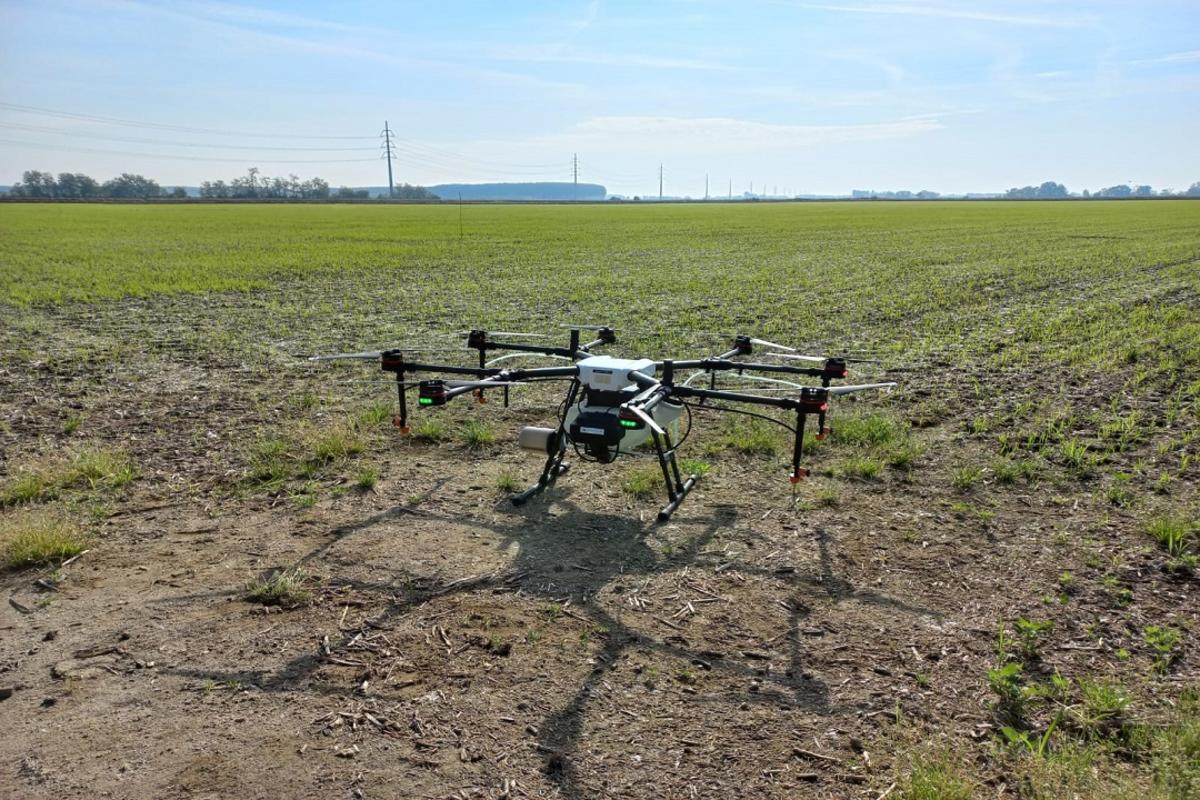
The SORRISO project (Sustainability, Regeneration and Innovation for Rice). Co-financed by the Lombardy Region under the "Collabora e Innova" announcement of the ERDF Regional Programme 2021–2027, the project aims to develop a sustainable rice farming model capable of combining technological innovation, agricultural productivity, and environmental protection. SORRISO began in September 2025 and will run until early 2028. The partnership involves companies, research centers, and several universities, including the University of Milan. The project's goal is to optimize rice farming techniques through the use of innovative precision agriculture technologies. IoT sensors installed in the field enable continuous monitoring of key agronomic and environmental parameters, while digital platforms and decision support systems (DSS) help farmers manage crops more efficiently. Drones, satellite imagery, and multispectral surveys are used to create prescription maps that optimize water and fertilizer use, while autonomous rovers are used for mechanical weeding, reducing the use of pesticides.
The proposed innovations are applied on various rice farms, comparing traditional and innovative agronomic management systems to assess their effectiveness under real-world growing conditions. At the same time, for all the technologies and practices adopted, the sustainability study evaluates not only the environmental but also the economic and social effects. In this first phase, one of the main activities is the definition of indicators that will make it possible to assess the various pillars of sustainability. To identify shared parameters that truly represent the sector's needs, the project involves all stakeholders in the rice supply chain, promoting direct dialog between producers, technicians, researchers, and other stakeholders.