Agrivoltaics and virtual fencing, the new frontier of smart grazing
Climate change requires a rethinking of options for land use. The integration of agrivoltaics and virtual fencing allows for the diversification of income sources, increasing both pasture productivity and the quality of the forage produced
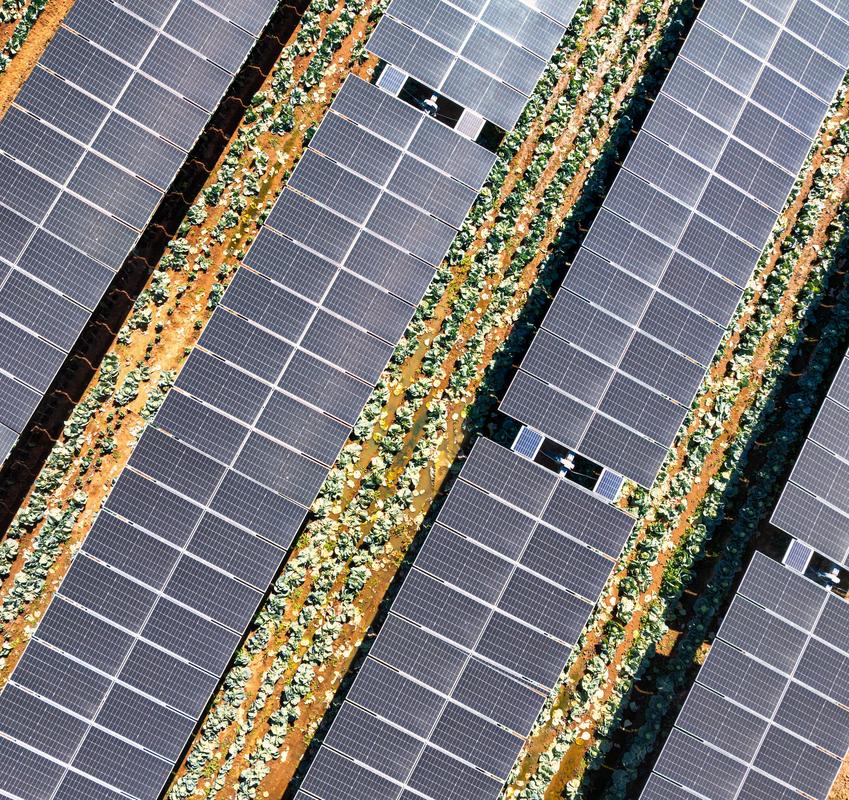
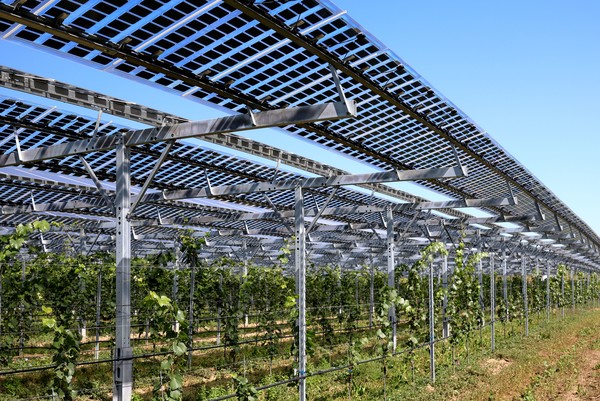
Agrivoltaics is an integrated system that combines agricultural production with the generation of renewable energy from photovoltaic panels on the same surface (the ground), with the primary goal not of reducing, but rather to improve the productivity of the agroecosystem. Formally, this constitutes a combined use of the land (“dual land use”): thanks to the support structures for the photovoltaic panels, the system is elevated above the ground or, in any case, configured to allow for the performance of normal agricultural activities. The density, tilt, and height of the modules are optimized to balance exposure to solar radiation and, consequently, electricity production. In addition to the photovoltaic modules (made of monocrystalline or polycrystalline silicon) and the support structures (typically 2–5 m in height), the photovoltaic system is sometimes supplemented with single-axis or dual-axis trackers, i.e., mechanical devices that orient the photovoltaic panels to maximize energy absorption. The rows of modules must be appropriately spaced to maintain diffuse light transmission over the crops. Although configurations and designs vary widely depending on the climatic and agricultural context in which they are installed, typical design parameters call for a minimum height of 2–3 m above ground and a row spacing of 5–10 m or more, also to allow for easy passage of agricultural machinery through the field. The ground coverage ratio (GCR) is 15–25% (with a maximum of 40%), values significantly lower than those of conventional photovoltaics, where it can reach up to 70%.
There are three types of agrivoltaics: basic, with raised panels and no dynamic control; advanced, with trackers, semi-transparent modules, and intelligent radiation management systems; and vertical, with vertical bifacial panels and crops growing between the rows. The cropping system includes both herbaceous crops (wheat, soybeans, vegetables) and tree crops (vines, orchards), as well as pasture. The partial shading created by the modules produces interesting microclimatic effects: evapotranspiration is reduced, thereby mitigating heat and water stress, ultimately leading to a more efficient use of water resources. In addition to an electrical system identical to that of a traditional plant, agrivoltaic systems feature sensors for monitoring solar radiation intensity, energy production, soil temperature, and soil moisture, supplemented by others that monitor crop productivity. The design of an agrivoltaic system must take into account: photosynthetically active radiation (PAR) available to plants; shading (GCR, Ground Coverage Ratio, expressed as a percentage); height of the structures; and the shape and orientation of the panels.
Economic and environmental aspects. Diversifying income sources reduces exposure to fluctuations in agricultural and energy prices. However, agrivoltaic systems generally require higher initial investments than traditional ground-mounted systems, due to the need for elevated structures, greater spacing between rows of modules, and monitoring systems. Despite this, economic sustainability is often supported by public policies and specific incentives that promote the energy transition without compromising agricultural production. From an environmental perspective, agrivoltaics undoubtedly reduce the conflict between energy production and land use, preventing the permanent loss of land suitable for agricultural cultivation, which sometimes occurs with traditional photovoltaic systems. Furthermore, thanks to the production of renewable energy, agrivoltaics can contribute to reducing greenhouse gas emissions and, if properly designed, can promote better soil management and biodiversity.
Beyond the reported challenges regarding investments, agrivoltaics can be considered an innovative model that integrates energy, agricultural, and environmental objectives within a single territorial infrastructure.
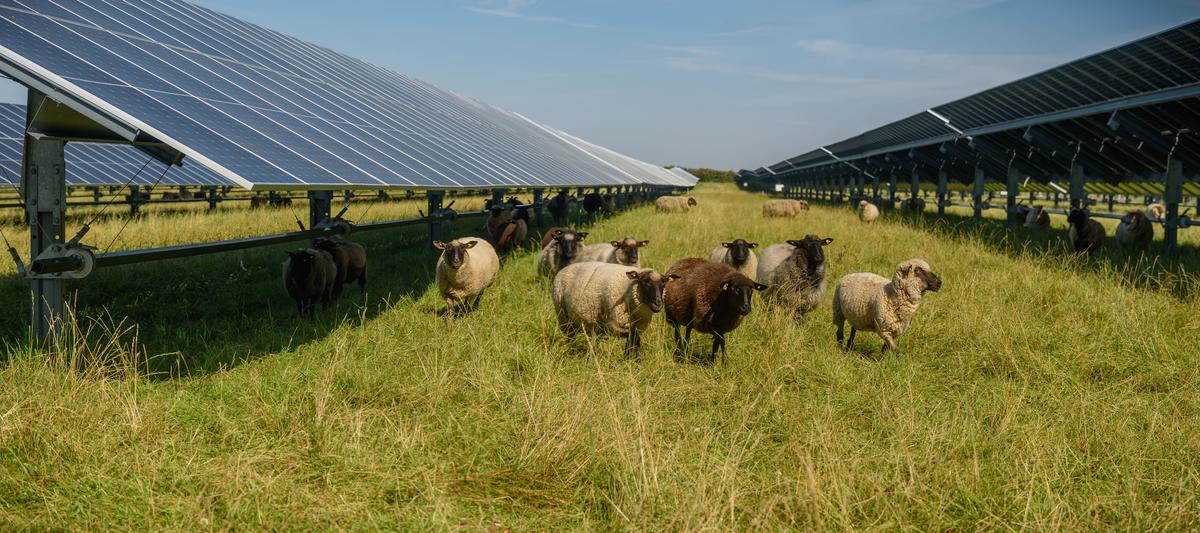
Integration of virtual fencing into agrivoltaics. It is an innovative approach to sustainable land management, combining renewable energy production with advanced pasture management systems, representing one of the most advanced frontiers of Agrifood 4.0, capable of reducing the need for mechanical mowing and improving soil management.
Controlled grazing also helps keep the soil covered with vegetation, reducing erosion and improving soil fertility through the natural addition of organic matter from animal manure. Another tangible benefit is management flexibility: thanks to virtual fencing, grazing areas can be adapted over time based on vegetation growth, seasonal weather patterns, and the needs of the power plant. Controlled grazing can also help improve biodiversity by promoting the diversity of plant species present, while reducing the impact on the soil caused by mechanical tillage.
Alongside these many potential benefits, however, certain challenges must be considered, primarily related to technological and management costs: implementing virtual fencing requires GPS collars, communication infrastructure, and digital platforms for monitoring the animals. The cost of each collar ranges from 30–40 to 200 euros, to which must be added the financial burden of the infrastructure (gateways, cloud services, etc.). To ensure effective animal welfare, corrective stimuli must take care to avoid excessive stress in the animals. Conversely, the structures of agrivoltaic systems must be designed to prevent animal activity from damaging the photovoltaic modules, cables, and, more generally, the electrical infrastructure. Operators must be adequately trained, acquiring digital skills and expertise in the integrated management of agro-energy systems.
The SAGE (Sustainable Agrivoltaic Grazing Ecosystem) project. Proposes the development and validation of an integrated agroecological model that combines agrivoltaics and ruminant grazing, with the aim of optimizing the multifunctional use of land and increasing the resilience of grazing-based agricultural systems. The main objectives focus on the integration of photovoltaic systems, grazing management systems, and advanced digital technologies. Specifically, the project aims to analyze the effects of photovoltaic modules on the microclimate, soil, and vegetation; develop monitoring systems based on sensors and virtual fencing for animal control; optimize grazing management in environments characterized by the presence of energy installations; and integrate multi-source data (sensors, remote sensing, NIR analysis) to support decision-making models and adaptive strategies. A further objective is the engineering-economic evaluation of agrivoltaic systems with grazing, through the study of environmental benefits using life-cycle assessment (LCA) and the development of new business models. The project also involves experimentation in “living labs” distributed across various European climatic contexts, in order to validate scalable and transferable solutions while also considering the effects of climate change.
In addition to demonstrating the technical and economic feasibility of these systems on a real-world scale, the expected results include the development of technical guidelines for the design and management of agrivoltaic systems with livestock integration; operational protocols for the use of precision livestock farming technologies (e.g., GPS collars and virtual fences); predictive models for integrated energy management, pasture productivity, and biodiversity. The expected benefits for the agricultural sector include increased land-use efficiency for the simultaneous production of energy and forage, reduced management costs (by avoiding mowing and the installation of fences), and improved animal welfare through microclimate control. More generally, the adoption of digital technologies and advanced monitoring systems facilitates the transition toward precision agriculture that is sustainable and resilient to climate change.
Virtual fencing
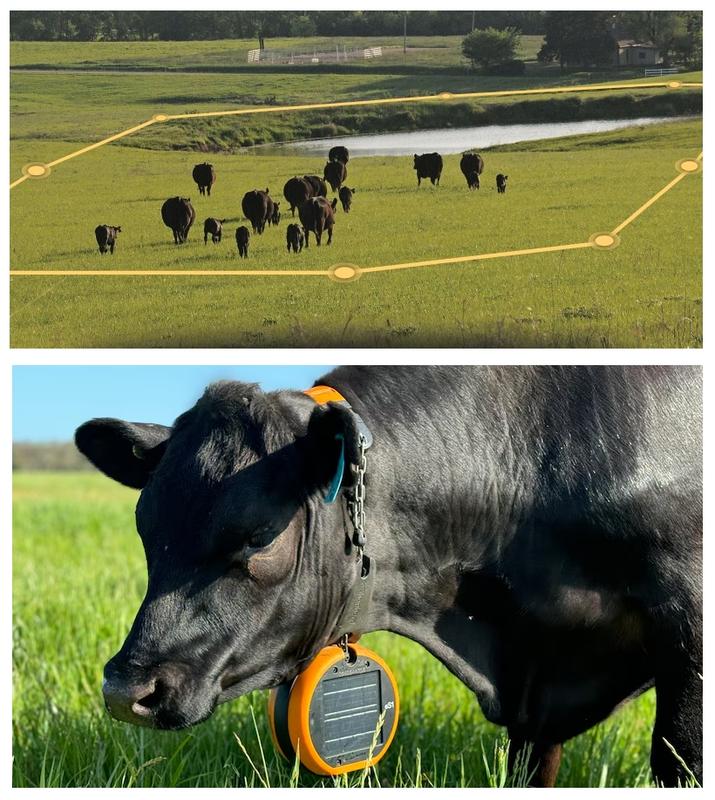
This technology uses GPS collars attached to livestock (cattle, as well as goats and sheep) to demarcate grazing areas using digital boundaries, without the need for physical fences. Through acoustic signals or corrective stimuli, the animals are guided to remain within predefined areas, which can be dynamically modified via software. In practice, when an animal approaches the virtual boundary, the collar emits a warning sound that grows louder. If the animal crosses the boundary, it receives a mild electric pulse (up to 25 times weaker than a traditional electric fence). Using a smartphone App, the farmer delineates the grazing area, monitors the animals’ location in real time, and receives notifications