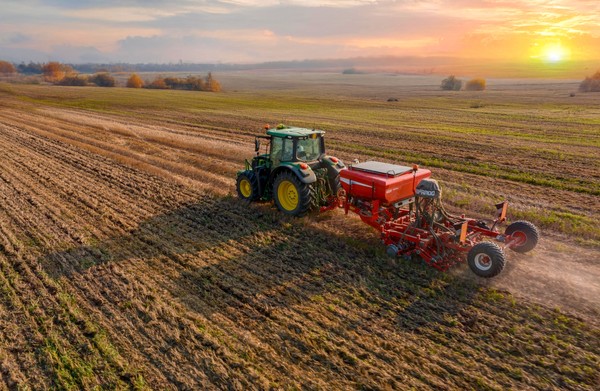
Combined direct seeding
Intensive cropping systems combined with the sustained use of mineral fertilizers lead over time to a progressive depletion of soil organic matter. Direct drilling, together with minimum-tillage or no-till practices, ensure satisfactory crop profitability
The decline in agricultural soil fertility, exacerbated by the progressive depletion of organic matter, poses new challenges for farmers. It is in this context that so-called conservation agriculture (and even more so regenerative agriculture) presents itself as a high-potential solution for increasing soil fertility, reducing erosion, and boosting yields. The cornerstone of these objectives is the adoption of agronomic management models that minimize soil disturbance through reduced, minimal, or no-till practices.
Direct seeding. Known in English as “sod seeding” (and incorrectly translated into Italian as “semina su sodo”), combined direct seeding differs from traditional methods in that it does not require the preliminary preparation of the so-called “seedbed” through primary and secondary soil tillage, such as plowing and harrowing. Instead, in direct seeding, a single pass is made across the field, often by coupling multiple machines onto a single frame, in order to loosen the soil, sow, fertilize, and apply the soil disinfectant.
Compared to conventional practices, the main change is soil management, which is carried out less aggressively and at significantly shallower depths. Above all, there is usually no inversion of soil horizons, but only a mixing of the surface layer; this substantially preserves the soil’s physical-chemical and biological balance, while simultaneously limiting the loss of organic matter and moisture. Thanks to minimum tillage (and even more so with no-tillage or “zero tillage”), the surface layer often shows a moisture increase of 10–15% or more. Tangible advantages are also evident on the operational level. Performing soil tillage, fertilization, and seeding in a single pass results in a significant reduction in working time: with traditional methods, which involve preparing the seedbed and subsequent seeding in 2–3 separate passes, the typical operational capacity is often between 0.8 and 1.2 ha/h. This figure does not refer to the speed of a single operation but is derived from the sum of the times required for the various operations, whereas a combined seeder easily reaches 1.5–2.5 ha/h, with a productivity increase that can exceed 50%. This translates into simplified work organization and more timely intervention. The reduction in field passes is also reflected in lower diesel consumption: while traditional seeding (following plowing and harrowing) requires approximately 18–25 L/ha of fuel, with direct seeding using a combination seeder, these figures drop to 10–15 L/ha, resulting in total savings of over 30%.
Reducing the number of passes undoubtedly leads to lower costs for labor, fuel, and machine wear and tear; however, the initial investment for a combination seeder is significantly higher, given that models with working widths of 3–6 meters have list prices ranging from 40,000 to over 120,000 euros, thus representing a substantial upfront investment if one decides to change sowing strategy. Since the seed is planted in unplowed soil, direct-seeding machines must be adequately equipped to manage crop residue effectively (regardless of type or amount) to ensure proper planting depth under all conditions.
With this in mind, there has recently been a shift toward innovative solutions that aim not only to remove crop residue from the seed furrow but also to shred the material using lasers or high-pressure water jets.
Technical progress. The ISOBUS protocol effectively increases work efficiency: for example, “section control (SC)” reduces overlaps and improves uniformity of field coverage, while “variable rate control (VRC)” allows varying seeding rates based on predefined prescription maps, with a greater focus on yield optimization.
Whether switching to no-till planting is advisable also depends on the farm’s specific context: for large areas, and especially in a scenario already geared toward reducing tillage, it can be a beneficial option, whereas in cases of poor soil conditions and limited acreage, the economic and operational benefits tend to diminish.
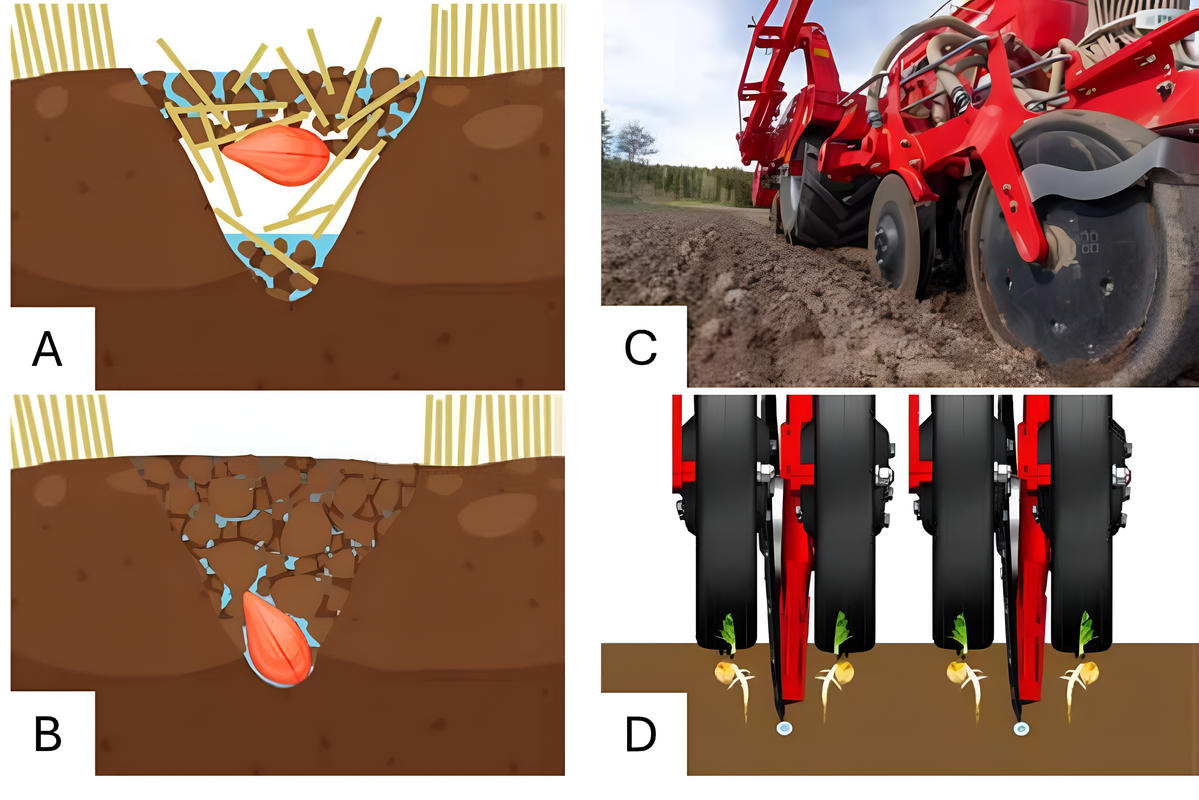
Combined seeding can utilize different levels of soil tillage: minimum tillage involves turning over the top few centimeters of soil across the entire field; in strip tillage, the soil is tilled only around the seed rows, over a width of 15–25 cm, while in zero tillage, only small furrows are created for seed placement, thus causing minimal soil disturbance.
Zero tillage (as well as strip tillage) are therefore the preferred methods in conservation agriculture and even more so in regenerative agriculture; in this case, the critical issues concern successful germination and, above all, weed management, which must be carried out through chemical weed control. To achieve satisfactory performance, direct-seeding models are often offered in multiple configurations, tailored to different tillage requirements.
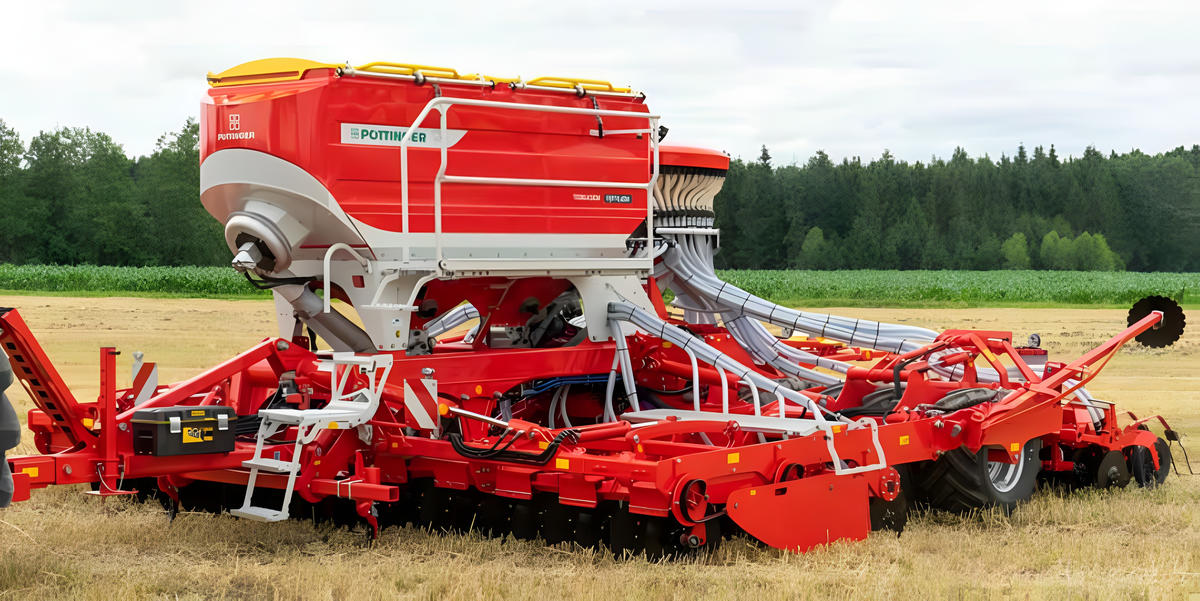
The new Terrasem in the “Fertilizer” configuration from the Austrian company Pottinger is a significant example of this category of equipment: available in working widths between 3 and 9 m, it is equipped at the front with a harrow featuring a “wave disk” system, capable of ensuring effective soil fragmentation and the cutting of crop residues. The 380 mm-diameter seeding coulters, with ground pressure up to 120 kg, ensure even seeding, with depth adjustable centrally from the tractor’s driver’s seat. With the “Seed Complete” package, it is also possible to adjust the seeding density at variable rates.
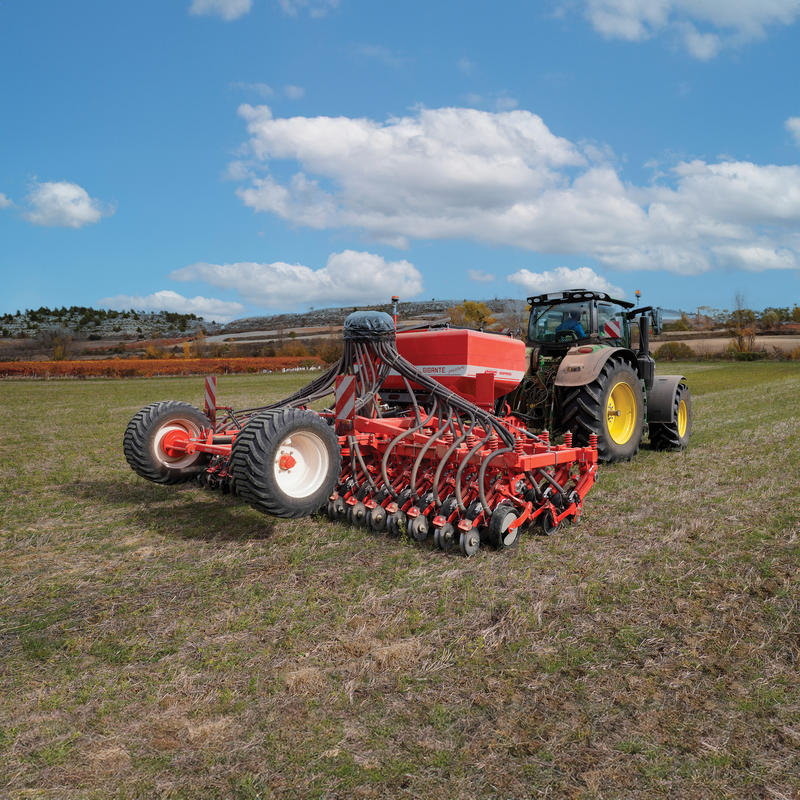
The Gigante Pressure represents the most comprehensive and cutting-edge solution in the range of pneumatic direct-seeding drills from Maschio Gaspardo in Campodarsego (Padua). It is suitable for use on unplowed fields, with working widths of 4 to 6 m, and sowing up to 40 rows spaced 15 or 18 cm apart. The folding frame with a 2-point semi-mounted hitch integrates the seed hopper (with a capacity of 1,860 to 2,240 liters) and a 980-liter fertilizer tank, allowing for both seeding and fertilization in a single pass. The seeding unit, featuring a 475 mm diameter toothed disc coulter and ground pressure up to 260 kg, ensures depth adjustment within wide margins and uniform seed placement. Seed metering and other precision farming functions are managed via the electric metering drive, using the ISOBUS protocol.
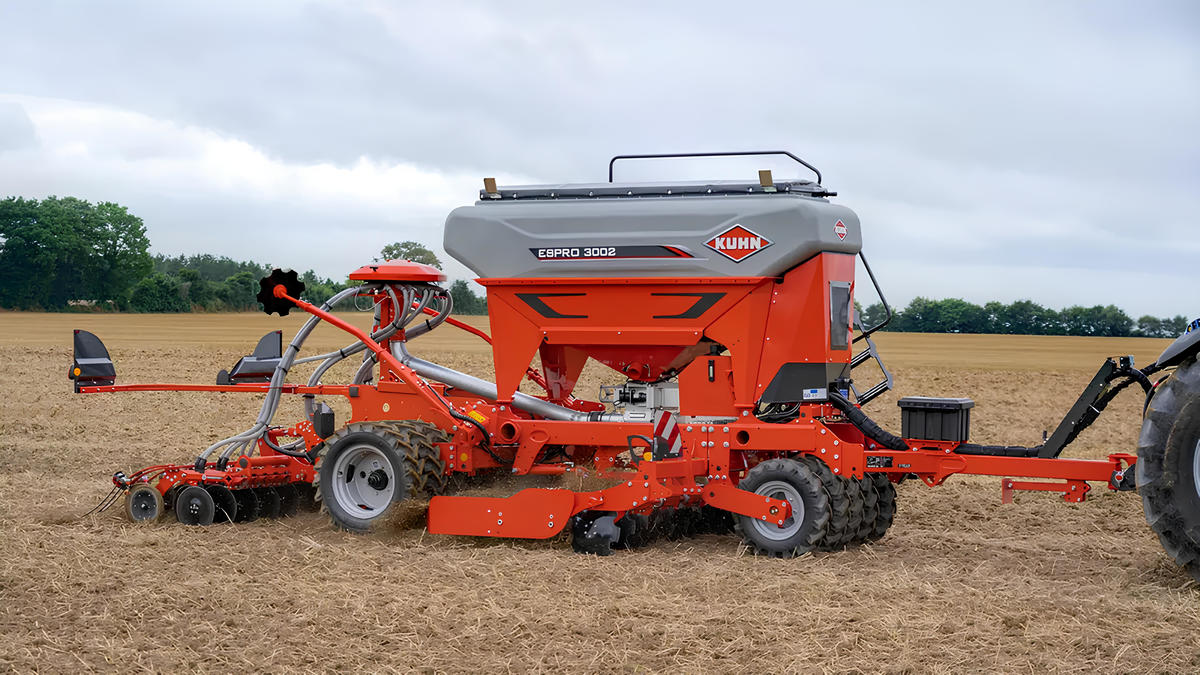
The Kuhn Espro (R) is a minimum-tillage seed drill that, according to the manufacturer, features low power consumption thanks to a lightweight frame and a plastic hopper. The machine is equipped with pneumatic compacting wheels with ribs (900 mm diameter), staggered in pairs on two rows spaced 20 cm apart, to reduce rolling resistance and ensure uniform compaction. Two rows of 460 mm diameter discs cut and bury crop residues, preparing the seedbed. Next comes the Crossflex seeding unit, featuring dual 350 mm diameter discs offset by 41 mm and adjustable ground pressure up to 120 kg, which ensures a “V”-shaped furrow opening and even seed placement at speeds of up to 17 km/h. The universal metering unit (with a range of 1,430 kg/ha) uses ISOBUS control for variable-rate application, while the Vistaflow system integrates tramline guidance and clogging monitoring functions to ensure optimal adaptability across various minimum-tillage conditions.
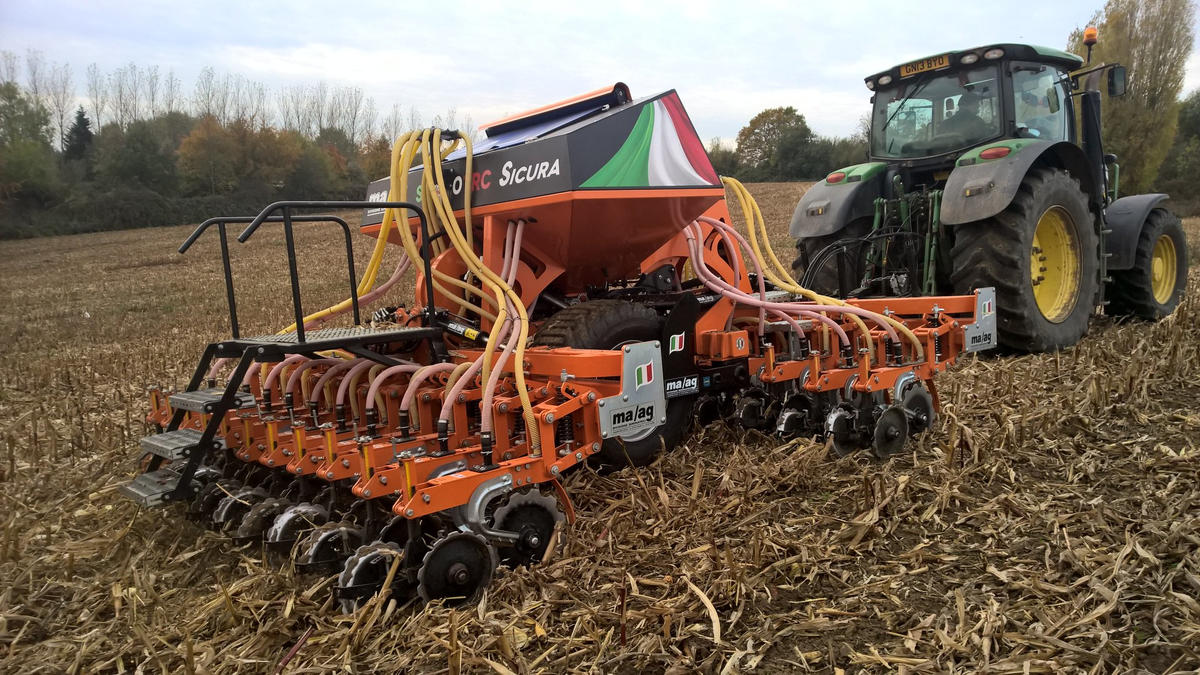
The Sicura range from MA/AG in Casalbuttano (Cremona) includes row seeders for direct seeding on unplowed or partially tilled soil, available in the pneumatic SSP or mechanical SSM versions, with a fixed or folding frame for working widths ranging from 3 to 6 meters. These models are specifically designed for conservation agriculture, with configurations that minimize soil disturbance and maintain yields comparable to traditional seeding methods, but—according to the manufacturer—lower mechanical and energy costs.
The SSP version features hoppers with a capacity of up to 2,500 liters for greater operational autonomy. The mechanical SSM model deposits seeds via rollers, with metering controlled by an oil-bath cam gearbox. On both models, each seeding unit is mounted on a cushioned, adjustable parallelogram. For furrow formation, it uses pairs of toothed/smooth discs, pressed into the soil with loads of up to 180 kg, to ensure accurate soil penetration and proper seed placement. On both the SSP and the SSM, seeding depth adjustment is achieved via hydraulically adjustable central wheels.
ISOBUS System “Add-ons”
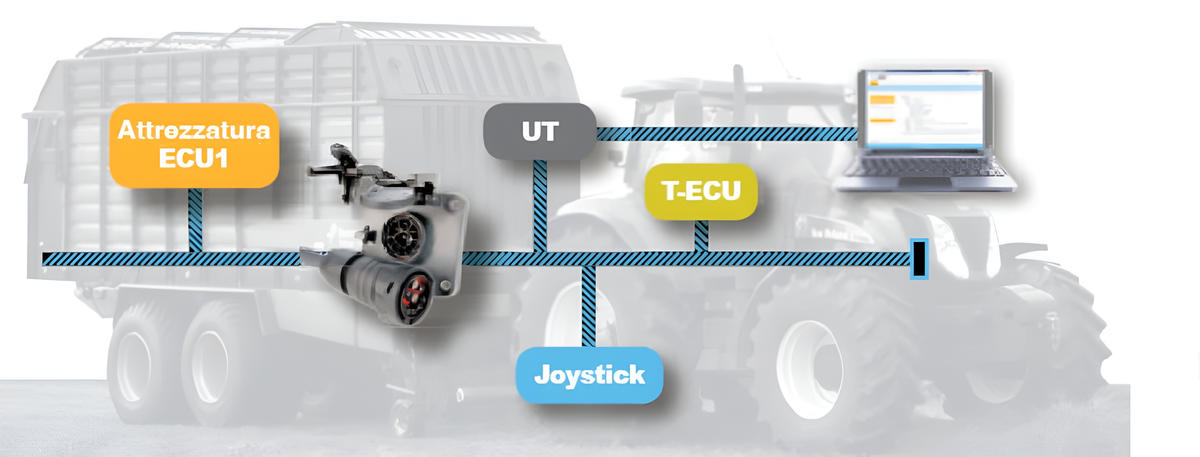
Improving operational precision, data management efficiency, and safety levels are the primary goals of modern agricultural equipment management. In the past, each manufacturer used proprietary solutions specific to each tractor-implement combination, making any interchange between tractors and implements practically impossible.
Today, however, with the ISOBUS protocol, it is often possible to manage a wide range of equipment using a single terminal, regardless of the tractor manufacturer, thanks in part to numerous additional features (known as “add-ons”) offered as specific modules to users.
Among the various options, the TC-GEO (Geo-based Task Controller) and TC-SC (Section Control Task Controller) modules are worth noting. The former acquires georeferenced data and displays the recorded data as an application map. Furthermore, it is possible to plan tillage strategies based on location, defining them in advance as prescription maps. The TC-SC, on the other hand, allows for the automatic modulation of the mixture output from a spray boom, a fertilizer spreader, or a precision seeder, adapting it to the georeferenced position and the extent of overlap. These implementations result in savings of 5–10% of the product applied in the field, avoiding unwanted overlaps or missed spots, especially where the risk is high (for example, in flooded rice paddies).
The Transition to Minimum Tillage
The shift from conventional tillage to minimum or no-till techniques involves a significant change in agronomic strategy, which, although capable of ensuring a tangible improvement in soil fertility and resilience in the medium to long term, often results in an initial yield drop. This trend is typically observed in the first 2–4 years following the start of the transition and can range from 5% to 20% depending on the crop grown, soil texture, climatic conditions, and the tillage practices employed.
From a physical standpoint, the soil must “adapt” to the absence of the periodic inversion of soil layers, characteristic of plowing: the structure of the topsoil may therefore initially be more compact, temporarily limiting root development and water availability. From a biological perspective, the microbial flora and macrofauna require some time to readjust to the new conditions, leading to an initial slowdown in the mineralization and decomposition of organic matter. Even the management of post-harvest surface crop residues, if not optimized, can cause temporary nitrogen immobilization (especially if the residues have a high C/N ratio, such as cereal straw), thereby slowing nutrient availability to the crop. Weed control is also more complex: the absence of preparatory seedbed tillage reduces weed suppression, requiring integrated weed management strategies and appropriate crop rotation to control them.
More sensitive crops, such as corn, may be more affected by the change in management, while hardy cereals or soybeans show greater adaptability. Nevertheless, after the first few crop cycles, the soil-plant system tends to stabilize: soil structure improves, thanks to biological activity and root action; fertility increases due to the accumulation of organic matter and moisture; and agronomic resilience rises, with a greater capacity to retain water and nutrients in the cultivated layers and a reduction in yield variability. The selection of appropriate seeders and careful management of crop residues accelerate the recovery of productivity and ecosystem benefits.
The initial drop in yield is therefore an entirely natural and undoubtedly temporary phenomenon; careful, appropriately integrated agronomic management allows this phase to be overcome, leading, over time, to more fertile, structured, and resilient soils and to agriculture that is less detrimental to the natural environment.