Energy crises: renewable energy as a possible alternative
International conflicts and crises particularly affect the fossil fuel sector. This scenario shows all the more clearly the strategic role of "renewables". These were the themes at the center of the “Terra Motrice” event organized this past March by the CIB (Italian Biogas Consortium) in Rome
In the current international scenario characterized by strong geopolitical tensions the energy sector, still closely tied to fossil fuels, is the one experiencing the most pronounced imbalances. In this context, which apparently relegates the issue of "renewables" to the background, the strategic importance of green energy is greater than ever, both from an environmental perspective and for energy security and independence.
These are the topics covered during the 10th edition of the Biogas Italy event titled "Terra Motrice," held this past March in Rome, which also celebrated the 20th anniversary of the Italian Biogas Consortium, which has been committed to the development of agricultural biogas and biomethane in Italy since 2006. Today, thanks to its supply chain model for "well-made biogas", the CIB is a fully-fledged accredited reference in Europe and beyond for the development of the anaerobic digestion supply chain.
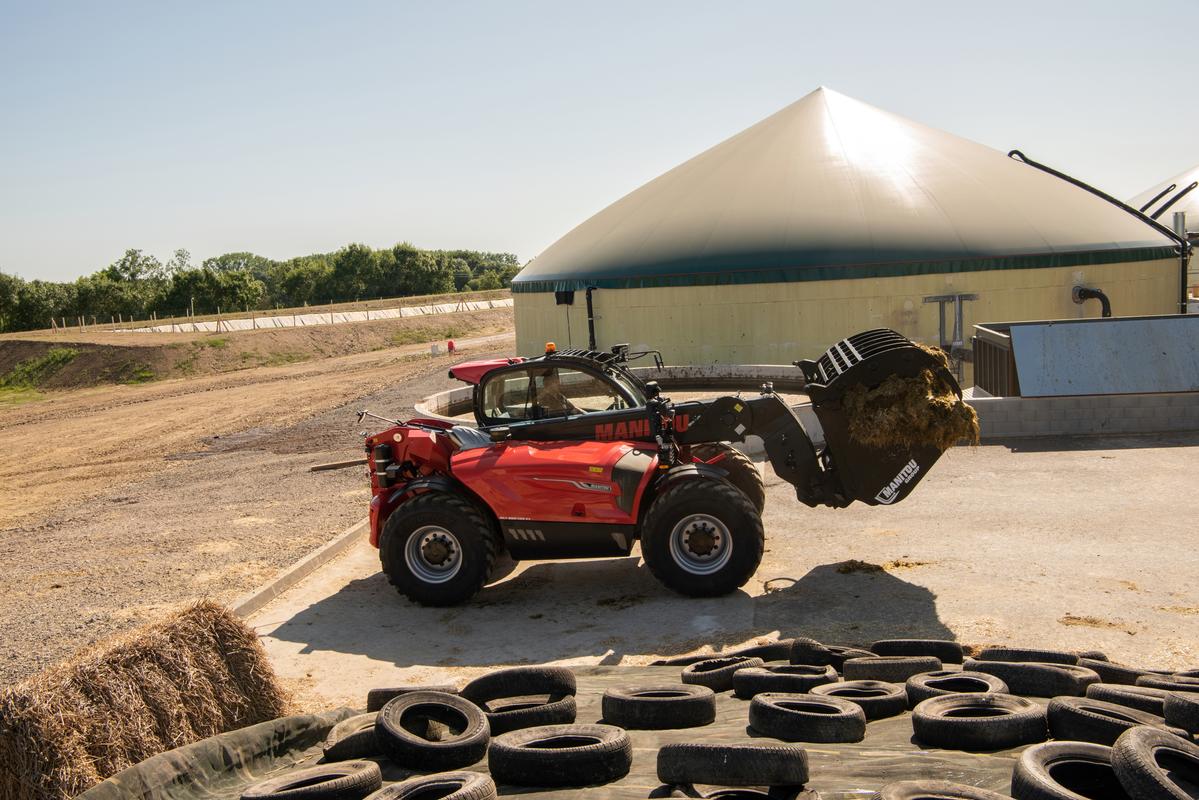
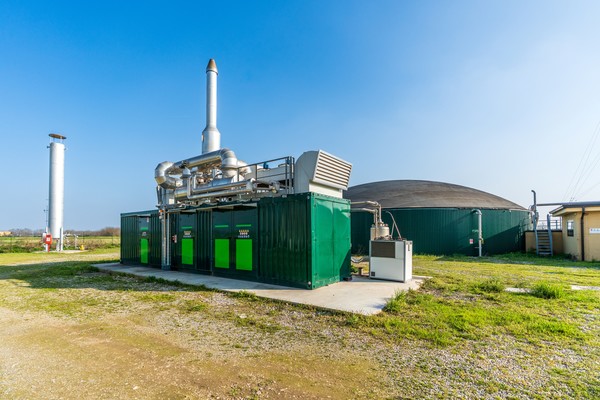
In international crises, the primary sector responds with its production chains that offer significant opportunities in terms of food, energy and soil fertility. “We live in a moment in which energy has returned to the fore of global debate, not only as a climate issue, but - states Francesco La Camera, Director General of the International Renewable Energy Agency (IRENA) - as a matter of security, economic stability, and strategic sovereignty. Recent geopolitical tensions confirm this with extreme clarity: an energy system dominated by fossil fuels inevitably ends up being exposed to geopolitics. In this scenario, renewables, including bioenergy, take on a strategic role". At the beginning of last year, global renewable electricity capacity had exceeded 4,448 GW, a large figure that is not far from half of the total installed capacity. In 2024, the increase in RES was 582 GW, marking an annual growth rate of 15%. From a geographical point of view, the distribution of these 582 GW sees Asia in first place with 72% of new installations, followed by Europe with 12%, North America with 8%, South America with 4%, Eurasia and Oceania with 3%, and just 2% for the rest of the world. In the five-year period 2025-2030, RES are aiming for an average annual increase in installed power equal to 1,122 GW. In particular, as regards bioenergy, the total capacity in 2024 (151 GW) is expected to more than double by 2030 to around 310 GW. This means that if in 2024 the growth of plants generated an additional 5.1 GW, in the five years to follow the average annual growth will have to quintuple to levels of 26 GW per year. “Italy represents a particularly relevant example, assuming the role of leader among European countries in the development of biomethane – added the director general of IRENA – thanks to an advanced agricultural supply chain, strong involvement of the private sector and targeted support policies”. Interestingly, according to realistic estimates, Italy is on track to achieve the annual production of 5.7 billion SMCs (standard cubic meters) envisaged by the Integrated National Energy and Climate Plan (PNIEC) by 2030. This means that Italy will be able to self-produce approximately 10% of its national renewable methane needs (just over 60 billion m3) in a completely sustainable manner without having to extract the small amount of fossil methane the country has. This could be stored underground as a strategic reserve in case of need, without affecting the reserves which are currently decidedly scarce. In fact, it is estimated that the nation's fossil methane from proven deposits is approximately 40 billion m3 - of which 22.1 billion in terrestrial deposits and 17.7 billion in the seabed - to which can be added other possible deposits with reserves estimated at 27 billion m3. The nation's fossil methane would thus be barely sufficient to satisfy its gas needs for just one year. In this scenario, biomethane represents a concrete and already available response to address the climate and energy crisis. “Tools such as REPowerEU and key European directives such as RED3, recently implemented in Italy - stated Biljana Kulisic of the DG ENER of the European Commission at the meeting in Rome - will help the system define the new supporting rules that are essential for the development of the biogas and biomethane sector in Europe”.
The large turnout of all the key national stakeholders and numerous international experts at Biogas Italy confirms this event as a benchmark for the Italian supply chain, which embodies an integrated system of agriculture, industry, and energy policy. With 549 approved projects, 323 construction sites underway, and 46 plants already operational, "well-executed" biomethane—one characterized by an agricultural, circular, and territorial approach—is now a consolidated reality, ready to take on the future.
Bioenergy therefore represents the future of the energy sector and it is precisely for this reason, as experts in the sector emphasize, that it must be increasingly incentivised compared to fossil fuels such as coal, the use of which has been extended until 2038 under the bills decree, thus risking contradicting the commitments made by Italy in the National Integrated Plan for Energy and Climate (PNIEC).