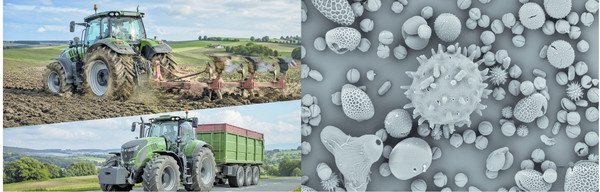
Particulate matter from agricultural tyre wear
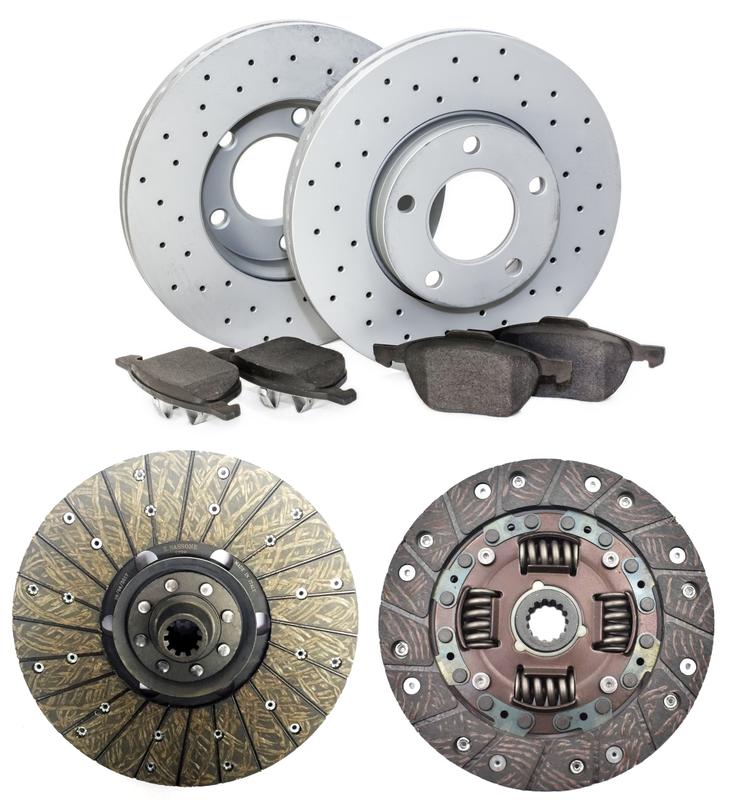
The environmental impact assessment of agricultural machinery has so far focused primarily on pollutant emissions from internal combustion engines. However, other potentially hazardous sources also deserve attention, including the wear particles generated by tyres and by the friction materials used in brakes and clutches
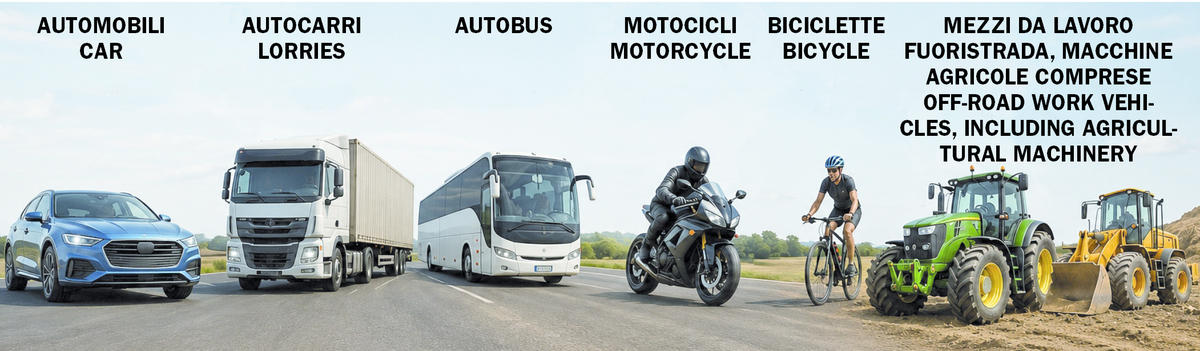
Every year, billions of tires are produced worldwide for cars, trucks, buses, motorcycles, and industrial vehicles. Behind this seemingly simple object lies a highly technological product, made up of dozens of different materials and designed to withstand heavy mechanical stress, temperature fluctuations, and long periods of use. However, the complexity of the tire also makes it challenging to manage its environmental impact, which spans its entire life cycle, from production to disposal.
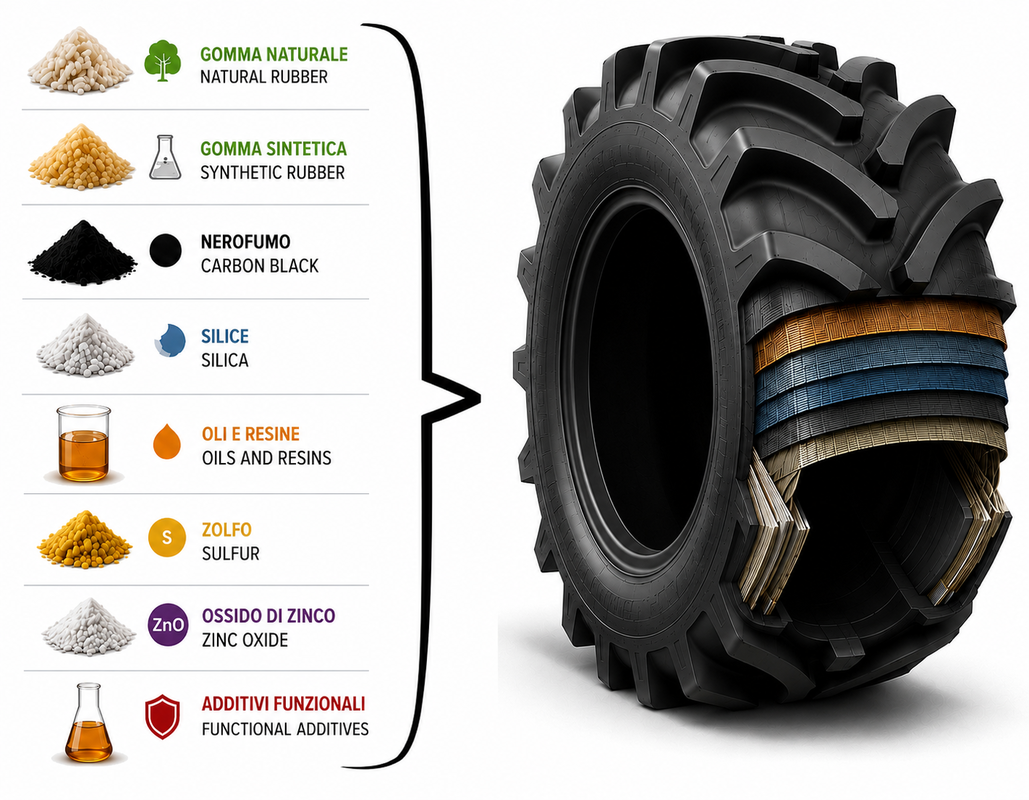
A blend of materials designed to last. The predominant component of a tire is, of course, rubber, which can be natural, derived from the latex of Hevea brasiliensis, commonly known as the “rubber tree,” or synthetic, chemically produced from petroleum. A modern tire is the result of a sophisticated (and jealously guarded secret by manufacturers…) combination of natural and synthetic materials, to which numerous other components are added to enhance its performance and durability. These include carbon black (which gives the outer surface a uniform color, as well as its characteristic black hue) and silica, which increase wear resistance and improve traction; oils and resins that make the compound easier to process; sulfur and zinc oxide, which are necessary for the vulcanization process, as well as a wide range of antioxidants, plasticizers, and stabilizers that slow the aging of the raw material. Inside the tire is the carcass, the load-bearing structure, made up of thin steel cords, plastic fibers, or textile fibers, which are essential for providing strength and stability. This variety of materials makes tires highly efficient for their intended use, but at the same time presents one of the main challenges inherent in their recovery and recycling.
The life cycle begins long before the tire hits the road. A tire’s environmental impact does not begin when it is mounted on a car. Life Cycle Assessment (LCA) analyses, now considered the most comprehensive method for evaluating a product’s environmental effects, show that every stage of its life cycle contributes to the consumption of natural resources and the production of emissions.
Production begins with the extraction of raw materials. In recent decades, the cultivation of rubber trees has led to the replacement of vast areas of forest with intensive plantations, especially in Asia and Africa, with consequences for biodiversity and ecosystems.
At the same time, synthetic rubber, carbon black, silica, and numerous chemical additives are produced using processes that require large amounts of energy and water. The actual manufacturing process involves a series of industrial operations: mixing raw materials, extrusion, assembling the carcass, inserting the steel belts, and subsequent vulcanization, during which sulfur forms the bonds that give rubber its elasticity and strength. Each tire requires electricity, water, and solvents and generates air emissions, wastewater, and industrial waste. Considering the more than three billion tires produced worldwide each year, even small per-unit consumption figures add up to enormous amounts of resources used.
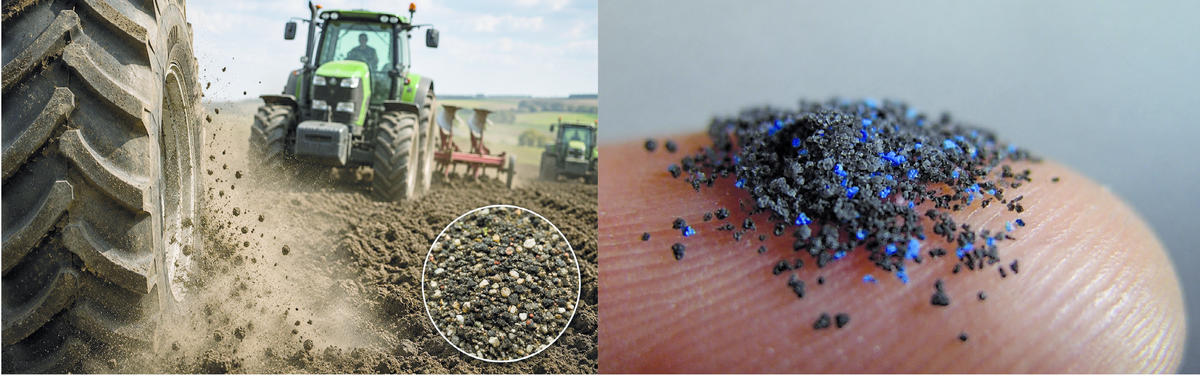
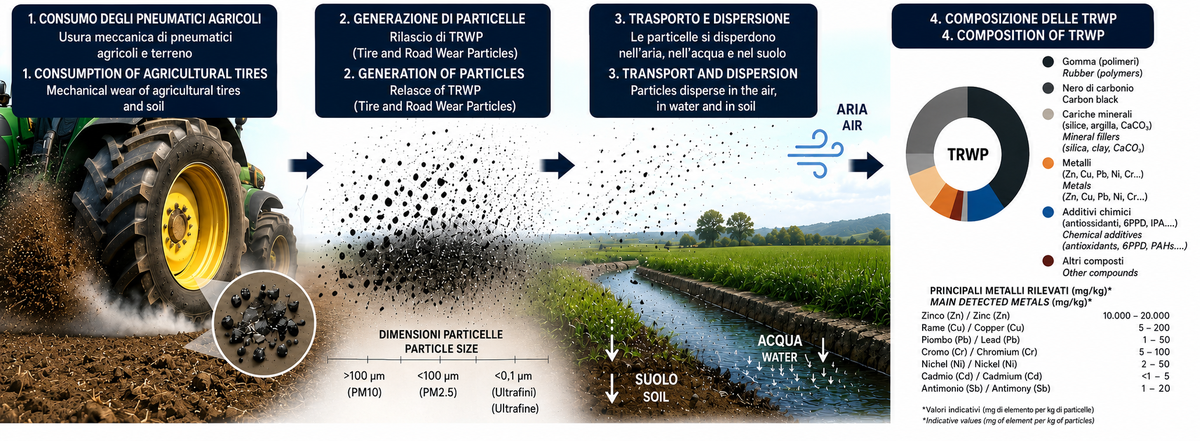
These invisible particles have become a global problem. While exhaust emissions have been progressively reduced thanks to advancements in engines and pollution control systems, another form of pollution has long been overlooked: that caused by tire wear. Every time a vehicle accelerates, brakes, or takes a turn, the tread loses tiny fragments of rubber. These particles often mix with asphalt residue, mineral dust, and materials from the brakes, forming what researchers refer to as Tire and Road Wear Particles (TRWP). Although each particle is microscopic, the total amount produced is enormous. Over the course of a tire’s useful life, several kilograms of material can be released, equivalent to a significant portion of its initial weight. For this reason, tires are now considered one of the main sources of microplastics released into the environment. The extent of wear depends on numerous factors: vehicle weight, driving style, speed, tire pressure, road surface type, and tire characteristics. A heavy SUV or truck, for example, generates far greater quantities of particles than a small compact car, just as sporty driving causes more abrasion than regular driving.
Where do the rubber particles end up? Once released, the particles follow very different paths. The larger particles, which account for most of the emitted material, tend to settle in the immediate vicinity of the roadway, accumulating along road edges, on adjacent land, or in the sediments of waterways. The finer and ultrafine particles, on the other hand, can remain suspended in the air for longer periods and be carried by the wind even considerable distances from the point of emission. Precipitation further alters this path. Rain washes the particles into urban drainage systems, where some are retained in storm drains and sewer networks, while the smaller particles reach wastewater treatment plants. Many contaminants thus end up in sewage sludge, which, in several countries, is used as agricultural fertilizer. In this way, the substances contained in tires can be transferred from urban centers to farmland, entering new environmental compartments. Even drinking water treatment plants, despite being highly efficient, are unable to completely remove all the smallest particles. This explains why microplastics derived from tires have now been detected in numerous terrestrial and aquatic ecosystems.
A chemical mixture far more complex than simple rubber. When people think of microplastics from tires, they often imagine nothing more than shredded rubber. In reality, these particles represent an extremely complex mixture of materials. In addition to natural and synthetic elastomers, they contain metals such as zinc, copper, nickel, lead, chromium, and cadmium, residues of additives used during production, polycyclic aromatic hydrocarbons (PAHs), plasticizers, antioxidants, and numerous other organic compounds. Among the substances that have attracted the most attention in recent years is 6PPD, an antioxidant used in virtually all modern tires to protect them from the effects of atmospheric ozone. When exposed to air and atmospheric agents, 6PPD transforms into 6PPD-quinone, a compound that recent studies have identified as highly toxic to certain species of salmon, particularly coho salmon, causing rapid mortality even at very low concentrations. This case has demonstrated how a substance introduced to improve tire durability can, as it ages, transform into a contaminant far more dangerous than the original compound.
Effects on ecosystems and health. Research in recent years is revealing an increasingly complex picture. In aquatic ecosystems, wear particles can be ingested by small invertebrates, fish, and crustaceans, disrupting their growth, reproduction, and development. Certain metals, particularly zinc, can cause toxic effects even at relatively low concentrations. In soil, however, the presence of rubber particles alters the chemical and biological characteristics of the environment. Several studies have observed changes in pH, microbial respiration, and nutrient availability for plants, as well as negative effects on the growth of certain plant species due primarily to the release of zinc. Even organisms essential for soil fertility, such as earthworms, show reduced survival and reproductive capacity when exposed to high concentrations of rubber granules. As for human health, research is still evolving. The finest particles can be inhaled and reach the respiratory system, while those deposited in food or water can be ingested. In addition to the physical presence of microplastics, the chemicals they gradually release into the environment and into organisms are a cause for concern.
Euro 7: Wear-generated particulate matter is now included among the type-approval parameters. In the “non-road” sector for machines equipped with internal combustion engines, the current standard is still Stage V/TIER 5, which sets regulatory limits that are essentially equivalent to Euro 5. However, it is conceivable that, albeit a few years down the line, the requirements will tend to align with those of the automotive sector, where the current standard is Euro 6, first introduced in 2014 and revised in subsequent years, up to the current Euro 6e, under which diesel-powered vehicles have limits of 0.50 g/km for CO, 0.17 g/km for a combination of HC and NOx, 0.08 g/km for NOx alone, and 0.005 g/km for PM. Conversely, given the different operating conditions of work vehicles, the Stage and TIER limits must logically take into account values established on a different basis, namely, the amount of pollutant emitted (in g), but relative to the unit of energy produced (in kWh).
The Euro 7 emissions standard, set to take effect in the automotive sector in November 2026, will mark a significant paradigm shift: gaseous emissions from engines are now very limited, and consequently the contribution of other components, the so-called “Non-Exhaust Emissions” (NEE), is becoming increasingly significant, especially with the gradual proliferation of electric vehicles. In practice, this refers to “wear-generated particulate matter,” that is, the wear and tear of friction components in braking systems and, above all, tires. Furthermore, vehicles will be tested under a wider range of conditions to ensure they meet standards throughout their entire lifecycle. For electric vehicles, Euro 7 will also include rigorous tests on battery health and performance.
From this perspective, tires undoubtedly play a predominant role; tread abrasion produces particles consisting of a mixture of natural and synthetic rubber, carbon black, silica, zinc oxide, resins, oils, and mineral material from the asphalt, known as TRWP (Tire and Road Wear Particles). Their size distribution is extremely broad, ranging from a few tenths to hundreds of μm; the finest fractions contribute to the formation of atmospheric particulate matter (PM10 and, in part, PM2.5), while the larger ones settle on the road surface or are carried into surface waters. According to estimates by the European Chemicals Agency, tire wear is one of the main sources of primary microplastics released into the European environment, with total quantities in the order of hundreds of thousands of metric tons each year. A car tire can lose over 1 kg of material over the course of its useful life. It should also be noted that the growing adoption of electric vehicles will make this phenomenon even more significant, due to the greater weight of the vehicle and the immediate availability of torque, which will tend to increase the rate of abrasion. This will likely necessitate an evolution in tire design, seeking a balance between wear resistance, wet grip, rolling resistance, noise levels, and durability, that is, characteristics that are often in conflict with one another. Research efforts are currently focused on functionalized elastomers, high-dispersion silica, new vulcanization systems, and tread patterns capable of reducing local slippage that accelerates material detachment. Essentially, these are all issues that will likely need to be addressed for tractor tires as well, especially considering that the proportion of working time spent on public roads open to traffic is gradually increasing in modern agriculture.
At the same time, Euro 7 also introduces limits on particulate emissions from brakes, measured as PM10 using the standardized UNECE GTR 24 cycle on a dynamometer. For passenger cars, the limit is set at 7 mg/km for internal combustion engine and hybrid vehicles and at 3 mg/km for BEVs, values that will require the adoption of low-wear brake pads, discs coated with high-hardness technologies (HVOF or laser cladding), and brake blending strategies capable of maximizing regenerative braking. The philosophy behind Euro 7 is therefore to evaluate the vehicle as a whole. It is no longer just what comes out of the exhaust pipe that matters, but also the material that is progressively released during use. In this scenario, tires, the braking system, vehicle mass, and electronic control systems become closely interconnected elements, destined to influence not only dynamic performance but also the car’s overall environmental impact.
Tyres with a lower environmental impact
In this regard, manufacturers are pursuing various strategies, such as increasing the proportion of raw materials from renewable sources, replacing certain chemicals with less hazardous alternatives, reducing rolling resistance, and improving the recyclability of tire compounds.
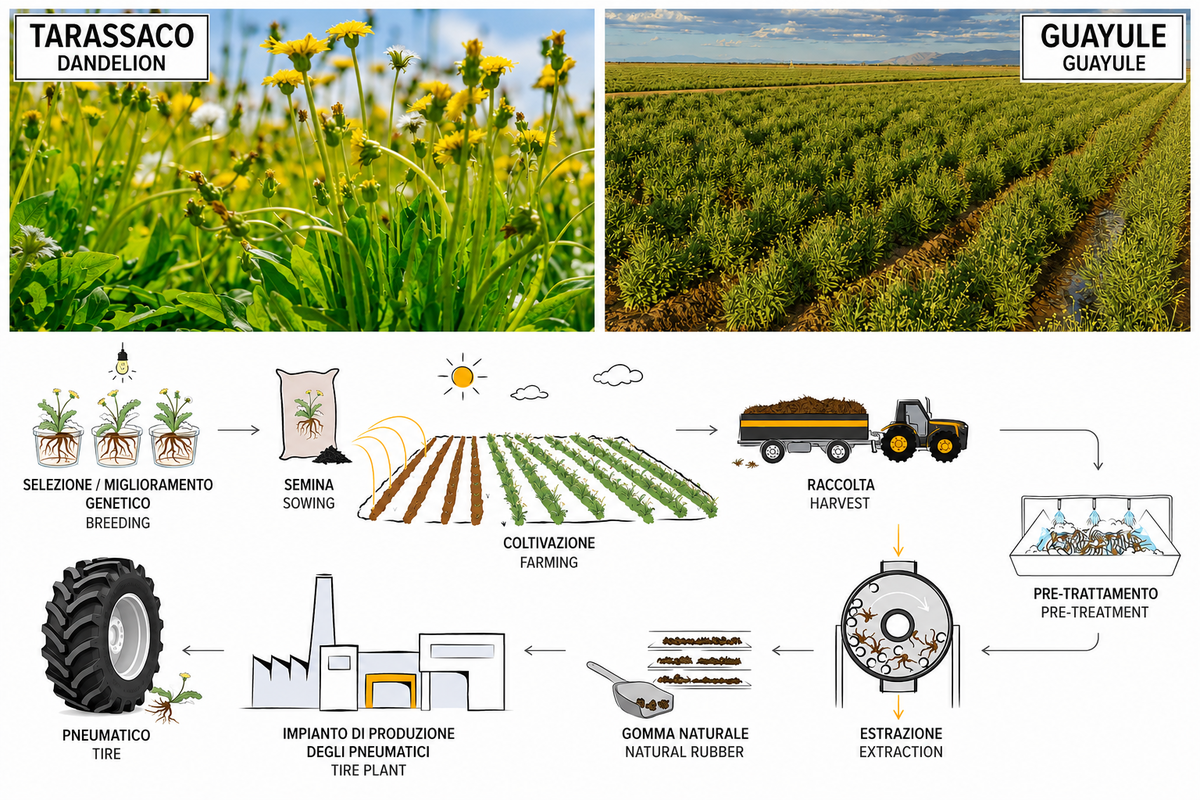
Among the most promising solutions regarding raw materials is guayule (Parthenium argentatum), a plant native to the arid regions of the Americas that produces a latex similar to natural rubber (but which does not contain the proteins responsible for allergies to traditional latex). This raw material (which was actually tested in Italy as far back as the autarky period…) could reduce carbon emissions while simultaneously decreasing dependence on large tropical plantations of Hevea brasiliensis.
Another option is the cultivation of dandelion (Taraxacum officinale), specifically the variety Taraxacum kok-saghyz, which is easy to grow, thrives in temperate regions worldwide, and, most importantly, contains a high amount of natural rubber, particularly in its roots.
At the same time, new systems for monitoring and dynamically adjusting tire pressure and wear, which can extend tire life and reduce both fuel consumption and the dispersion of microparticles caused by wear, are now well-established practices in the agricultural sector as well.