The evolution of the agricultural telehandler
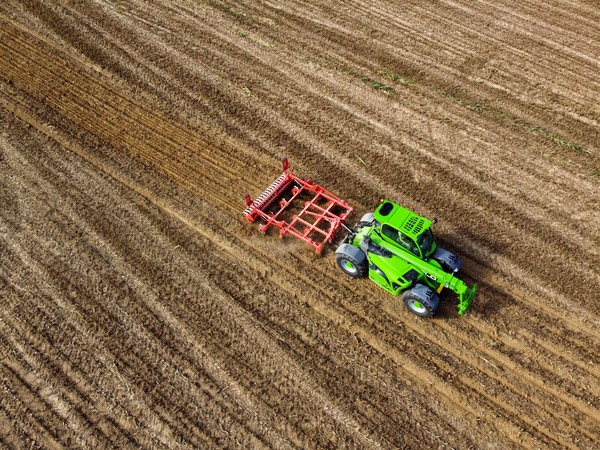
In addition to excellent performance in the lifting and handling of bulk and packaged materials, the modern telehandler is increasingly proving to be a versatile machine for several open-field operations, thanks to a comprehensive range of devices and accessories designed for coupling with both trailed and mounted implements
Initially designed solely for material handling, the modern telescopic handler is now a multi-purpose vehicle that is also highly appreciated in the agricultural sector, as it can effectively perform numerous work activities not only around the farm but also in open fields, offering further interesting opportunities for usage.
This great versatility comes from some distinctive technical features: its compact structure, optimized weight distribution on the axles due to optimal placement of the main components and elements of the vehicle and by the often isodiametric tires, but above all by the presence of the telescopic arm, which allows for lifting, transporting and positioning considerable loads at heights and outreach distances unattainable for an equivalent tractor equipped with a front loader.
Added to this is the availability of increasingly advanced transmissions (power shift, CVT and including hydrostatic transmission) which, combined with the vehicle's multiple handling options provided by the 4-wheel drive and steering, ensure precision in handling and continuity of traction even on rough terrain, and more generally in poor grip conditions.
The wide range of special attachments, from bale and pallet grippers to buckets and haymaking equipment, further expands the telescopic handler's range of action. On many livestock and cereal farms, this vehicle is now considered essential for distributing fodder, moving fertilizer, loading ration ingredients into mixer wagons, and providing logistical support during harvest. This increases labor productivity during these times while simultaneously reducing the resources needed to complete the work.
But it is in open-field operations that the telehandler has most recently expanded its range of action: the latest generation agricultural models are equipped with reinforced axles, and suspension systems and specific tires capable of improving traction, stability and comfort. The result is an increasingly multi-functional machine, capable of working alongside the tractor (and in some cases effectively replacing it), creating new operational solutions that are flexible and at competitive costs.
Farm Equipment
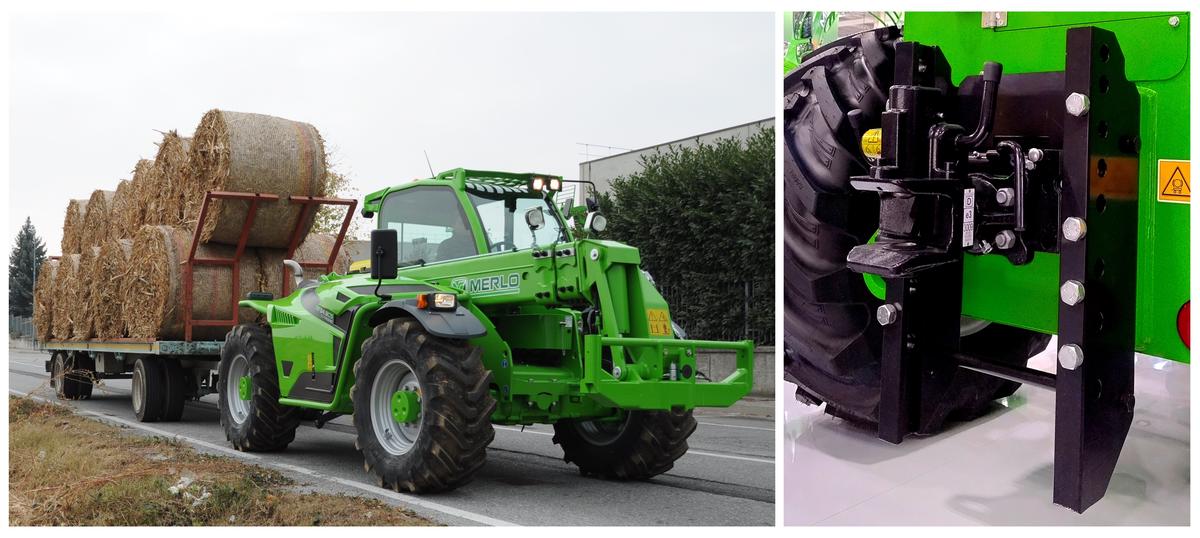
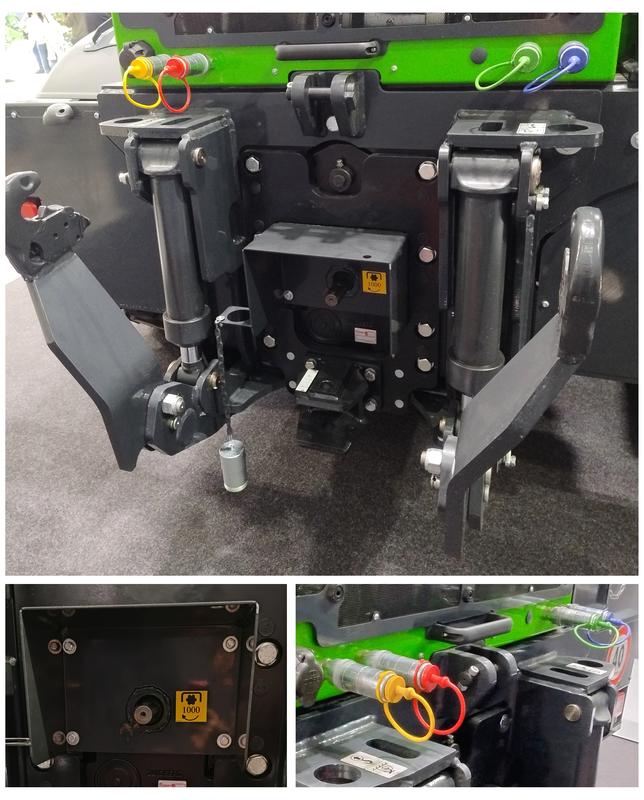
What makes the telescopic handler similar to a tractor, giving it the ability to couple in order to make a wide range of operating machines work at their best, are obviously the "farm" features, namely a sturdy towing hook, a standardized 3-point hitch managed by the lift and the power take-off, in the two classic operating modes. Without a doubt, the most popular accessory is the tow bar. Many telehandler models are equipped with them, but far fewer have agricultural tow hooks. And, even in this latter case, the various types on offer range from models compliant with CUNA standards (unfortunately valid only in Italy) to those used in the rest of Europe, the so-called "EU" tow hooks, which in their technical-design characteristics differ significantly from the CUNA types.
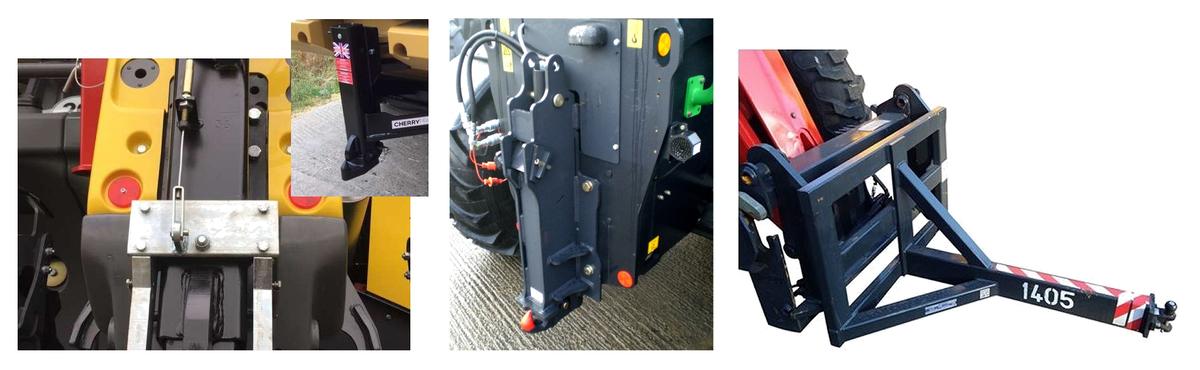
Thus, together with the availability of the classic CUNA agricultural hooks installed at the rear, and suitable for towing almost all trailers (and similar implements) on the road in Italy, the market also offers alternative solutions, for towing devices both conventionally applied to the rear of the vehicle, and on the lifting arm, by means of an adapter frame.
Merlo of S. Defendente di Cervasca (CN), which has long been at the forefront of offering well-established ranges of telehandlers specifically dedicated to agricultural applications, such as the Turbofarmer and Multifarmer, offers various solutions for towing towed equipment for these models, with CUNA hooks authorized for even heavy-duty towing.
Thanks also to the fruitful collaboration with several specialized manufacturers, semi-automatic and automatic hooks are available which offer a significant operational advantage, especially with regards to the comfort and safety of the operator when attaching and detaching the equipment.
As far as “EU” tow hooks are concerned, the products made for telescopic handlers are kits that often come from the United Kingdom, which include hook and ball types. Unimac, a UK company based in Northamptonshire, offers a 3,000 kg capacity ball hitch suitable for farm handling operations. The hook is mounted at the end of a sturdy metal profile frame which attaches to the lifting arm, obviously set to its lowest position. In line with this, but with an important technical variation, the Irish company Dromone produces a hook hitch, to be fixed with its own frame to the rear of the vehicle, the height of which can be adjusted hydraulically and directly from the driving seat, with a wide range. A similar solution is also offered by the English distributor Cherry Products.
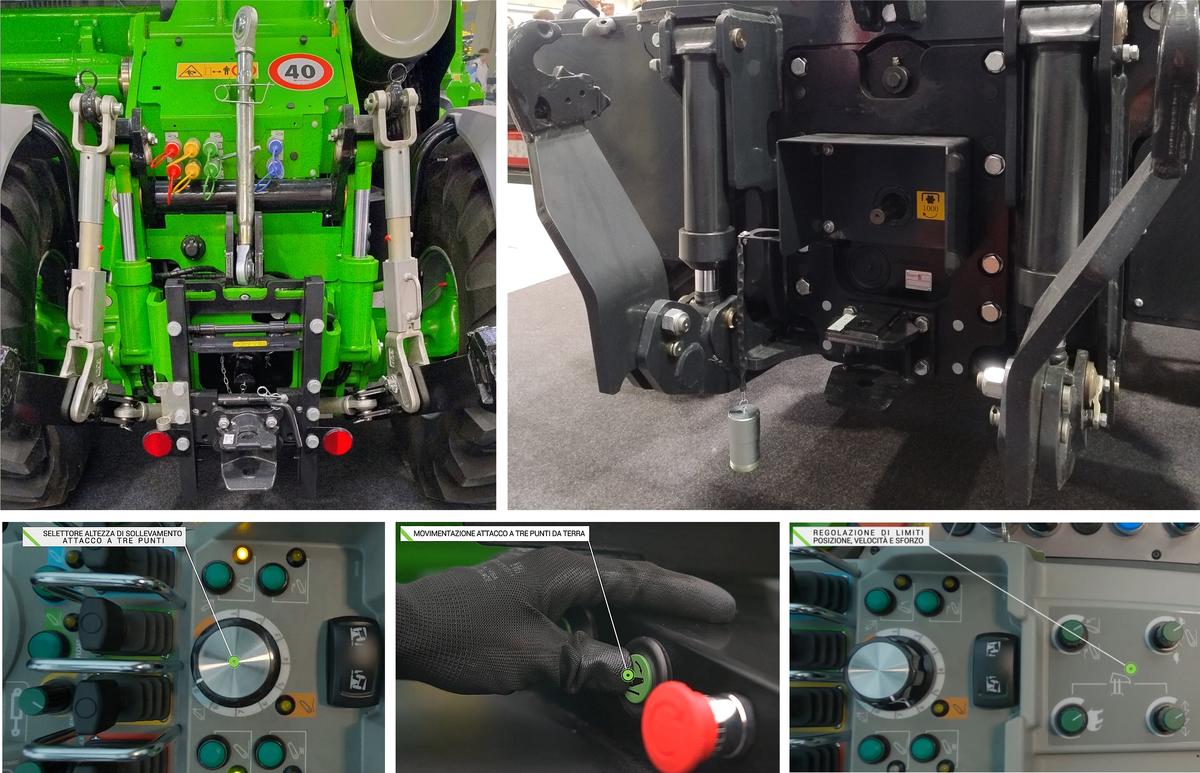
Not only for towed equipment, but also for mounted equipment: Merlo also offers several models equipped with a 3-point hitch managed by a hydraulic lift, which in this case is an integral part of the general system. The available functions include all those of the conventional tractor, i.e. position and draft control (with the ability to combine both to create the “float” mode), implemented by potentiometers to define the intervention rate and the descent speed of the implement. There is also the convenient remote control option, with a button control located near the mudguard.
In general, operation of the working parts of the vehicles uses mechanical and/or hydraulic drives. For this reason, telescopic handlers specific to agricultural activities are equipped with a power take-off (PTO) and hydraulic outlets.
Initially, the power take-off was hydraulically powered, but also due to the low efficiency of this technical solution, more recent technical evolution has seen the installation of a fully mechanical PTO, which is able to operate with greater efficiency at the most common standardized speeds, i.e. 540 and 1,000 rpm, in order to ensure proper operation of the devices installed on the combined equipment.
Operation of the hydraulic part of the implements is not a problem, given that telehandlers traditionally make extensive use of this technical option. It was easy to place one or more hydraulic outlets on the rear of the various models, generously powered also with regards to the flow of pressurized oil.
Tangible advances in electrification
The operational peculiarities of conventional telescopic handlers favor a rapid transition towards the complete electrification of these vehicles. In fact, since conventional models are effectively used for a single operational activity, namely the movement of loads, often performed within industrial and building complexes, they can make use of logistical supports that facilitate the replacement and recharging of the battery pack, essential for powering the electric motors used to operate the various constituent elements. If, on the other hand, the vehicle is designed for agricultural use in combination with several machines, the situation becomes more complicated, as it often requires additional power to operate the equipment. Furthermore, open-field use presents greater difficulties in relation to the possible replacement of the battery pack, and obviously to the lack or limited availability of an adequate on-site charging option.
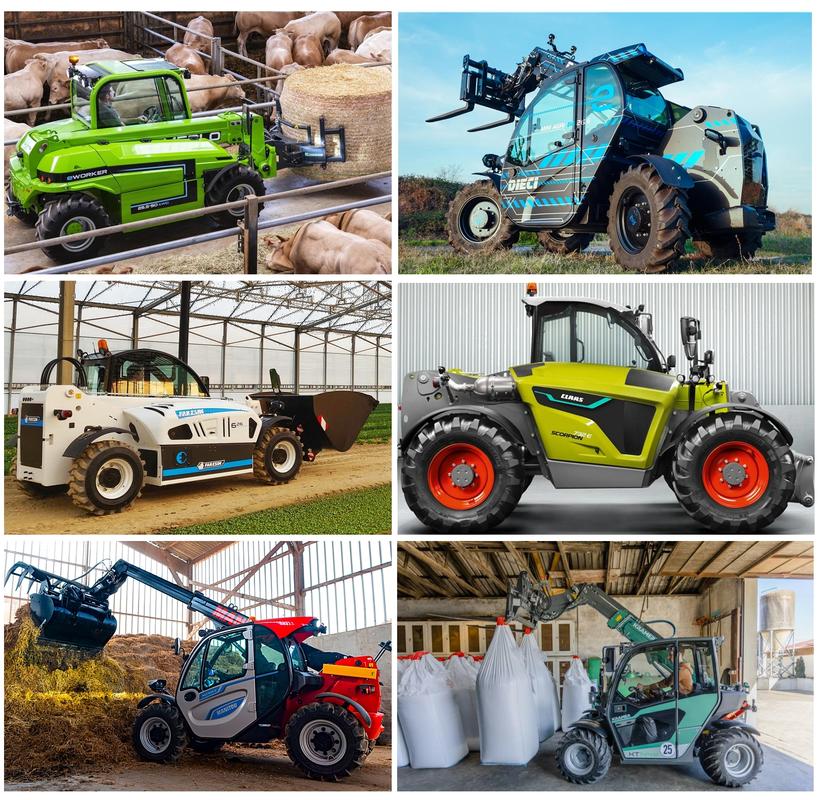
For these reasons, the electrification of telescopic handlers intended for agricultural use initially encountered some difficulties, though these have recently been overcome, so much so that the main manufacturers in the sector all have one or more fully electric agricultural models in their catalogs. The offering is already extensive on compact models, which in terms of performance means an average maximum lifting height of around 5 m and a maximum load capacity of 2,500 kg. To obtain this performance, vehicles of a certain rating were sized with a maximum mass varying between 4,500 and 5,500 kg. In any case, technical progress is currently seeing an expansion of electrification towards progressively higher-performance types, but in some cases also smaller in size.
The Italian company Merlo offers the E-worker range which, initially equipped with lead-acid batteries, similar to those installed on forklifts, has also been produced for about a year and a half with a lithium-ion version, offering a series of operational advantages. In fact, Li-Ion batteries have a longer useful life (3,000 charging cycles instead of 1,800), can be recharged more quickly (or partially), reducing downtime and increasing productivity. Furthermore, they require less maintenance and do not require investments in charging rooms or smoke exhaust systems, which are required for traditional battery packs. Finally, lithium-ion batteries use the Battery Management System, an electronic control unit that monitors the behavior of individual cells in real time and activates automatic shutdown to limit self-discharge.
More specifically, the E-worker lifts loads up to 4.8 m and has a maximum capacity of 2,500 kg. It is equipped with 2 or 3 motors for traction and hydraulic system management, for an installed power of up to 66 kW. The manufacturer states that it has a battery life of 8 hours.
The hydraulic system uses a 42 l/min pump that delivers oil pressure of 210 bar.
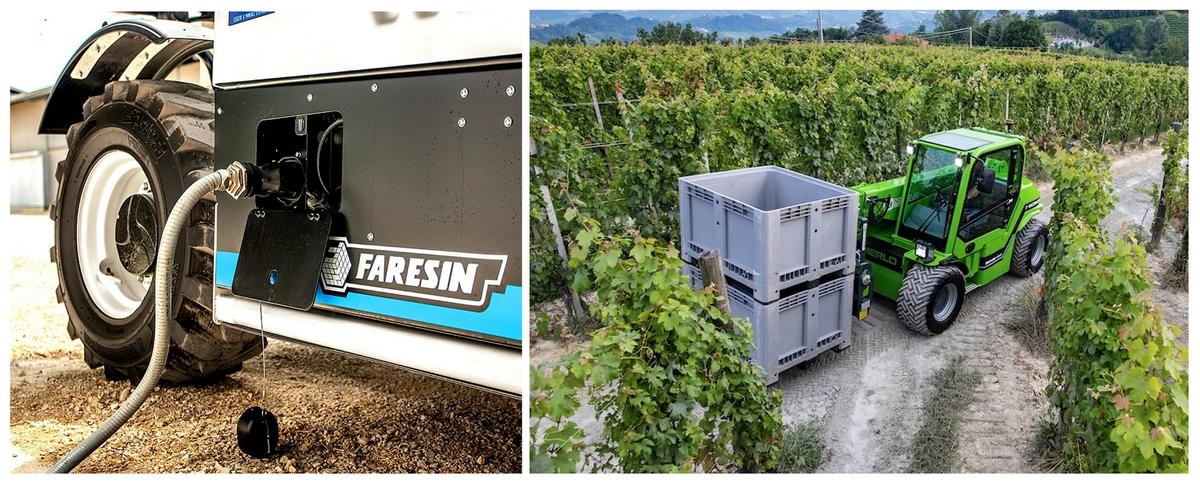
The company Dieci from Montecchio Emilia (RE) lists the Mini Agri-e in its catalog, equipped with one or two lithium batteries with a maximum capacity of up to 44 kWh, rechargeable using 3 different options, at the column, or via 220 or 380 V industrial sockets. Equipped with two motors, one for traction and the other serving the hydraulic system (19 and 22 kW respectively), it offers a maximum lifting height of 5.7 m, a capacity of 2,600 kg and a travel speed of up to 24 km/h. It can be managed with 3 different driving strategies, aptly described by their names: Standard, Eco and Power. Another model with similar lifting performance to the previous one is that offered by Faresin from Breganze (VI): it has an 80V battery pack with 24, 32 or 43 kWh capacities, two motors (30 kW for traction and 18 kW for hydraulic services) and a maximum speed of 12 km/h. Its overall mass is 4,800 kg, with a turning radius of only 3.25 m. Of interest are its multiple charging options, with the manufacturer stating that it takes just 3 hours to charge the battery using the integrated rapid charger.
The French company Manitou also offers an electric agricultural telehandler in the size detailed above. The MLT 625e model has a maximum lifting height of 5.9 m and a capacity of 2,500 kg. Its battery pack is 100 V, with a total capacity of 35 kWh; the traction motor is a generous 40 kW, while the one dedicated to hydraulic services is 30 kW. The vehicle has a maximum speed of 20 km/h. Still on the subject, but with a larger size, the fruitful collaboration between Liebherr and Claas has yielded the Scorpion 732-e model in the Claas catalog which, as attested to by the name, can lift loads up to approximately 7 m and has a maximum capacity of 3,200 kg. It is equipped with two high-performance electric motors, each with 90 kW, powered by a 64 kWh battery, which the manufacturer claims is suitable for up to 4 hours of operation, which is recharged via an integrated 22 kW charger on board. The travel speed reaches a top speed 30 km/h.
The German company Kramer lists the KT144E model in its catalog. It is equipped with a 96 V battery pack with a capacity of up to 28 kWh, rechargeable with an integrated 6 kW charger, and a battery life of 4 hours, as declared by the manufacturer. It is equipped with two electric motors, one for traction (23 kW, for speeds up to 25 km/h) and one for hydraulics (25 kW) which drives a 42 l/min pump. It offers a payload of 1,450 kg, with a reachable height of up to 3.4 m. The mass in operating conditions is 3,250 kg.