4.0 Technologies, site-specific weed management
Herbicides are essential to ensure high production yields, but their intensive use poses increasing agronomic and environmental challenges. Precision agriculture technologies offer a concrete response, allowing intervention only where necessary
Herbicides account for over a third of all plant protection products used in the European Union, their intensive use poses a significant environmental risk, especially in highly specialized agricultural settings. In such contexts, the widespread use of these products is associated with potential critical issues for the quality and safety of surface and groundwater, as well as risks (still not fully understood and assessed) for human health and the protection of biodiversity; these risks are attributable to the degradation products of the active ingredients.
The literature also shows how the substances most frequently detected in water, sometimes at concentrations exceeding regulatory limits, are attributable to some of the main herbicide active ingredients, including glyphosate, terbuthylazine and bentazone, widely used for weed control in pre- and post-emergence interventions on corn and open-field herbaceous crops.
However, weed management is a cornerstone of modern agricultural systems, as weeds are indeed the main biotic factor reducing crop yields on a global scale. In this scenario, both at the European and global level, there has been a growing dependence on the use of herbicides (and more generally on plant protection products), recognized for their contribution to maintaining adequate production levels and the security of agri-food supplies, to the extent that in some cropping systems, based on genetically modified varieties tolerant to herbicides, they represent the only control method adopted. However, the adoption of highly simplified management models, although operationally advantageous, over time favors the selection of resistant biotypes, with a consequent progressive reduction in the effectiveness of interventions and the need to increase the dosages of the active ingredients used.
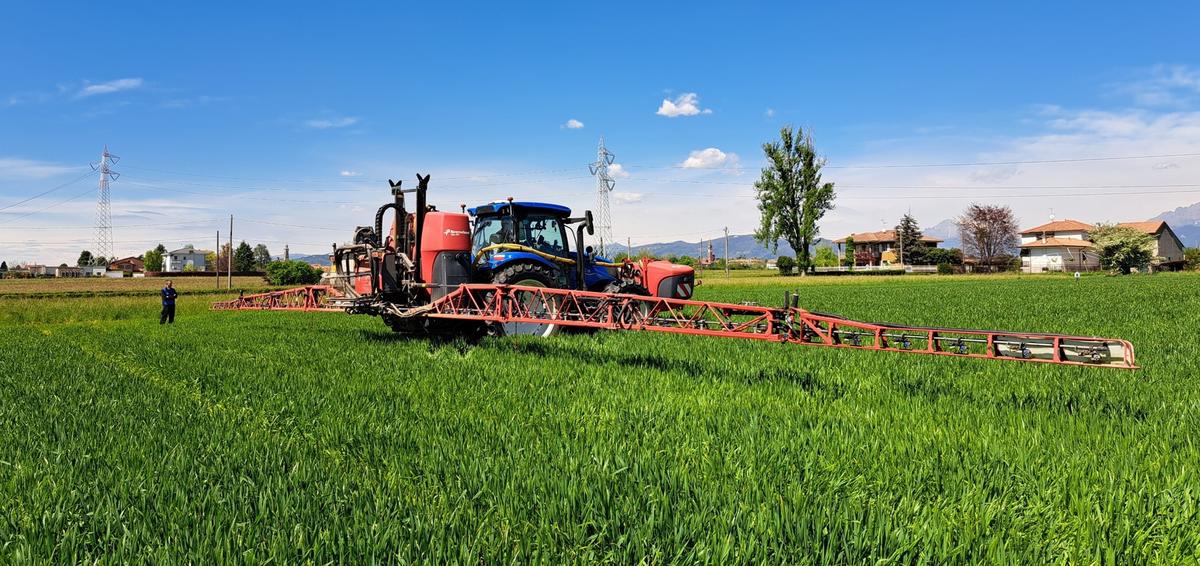
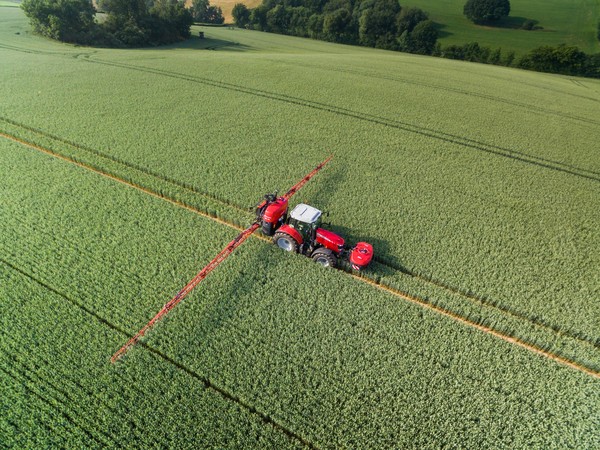
Faced with these challenges, the use of precision agriculture techniques and decision support systems based on field data can facilitate a rapid transition to management systems with reduced use of chemical herbicides, also supported by tax incentives. Farms today have new-generation tractors, equipped with RTK satellite guidance systems and ISOBUS interfaces, but also advanced spray booms, capable of variable-rate distribution, with effective section or even single-nozzle control.
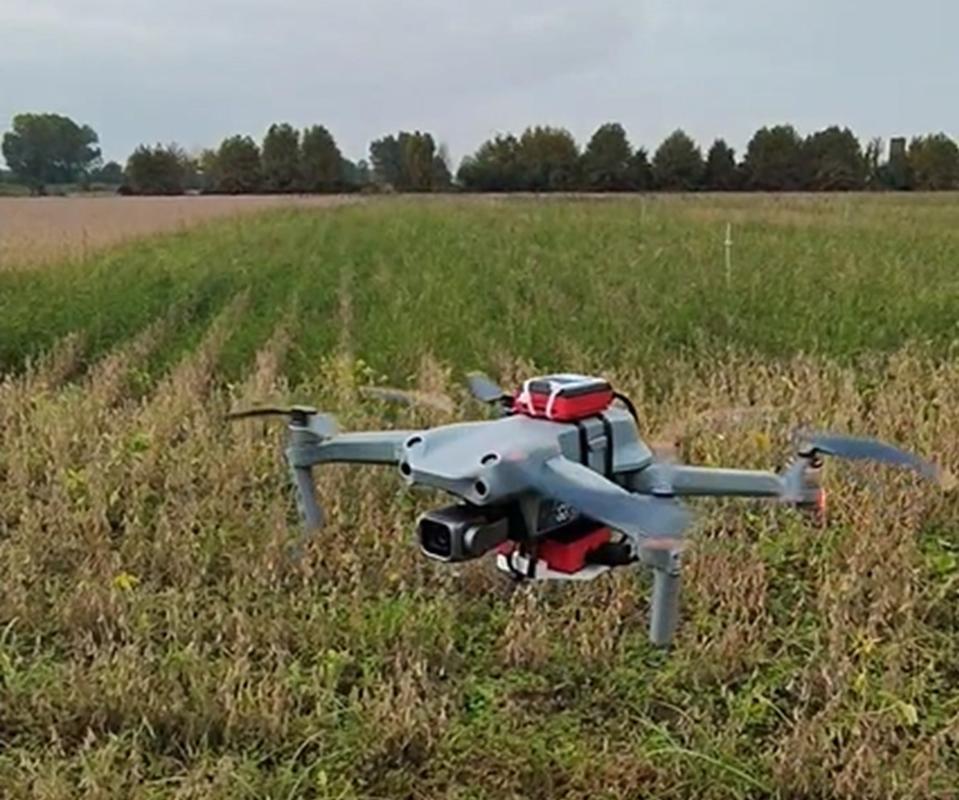
In fact, solutions for site-specific weed management are already commercially available. These solutions deliver the product only where weeds are present, with variable-dose distribution based on patch spraying. These solutions can be activated according to instantaneous prescriptions, with the support of sensors applied directly to the equipment (on-the-go applications) or on prescription maps created through preventive field monitoring, even with the support of drones.
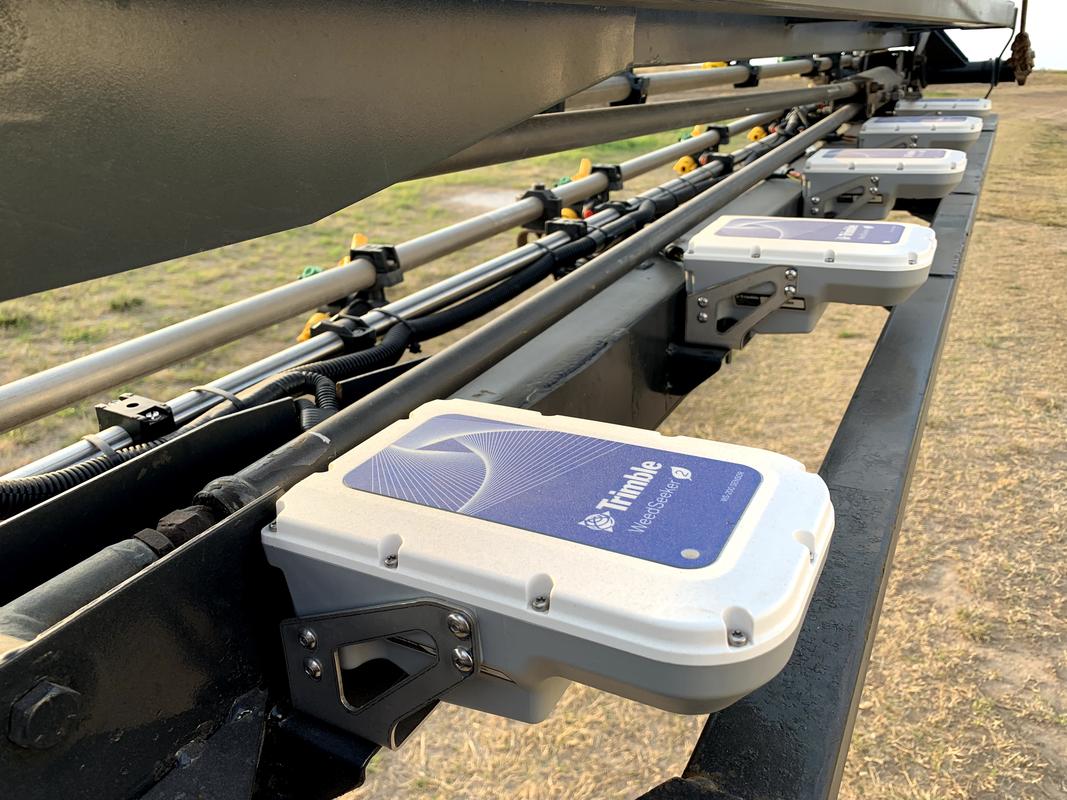
Patch-spraying. One of the best-known systems of this type is the WeedSeeker 2 developed by Trimble, which uses active optical sensors (i.e. independent of sunlight intensity) capable of detecting weeds, together with precision nozzles capable of carrying out herbicide treatment in real time.
The operating principle is based on the spectral reflectance of vegetation: plants are characterizzed by their characteristic response to light radiation, absorbing radiation in the red range and reflecting it in the near-infrared range. This allows the WeedSeeker 2 to distinguish between bare soil and vegetation in real time; implementation is ensured by a classification algorithm that translates the optical measurement into an immediate action, activating (or not activating) an individual nozzle. This is an extremely fast binary logic (a few milliseconds), which allows for a discontinuous and selective distribution of the herbicide, at centimeter resolution. In fact, the system can be considered a form of VRT (Variable Rate Technology), albeit in the more basic “on/off” version. The agronomic benefits are significant: reductions in herbicide use of up to 70–95% and less selective pressure on weeds are reported. However, performance depends on the operating context: the system performs best with isolated weeds, while it encounters greater difficulties in conditions of dense vegetation cover.
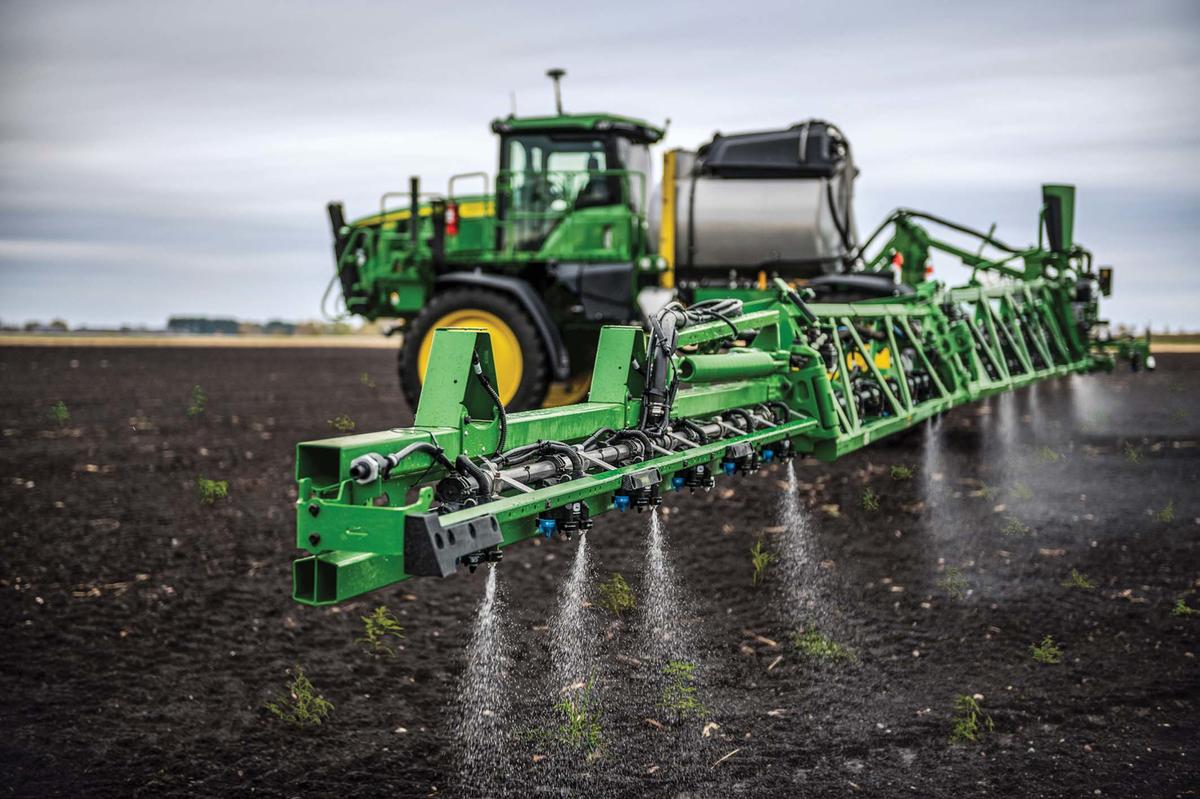
John Deere's “See & Spray” system works according to a similar logic, representing one of the most advanced solutions in precision plant protection, marking a clear evolution compared to traditional open-field herbicide treatments. The principle is that of selective distribution, based on the combined use of artificial vision and intelligence, operating in real time. A network of high definition video cameras (up to 36 units distributed along the spray boom) is able to continuously acquire images of the soil and vegetation; the data is processed in a few milliseconds by machine learning models trained to recognize weeds even in complex “green-on-green” conditions (i.e. in vegetation with different shades of green). Compared to traditional optical systems based on reflectance alone, here recognition is morphological and spatial in nature, with a potential increase in selectivity. From an operational point of view, the weed control intervention is precise: each sprayer nozzle is activated only in the presence of weeds, with response times of less than 200 milliseconds. The result is an extremely targeted distribution of herbicides, which allows for average reductions of around 70%, with clear economic and environmental benefits.
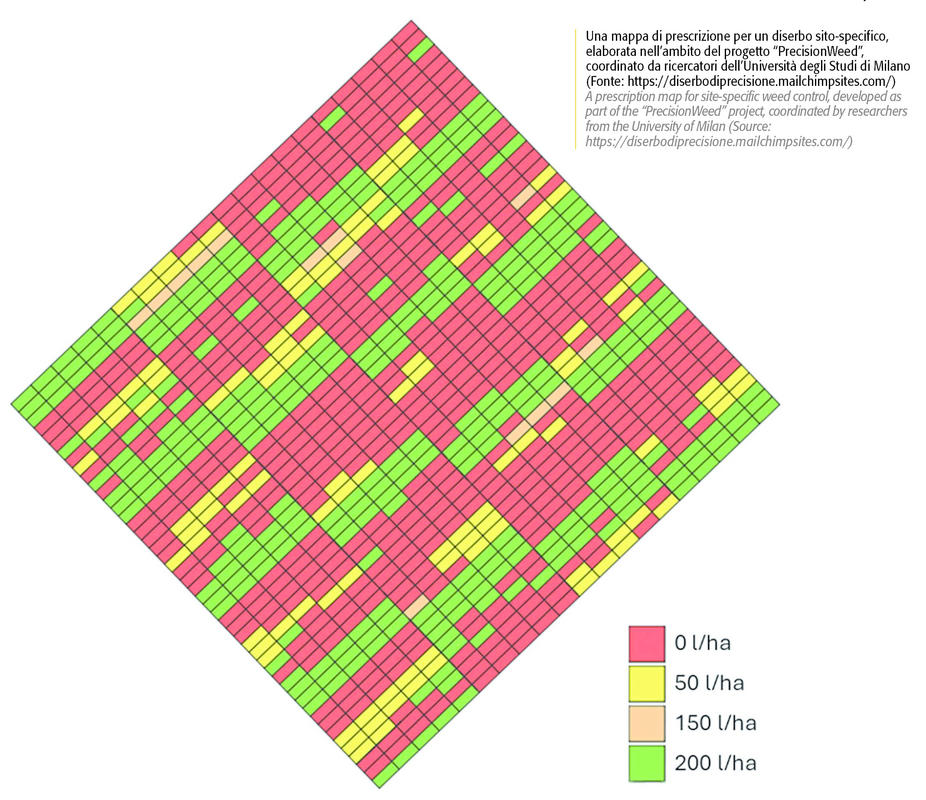
Prescription maps. Automatic control of boom sections or even individual nozzles integrated with GNSS georeferencing offers a further concrete possibility for targeted herbicide distribution, overcoming the logic of uniform treatment across the entire surface of the plot. This approach is based on a well-known agronomic characterization, namely that, as a rule, weeds are not distributed randomly within the plot, but tend to proliferate in aggregate, with areas of high infestation alternating with areas of little or no infestation. In many cases, especially in the presence of perennial species, the location of these areas is also relatively stable over time.
To obtain sufficiently accurate mapping, one of the most widespread solutions today is the use of UAV (Unmanned Aerial Vehicle) drones equipped with multi-spectral sensors. Operating at a low height from the ground (40-60 m), these systems are able to provide very high resolution images, even lower than 3 cm, offering considerable operational flexibility, with efficient surveys at key moments in the vegetative cycle, both of the crop and of the weeds. However, current technology limitations are linked precisely to the nature of the sensors used, which are based on measuring reflectance. This approach does not in most cases allow us to reliably distinguish weeds from crops or to discriminate between different species. Consequently, practical applications are mainly concentrated in the pre-sowing phases or in direct seeding solutions, where the contrast between vegetation and soil is more evident.
After acquiring the location of the weeds, it is possible to develop prescription maps aimed at site-specific spraying, modulating the doses according to the intensity of the infestation and intervening only when predefined thresholds are exceeded.
Experimental results confirm the effectiveness of this approach: the differentiated application of herbicides allows for dose reductions of up to 80-90%, maintaining control levels between 85 and 98%, without significant increases in the degree of infestation in subsequent years. From this perspective, site-specific herbicide application appears to be one of the most promising tools for combining agronomic efficiency, farm economic sustainability, and environmental protection.