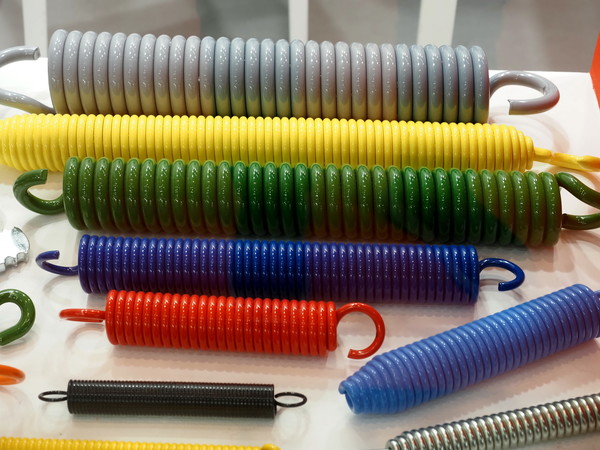
The evolution of springs in agricultural machinery
Springs are essential components for the proper operation of agricultural machinery, as they absorb shocks, allow tools to adapt to the terrain, protect mechanical parts, and improve operators comfort
Although they are relatively simple components, springs play a fundamental role in agricultural machinery, absorbing shocks, static and dynamic stresses, and vibrations. Thanks to their elasticity, springs allow implements to adapt to the surface profile of the terrain (often extremely uneven), maintaining effective contact without damaging the working parts, even at high speeds. They help protect the mechanical parts of the vehicles, reducing wear and the risk of breakage. They improve driver comfort on self-propelled vehicles by reducing transmitted vibrations. Here below is an overview, admittedly incomplete, of the design and technical-performance characteristics of the modern springs commonly in use nowadays in agricultural machinery.
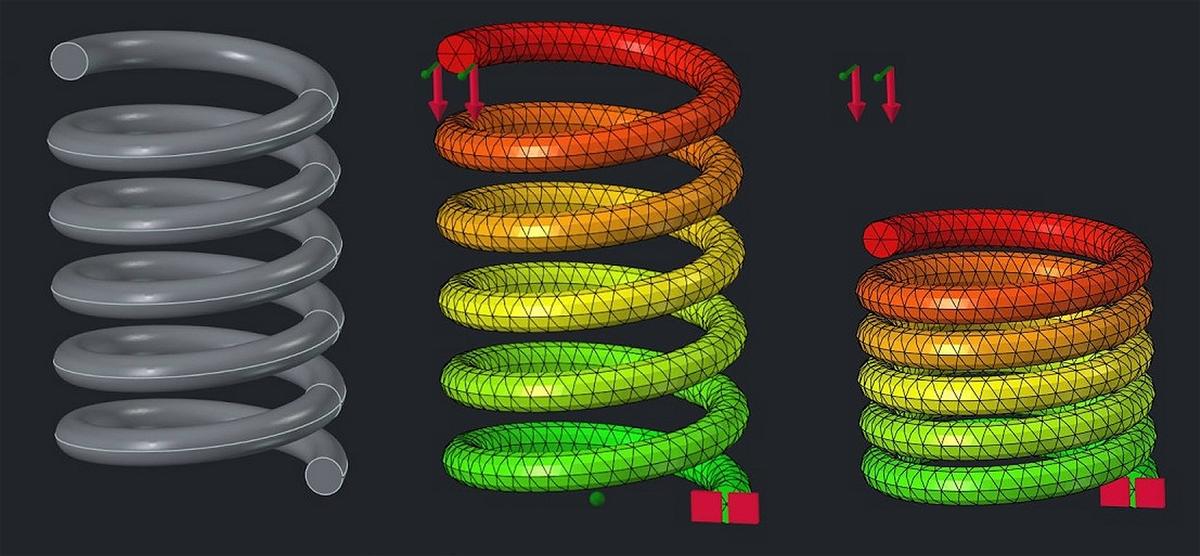
Optimized Design. Modern spring design is no longer based solely on practical experience validated by field tests, but uses modern and consolidated computer-aided techniques, such as CAD, finite element modeling (FEM) and subsequent dynamic analysis. This makes it possible to study the behavior of the spring in the design phase, and to predict how it will react to stresses with an excellent level of detail. Virtual simulations make it possible to precisely identify the critical points where stresses are concentrated and intervene accordingly by modifying their shape or thickness.
This has allowed us to create increasingly "tailor-made" springs for each specific need, taking into account the type of cultivation, the characteristics of the soil and the crop, and the forces involved. Spring designs have also evolved: alongside traditional coil springs, flexible tines are now available, with geometries designed for specific types of flexion, or leaf springs optimized to better distribute loads, absorb impacts and adapt to obstacles such as stones or large clods, while maintaining uniform soil cultivation.
Advanced Materials. There has been a widespread transition in the manufacture of springs from steels with a medium-high carbon content (classified as C50 to C80, with a carbon content varying between 0.5 and 0.8%), to so-called “high-strength” steels, which contain additional elements such as silicon, chromium, vanadium, and manganese. This has made it possible to obtain lighter, and at the same time much more robust springs that are able to withstand high stresses without breaking.
The alloy steels often used to make springs are silicon-manganese (55Si7, 60SiCr7). Silicon increases elasticity and fatigue resistance, while manganese improves toughness. Another suitable type is chrome-vanadium steel (for example 50CrV4), used to make springs that must provide long-term reliability. In this case, chromium increases resistance to wear and corrosion, while vanadium helps improve the internal structure of the material, making it more resistant to breakage even after many work cycles. Chrome-silicon springs (51CrV4 or similar) are also available if very high performance is required in terms of fatigue resistance and stability under extreme stress.
Another option is that of heat treatments to provide greater elasticity and better ability to return to the original shape after the traditional traction or compression cycle, preventing permanent deformations that could compromise the quality of the work.
An alternative to steel that is still under development but seems very promising is that of composite materials, such as glass fiber or carbon fiber, which are characterized by high corrosion resistance and low weight. These therefore make for an interesting option especially for applications in particularly aggressive environments, or where lightness is a key factor.
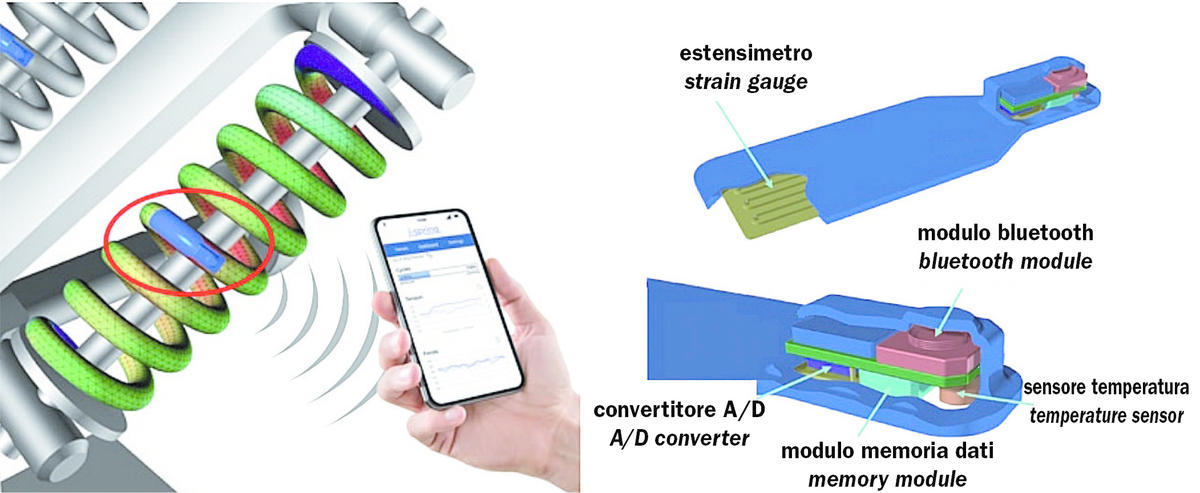
Sensor-fitted and “Smart” Springs. The integration of agricultural machinery with sensors and connected electronic systems has led to a significant evolution in the role of springs, which from simple mechanical elements have now become active and "smart" components, capable of "communicating" with the other components of the vehicle, dynamically adapting to working conditions. In newer agricultural machinery, springs can be combined with load and vibration sensors, which detect the forces applied and the stresses experienced in real time in order to monitor the behavior of the implement, sending the resulting information to the control unit which immediately processes the necessary actions.
The information coming from the sensor-fitted springs can be integrated with georeferencing coordinates, soil maps or other agronomic data, for extremely targeted management of processing, extending the application of the variable rate principle. Without a doubt one of the areas that benefits most from this integrated spring management is the automatic regulation of the pressure of the working parts on the ground, typically in surface tillage and sowing. Based on the information received, the system can modify the behavior of the springs, to maintain a constant working depth or intensity of action. At the same time, innovative mechanical solutions are also being developed to reduce vibrations, using springs with optimized geometries and combined with elastic materials, such as elastomer elements (neoprene, nitrile, polyurethane, etc.).
The result is a significant reduction in transmitted vibrations, with a reduction in stress on mechanical components, limiting wear and extending their useful life, and an increase in operator comfort on self-propelled vehicles.
Variable Load Systems. Especially on harrows, cultivators, and seed drills - i.e., equipment that interacts with the surface layer of the soil - springs automatically adjust their stiffness based on operating conditions, increasing the force exerted on compact soils and, above all, decreasing it on soft soils, to avoid compromising their physical structure. In practice, this all translates into optimal pressure on the ground for a more uniform action of the working parts without the need for continuous intervention by the operator.
Sustainability. The use of advanced springs makes a concrete contribution to improving the sustainability of mechanized processes. One of the main benefits is reduced fuel consumption: springs built with advanced materials and sophisticated geometries allow the working parts to slide better in the ground, requiring less effort from the tractor, thus resulting in significant diesel savings, especially when compared to the large surfaces worked. Another key aspect is less soil compaction, as the pressure exerted by the tool's elements is distributed more evenly. Furthermore, innovations in the materials and shape of the springs allow them to last longer, with greater resistance to fatigue, wear and corrosion. In addition to the obvious economic savings, the reduction of impacts inherent in the production of starting materials and the disposal of end-of-life parts must also be taken into account.
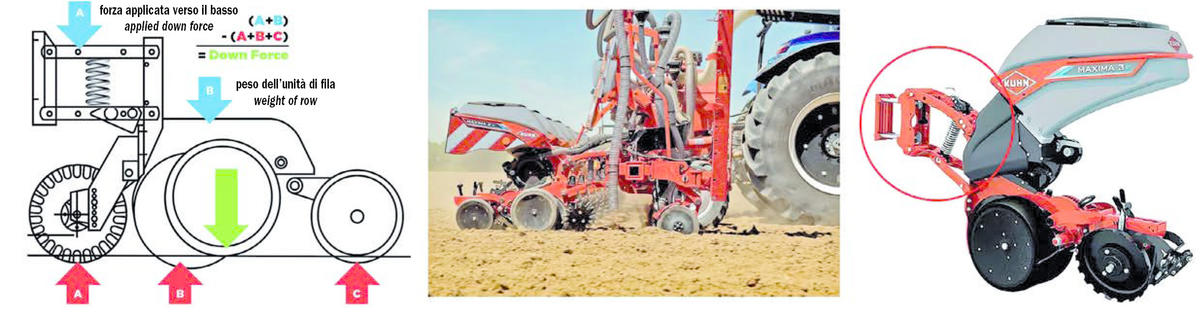
Some Typical Applications. In precision seed drills, each seeding element is equipped with mechanical springs (or equivalent hydraulic or pneumatic devices) that regulate the pressure of the unit on the ground. Some advanced models use systems that render the so-called “downforce” (i.e. the vertical load on the depth wheels) variable, automatically modifying it according to the compactness of the soil, to ensure a constant sowing depth.
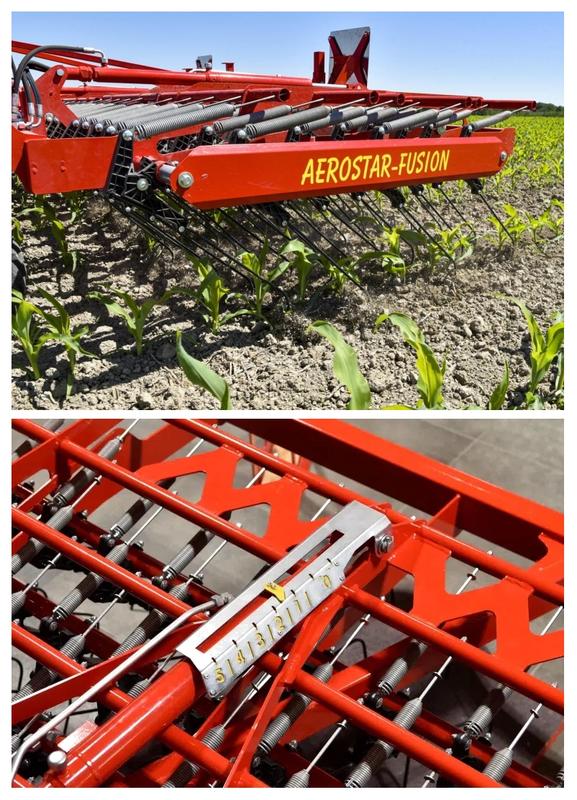
In some modern versions of spring-tine harrows or weeder harrows, springs are used to control the pressure of the tines on the soil. Their tension can be adjusted centrally (even from the driver's seat) or adjusted automatically, allowing for more aggressive or gentle work depending on soil conditions or the stage of the crop.
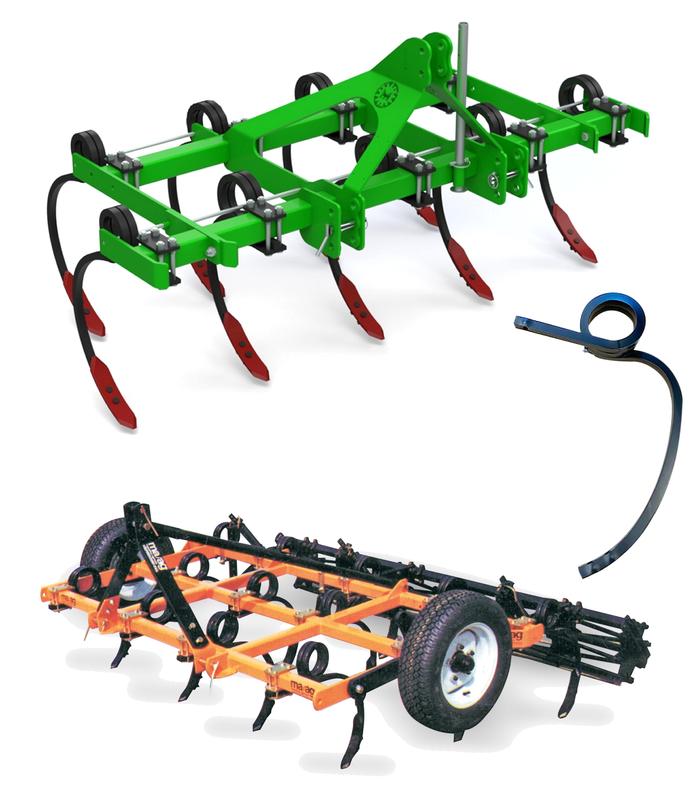
Similarly, on spring-tine cultivators, springs allow the tines to flex when they encounter obstacles: in more advanced systems, the stiffness can vary to maintain a constant working depth.
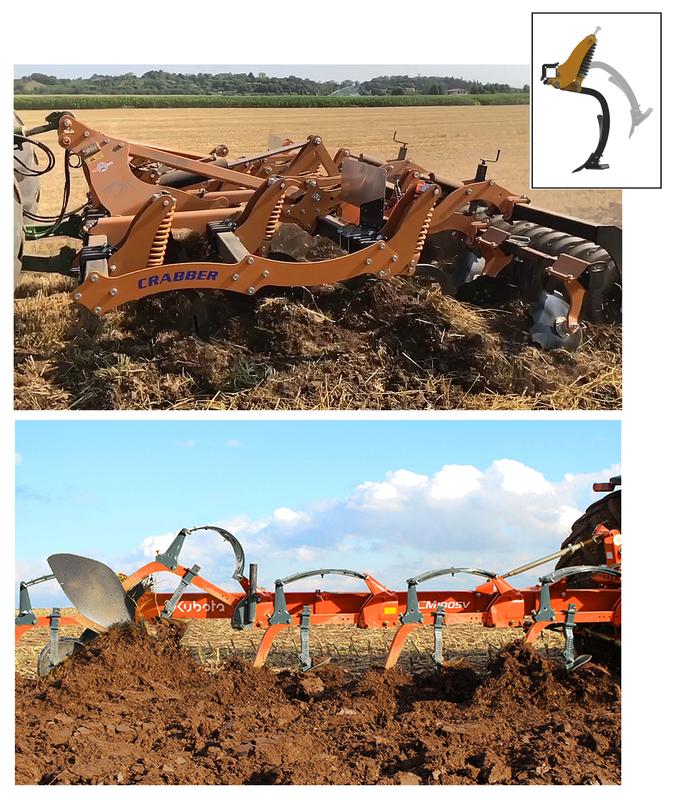
Some models usefully integrate systems that combine springs and hydraulic adjustments to adapt the behavior of the tool during advancement. Weeders also use manually or automatically adjustable preload springs to react to changes in soil consistency by modifying the force exerted on the working parts. Another important use of springs on agricultural machinery concerns the integrity of the working parts to prevent damage and breakages. A well-known example is the “non-stop” devices on plows: if the plow encounters obstacles such as stones, roots or other hard objects present in the soil the protection system ensures that the entire body of the plow immediately lifts automatically, overcoming the obstacle with the advancement of the tool.
In addition to the shear bolt - a simple, effective, but irreversible solution (in the sense that it is necessary to replace a broken bolt with an identical one) - and the advanced, but expensive, solution that uses hydraulic cylinders with attached nitrogen shock absorbers, the mechanical version in which robust spiral or leaf springs are used makes for a good compromise, especially since it is a fully reversible operation, one that does not require any maintenance or repair after the springs have come into operation by compressing.
Special Springs
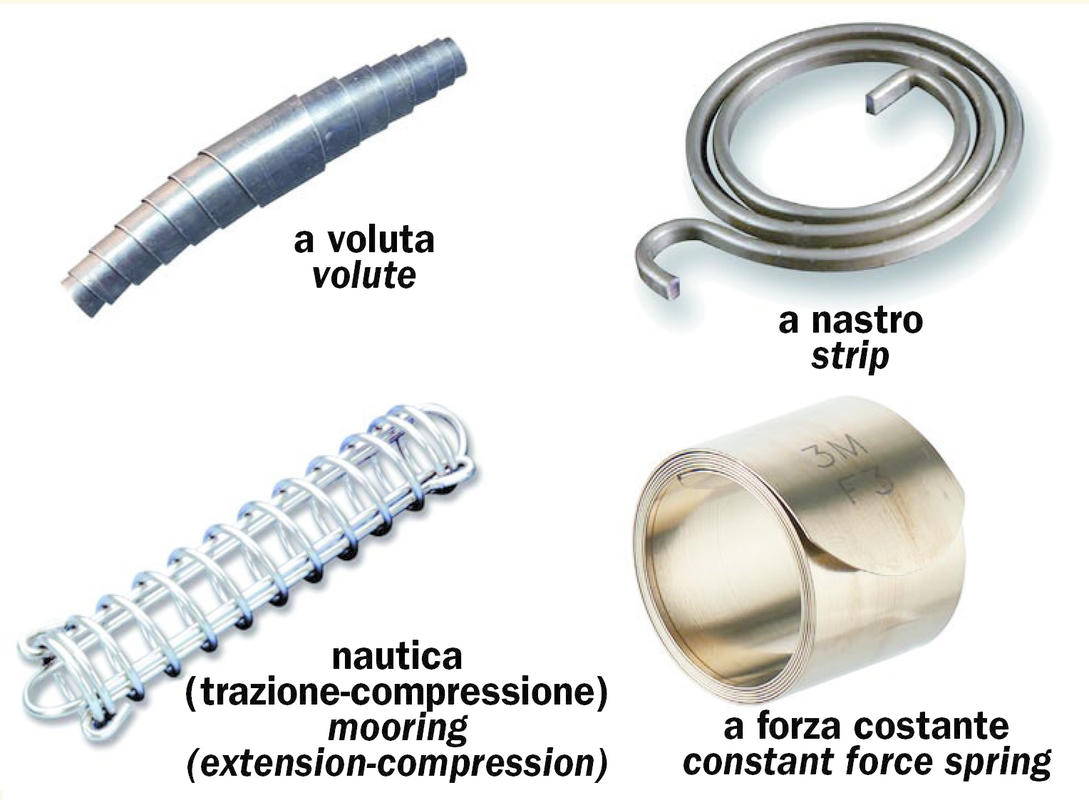
In addition to the more traditional springs that work by means of traction, compression or torsion, there are also numerous other types of (so-called "special") springs that differ by shape, operating mode and area of use. Without claiming to fully explore the topic (which is extremely vast in scope), here we will mention: ribbon springs with a flat section shaped in concentric windings,
cup springs which work by means of compression and typically have a disc shape, like a truncated cone-shaped washer in appearance, leaf springs that also work by means of compression and are comprised of multiple metal sheets, volute springs that are typically used on shears and similar work tools (they are made using a metal strip whose windings, rather than being flat as in ribbon springs, are arranged in a spiral, giving the device a conical or biconical shape), and constant force springs which take the form of an extremely compact flat ribbon wound around a mandrel, which after reaching the maximum load under tension exerts a constant force. Another particular type of spring is the spring line typically used for mooring boats, whose characteristic structure allows the spring to work simultaneously using tension and compression.
Surface treatments of springs
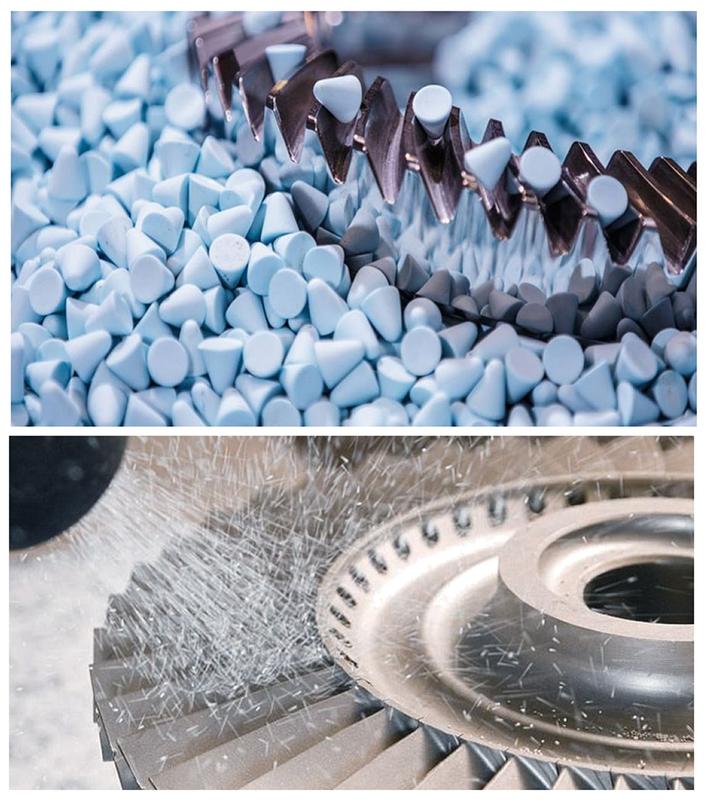
To ensure greater resistance, longer life, and a pleasing aesthetic appearance, the materials used to construct springs are subjected to various treatments for the purpose of increasing the robustness of the finished product, protecting it from corrosion, and more generally minimizing the potential damage caused by harsh environmental conditions, such as those typically found in agriculture. The main treatments in use are concerned with protection from corrosion. Specifically: burnishing to prevent oxidation of the metal and, when necessary, also to give a dark color to the surface of the treated piece; galvanizing also offers (at least partial) protection from corrosive agents, by applying a thin layer of zinc over the entire surface of the wire before the spring is made; GEOMET® a commercially patented process aimed at the non-galvanic coating of metal based on zinc and aluminium, with anti-corrosive efficacy (it is suitable for elements that may come into contact with aggressive chemical substances, such as acids for example); phosphating, in addition to a higher resistance to corrosion, represents a valid substrate for subsequent painting; tumbling, a finish applied to stamped or cast metal materials using abrasive elements often to remove burrs, and/or to dull, descale, and remove rust (achieved by rolling inside a drum called a sifter); shot peening is a finishing process for the hardening of cast or stamped metal pieces, carried out by violent impact with very small spheres, kept in vortical motion by centrifugal impellers or flows of compressed air. When using powder coating the metal is coated with a film of paint, which is made to adhere to the surface electrostatically, improving the aesthetic appearance of the finished product and limiting sensitivity to aggressive agents, such as corrosion. Finally, cataphoresis painting offers an anti-corrosion treatment of metal elements by depositing epoxy or acrylic resins.