
Carbon farming: how agriculture can control the climate
Soil is the main terrestrial carbon sink, and good agricultural practices can remove large amounts of climate-altering gases from the atmosphere. In order to achieve the climate neutrality goal set for 2050, Europe is seeking to reward carbon farming with a voluntary carbon credit mechanism
It is well known that Europe – following the COP 21 in Paris (2015) – has, with the Green Deal (2019), undetaken a complex and articulated path towards the decarbonization of human activities in the hope of achieving so-called climate neutrality by 2050, which is to say, the elimination of greenhouse gas emissions - and negative emissions to follow - as a means of combatting the phenomenon of global warming. With this in mind, in 2021, the European Commission took an intermediate step by laying out the "Fit for 55 Package," a set of legislative proposals aimed at reducing greenhouse gas emissions - estimated at 225 million tons - by at least 55% by 2030. To this end, the key sectors requiring action be taken with stringent regulations and incentives have been identified: transport, construction, industry and - last but not least - agriculture and forestry.
Indeed, the role played by the primary sector in this challenge is of enormous importance, given that soil is the main terrestrial reservoir of carbon, containing huge quantities estimated at around 1,500 petagrams (1,500 billion tons), a value that corresponds to double the atmospheric amount and triple that contained in biomass. Soil care, among the many ecosystem services it generates, also has concrete implications for climate control. A release of 10% of soil organic carbon (SOC) is comparable to all anthropogenic emissions of CO2 producible within 30 years.
For these reasons, talking about carbon farming today carries enormous strategic significance from countless points of view that align - further enhancing its effectiveness - with the eco-schemes envisaged by the Common Agricultural Policy (CAP) 2023-2027.
In this perspective, EU Regulation 2024/3012 of the European Parliament and of the Council of November 27, 2024 is today the main regulatory reference that "establishes a voluntary Union certification framework for permanent carbon removals, low-carbon agriculture and carbon sequestration in products”. This measure aims to stimulate investments in both innovative carbon removal technologies and sustainable carbon farming solutions, while addressing greenwashing and thus contributing to the Union's climate neutrality objective.
It should be clarified that Carbon Farming cannot be considered a single practice, but rather a systemic strategy that brings together agricultural and forestry management techniques and practices aimed at maximizing the capacity of soil and plant biomass to absorb CO2 from the atmosphere and store it in the soil. Incidentally, higher SOC contents also reduce emissions of nitrous oxide (N2O), a greenhouse gas about 300 times greater than CO2. In fact, an increase in SOC corresponds to an improvement in soil structure due to greater porosity which in turn positively influences microbial activity in the processes (nitrification and denitrification) with which these organisms process nitrogen. Furthermore, soils rich in SOC are able to retain more water and thus, in addition to resisting erosion, are able to better support crops in case of drought years, providing a natural resource in the face of climate change.
Agronomic Practices
To enable carbon capture in soils, the interventions identified by the regulation include:
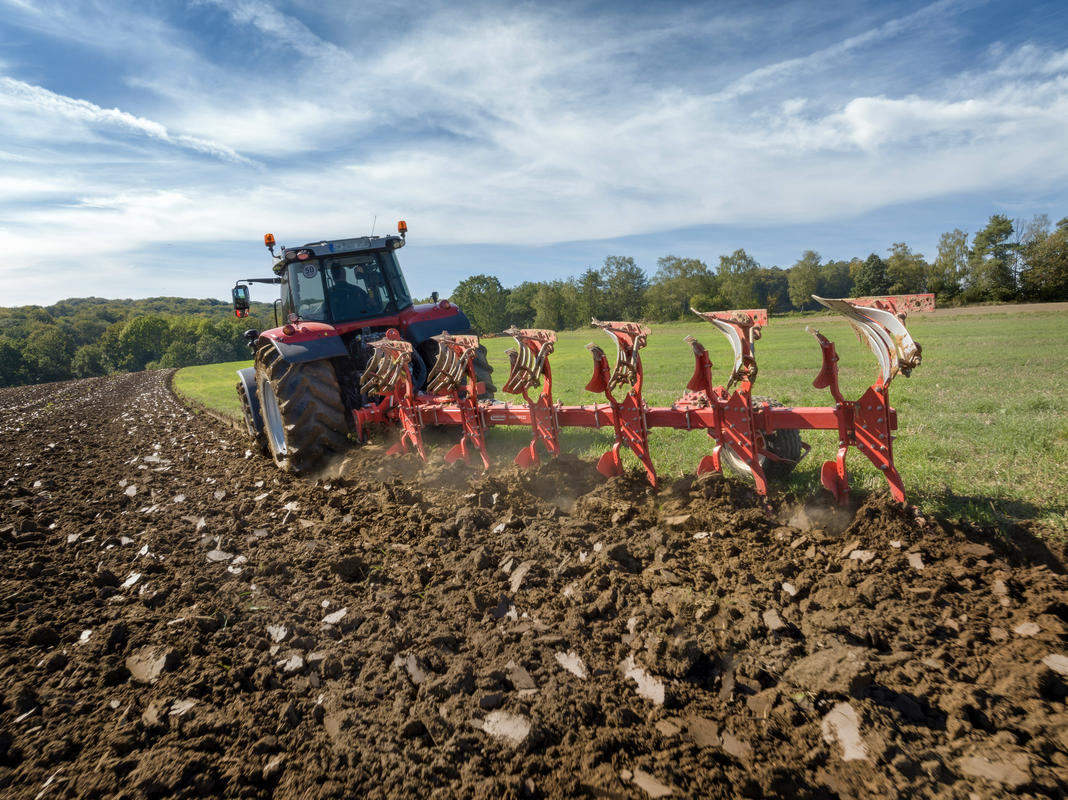
- Low-till or no-till: Using conservative practices to maintain soil structure while preventing stored carbon from being released into the air. Agricultural mechanization can provide important support with the most modern technologies related to precision agriculture.
- Cover crops: in addition to increasing organic matter, these significantly reduce soil erosion processes.
- Crop residue management: aiming to maintain residual biomass in the field.
- Agroforestry: integrating trees and shrubs into crops or pastures, preserving and strengthening hedges and rows.
- Use of organic amendments: application of livestock effluents, digestate, compost, or biochar to increase natural organic matter rather than synthetic chemicals.
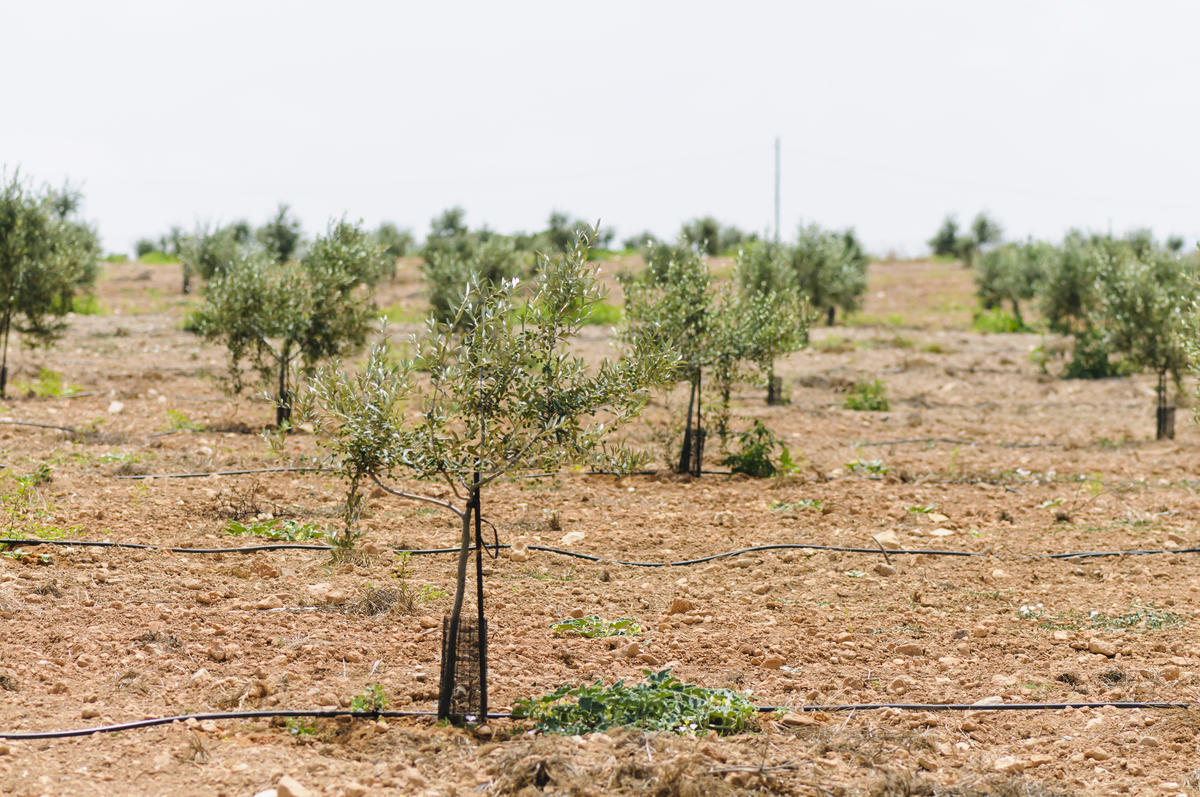
- Planting of new permanent crops (orchards, vineyards, and olive groves) in which two or more agricultural activities are carried out.
Given that the aforementioned practices can contribute to increasing soil carbon stocks - again depending on the possible options and their combinations, techniques adopted, soil and climate characteristics and geographical contexts, etc. - it is necessary to establish how to make this carbon capture quantifiable (measurable, verifiable and recognized) for the purposes of climate neutrality by 2050.
According to the regulation, all of this must be certified by providing: a description of the application of the "Quality" criteria; estimates of the total carbon removals, total emissions from land, and total greenhouse gas emissions associated with the activity, and the net benefits generated.
The Quality Criteria
To quantify and validate the net benefit generated by the good practices implemented, three elements are considered necessary: additionality, permanence and sustainability.
Additionality refers to the positive effects that increase those already established by law. To ensure additionality, it is necessary to identify a starting scenario or baseline. For the agricultural sector, this means a baseline specific for activities based on soil sampling and laboratory analysis, or on the use of models. For the forestry sector, a standardized reference scenario is envisaged based on different approaches: use of the Carbon Budget Model of the Canadian Forest Sector (CBM), use of forest growth models, or use of national forest inventories. A standardized baseline of zero is being proposed for agroforestry, as agroforestry practices are currently not widespread in Europe, and therefore the intention is to encourage and reward such activities.
Permanence refers to the duration of carbon storage in relation to the activity undertaken. While storage related to bioenergy production or direct carbon capture and storage in the atmosphere is considered permanent, storage related to carbon farming is considered temporary – with a time horizon of at least 5 years – and the time horizon stretches to at least 35 years for activities involving carbon storage in products.
As regards sustainability it is necessary to ensure that a series of collateral benefits are mandatory, such as the prevention of soil degradation or the protection and restoration of biodiversity. For monitoring and reporting non-mandatory co-benefits, operators can use approved methods developed under other certification schemes.
Carbon Credits
To encourage farmers to practice carbon farming, a carbon credit mechanism has been introduced which gives an economic value to CO2 atmospheric absorbed into the soil, inserting it into a vast market that includes both large emission-intensive companies (obligated) and numerous other entities involved for ethical or marketing reasons (spontaneous).
At present, this incentive does not appear particularly stimulating, given that the complexity of the system (monitoring of absorption, reporting of results, certification, etc.) corresponds to a low market value of the credits. In fact the price of a carbon credit, which is equivalent to 1 ton of CO2 absorbed, is subject to variations over time and stands at around a few dozen (10 – 30) euros.
This is an unattractive value if the farmer were to use it to cover the costs associated with adopting the aforementioned practices, especially if the farm area in question is small. Suffice it to say that, according to literature data, the annual carbon sequestration potential fluctuates - in relation to the possible contexts - on values within a range that goes from 0.1 to 1 t/ha/year of CO2.
Over time, the system is expected to evolve towards simplified and less costly forms of certification to validate the effects of carbon farming, and the value of the credits is expected to grow.
In any case, increasing soil organic carbon remains a very important commitment, not only to mitigate climate change or to profit from the sale of carbon credits, but above all to increase productivity and improve the quality of food and feed crops.