
Bioeconomy in Abruzzo: the success of the GESTA project
The project, funded by the Ministry of Agriculture and aimed at establishing an association for the active management of Abruzzo's forest heritage, ended last December. Activities carried out as part of the initiative
Last December, the project known by the acronym GESTA (Eco-sustainable Management of the Territory in Abruzzo) came to an end. The main result of this initiative, launched in 2022 thanks to funding from the Ministry of Agriculture, Food Sovereignty, and Forestry (MASAF), was the establishment and subsequent activation of a highly dynamic association that brought together numerous local entities and individuals who own or manage public, private, and collective property. The initial intention, which was fully achieved, was to align with the provisions of Article 10 of the Consolidated Law on Forests and Forestry Supply Chains (TUFF), which assigns to the regions the specific task of promoting land associations to ensure the protection and active management of agricultural, forestry, and pastoral resources, to ensure the improvement of abandoned land, and to encourage the reestablishment and consolidation of new business activities, also aimed at increasing employment. Article 10 also emphasizes the importance of joint management of small properties, public lands, collective properties, and civic uses by local populations. These aspects formed the backbone of the GESTA project. The actions carried out in the first three years of activity were, in fact, aimed at highlighting the opportunities offered by active forest management and at identifying the obstacles to be overcome to fully exploit resources, including the ecosystem services generated by forest heritage.
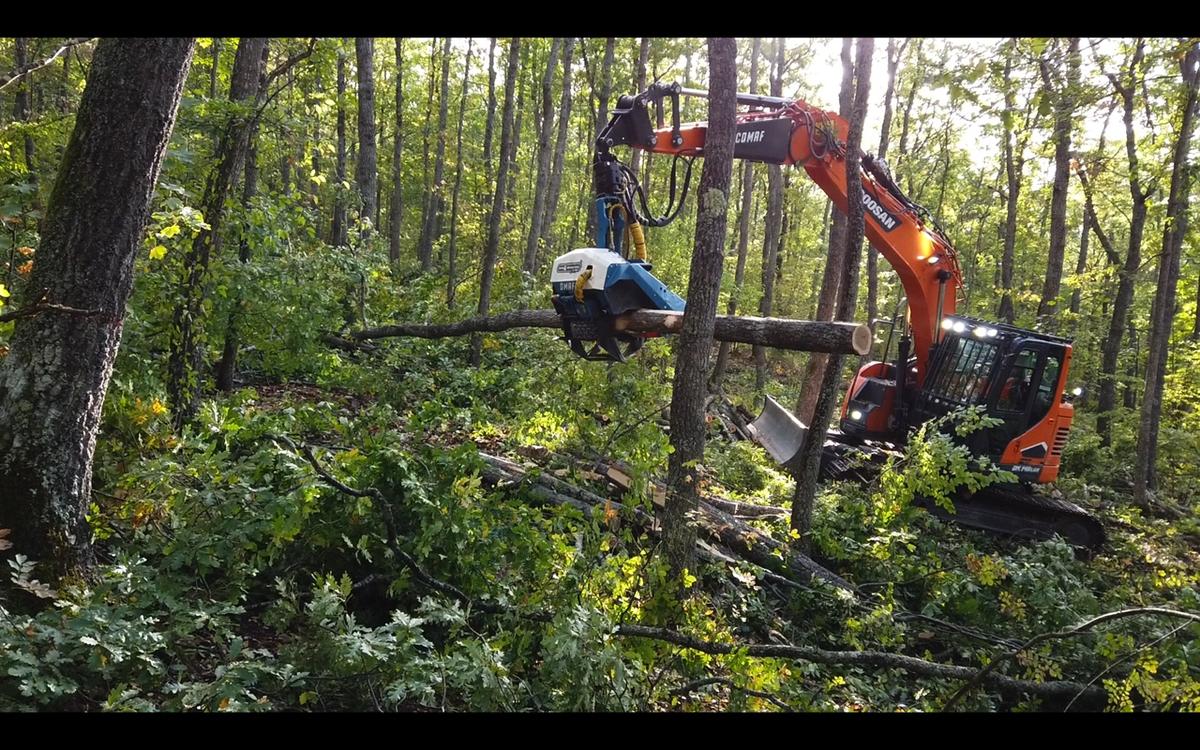
The demonstration site. In Abruzzo, over a third of the regional territory, covering just over a million hectares, falls within the context of protected natural areas and is characterized by a strong mountainous component with dense forest cover. This is precisely why there is a conflict between a conservative, or "museum-like," approach to forests and a dynamic, or "productive," one, which must be overcome. In this perspective, the mechanization of forestry operations is called upon to play a strategic role in ensuring the financial and social sustainability of the active management of our forests. The old systems based on manual labor with the help of pack animals are neither economically competitive nor socially acceptable due to the excessive fatigue and risk of accidents they entail. However, the use of increasingly agile and powerful machines amplifies environmental risks and therefore requires their professional, controlled use. To this end, GESTA, with the support of Itabia, CNR Ibe, and FederUnacoma, has developed an innovative working method based on the integration of animals and machines in a deciduous forest within the Gran Sasso and Monti della Laga National Park. The goal, which has been fully achieved, was to make working with animals more efficient and working with machines more eco-friendly. This combination, which the Park Authority also appreciated for the way it was planned, could be introduced at more work sites, reviving the current, very limited (and decreasing) availability of teams equipped with animals. At the same time, the new working method greatly mitigates the environmental impact of mechanization.
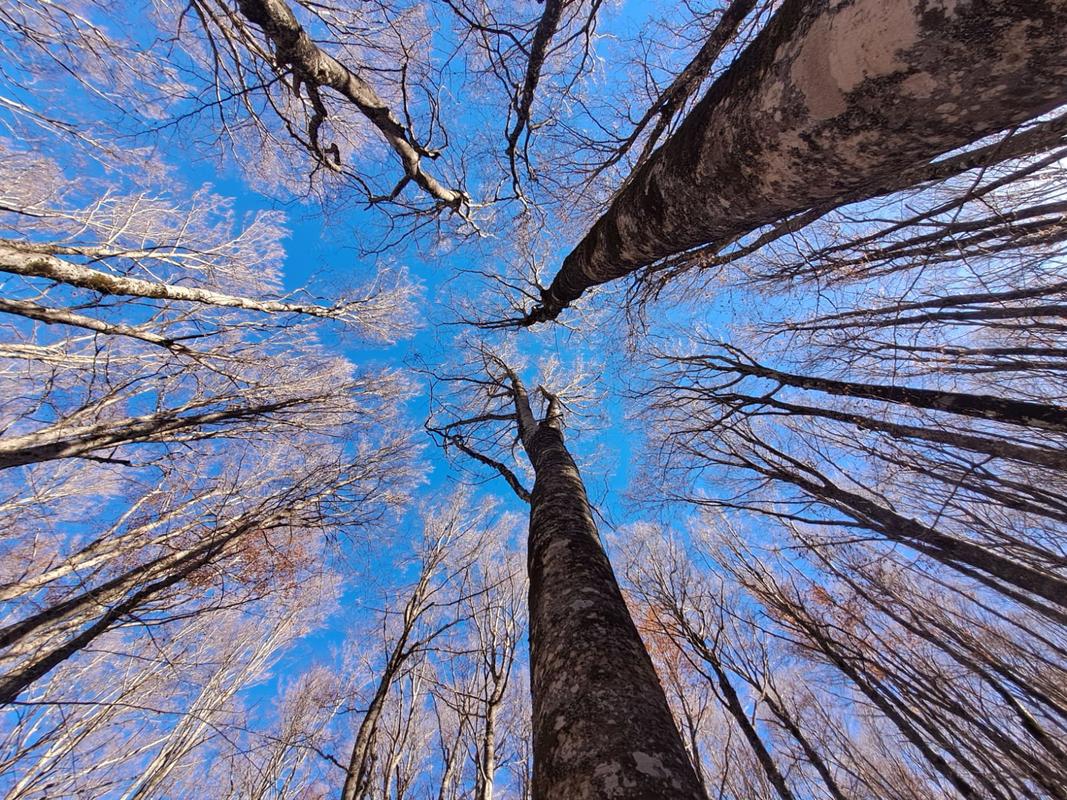
Lessons in the woods for modern forestry in Abruzzo. GESTA, in collaboration with Itabia, has organized several initiatives for young people in Abruzzo studying forestry-related subjects. In addition to classroom seminars, workshops held in a forest for students from two higher education institutes, Serpieri in Avezzano and Da Vinci – Colecchi in L'Aquila, were of great interest and usefulness. These initiatives, which others will follow, were aimed at putting into practice some modern forestry techniques for the active and sustainable management of Abruzzo's vast forest heritage ( ). The working days transformed two sample areas of approximately 5,000 square meters each, populated by tree species characteristic of the Apennine context, into an open-air laboratory. The first event was held in a beech forest in Prati di Tivo in the municipality of Pietra Camela (Teramo), followed by a pine forest planted in the 1950s in Fossa delle Pescine as part of a vast plan to repopulate the mountain slopes of the municipality of Pizzoli (L'Aquila) with vegetation. Both forests are located within the Gran Sasso and Monti della Laga National Park. Numerous activities were carried out in the field, including, for example, operations known as 'martelloscopio', which use a special kit of digital and analog tools to simulate 'virtual thinning' in full compliance with sustainable forest management criteria. Students and teachers, therefore, had the opportunity to witness real commercial logging operations carried out by forestry technicians from the local Geoilex Cooperative and to experience the different stages of forestry marking, from tree selection to marking specimens for removal. For example, in the test area at Fossa delle Pescine, 145 black pine trees (Pinus nigra) were surveyed - considering only those with a diameter greater than 18 cm - whose wood mass was estimated at approximately 146 m³; a considerable amount of biomass which, with a view to desirable forest maintenance and fire prevention, could be used as a renewable source of local energy.
The wood-energy supply chain. Among the entities with which GESTA has built a constructive dialogue over time, it is worth mentioning the Special Office for the Reconstruction of the Municipalities of the Crater (USRC), established in December 2012 following the end of the state of emergency declared after the earthquake of April 6, 2009.
The Office, which provides technical assistance for the reconstruction of public and private structures and infrastructure in 56 municipalities in the earthquake crater (excluding the city of L'Aquila) and over 100 municipalities outside the crater, can therefore play a strategic role in promoting the use and energy valorization of local biomass for heating a large number of buildings. With this in mind, an excellent technological solution to consider is mini biomass district heating networks integrated into locally built, complex wood-energy production chains. In fact, the sustainability of bioenergy depends on both the selection and sizing of energy conversion technologies and the ability to plan the supply of biofuel to feed the plant. It should be noted that the area affected by the earthquake is characterized by an impressive forest area, which requires adequate measures to protect the territory and relaunch sustainable forms of local economy. To this end, particular attention should be paid to defining efficient criteria for mobilizing wood products, which require specific techniques, equipment, and knowledge. Firstly, it is advisable to set up a center for the collection, conditioning, and distribution of local wood biomass. This lays the foundations for the launch of a 'certification' process for the forest-wood-energy supply chain that takes into account the 'sustainability' of the wood-fuel production process.
The prospects of GESTA. The dense network of contacts created over time and the new project proposals formulated within the framework of national and European calls for proposals will enable the GESTA association to continue operating in the years to come, even though the funding received from MASAF has been exhausted. Continuing to involve technical college and university students in knowledge transfer and the dissemination of good forestry practices will remain a strength and a source of pride for the GESTA association, which strongly believes in the development potential of the forests of Abruzzo within the broader circular bioeconomy.