Financial instruments supporting investments
The financial instruments supporting transactions with Italy do not pose any operational problems, thanks in part to the presence of Italian banks in the area. The role and projects promoted by the European Bank for Reconstruction and Development
The banking system in the area has established relations with Italy, and, in general, the instruments for transactions with Italy are part of an operation that does not pose any particular critical issues. However, Kosovo and Montenegro have unilaterally adopted the euro without authorization to issue currency. The other four countries essentially use the euro in foreign transactions.
The operations of our companies in these countries are facilitated by the presence of Italian banking groups (such as Intesa and Unicredit) with banks under local law. There are also international groups such as Raiffeisen, Erste, and Procredit, in addition to the aforementioned Turkish, Chinese, US, and other Eastern European institutions. This banking network provides added value, especially to companies with established local presence (or those intending to establish one), by facilitating traditional activities such as account management, access to credit, and local financial incentives. In particular, one tool that can be adopted by Italian banks present in the region is the transfer of credit lines granted to the parent company to the subsidiary, which, especially in the initial phase, may not have the standing required for independent access to credit. We conclude this article with a mention of the EBRD (European Bank for Reconstruction and Development) interventions, which also support the six Western Balkan countries. By understanding how this works—EBRD financing for local public and private entities—it is possible to gain insights and guide one's own commercial strategy. As regards direct financing to businesses, the dedicated EBRD instrument is the WBIF Western Balkans Investment Framework, which, in coordination with the EU and the European Investment Bank, can provide financing to both private companies and the public sector for the construction of strategic infrastructure with the aim of supporting these countries' entry into the Union. Recent operations in the agri-food sector are examples of this. In Albania, a €50 million risk-sharing guarantee program has been launched by the EBRD and Union Bank to support Albanian SMEs, with one-third of the commitment allocated to green projects. Another example is the €40 million loan to the MK Group, a leading Serbian company operating in Serbia, Montenegro, Croatia, and Slovenia in the food, agribusiness, and renewable energy sectors. The EBRD CAPEX loan supports investment expenses, including machinery.
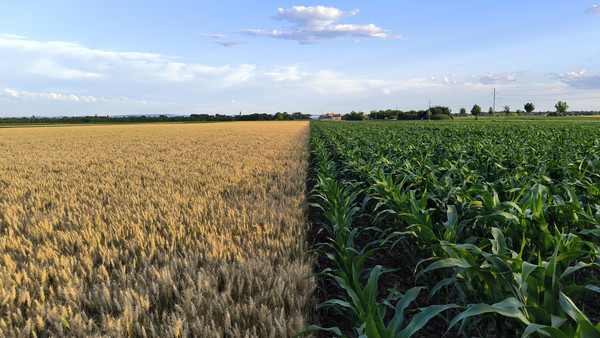
Also in 2025, the EBRD financed Serbian Ferdinland, a company historically active in agribusiness, particularly in the cultivation of wheat, corn, sunflowers, and rapeseed. The EBRD's intervention was part of the SME GO GREEN Program and enabled, in particular, the purchase of combine harvesters and equipment. In North Macedonia, Sparkasse Bank provided €2 million in financing to Makprogres DOO Vinica, of which € 1 million was guaranteed by the EBRD. In this case, the loan was used to support the working capital of this company, which has 640 employees and manufactures and sells its products in over 60 countries. To seize opportunities even when dealing with potential commercial partners, it is worth noting the partnership between local banks and the EBRD. Just as Sparkasse is a leading partner of the EBRD in North Macedonia, other banks in the region also collaborate with the EBRD. Without claiming to be exhaustive, we can mention Raiffeisen and Union Bank in Albania, Procredit and Raiffeisen in Kosovo, and above all, the Italian banks present in the area: Intesa and Unicredit.
Monitoring these initiatives by Italian companies, involving their potential customers in the area and the banking system, can certainly add value by combining the commercial proposal with the financial intervention provided by the EBRD. Another interesting tool offered by the EBRD to banks, specifically dedicated to commercial activity, is the TFP Trade Facilitation Program. To simplify its description as much as possible, and because it will serve as the Bank of reference for assisting, the EBRD offers interested banks the possibility of obtaining a guarantee against political and commercial risks related to the transaction, in the event that the Italian Bank makes commitments. The classic case is the confirmation of an export letter of credit received by an Italian exporter, opened by a bank in the Western Balkans, and approved by the EBRD and our Bank. With this intervention – especially for exports – the channeling of transactions through local banks included in the EBRD's TFP Program increases the Italian banking system's capacity to assume risk on behalf of foreign banks (by enabling risk sharing with the EBRD). From the point of view of the finance function of the exporting company – given that all the main Italian banks participate in the TFP Program as confirming banks – it will be useful to contact the relevant bank to check whether it considers it appropriate to operate with the TFP instrument and, if so, that bank will indicate the local bank approved by the importer.