Combine harvesters: when working on sloping ground
Self-leveling technology for combine harvesters is an Italian exclusive, developed 55 years ago by Laverda and now exported worldwide. Let’s compare the three solutions for extreme slopes available on our market
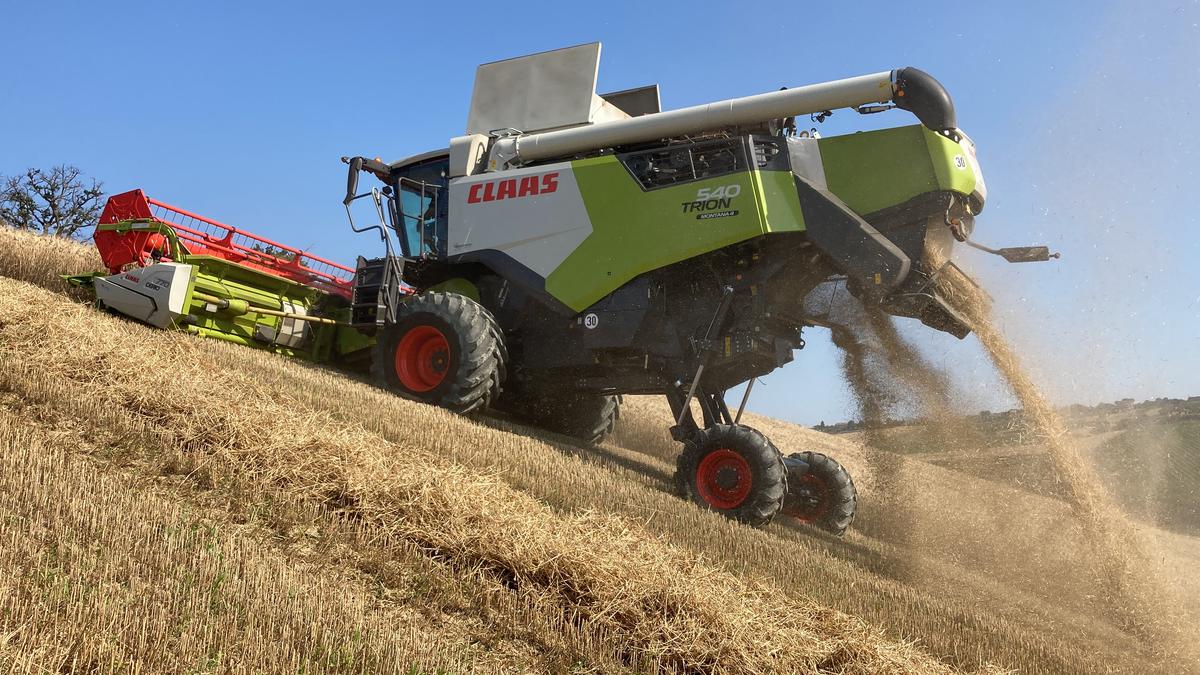
Self-leveling combine harvesters are a small miracle of mechanical engineering and, at the same time, a source of national pride. Carrying 180 quintals (chaff plus grain) up impossible inclines, positioning them sideways on slopes exceeding 35% while keeping them not only stable but also capable of harvesting grain without even spilling any along the way, seems impossible. And it’s an impossible feat with an Italian heart, given that the first self-leveling system was born in Breganze, exactly 55 years ago, in the factory that then belonged to Laverda.
More than half a century has passed, but leveling for extreme slopes remains an Italian Job. In fact, all the self-leveling kits currently installed by the three brands—AGCO, CLAAS, and New Holland—that offer this type of machine in their lineups are manufactured in our country. Of course, everything has changed since 1971: stability is now controlled electronically, although all three solutions still allow for manual correction of the balance determined by the computer. Let’s explore, then, how machines weighing tens of tons can be transformed into mountain goats.
Variable levelling. Talking about self-leveling combine harvesters says everything and nothing. Depending on the need, slope correction can be more or less aggressive, partial, or total. Sometimes, it doesn’t even involve the machine’s suspension. Working on slopes causes several problems. The first is related to the crop drifting downhill during threshing and cleaning mechanisms: this results in dirtier grain. If the slope increases, harvesting becomes difficult—especially on downhill sections, since the crop tends to fall from the header or the elevator chute—to the point where, on steep slopes, the combine’s stability is compromised, posing a potential danger to the operator.
The first level of correction concerns only the sieving components. Hoppers with both lateral and longitudinal movement redistribute the crop across the entire surface, preventing accumulations that hinder residue removal. In some cases, combine harvesters have also been equipped with sieve tilting systems, which bring them back to level at least on moderate cross-slopes. A different fan adjustment—high on uphill slopes, gentle on downhill slopes—helps reduce problems on longitudinal slopes.
The next step involves so-called semi-leveling: a system of cylinders that acts on the gearboxes, correcting lateral slopes, generally up to 18%. It is perfect for Central Europe, where slopes are gentle and large machines are needed, which are difficult to level beyond a certain limit.
Thirty-eight, ten, and thirty (or thirty-five). These are the numbers for extreme leveling, beyond which, so far, no one has ever gone. Nor is there any need to, given that they allow for work on high-mountain slopes. To achieve these, significant structural modifications to the machine are required. First and foremost, the machine must be sufficiently lightweight so that the lift cylinder rods can support it. This conflicts with the now-constant need for machines with ever-higher power ratings, even in hilly or mountainous areas. And in fact, some manufacturers offer dual leveling - front and rear - on six-shaker combine harvesters, which are therefore quite heavy. They achieve this with the aforementioned partial front leveling, to which they add two hydraulic cylinders to raise the rear. Not to the extreme angles of pure self-leveling, but enough to work on fairly steep terrain.
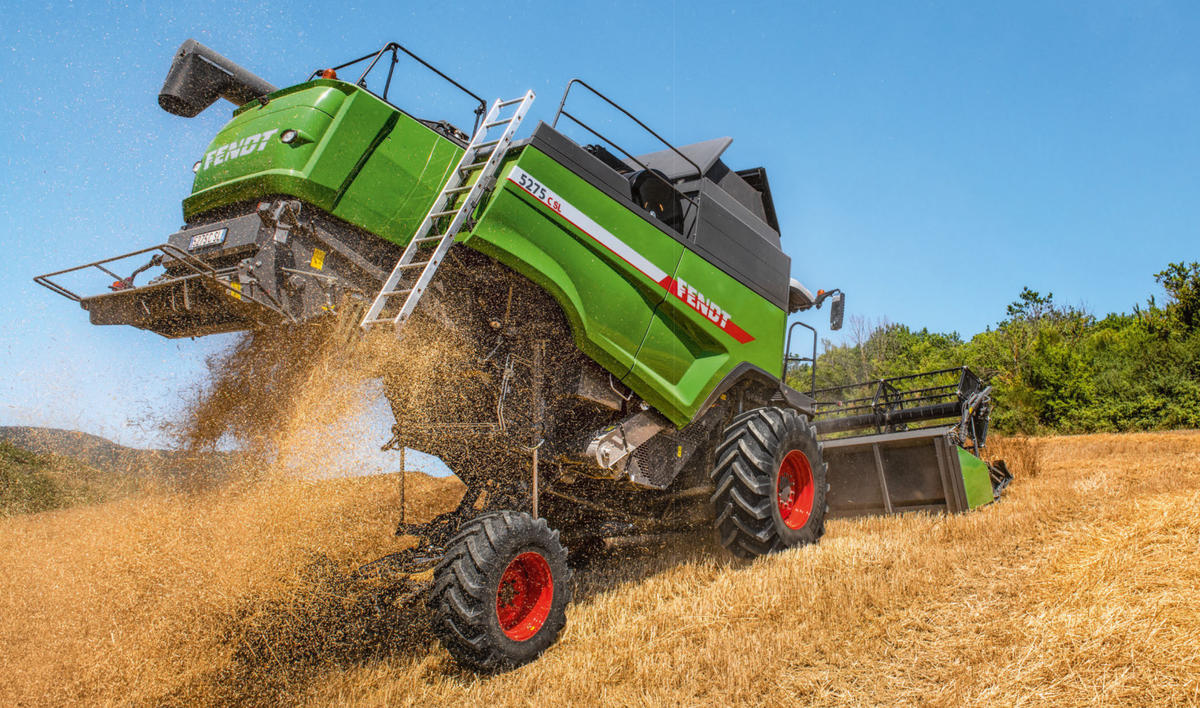
But let’s return to the heart of this analysis: the most radical leveling, designed for true mountain terrain. As we’ve seen, three brands offer this. In chronological order, we’ll start with AGCO, which inherited the Laverda technology by taking over the brand and the Breganze plant sixteen years ago. In 2020, it stopped selling combine harvesters under that brand but continues to produce self-leveling machines under the Fendt and Massey Ferguson brands. It also points out that it is the only one to install fully in-line self-leveling systems, without relying on external workshops.
Then there is New Holland, which partners with Zaffrani of Corridonia (Macerata) for its self-leveling machines and offers two different solutions: the agile Tc Hillside and the higher-performance Cx Hillside, both equipped with five straw walkers. The device, explains Zaffrani, was developed with the machine’s weight and working conditions in mind and is equipped with protection systems against system overpressure and electrical malfunctions.
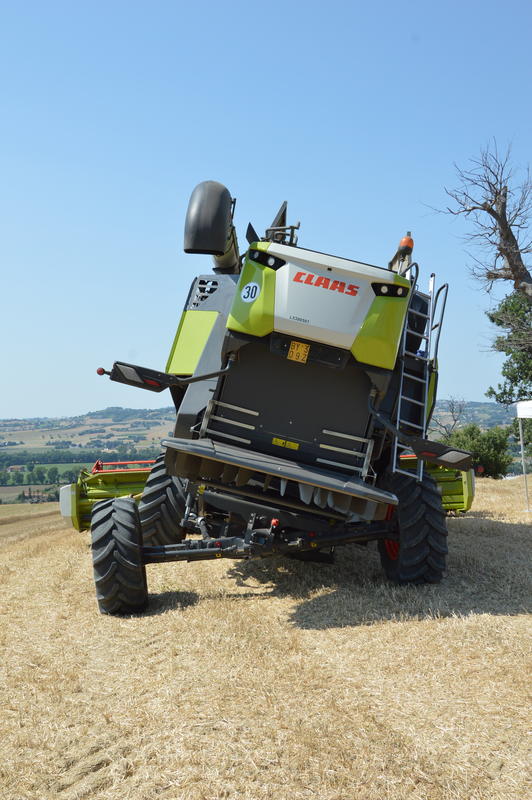
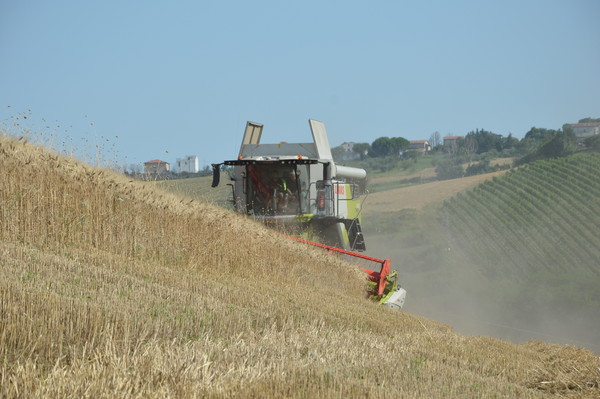
We conclude with CLAAS. Its self-leveling system is the most recent of the three, having been introduced in 2023 to replace a previous model. It was developed in collaboration with the Fratelli Marchesi workshop in Piacenza, which also supplies some components. It is found on the Trion Montana 4.
In terms of performance, the three brands are equivalent, or nearly so. All can handle a 38% side slope and stop at a 10% downhill gradient (the elevator chute, with the header attached, cannot rise much higher or push the crop toward the threshing drum if the slope is too steep). There is, however, some difference in uphill performance: 30% for New Holland, 32% for Claas, 35% for AGCO.
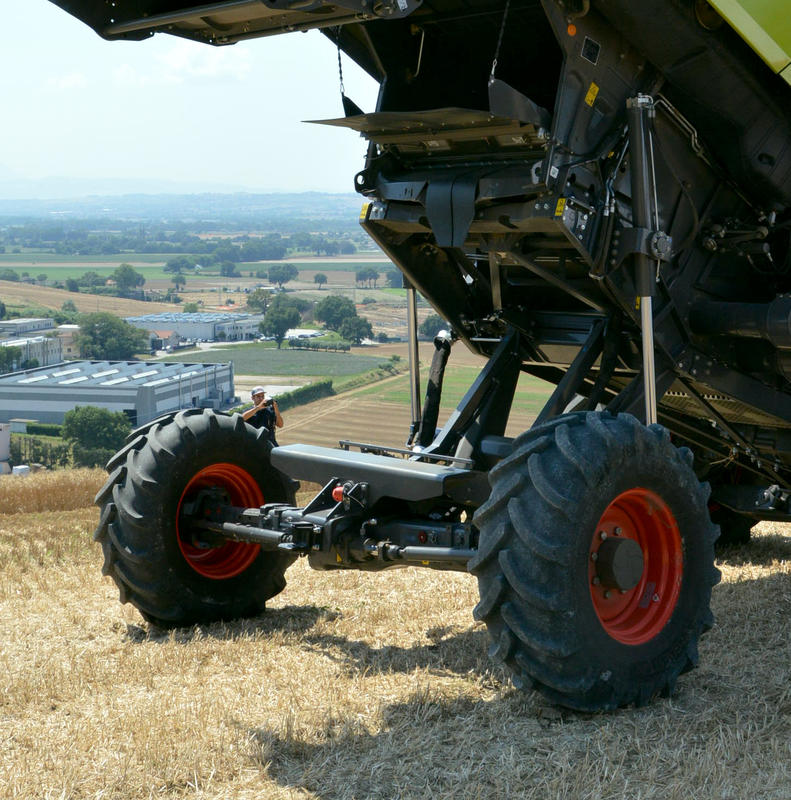
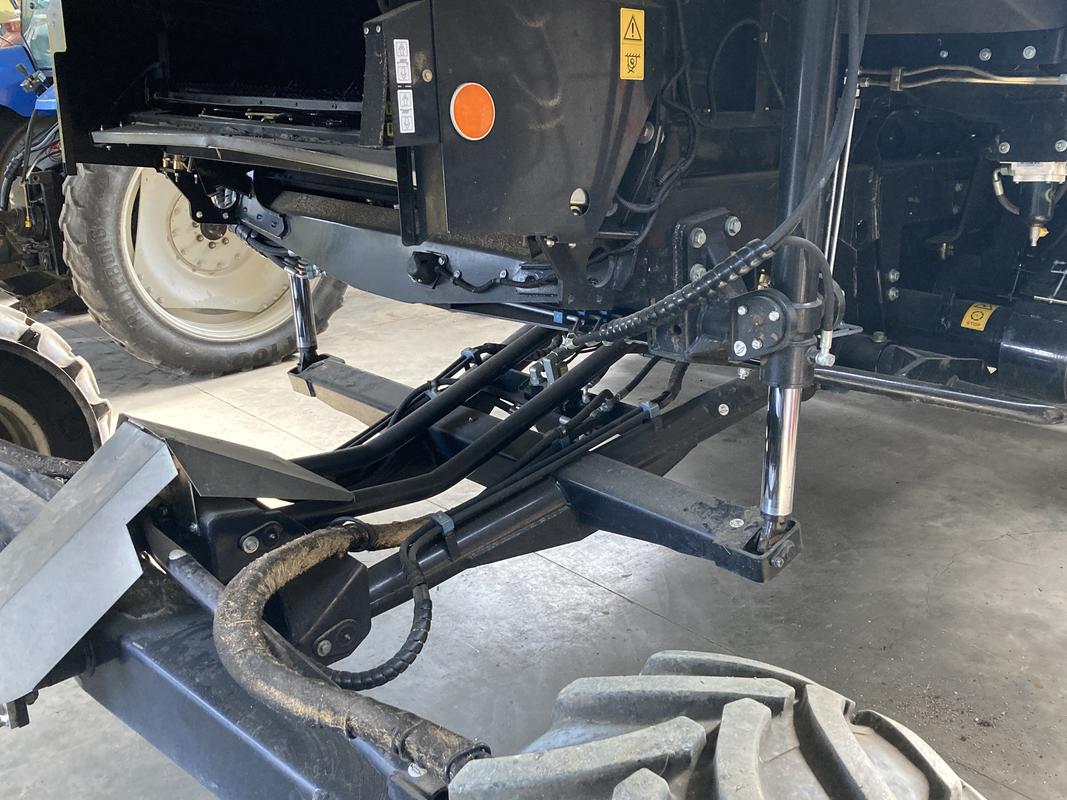
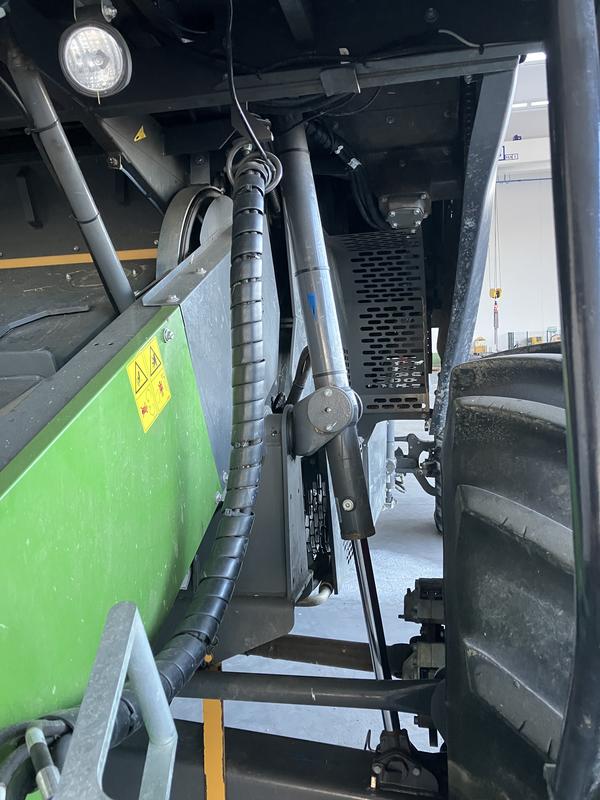
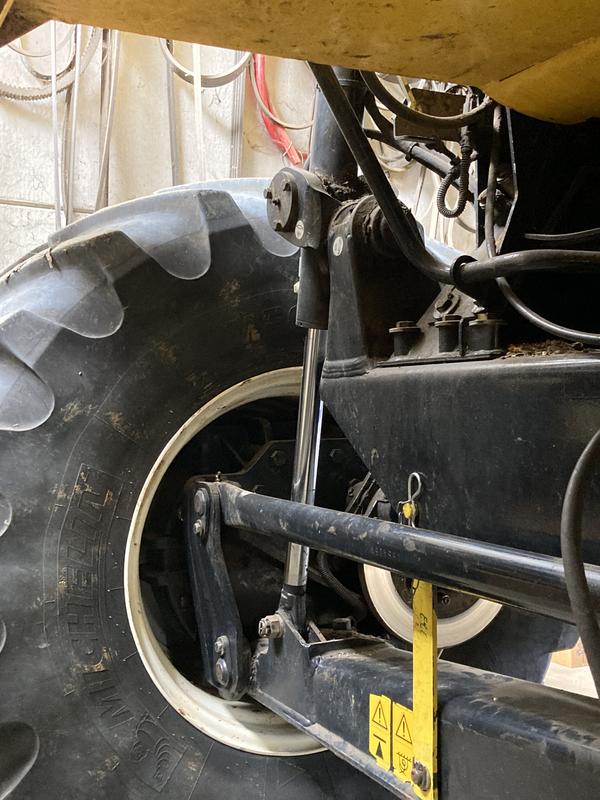
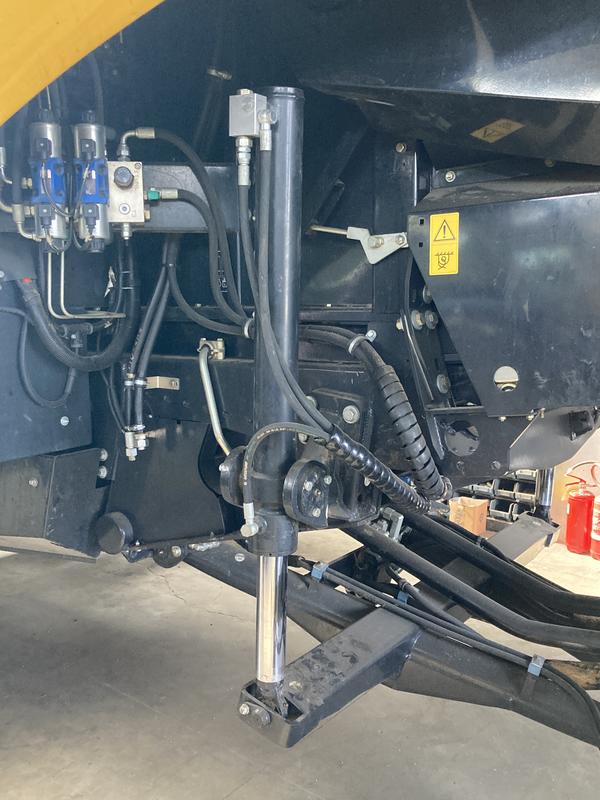
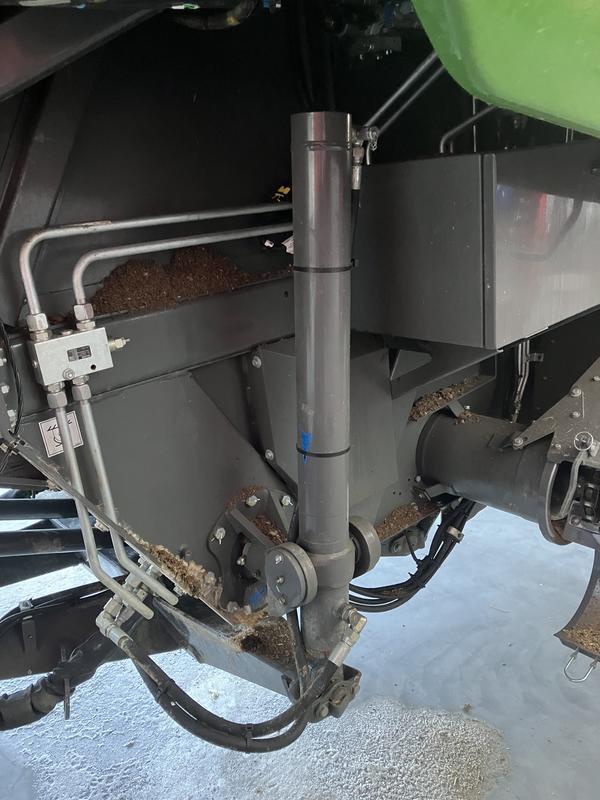
How self-leveling works. Essentially, the trick that still makes a combine harvester suitable for mountain work today is keeping the machine body horizontal at all times, as if it were moving on flat ground. This is achieved by supporting it on four hydraulic cylinders: two longer rear cylinders that compensate for the uphill slope, and two front cylinders that raise the front of the machine on downhill slopes. When moving along contour lines—that is, on a cross-slope—the two pairs of cylinders work together, always aiming to keep the threshing and sieving unit level. We must not forget, however, two other fundamental elements: traction and the header. Hill-working machines must have all-wheel drive, with compensation systems that prevent oil transfer issues in hydrostatic transmissions. Finally, the harvesting heads must be able to tilt, lower, and raise to adapt to slopes. For this reason, the elevator chute is longer than normal and equipped with two cylinders that allow greater lifting, while two other hydraulic cylinders adjust the head's horizontal tilt. All these adjustments occur automatically, thanks to electronics, which have gradually replaced the mechanical-hydraulic self-leveling systems based on gyroscopes of the past. In general, self-leveling machines are standard combine harvesters to which one or more additional hydraulic systems have been added. How many there are and how they are designed depends on the engineering choices.
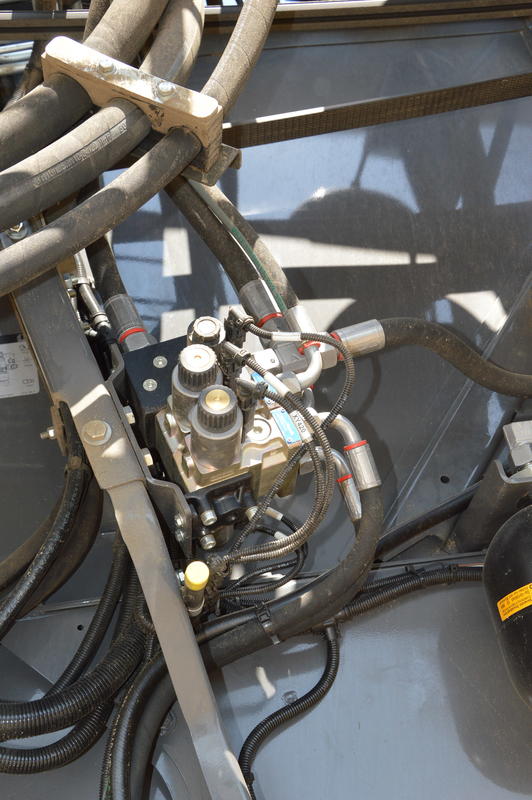
AGCO, the tradition. The U.S. group owes the leveling systems on Fendt and Massey Ferguson machines to Laverda. It consists of two rear cylinders, mounted on the axle and the frame, and two more on the front axle, plus the system for adjusting the header’s longitudinal and transverse tilt. According to the Breganze plant, the entire system is controlled via proportional hydraulic valves, which allow for gradual oil regulation rather than the classic on/off option. Essentially, they enable smoother machine movements, without the jerks typical of a hydraulic circuit that is either fully open or fully closed. Control is fully automatic and based on a gyroscope that provides the software with information on the machine’s tilt. The tilt of the headstock on the horizontal axis is also electronically assisted, while the height adjustment of the lifting channel utilizes a shared oil circuit with the rear axle and proportional valves that, based on the raising of the rear cylinders, adjust the position of the front channel. The hydraulic system is powered by three hydraulic pumps: one for the lift channel and various functions, one for longitudinal tilt, and a third for transverse tilt. This is to ensure the correct pressure at all times, which is essential not only for maintaining work quality but, above all, for the safety of the occupants.
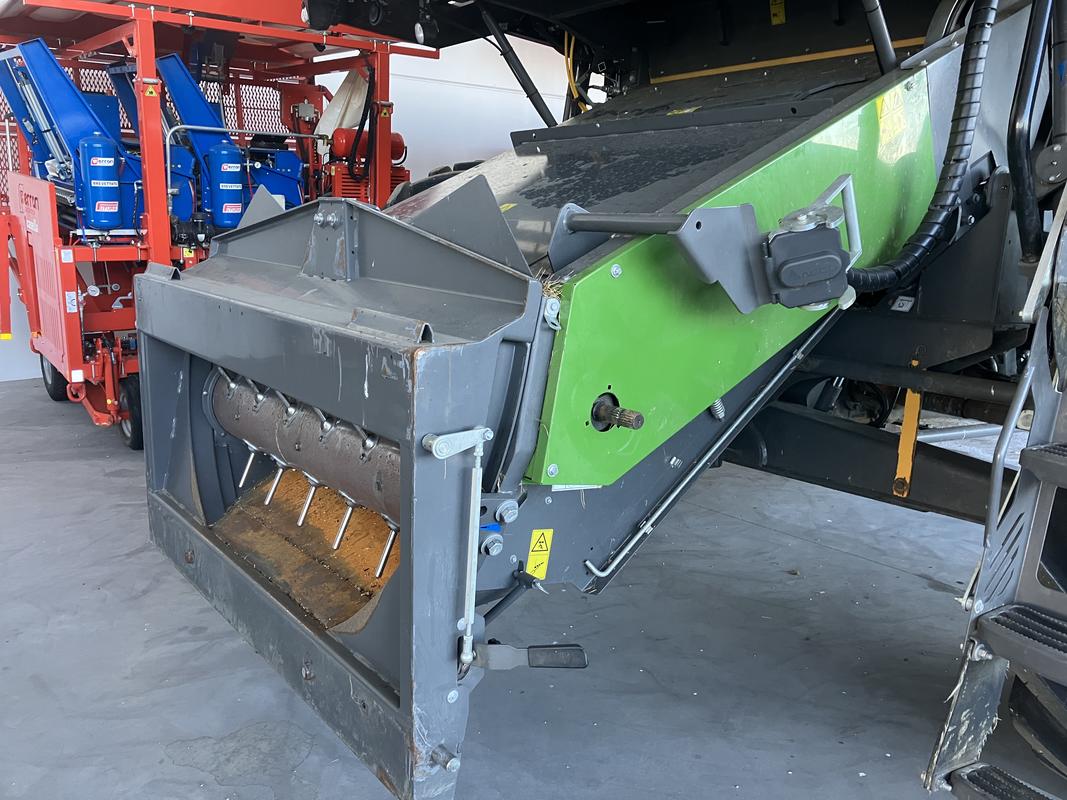
New Holland’s dual solution. The CNH Group brand offers two machines equipped with self-leveling systems: the TC 5.90 and the CX 5.90, which are designated “Hillside” when configured for mountain use. As New Holland explains, the two leveling systems are very similar and differ primarily in the dimensions of their cylinders and mounts. Performance is identical: 38% lateral compensation, 30% longitudinal, and 10% downhill compensation. The system is very similar to AGCO’s: two rear cylinders, mounted on the frame and the axle, and two more for the front, mounted on the axle near the final drives. The elevator chute, which is obviously longer than usual, features a roller with retractable fingers to facilitate the crop's entry into the chute. Other modifications include the standard four-wheel-drive system, now equipped with a new sensor for automatic activation on inclines, and the brakes, which have been relocated near the wheels so that a potential driveshaft breakage does not affect braking performance. This is because the primary objective of the project - developed by New Holland and Zaffrani about fifteen years ago and first introduced for the Cx Hillside models - was to ensure machine stability and, consequently, maximum operator safety.
As with AGCO’s self-leveling machines, on the Hillside models, the headstock height adjustment and rear cylinders work in synergy, and the same applies to the boom tilt system and the lateral compensation system. However, New Holland points out that, for the header, the position sensor takes priority, so that a rapid transition from descent to ascent does not cause the boom to get stuck in the ground. Let's conclude with the hydraulics: a single circuit and a single pump for New Holland's self-leveling machines.
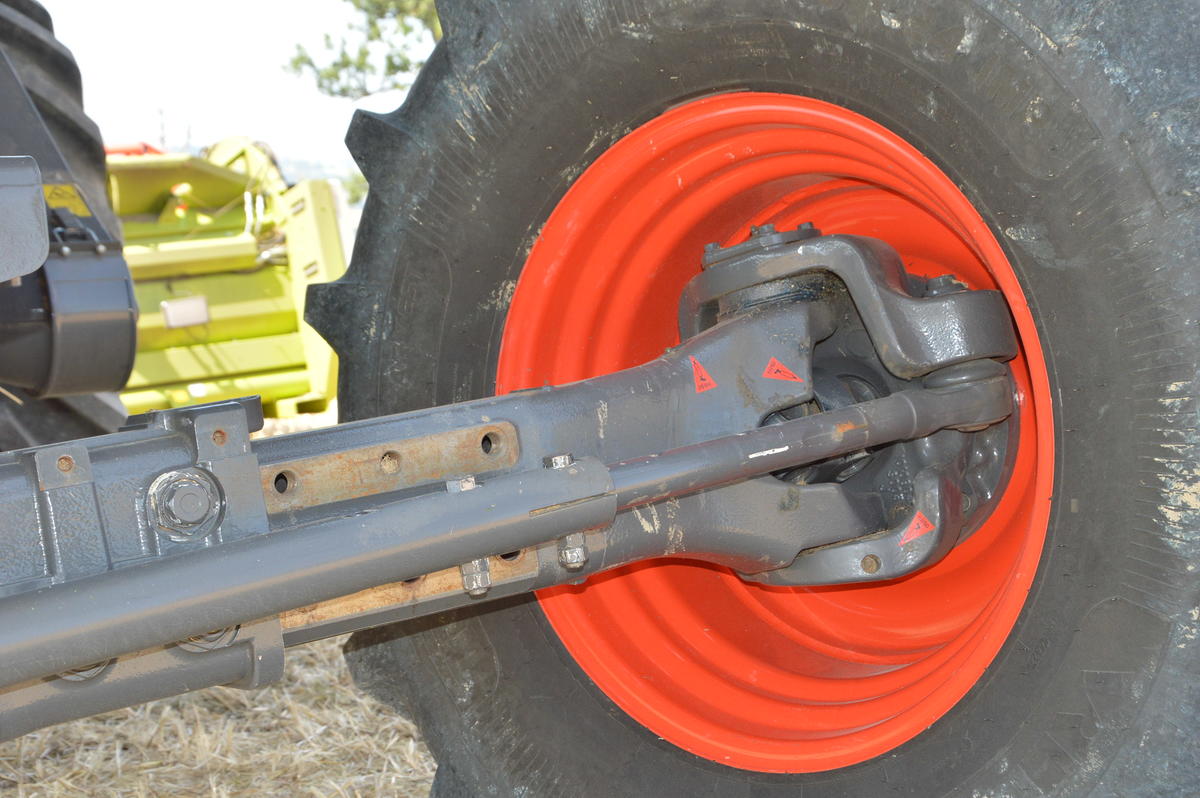
Electronics dominate on CLAAS models. CLAAS’s self-leveling design was redesigned three years ago and is therefore the most recent, at least in terms of concept. The German engineers, in collaboration with the Marchesi workshop, thus developed a system that, they explain, is heavily based on electronics, replacing the old system based on communicating vessels. Essentially, there are no connections between the boom tilt regulators and the lateral leveling, but the electronic system receives lateral tilt information and moves the header accordingly. The result, the designers claim, is the ability to lift much heavier headers without any responsive issues. To improve responsiveness - and here we turn to leveling - preload accumulators have been installed, and high-sliding-surface cylinders, typical of the earthmoving sector, have been selected. Thanks to these solutions, it is possible to operate the self-leveling and all functions, except the transmission, using a single variable-displacement hydraulic pump at 100 bars. Rounding out the package are high-elastic special steels on the axle and rear frame to compensate for torsional forces caused by lateral thrusts when climbing, and a different rear-wheel-drive system based on a two-speed mechanical transmission powered by a hydraulic motor mounted on the axle. A hydraulic-mechanical system that, according to CLAAS, significantly increases traction capacity compared to conventional hydrostatic motors on the wheels.