Sensors in the vineyard: a great benefit for the environment
The spread of precision agriculture solutions based on the use of sensors and decision support systems has led to improved sustainability in the viticultural supply chain, especially for plant protection and fertilization
The need to combine quality, sustainability, and competitiveness is gradually pushing Italian viticulture towards a precision approach with the useful application of digital technologies and monitoring tools for targeted vineyard management. Some of the more interesting innovations include the adoption of sensors for the variable-rate application of pesticides and fertilizers. Traditionally plant protection products are applied uniformly across the entire plot, prioritizing uniformity of distribution. However, each vineyard has differences in vigor, nutritional status, soil moisture, and conditions that make it more or less susceptible to the development of diseases. Sensors installed on tractors, drones, or fixed platforms make possible real-time detection of parameters useful for differentiated assessment, such as the vegetation index (NDVI), canopy density, or plant water status. This information is processed to support site-specific management of the vineyard and subsequently to modulate the supply of production inputs. Unlike approaches based on prescription maps, which require a preliminary data acquisition and processing phase for their generation, the direct use of sensors in the vineyard allows the application of inputs to be adapted directly as the vehicle passes through the field and does not, apart from the calibration phase, require any further processing or map preparation activities.
Variable-rate application thus allows for reduced pesticide use in less vigorous areas or for more targeted intervention where canopy development is greater. At the same time, as regards fertilization, the fertilizer dose can be modulated, for example, according to the nutritional status of the crop. There are many benefits to this: lower costs, less environmental impact, improved treatment effectiveness, and greater qualitative and quantitative uniformity of the grapes produced.
“On the Go” Sensors. These make it possible to perform variable rate applications in real time, adapting the dose of fertilizers and pesticides directly as the tractor passes through the vineyard. In the case of fertilization, the most common systems use active or passive optical sensors capable of estimating the vegetative state of the crop through vegetation indices, such as NDVI or NDRE, correlated with the plant's vigor and leaf chlorophyll content, and with the nitrogen available in the soil. This information can be integrated with data from soil apparent electrical conductivity or moisture sensors that help describe soil variability within the plot. The collected signals are processed by electronic control units compatible with the ISOBUS protocol, so as to automatically regulate the operation of the fertilizer spreader, varying its flow rate via electric or hydraulic actuators. In this way fertilizer distribution can be modulated along the row according to agronomic objectives promoting a better vegetative-productive balance in the vineyard.
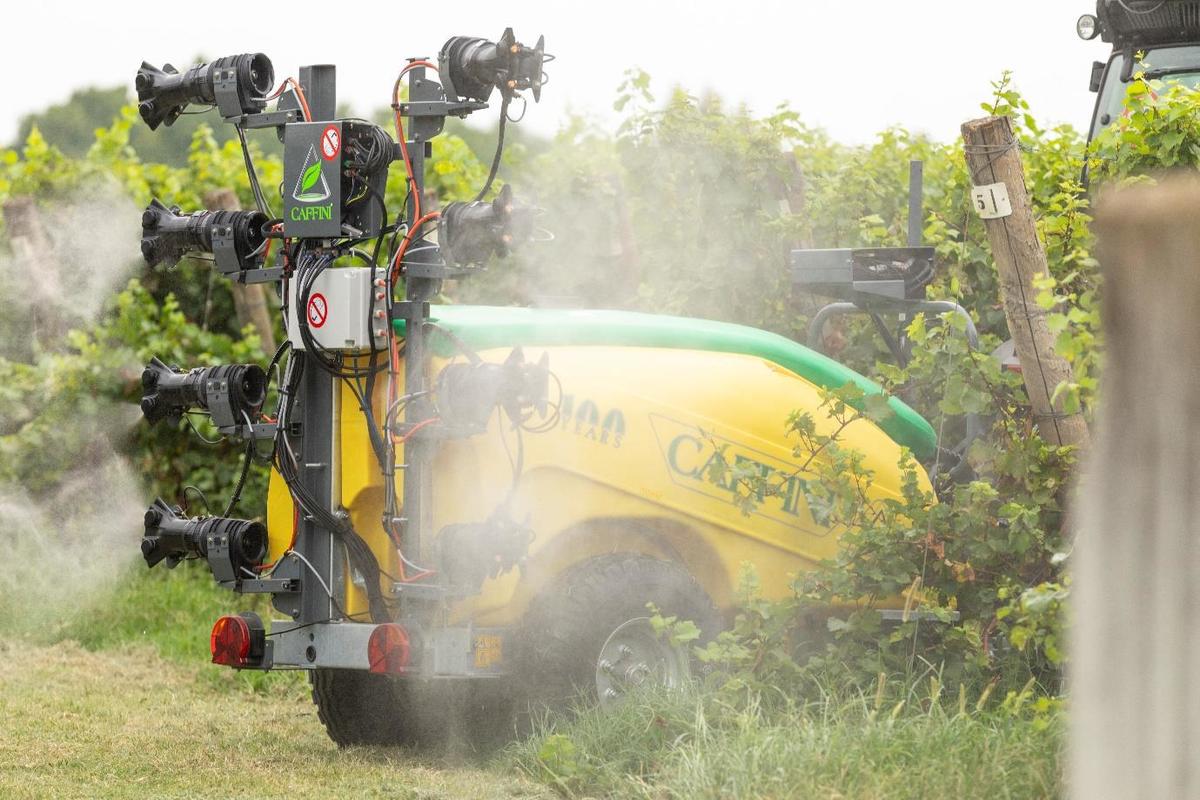
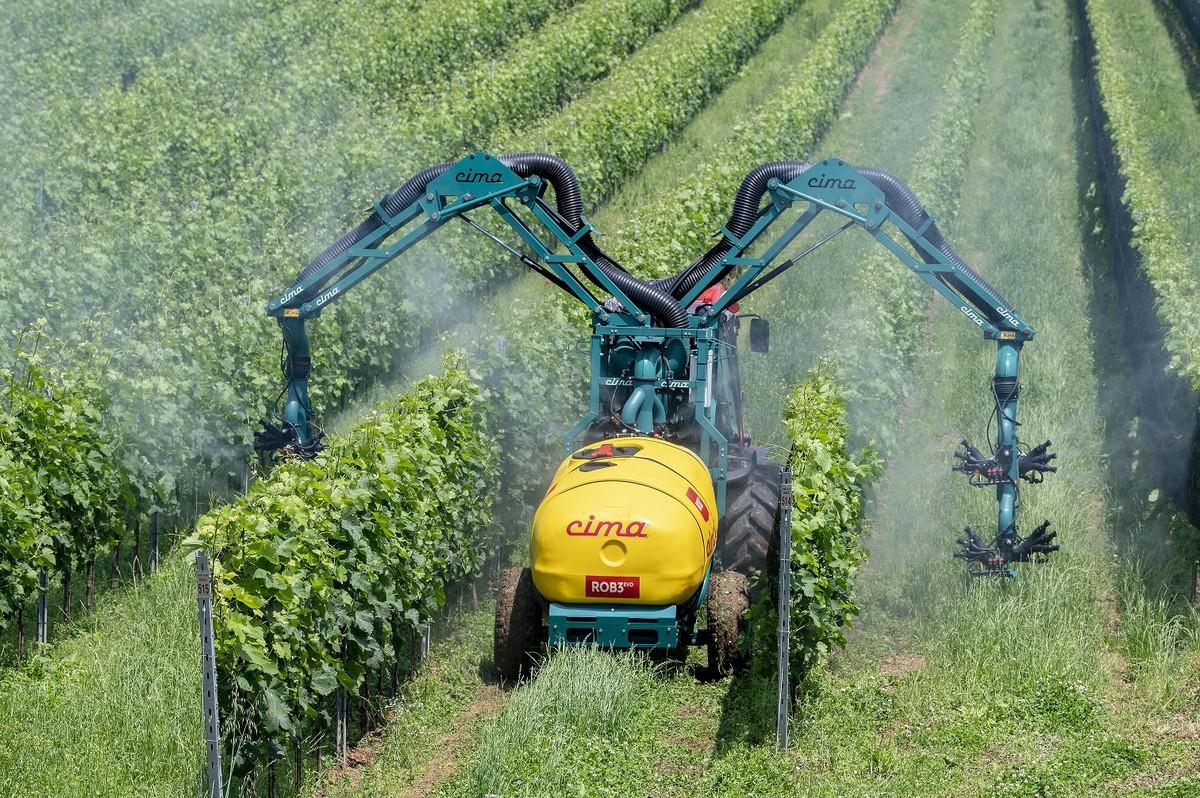
For plant protection the most commonly used systems are based on ultrasonic sensors or LiDAR technologies capable of continuously measuring structural parameters of the canopy, such as height, thickness, and volume. This information allows us to estimate the so-called Tree Row Volume (TRV), a parameter frequently used to adapt the quantity of mixture distributed to the actual vegetative mass to be treated. In practice, the flow rate of the mixture is automatically regulated by changing the operating modes of the nozzles. In areas with weak or less developed growth, the nozzles can be temporarily closed, so as to prevent unnecessary spraying, which is costly and, above all, harmful to the environment. Limiting product drift and percolation to the ground can lead to a significant reduction in chemical inputs (up to 20–40% annually), depending on vineyard conditions and canopy structure.
The Winery Farming 4.0. Project To evaluate the environmental sustainability of the technologies just described, a life cycle analysis (LCA) was conducted as part of the larger Winery Farming 4.0 project, financed with PNRR funds, in order to quantify the possible benefits associated with the use of sensors to support the variable rate application of both pesticides and fertilizers. In both cases, the environmental impact was calculated with reference to one ton of harvested grapes, while the environmental benefits were assessed by comparing the results of a baseline scenario in which conventional applications were performed with those of a variable rate distribution using sensors and advanced machinery. All other operations in the crop cycle, which are considered identical in both scenarios, were excluded from the assessment.
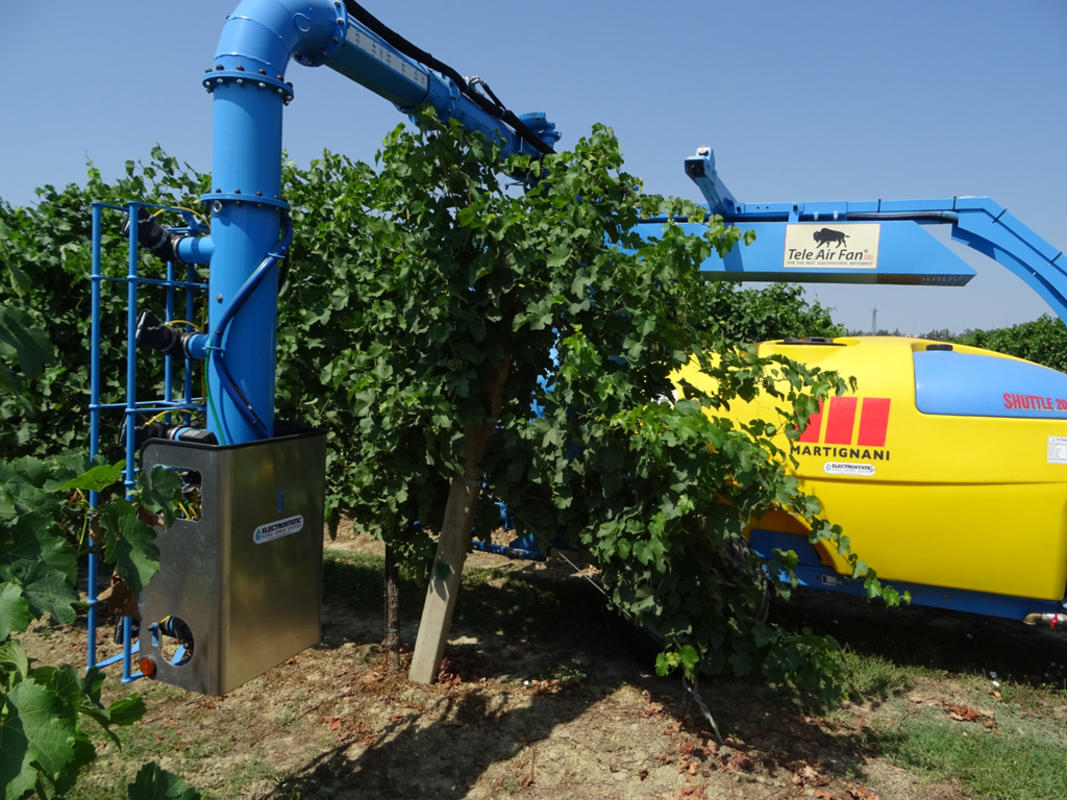
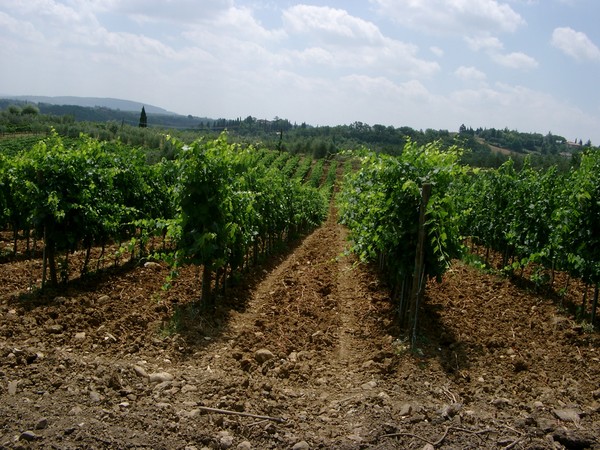
Variable-rate fungicide application was conducted by researchers from the Department of Agricultural, Food, Environmental and Forestry Sciences and Technologies of the University of Florence in a commercial vineyard of approximately 22 hectares located in the Chianti Classico area and cultivated with Sangiovese, with a density of approximately 5,000 vines/ha and spurred cordon vine training. The experimental site consisted of a trailed pneumatic sprayer (Martignani M612 Whirlwind), equipped with Topcon NORAC ultrasonic sensors installed on the front of the vehicle capable of detecting the thickness and density of the canopy along the row in real time. The signals acquired by the sensors were processed by the Topcon X25 electronic control unit, which automatically modulated the volume of the mixture distributed through dedicated solenoid valves.
Given similar production in the two scenarios, the average reduction in the applied dose was 45%, with a consequent reduction in operating times, which also led to a small decrease (approximately 2%) in diesel consumption. Overall, 13 environmental impacts were assessed through LCA, which highlighted reductions in the variable rate scenario, ranging between 3.%8 and 37.3%, with an average of approximately 18.5%. The carbon footprint, the indicator most closely related to the impact of climate change, decreased by 3.8%, corresponding to 25.3 kg of CO2 eq/t of grapes produced.
Variable-rate fertilization trials were conducted by the Department of Territory and Agro-Forestry Systems of the University of Padua, in a vineyard of approximately 8.5 hectares located in the Conegliano Valdobbiadene Prosecco DOCG area, cultivated with Glera and characterized by considerable variability in vegetative vigor, due to the soil conditions of the hilly site. The vineyard had an average slope of approximately 10%, with rows oriented north-west/south-east, and trained using the Sylvoz system. After a preliminary calibration of the GreenSeeker sensors carried out at sample points in the vineyard, 3 vigor classes were identified for the NDVI values obtained. To distribute the fertilizer two sensors were installed at the front of the tractor (a New Holland T4.110F) at approximately 1.5 m above the ground and oriented towards the upper part of the canopy, which continuously measured the NDVI values of the vegetation. These were processed in real time by the fertilizer spreader control unit (Kuhn MDS 12.1), which automatically adjusted the dose according to the vigor. The fertilizer supply to the vineyard was modulated with the aim of uniform grape production, and thus higher doses were applied in areas of low vigor and, conversely, there was less distribution in areas of greater vegetative development. The variable rate application allowed for a reduction of approximately 30 kg N/ha in the distribution of fertilizer, which resulted in a reduction of all environmental impacts, varying between 41.5% and 50.2%, with an average reduction of 47.8%. The carbon footprint decreased by 48.9 kg of CO2 per eq/t of grapes. Again in this case, there was a reduction in production costs. Furthermore, variable-rate fertilization saw a fairly uniform decrease in all environmental impacts considered, with proportional reductions. However, for variable-rate plant protection, the reductions were not distributed evenly: the benefits were more marked for the impacts directly linked to the release of active ingredients into the environment, namely the ecotoxicity of freshwater (-23.3%) and human toxicity (-42.2%). The impacts related to climate change (-3.8%) and the use of fossil resources (-4.0%) show more modest reductions.
In any case, the decision to invest in precision agriculture solutions must necessarily include a careful evaluation of the initial investment, which is generally high, especially when using LiDAR sensors and due to the need to use advanced machinery compatible with the ISOBUS protocol and equipped with electronic control units. To these factors must be added the costs associated with system calibration, equipment maintenance and personnel training. Furthermore, the economic benefits tend to be more tangible in large and/or highly heterogeneous vineyards, where the payback times are generally shorter.