
Work gloves: types and reference standards
Whether working with sharp or high-temperature materials or handling chemicals, gloves are available to ensure adequate protection. They are therefore the most widely used personal protective equipment
Work gloves are Personal Protective Equipment (PPE) that is essential in many professional fields. They play a fundamental role in preventing hand injuries, providing an effective barrier against mechanical, thermal, chemical, biological, and electrical hazards, sometimes even simultaneously. To select the most suitable type for your tasks, consider the manual operations, the characteristics of the working environment, the nature of the risk, and, of course, the relevant regulations. Work gloves can therefore be classified according to the protection they provide and the type of risk present in the working environment. Below is a brief overview of the types most suitable for use in agriculture.
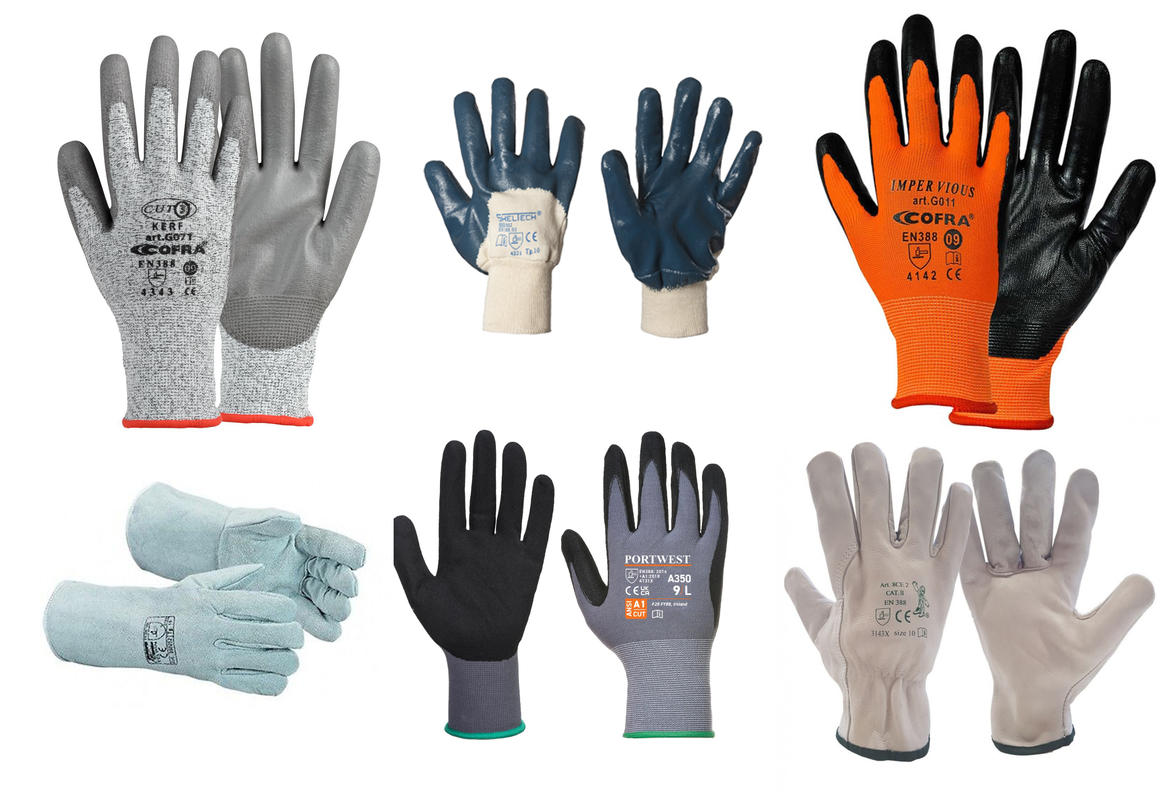
Gloves against mechanical risks. They protect the operator from possible events such as abrasions, superficial cuts, tears, perforations, and small impacts, while ensuring good tactile sensitivity and freedom of movement. They are widely used in numerous work sectors, for the manual handling of materials, industrial maintenance, logistics, craftsmanship, and, of course, agriculture. The materials used to make them vary according to the specific protection and comfort requirements of the activity carried out. Natural leather, such as cowhide, sheepskin, or goatskin, is particularly valued for its strength and durability, making it ideal for heavy-duty applications like construction and carpentry work. Other models utilize synthetic or natural fabrics, such as polyester, nylon, or cotton, often coated on the outside with a layer of nitrile, latex, or polyurethane, which enhances abrasion resistance and improves grip. In contexts where superior cut protection is required, high-tenacity fibers such as Kevlar are used. For particularly demanding applications, some models include specific reinforcements on the knuckles and back to improve protection against accidental impacts. Maintenance is essential to maintain the gloves' level of protection against mechanical risks over time: fabric gloves can be washed following the manufacturer's instructions carefully, while leather requires specific care and treatment to preserve its flexibility and resistance. It is also good practice to carry out regular visual inspections to detect any damage, such as tears or signs of wear that
could compromise the effectiveness of the gloves, replacing them when necessary.
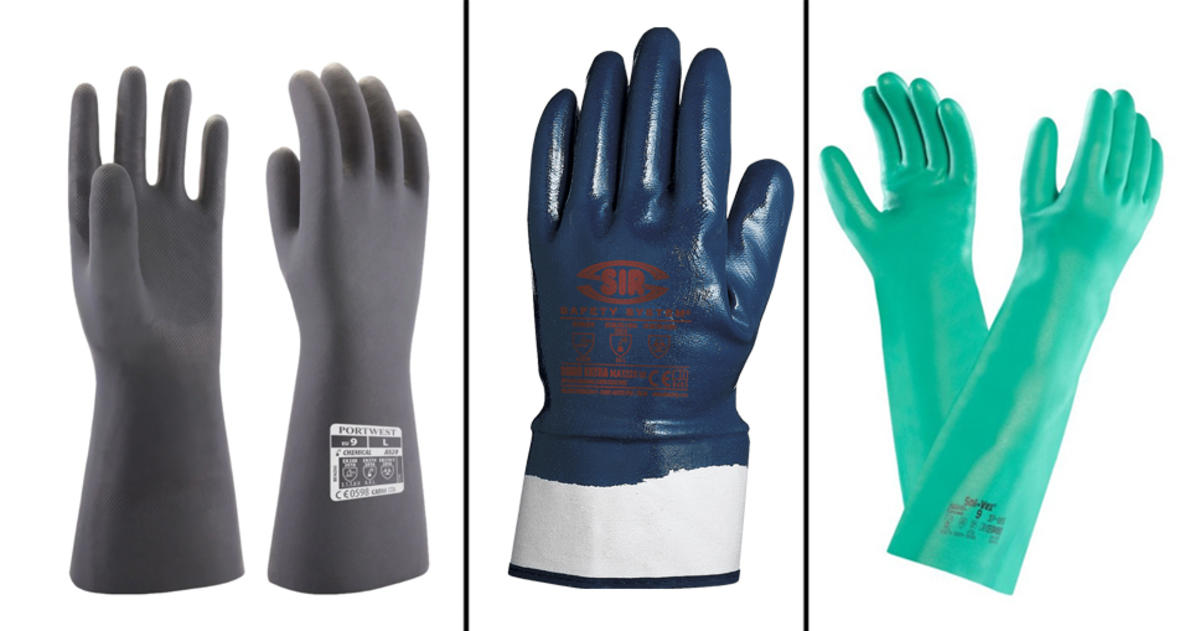
Gloves for chemical risks. They protect against contact with corrosive, irritating, or toxic agents and are therefore frequently used in the chemical and pharmaceutical industries, as well as in analytical laboratories, industrial cleaning, special waste management, and certain healthcare settings, including agriculture, particularly for handling plant protection products and synthetic fertilizers. Their main function is to prevent direct contact between the skin and harmful liquids and vapors by providing an effective impermeable barrier. In addition to chemical protection, it must guarantee good mechanical resistance and, for many applications, also a reasonable level of tactile sensitivity. The materials used to make them vary according to the characteristics of the substances from which protection is required: nitrile is particularly suitable for resisting oils, fats, and organic solvents; neoprene offers broader protection against acids and bases; butyl is recommended for sealing against particularly aggressive gases and chemical vapors; while PVC is a versatile and economical solution, effective against many water-based substances. To improve comfort, especially during prolonged use, many models are equipped with inner linings that enhance fit and absorb sweat, making work safer and more comfortable. The maintenance of chemical risk gloves, especially if they are reusable, requires special attention. It is essential to clean them thoroughly after each use, following the manufacturer's instructions, to avoid the risk of residual contamination and preserve their integrity. It is also essential to store them in dry places, away from heat sources and direct sunlight, to prevent their protective properties from being altered. If signs of wear, tears, or loss of elasticity are detected, the gloves must be replaced immediately. Disposable models must be disposed of properly after a single use.
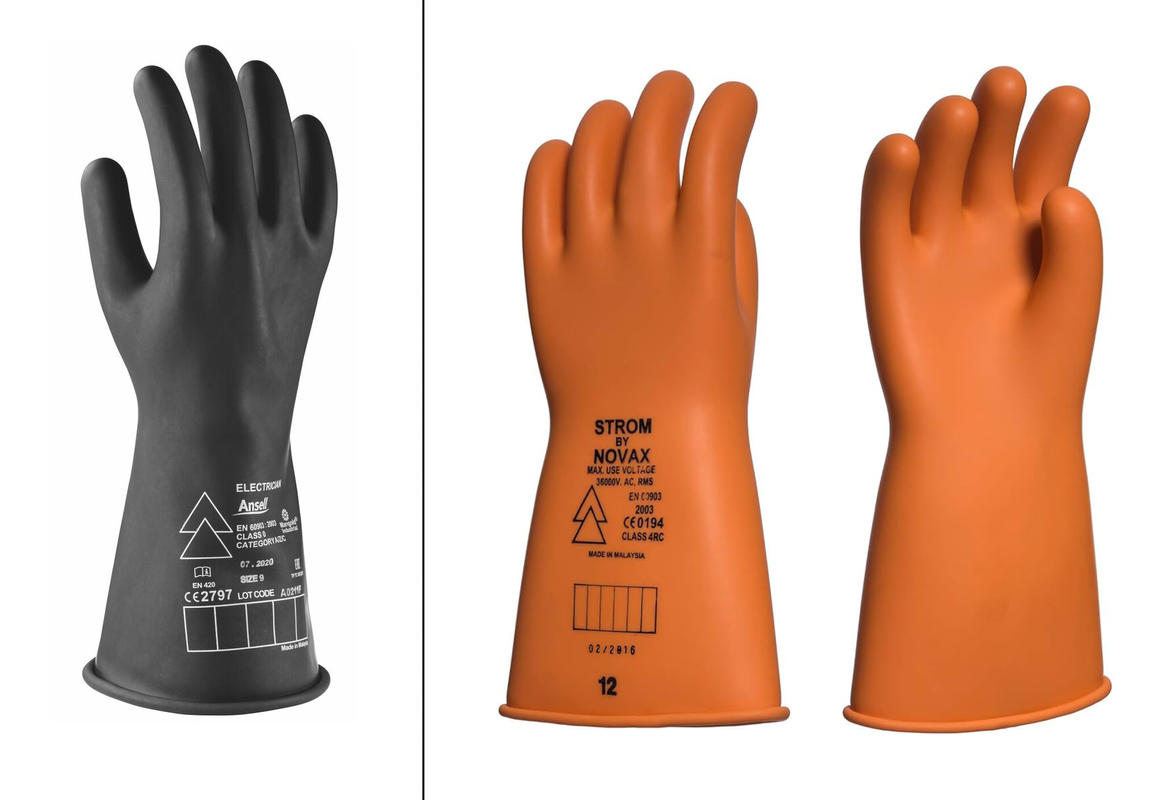
Gloves for electrical risks. They protect against the risk of electrocution when working on live electrical installations. Their primary function is to completely isolate the hands from contact with live electrical parts, preventing the passage of current through the human body and thus significantly reducing the risk of serious or potentially fatal accidents. The use of these gloves is essential for the maintenance and installation of industrial electrical systems, as well as for work on distribution networks, energy transport infrastructure, and during work on electrical panels or transformer substations. Although to a lesser extent, gloves for electrical risks can also be used in agriculture for work on power lines in rural areas. Made of natural or synthetic rubber with high insulating properties, this PPE must combine electrical insulation and good elasticity to ensure safety while facilitating the operator's manual dexterity. This particular type of glove is produced in different thicknesses and is classified into categories that define its suitability for specific maximum voltage values. To maintain their effectiveness, it is essential to carry out thorough checks before each use. The operator must check the integrity of the glove, ensuring there are no cuts, holes, cracks, or other signs of deterioration that could compromise its insulating properties. For this purpose, a manual inflation test is commonly performed to detect any micro-perforations that are not visible to the naked eye. Additionally, the relevant standards require periodic laboratory testing, including dielectric strength tests, to ensure that the gloves maintain their required safety performance. Proper storage is equally important. Gloves must be protected from heat sources, direct sunlight, and chemicals, and must be stored in suitable containers or bags, away from sharp objects or abrasive surfaces that could damage them.
Anti-vibration gloves. These gloves are designed to reduce exposure to vibrations generated by hand-held tools and machinery. They are particularly suitable for use in sectors such as construction, carpentry, and woodworking, as well as in agriculture, forestry, and landscaping, where the prolonged use of jackhammers, grinders, brush cutters, and chainsaws can cause premature fatigue, discomfort, or even damage to hands and arms. Specific materials are used to manufacture these anti-vibration devices, such as special foams or gel inserts, which are primarily placed in the palm and around the fingers, as well as in areas most susceptible to vibration transmission.
The aim is to absorb part of the vibratory energy without compromising tactile sensitivity and dexterity, which are essential for working with precision and safety. When using chainsaws in particular, anti-vibration gloves play an important role, helping to reduce fatigue and the real risk of conditions such as the infamous Raynaud's syndrome (which affects the blood vessels in the fingers and toes) or "white finger" (consisting of a reduction in blood flow to the extremities of the body).
Some models combine anti-vibration action with cut-resistant reinforcements, particularly on the back of the left hand (for right-handed users), which is the most exposed to the cutting bar during work. Here, too, maintenance is important, especially in relation to the integrity of the padding.
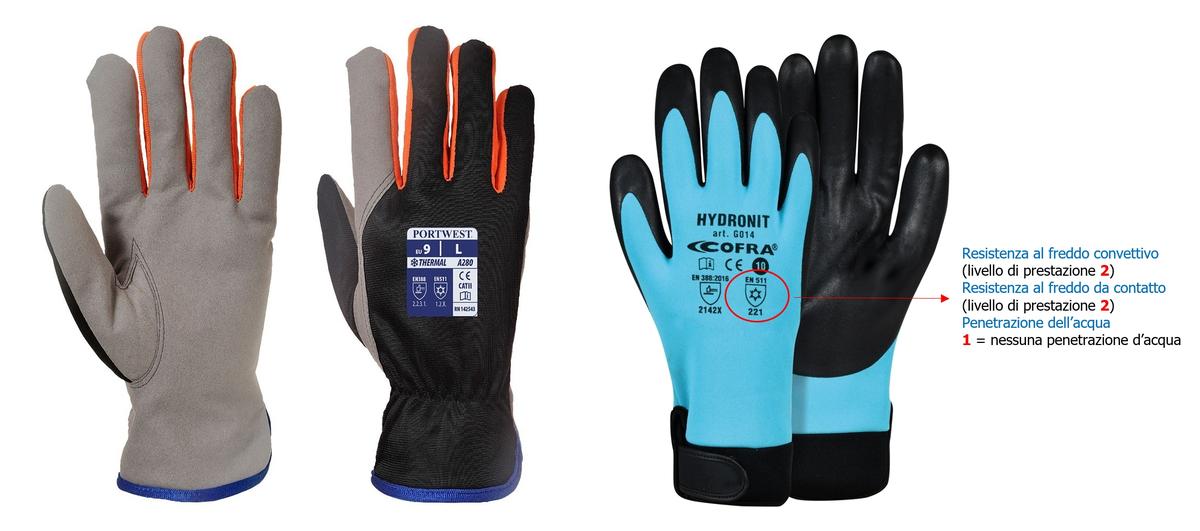
Gloves for extreme temperatures. So-called "thermal" gloves are essential for operators working in extreme temperatures (either extremely cold or hot). They are made of materials with a high thermal insulation coefficient and equipped with specific coatings to withstand high temperatures or protect against frost. Due to their expected thickness, it is essential to ensure good operational dexterity, allowing the fingers to move easily.
PPE regulations for hand protection
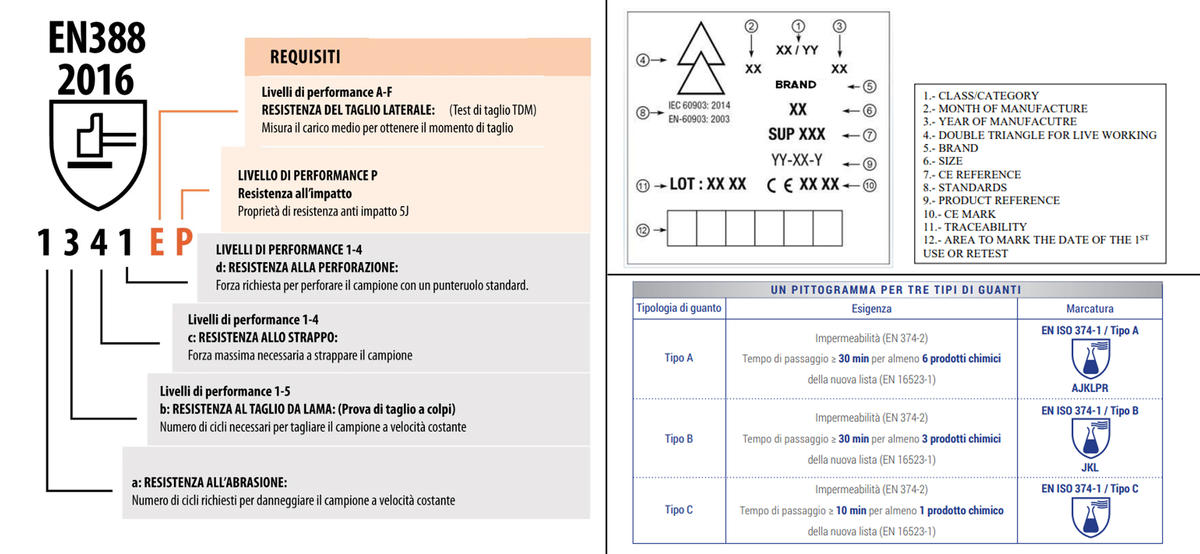
Personal protective equipment for hands must comply with specific regulations; the relevant reference is usually indicated on the back of the glove, with coded markings indicating the specific risks that it can limit. For gloves against mechanical risks, the EN 388 standard applies, which provides for tests to assess resistance to abrasion, blade cutting, tearing, and puncture. For special applications, a cut resistance test according to ISO 13997 (TDM index) may be required, which prescribes a more accurate assessment of the glove's ability to withstand more severe cuts. Gloves for chemical (and biological) risk are governed by ISO EN 374. This standard establishes criteria for resistance to permeation and degradation by a series of typical substances. The suitability of PPE is then indicated by pictograms and codes specifying the type and level of protection offered.
EN 60903 addresses the characteristics, test methods, and classification of gloves in relation to electrical risks. Based on the maximum rated voltage, the glove must indicate the voltage class, date of manufacture, expiry date of periodic checks, and any restrictions on use (e.g., resistance to low temperatures, oils, and ozone). For anti-vibration gloves, the reference standard is ISO EN 10819, which establishes the criteria to be met based on the frequencies most hazardous to the hand-arm system. In this case, the certified attenuation values must be indicated. It is therefore important to consult the product data sheet to verify its suitability for the type of equipment used by the operator, paying particular attention to those that may exhibit high vibration intensity, as is typically the case with chainsaws.