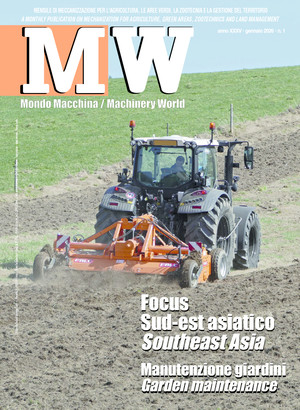
Agriculture in Southeast Asia between challenges and new opportunities
With agricultural production worth $317 billion, countries in the region export foodstuffs totaling $166 billion, accounting for 10% of global exports. The effects of climate change on the agricultural sector
To rovide an overview of agriculture in ASEAN countries, we have chosen to use reliable sources in the region, including the September 2025 report by the ISEAS Research Center in Singapore, titled "Outlook for Agriculture and ASEAN's Role in Southeast Asia's Food Security." The report highlights how Southeast Asia is one of the regions in the world with the largest areas of agricultural production, serving a population of around 700 million consumers and providing income for almost 100 million agricultural workers. The sector contributes nearly 10% to the region's Gross National Product, and ASEAN countries account for 9% of global agricultural exports, mainly concentrated in food, feed, fibers, and industrial products. The most dynamic countries in recent years have been Indonesia, Thailand, and Malaysia, which exported foodstuffs worth $48.2 billion, $42.9 billion, and $29.2 billion, respectively. Also noteworthy is Vietnam, whose exports reached $19.5 billion. Overall, in 2023, agricultural exports from the region reached $166 billion. Let us mention a few more quantitative data on the sector. In 2023, the value of production in ASEAN countries was $317 billion, most of which ($138 billion) was attributable to Indonesia, followed by Malaysia, the Philippines, Thailand, and Vietnam. Less significant, however, is the reference to the weight of the agricultural sector in the Gross National Product (GNP), which sees Myanmar and Cambodia, for example, above 20%. But in this case, it is a parameter conditioned by the preponderance of the agricultural sector over other economic sectors.
The issues affecting the primary sector in Southeast Asia are mainly related to low investment (and therefore productivity), which is largely public; the exodus of agricultural workers to other sectors and large urban areas; and the worsening climate crisis and the extreme events associated with it. Research on this last aspect has placed the Philippines at the top of the list of countries most at risk from catastrophic climate events. Agriculture is therefore one of the sectors most exposed to the effects of climate change: floods, typhoons, rising sea levels, droughts, and heat waves. Researchers at the United Nations have also focused on this critical issue, estimating a 10% decline in rice productivity for every 1°C increase in the maximum daily temperature in the area. It is also estimated that, as a result of climate change in the region, 10% of arable land in Indonesia, Malaysia, the Philippines, and Vietnam will be at risk by 2028 if prompt action is not taken.
Therefore, the ASEAN Economic Community structures have given high priority to these issues, as demonstrated by the drafting of two documents: the New Vision for Food, Agriculture, and Forestry Towards 2045, and the New FAF Sectoral Plan (2026-2030), which indicate some guidelines and policies to be adopted to combat the effects of climate change. In summary, the guidelines prioritized the enhancement of biotechnology and agronomy, not only to develop innovative inputs for agriculture and livestock farming (seeds, animal genetics, pest control), but also to increase tolerance to heat, drought, salinity, pests, and diseases. In this context, production must be improved through robust technological integration, including agricultural machinery, cultivation equipment, automation, and robotics. Digital technologies are fundamental in this regard, as they allow agricultural management to be linked to data analysis, improve remote control, and provide decision support. Together, these interventions can increase productivity, reduce labor requirements, minimize risks, and cover the entire supply chain, from storage warehouses to solutions for extending shelf life, reducing waste, and ensuring product traceability.