Multifunctionality and efficiency: the role of tool carriers in specialized crops
Multifunctional tool carriers make it possible for multiple operations to be concentrated on the same platform, representing a concrete response to the demands of efficiency and sustainability. Modularity, precision and technological integration are the main factors that are helping it gain popularity
In the context of modern farm mechanization, where operational efficiency must increasingly be combined with sustainability and cost optimization, multifunctional tool carriers are establishing themselves as strategic operating machines, especially for specialized crops, such as vineyards and orchards. In these production settings, characterized by defined planting distances, limited headland maneuvering space, and the need for frequent and targeted interventions, the ability to concentrate multiple operations on a single operating platform is of particular interest. Designed to offer modularity and versatility, these systems make it possible to tackle different cultivation phases with a single frame, adaptable to different production cycles and the agronomic specificities of various growing environments.
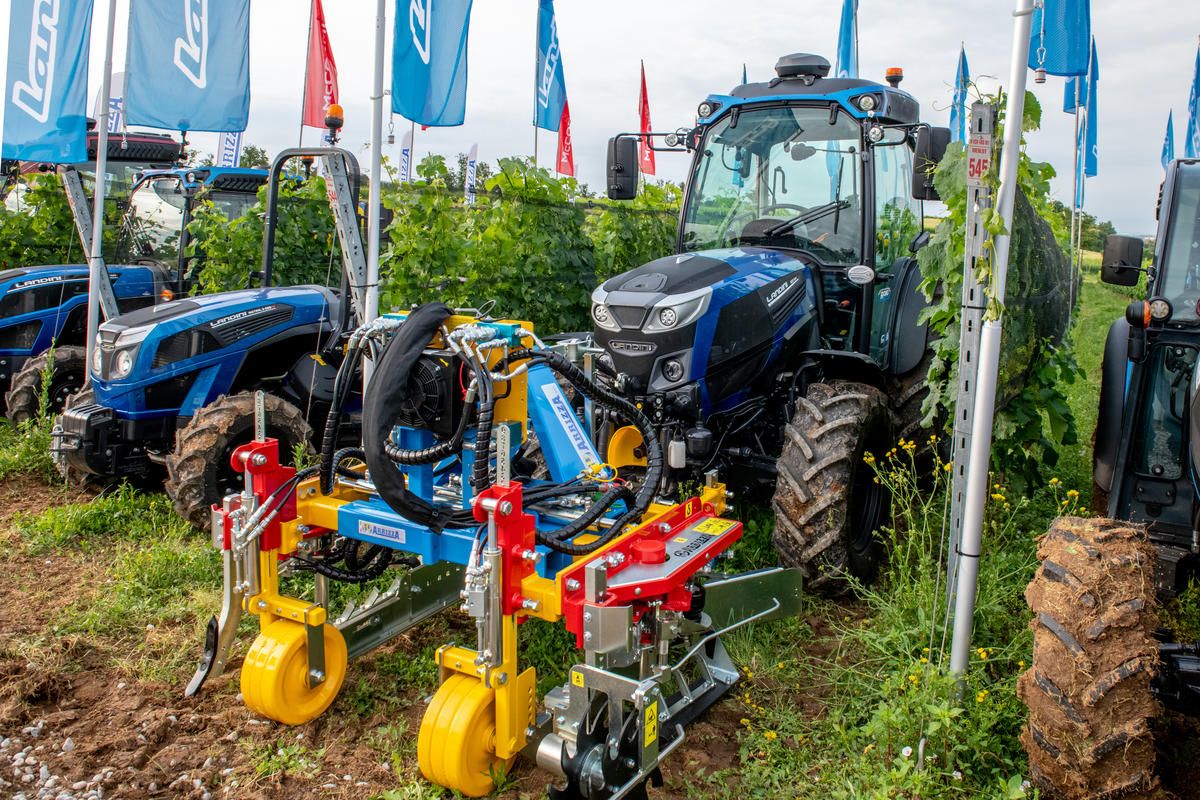
The distinctive element of a multifunctional tool carrier lies in its supporting structure: a robust frame with standardized dimensions and attachments, adjustable support components for controlling the working depth and a lifting device that allows various operating options to be easily configured. It is possible to mount a wide range of specific tools on this base, such as precision seed drills, weeders and inter-row cultivators, weeding blades and vibrating heads for mechanical weed control, hillers, light harrows or harrows, making these combinations suitable for soil preparation, sowing, weed management and even internal transport activities on the farm.
In vineyards, orchards, horticultural crops, and in row crops in general, where the small size of individual plots and sometimes the fragility of the plants require high standards of precision, multifunctional tool carriers ensure high operational performance. Furthermore, some advanced configurations adopt modular solutions, which permit the simultaneous use of implements coupled both to the front and rear of the tractor, or the use of independent arms capable of working on two side-by-side rows in a single pass, thus increasing operational efficiency.
The use of multifunctional tool carriers equipped with standardized attachments and characterized by rapid tool change times reduces the need for dedicated operators and improves production efficiency. These are two important factors in specialized crops, where prompt intervention is always crucial.
However, there are some points to note: the versatility of these systems requires specific skills on the part of the operator to select and set the tools best suited to the soil and climate conditions and cultivation needs. In the presence of particularly demanding crops or in difficult soil conditions, the performance of a multifunctional system may be inferior to that of highly specialized machines, designed to perform a single function. Furthermore, centralizing many functions in a single vehicle can, in the event of a failure, have a greater operational impact on the entire production cycle, especially if regular maintenance is not performed.
What's on the Market. More so than in other agronomic operation, the opportunity to opt for mechanical weed control over traditional chemical methods is becoming increasingly pressing. In this area, the most advanced solutions currently available on the market for specialty crops, including ISOBUS integration, artificial vision, and advanced modularity, are numerous.
For inter-row management, Arrizza of Fossacesia (Chieti) offers the Expo multifunctional frame, hydraulically operated with an independent control unit. The pump, driven directly by the tractor's PTO, supplies the working parts with a flow of pressurized oil of up to 80 l/min for combined de-suckering and weeding, reducing passes, saving diesel fuel and reducing inter-row compaction.
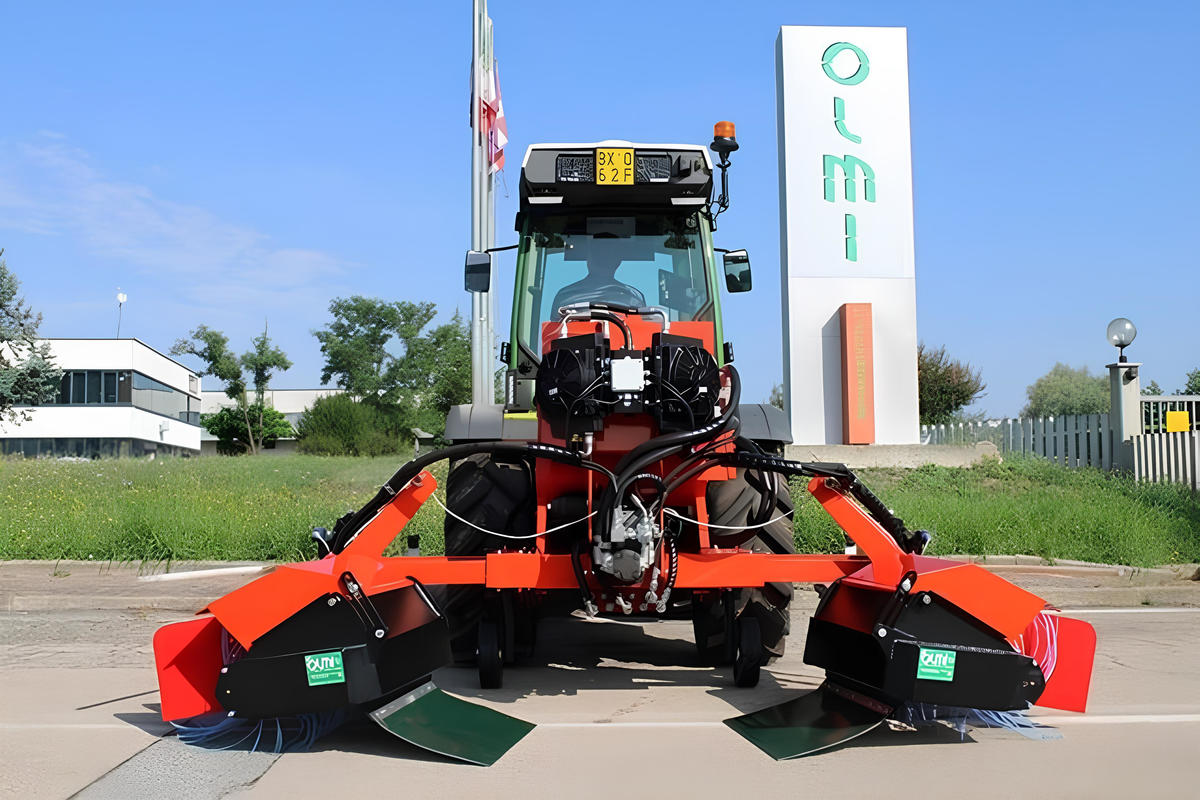
Olmi of Castelnuovo Calcea (Asti) has created the Comby tool carrier frame, available in 3 different sizes (S, M and L) to adapt to different planting distances, to be coupled to tractors of at least 60 Hp.
Again, the drive is independent hydraulic, with 3 pumps driven by the power take-off at 540 rpm.
The equipment frame, connected to the rear 3-point hitch, features a double hydraulic system for independent adjustment of the working parts. In the version dedicated to mechanical weeding under the rows, important functions are implemented to facilitate the operator's work, such as the automatic retraction of the heads and automatic centering of the row.
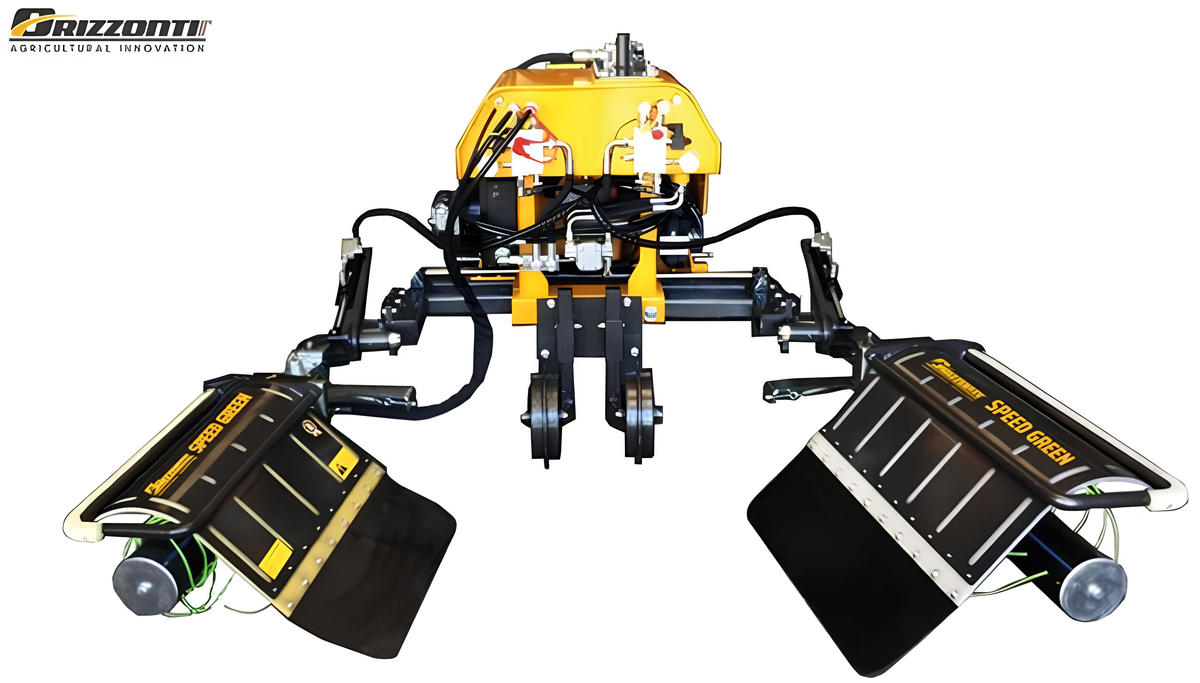
Orizzonti of Imola (Bologna) has a catalog including the Biogreen, a double independent tool carrier frame, which requires a flow of 70 l/min for the hydraulic system that operates it. It is possible to mount various tools suitable for the vineyard, such as ridgers, inter-row discs, shoot removers and windrowers onto its arms. It has a working width between 2.2 and 3 m, which is reduced to 2 m in the “Compact” version. Orizzonti also offers the Sirio 2 double front frame, which can be used to rake pruning residues but also, alternatively, for localized chemical weed control with a protective dome. It requires at least 30 l/min of oil flow, working with variable inter-row widths between 2.2 and 3.6 m. Electro-hydraulic operation with joystick is available on request.
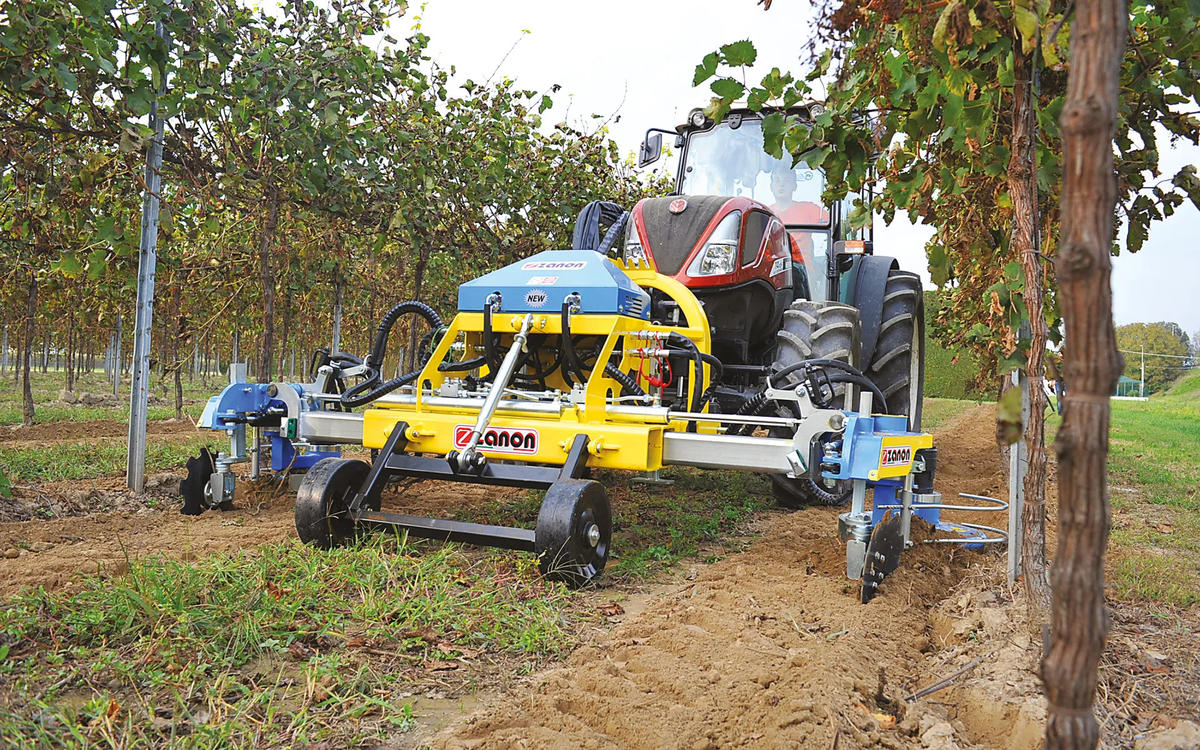
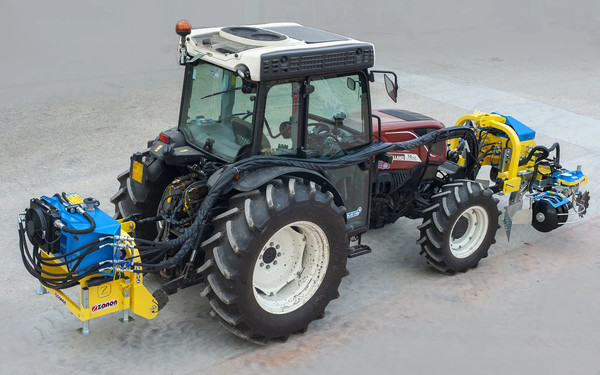
Zanon of Campodarsego (Padua) has instead developed the CST/F Master, a tool carrier that features a rear-mounted hydraulic system, while the processing module is coupled via the front 3-point hitch of tractors up to 100 Hp. Designed for both under- and inter-row cultivation, the multifunctional frame offers numerous working tools: plows or furrow opener discs, grass cutters, inter-row harrows, mechanical weeders, shoot removers, hoeing blades, both idle and motorized ridgers, etc.
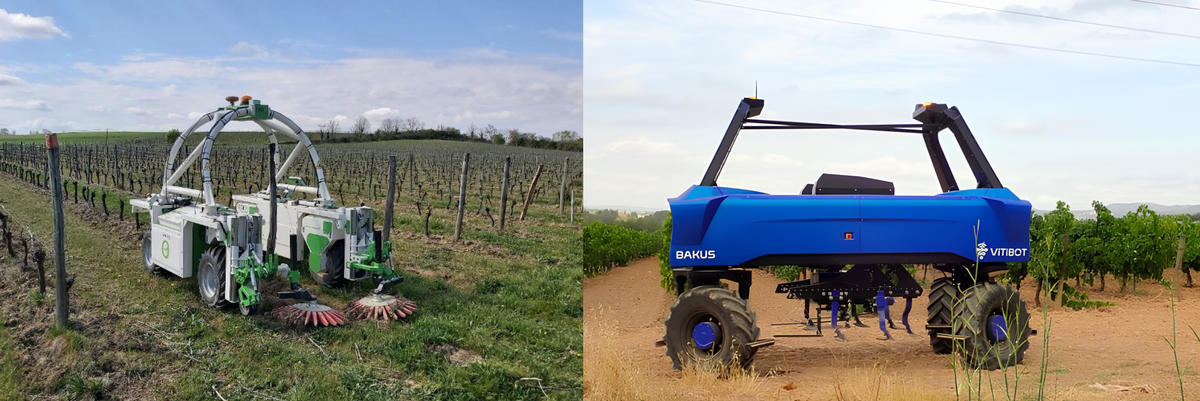
The future is automation and robotization. Even in the case of multifunctional tool carriers, innovation is moving in the direction of semi- or fully-autonomous models. Offerings of these already available for sale are starting to become significant: concrete examples are the Ted by the French manufacturer Naïo and the Bakus by Vitibot, which represent the concept of multifunctionality extremely well. In both cases, these are fully electric tool carriers, capable of operating autonomously in rows guided by satellite georeferencing and artificial vision, to manage different tools with high levels of precision, uninteruptedly, or 24/7. Without a doubt, from an economic standpoint, adopting these machines requires significantly greater initial investments than "traditional" multifunctional tool carriers coupled to tractors, but on large, appropriately structured farms, the opportunities for their use allow for a significant reduction in environmental impacts, both due to the absence of direct polluting emissions into the atmosphere and the reduction of soil compaction. The operating autonomy of these vehicles with a single battery pack is acceptable, estimated by the manufacturers to be around 6 hours, though it also varies depending on the intensity of the work.
Don't forget self-propelled models
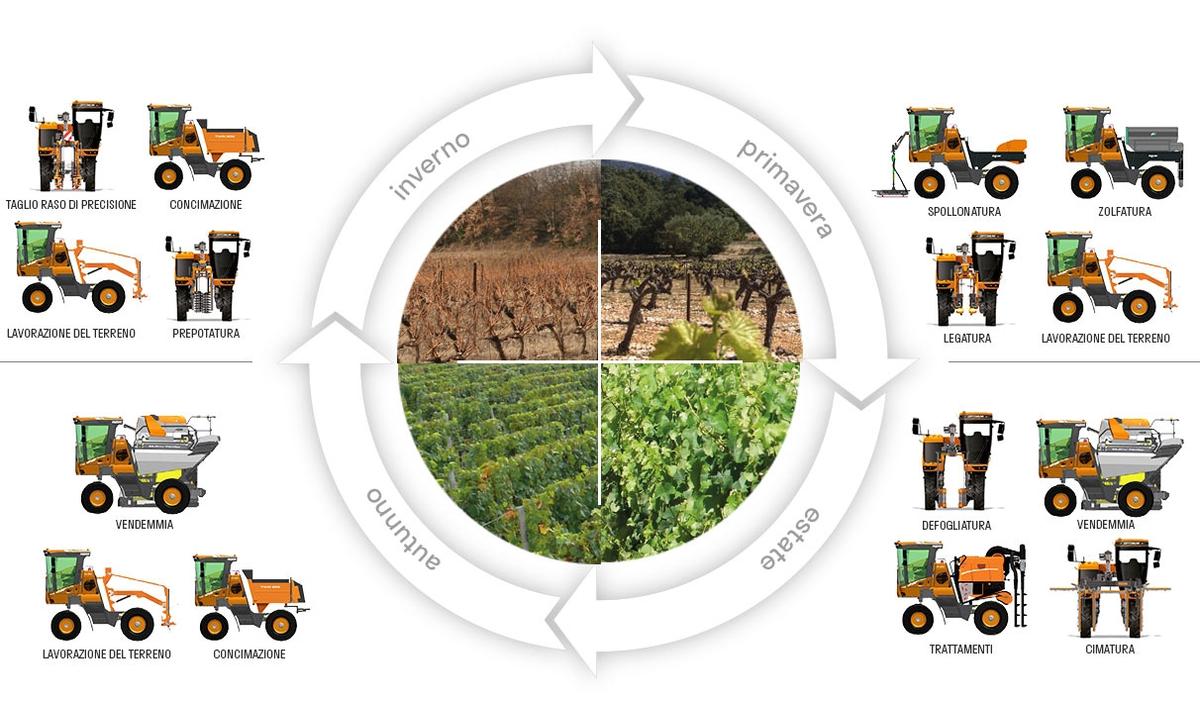
The panorama of tool carriers must also include the evolution of the grape harvester which, in the self-propelled version, has long since been transformed into a true motorized multifunctional frame. Market-leading companies have already made significant progress in this direction; one example is Pellenc's Optimum range, whose models can perform the main vineyard operations by alternatively installing dedicated modules, automatically recognized by way of the "Easy Connect" function. The advantage of flexibility in working is added to the peculiarities of the self-propelled part of the machine, such as the steering angle of 95°.
A similar approach has been implemented in the New Holland Braud 9000 range where, in addition to harvesting, due also to the collaboration with Martignani of S. Agata sul Santerno (Ravenna), the machine can be configured to carry out phytosanitary treatments and other routine operations in the vineyard.