The electrification of work machinery
It is not just tractors. Electrification is now gradually spreading to equipment, making it more efficient, precise, and safe, for an increasingly sustainable and technologically advanced sector
Reducing environmental impact is one of the main challenges facing the agricultural sector today. In this context, the electrification of agricultural machinery, both tractors and work equipment, represents one of the most promising technological cornerstones, both for reducing direct and indirect emissions and for improving energy efficiency, operational control, and operator comfort.
What until recently seemed like an interesting, if merely experimental, prospect has now become a technical and commercial reality, with the appearance of the first electric tractors and the development of major research projects aimed at developing electrically powered work machinery. Replacing mechanical and hydraulic components with electric actuators allows for much more precise and continuous control of the speed and torque of moving parts, paving the way for new features closely related to precision agriculture and variable-rate processing. Furthermore, electrical systems allow for better integration with sensors, control and automation systems, while reducing noise, vibration and the need for maintenance.
Despite these undeniable advantages, the spread of electrification in agriculture has historically been hindered by the need for high power and the difficulty of supplying equipment with large amounts of energy for long periods. For a long time this meant that attention was focused almost exclusively on replacing and/or integrating diesel engines in tractors with electric ones, while the electrification of work machinery remained confined to prototypes or specific applications (such as the electric operation of distributors on precision seed drills or the regulation of the hopper clearance of centrifugal fertilizer spreaders).
Innovations from the past. It is always interesting to note how even the most recent and futuristic innovations often come from insights gleaned a long time ago, which in some cases even reached the prototype stage. The electric tractor is a prime example of this. Considering only the Italian landscape, the 1930s saw the development of ingenious and original solutions, such as gas-powered trucks and cars, which were not limited to the automotive sector but also impacted the agricultural sector. In the tractor sector, models were created (both tracked and wheeled) powered by electric motors connected via very long cables (with a winding reel attached to the tractor) to fixed power points at the edge of the field.
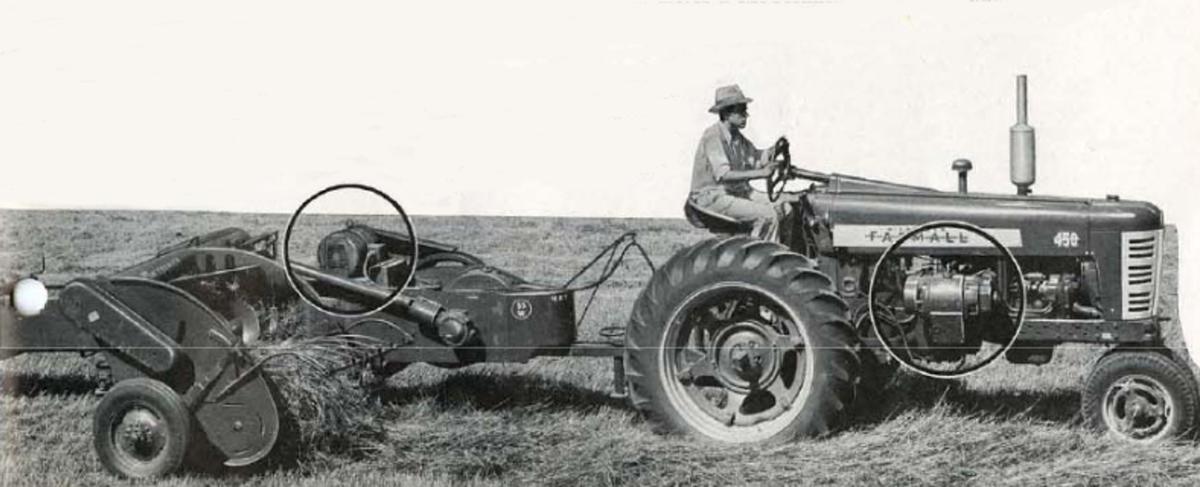
Even for work machinery there was no shortage of innovative proposals which, for the era in which they were introduced – the post-war period – can be considered decidedly pioneering. A significant example in this sense dates back to 1954, the year in which the American Farmall 450 IH Electrall tractor was created. The vehicle was equipped with a crankshaft-driven alternator, capable of providing electrical power for 12.5 kW equipment at 220 V, replacing the traditional mechanical transmissions based on the PTO with a cardan shaft. The concept behind this solution is still highly relevant today: electric motors are in fact known for very high efficiency under any load conditions, and eliminating the PTO shaft offers clear benefits in terms of the tractor's overall performance, and of course without the mechanical risks associated with the use of this component.
More generally, the trend that is gradually gaining ground is that of being able to develop fully electric-powered equipment. The main obstacle to this has been (and still remains) the ability to store large quantities of electrical energy on board the tractor, in sufficient qiantity to also power the work equipment. In parallel, a high-power electrical interface standard for agricultural and forestry machinery has been developed (ISO: ISO 23316–1:2022), which defines a power bus of up to 150 kW, operated with voltages of 700 V DC or 480 V AC.
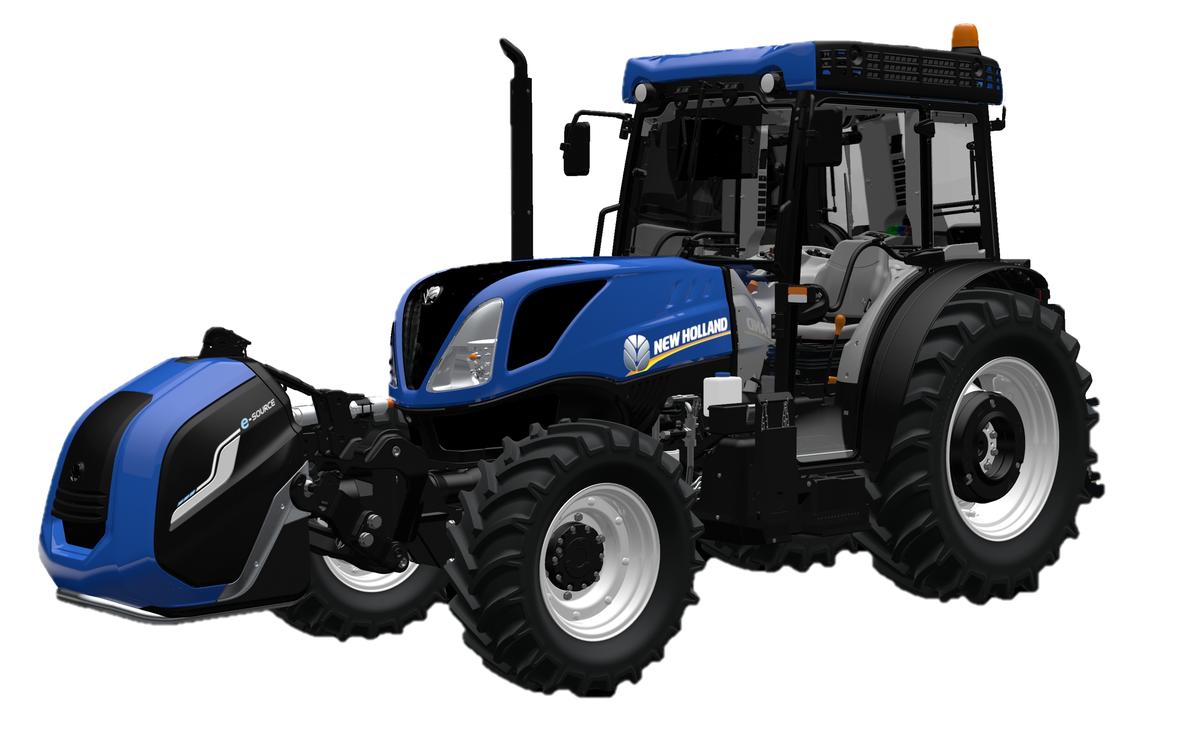
The MArcEL project funded by the Piedmont Region. At the national level, one of the projects that has invested heavily in this direction is one called MArcEL (Electric Agricultural Machinery, https://www.pro-logic.it/marcel), co-financed by the Piedmont Region and developed thanks to the involvement of 17 partners, including universities, research centers, and local businesses. As part of the project, two different external generators for tractors have been developed and tested.
The first is capable of supplying up to 50 kW of DC power at 700 V for driving equipment requiring medium-high power; the second, however, is intended for low-to-medium power applications, up to 10 kW, operating at a voltage of 48 V DC. In both cases, the generators are positioned in place of the front ballast and are driven by the tractor's mechanical PTO.
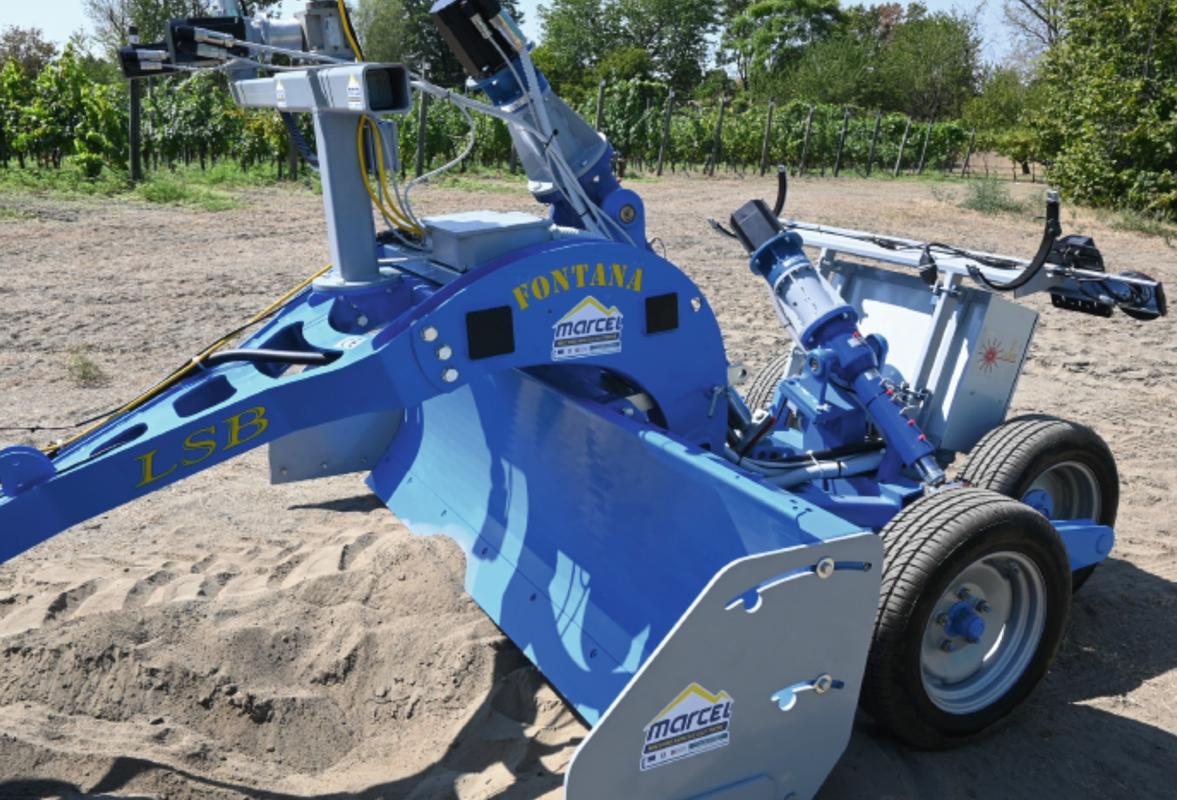
Among the machinery developed during the project is a towed grader from Fontana of Crescentino (Vercelli), for laying out hydraulic lines in plots of land. In this case, the blade height and inclination adjustment system, as per the design proportions, is automatically controlled by a pair of laser receivers, one of which is stationary, which acts as a reference for the grader positioning system.
The position of the blade is regulated by two linear screw actuators driven by two brushless motors via an epicyclic reducer. The laser control system automatically controls the brushless motors, implementing a position control loop referred to the plane generated by the laser emitter. The experimental tests conducted have shown a significant reduction in electrical power consumption compared to traditional hydraulic systems, mainly due to greater energy efficiency.
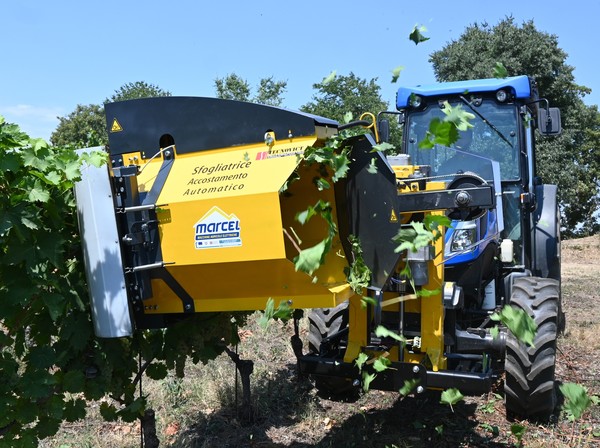
Another piece of machinery developed as part of the project and now ready for commercialization is a vineyard leaf remover from Tecnovict of Pianello Val Tidone (Piacenza). Its canopy cutting and position control devices are powered by 48 V electric motors. Experimental tests have shown that power consumption is approximately five times lower than the corresponding hydraulic solution, while the head's approach/distance speed is 50% greater. Furthermore, the machine offers extremely precise control of the defoliation intensity and allows the immediate reversal of the direction of rotation of the rollers, facilitating the expulsion of any debris.
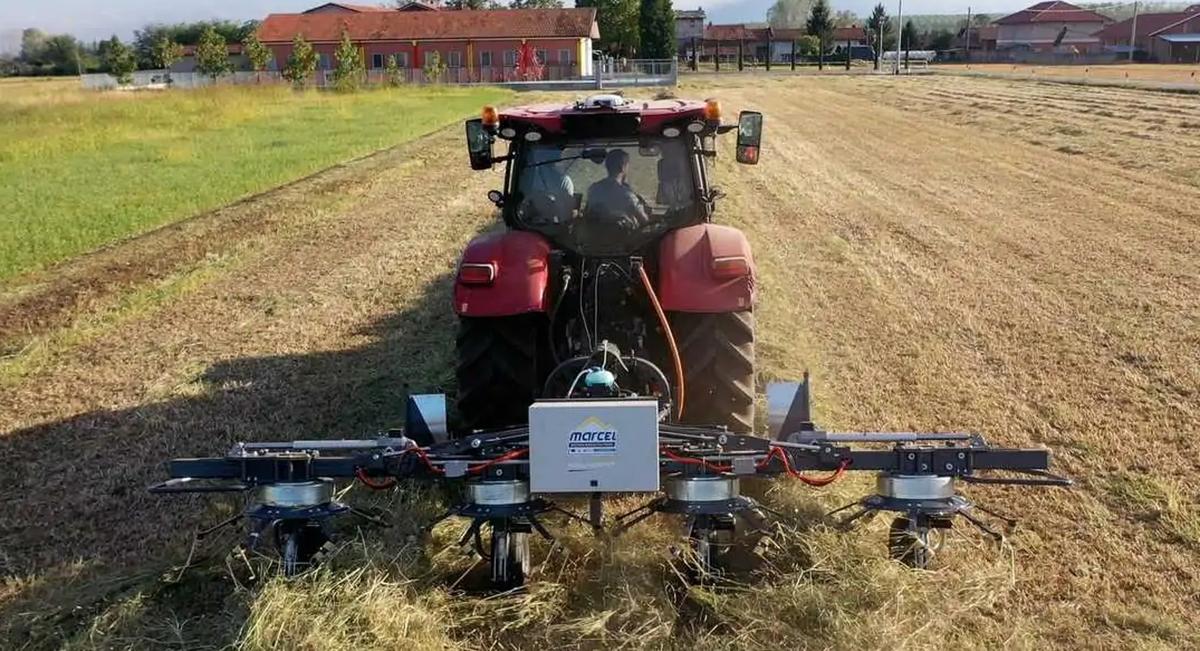
Another interesting solution proposed by manufacturers is the tedder from Frandent of Osasco (Turin), which allows for continuous and independent variation of the rotor speed, working width and angle of incidence of the machinery with respect to the ground, in order to optimize the operation in terms of both energy and quality.
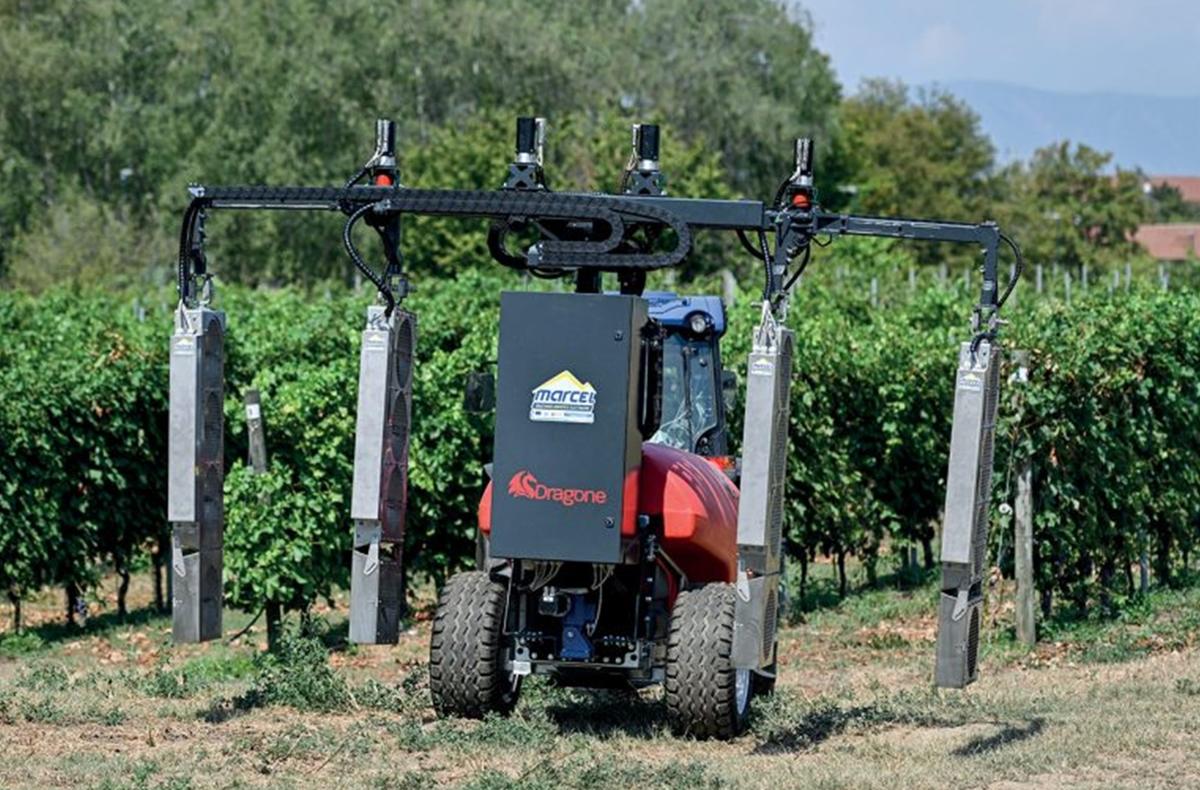
Other working equipment, such as a trencher from Fissore of Cavallermaggiore (Cuneo) and a straddle sprayer from Dragone of Castagnole Lanze (Asti), were also developed as part of the project, attesting not only to the growing interest in electrification in agriculture but also to the versatility of the available generators, capable of meeting the energy needs of a wide range of equipment.