Merlo: an 'artisan' heart, an industrial vocation
An educational tour for the trade press took place last July at the Group’s headquarters in Cervasca (Cuneo). Industrial policies, medium- and long-term growth prospects and new products were the key topics of the two-day event
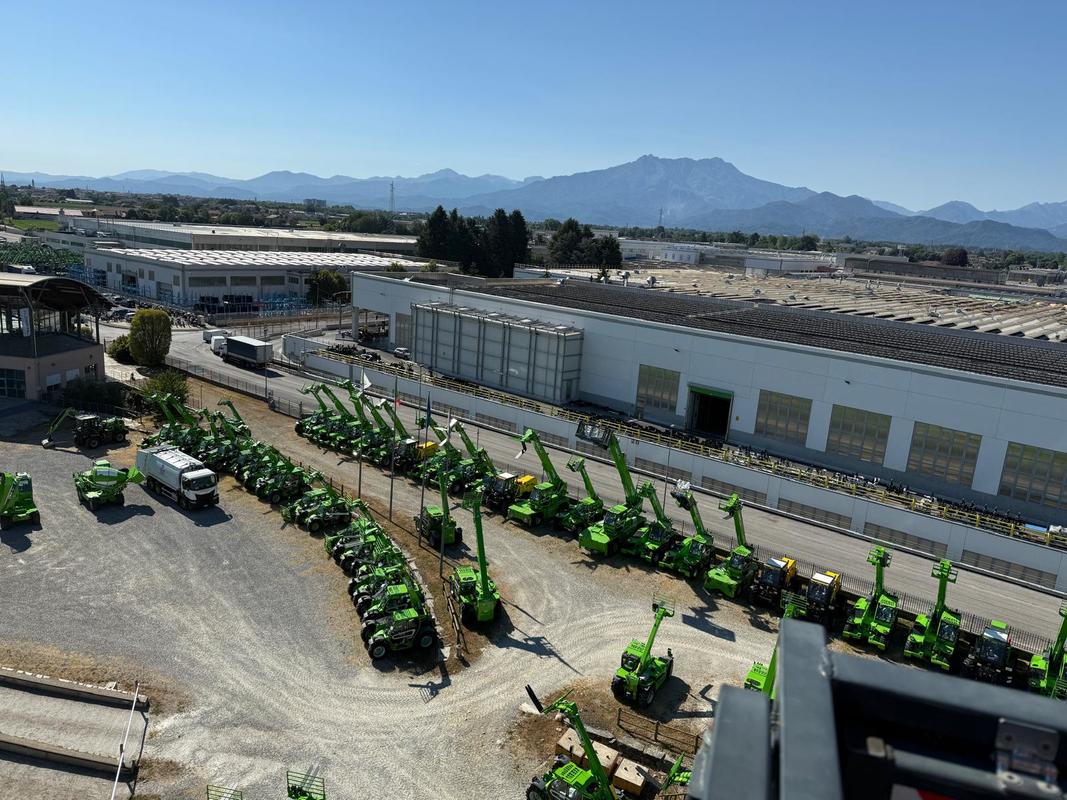
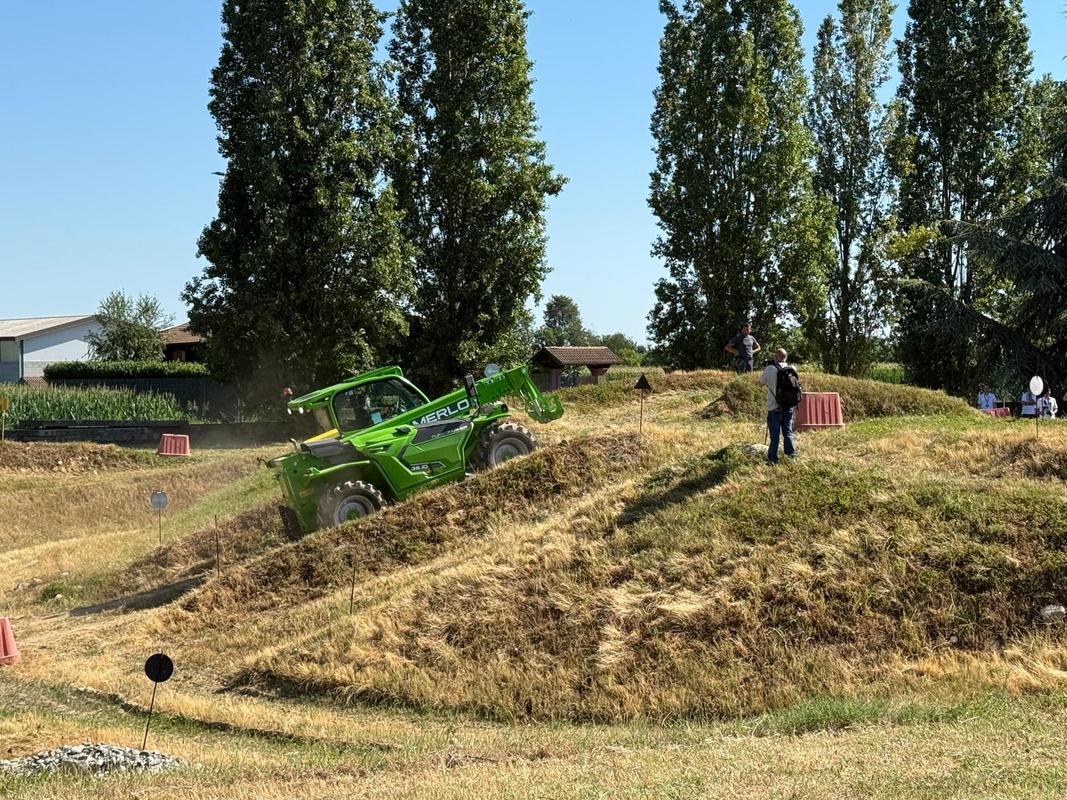
These are years of great turbulence for global markets. Geopolitical tensions, disruptions to supply chains, blocked trade routes and inflationary pressures are affecting the performance of the global economy, with significant repercussions not only for the agricultural sector but also for the agricultural machinery sector, which is closely linked to it. Rising commodity prices, combined with stagnant farm incomes, are in fact slowing down investment in machinery and, consequently, leading to a contraction in business for companies in the sector. In such a complex landscape, however, there is no shortage of success stories. One such story, entirely Italian, is that of the Merlo Group, one of the world’s leading manufacturers of agricultural and construction machinery. Since 1964, its headquarters have been located at the foot of the Maritime Alps, in the municipality of Cervasca, just a few kilometres from Cuneo. Here, more precisely in San Defendente, are the administrative offices, the production plant and the newly established Merlo Academy - a centre where the Group’s technical and sales staff are trained - which last July hosted an educational tour for the trade press.
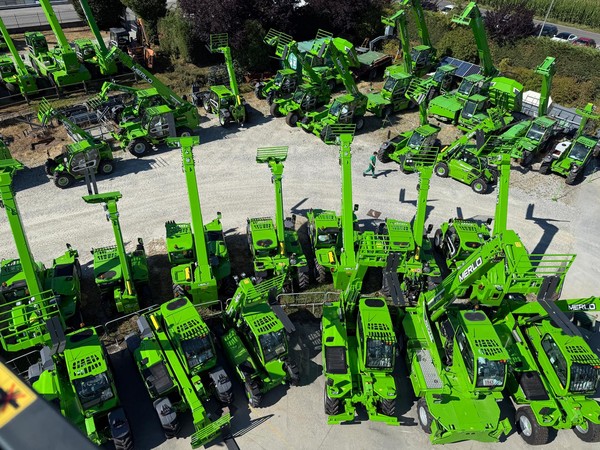
A single production hub for the whole world. Spanning an area of 337,000 square metres, including underground levels, the Cervasca plant stands out not only for its high level of technology - most of the manufacturing processes are automated and the various production cells are integrated and co-ordinated with one another - but also for being Merlo’s sole production site. Whether it is a dumper or a telescopic handler destined for the Canadian, Dutch or Australian markets, every model is conceived, designed and manufactured in San Defendente. At a time characterised by the offshoring and decentralisation of production activities, the Cuneo-based company’s approach undoubtedly represents a decision that goes against the grain. ‘From sheet metal cutting to painting, from the design of axles or hydraulic cylinders to the manufacture of internal wiring, right through to the assembly of the various sub-assemblies, we manage all the different stages of the production cycle for every single machine in-house, limiting our reliance on external suppliers to what is strictly necessary,’ explains the Group’s chairman, Paolo Merlo.
From the bolt to the cab, everything is made by Merlo. With the exception of engines and electronic control units, the company designs and develops more than 90% of its components in-house. This enables the manufacturer not only to create bespoke solutions, with a level of quality and attention to detail that it is no exaggeration to describe as artisanal, but also to adopt a systematic approach to innovation, applying it to every component of the machine, of which Merlo has comprehensive knowledge. Obviously, this would not be possible if these components were produced externally.
‘When we think of a machine, we don’t just think of the end product; we also think about how that machine is to be produced, using which industrial processes. For example,’ adds Paolo Merlo, ‘the e-worker forced us to invest in a new production platform, namely the electric one. This means that, as we do not wish to outsource any stage of the manufacturing process, we must take on a much broader and more structured process.’ In addition to the production phase, the Cervasca-based company also directly manages distribution, which is entrusted (‘except in special cases’, the Group’s chairman points out) to a network comprising eight branches and 600 authorised dealers and distributors, as well as authorised after-sales service centres.
Merlo Group: team spirit. Given that the range comprises more than 190 models, including variants, the complexity of the production cycles is readily apparent. This has required the company to optimise its organisational structure as well, establishing itself as an industrial group comprising several integrated entities, each with its own specific areas of expertise. To go into more detail, Merlo and TreEmme specialise in the manufacture of equipment for the primary sector and the construction industry (including telescopic handlers, dumpers and forestry vehicles), whilst Tecno Industriale Merlo focuses on commercial vehicles, in particular waste compactors. Project and MGILAB, on the other hand, focus on innovative design: the former in the field of new materials, and the latter in hydraulic and electrical technologies. In addition to these are Movimatica, which designs and develops platforms for industrial automation and fleet management systems (diagnostics, geofencing, reporting, geolocation), and the aforementioned Merlo Academy, the Group’s training hub.
Target 2029. The centralisation of production activities and the strong integration between the various companies within the Merlo group have proved to be a successful industrial strategy, particularly in light of the current economic climate, because – for example - it does not expose the manufacturer to disruptions in value chains and the consequent risk of supply shortages. To date, the results have vindicated these industrial policy choices. In 2025, a challenging year for the global agricultural machinery market, the Cervasca-based manufacturer sold as many as 7,000 machines, the majority of which - 78.5% – were sold in overseas markets, particularly France (17.3%) and Germany (14.1%). North America (10.5%) and the United Kingdom (8.8%). The remaining share - 21.5% - was absorbed by the domestic market, where sales reached the 1,500-unit mark. Today, Merlo, which holds an 8.6% share of the global telescopic handler market (12.7% in Europe), is, as stated by the manufacturer itself, the market leader in Italy, Sweden, Canada and Finland. Although the company has seen a slight decline in revenue over the past twelve months (an increase is forecast for 2026), the medium-term outlook remains positive and should lead to further consolidation of the Cuneo-based manufacturer’s position in global markets by 2029. The target is ambitious - to increase the capacity of the Cervasca plant by 30% and bring annual machine production to 10,000 units - but the Merlo Group has already deployed the human and financial resources needed to achieve this goal.
New products for EIMA
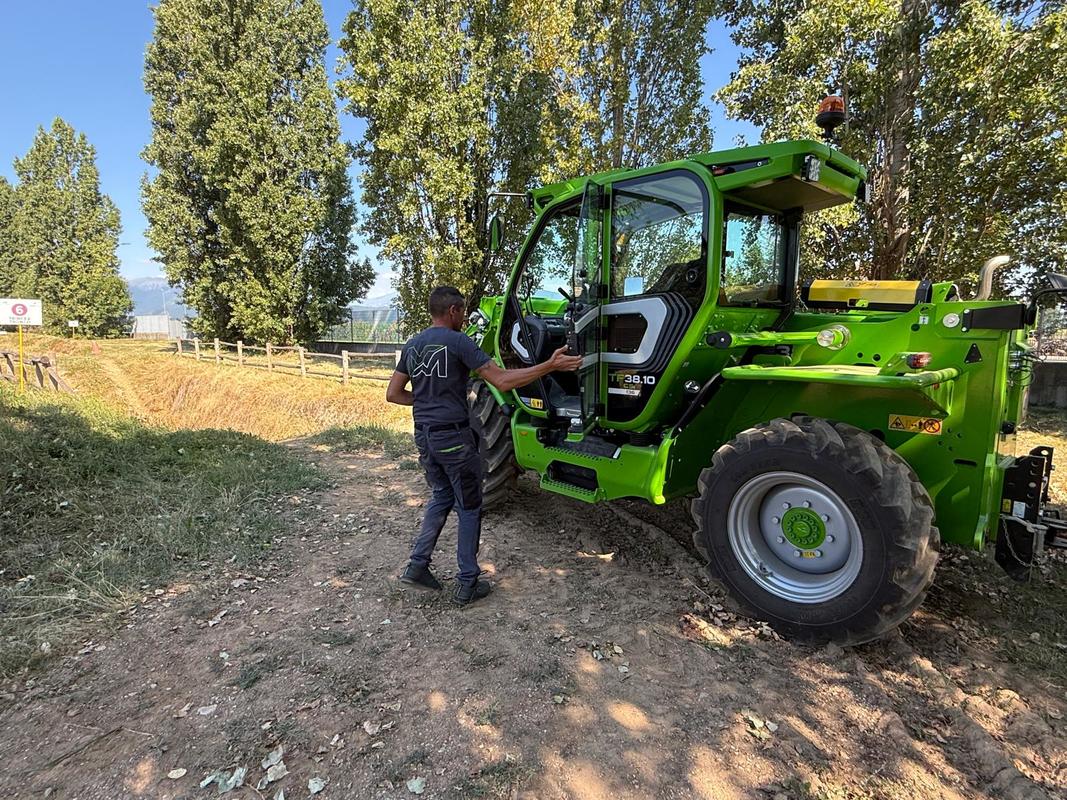
Whilst we await the main course, which will be ‘served’ next November at EIMA International, Merlo has offered a substantial appetiser. The Turbofarmer TF38-42 models have been updated with the new Fops Safe View protective grille, which further enhances the view of the working area, and with new silent blocks, specially designed to improve cabin insulation. The redesign has also extended to the lubrication system, featuring a ‘centralised’ solution via a set of grease nipples positioned at the front of the machine. Wider chassis, enhanced load capacity, Cartesian movements and a Set-Point function (the boom returns to a pre-set position) are the main improvements introduced by the Cervasca-based manufacturer on its Roto rotating telescopic handlers with reach ranges from 16 to 35 metres. Also worth noting in this range is the introduction of a new radio remote control with a range of up to 100 metres, which allows the machine to be operated even more easily and intuitively. The spotlight is also on the MM170RM model, a multi-purpose machine designed for road and forestry maintenance. Powered by a 170 Hp Deutz Stage V engine, the MM170RM features a newly designed cab that optimises visibility of front and side attachments.