The use of green hydrogen on farms
The need to reduce climate-altering emissions and the intermittency of energy production from wind and photovoltaic sources makes the use of hydrogen an attractive option, especially if produced on the farm to power machinery and systems
The need to reduce dependence on fossil fuel energy sources has long been an absolute imperative. Among alternative solutions, including for agricultural vehicles, the focus is now shifting toward an even greener energy source than biomethane and more practical than traditional electric power: hydrogen. However, it is not a primary energy source, since its production, isolation and use require energy inputs, aimed at separating the molecules in which hydrogen is present. Unlike traditional renewable sources (sun, wind, and water), whose energy supply is intermittent and dependent on weather conditions, hydrogen can be used immediately or stored for later use. This allows excess production to be accumulated during periods of peak performance by other systems.
Hydrogen can be used both as a vector for energy production and as a fuel to directly power an internal combustion engine; this flexibility has undoubtedly contributed to increased interest, particularly in sectors where direct electrification still faces several limitations.
Self-propelled Agricultural Vehicles and Hydrogen. Tractors used for heavy-duty work, typically those with high power, full-electric solutions still show significant limitations in terms of autonomy, charging times and battery mass. In this scenario, hydrogen presents itself as a possible alternative, especially in applications characterized by intensive work cycles, where high energy density and rapid refueling are crucial.
The main solutions currently being studied for the agricultural sector concern the powering of fuel cells for the production of electricity and combustion in suitably adapted internal combustion engines.
Hydrogen produces electrical energy in fuel cells through an electrochemical reaction, reacting with oxygen and powering both the propulsion system and the numerous functions found on tractors; a low-capacity storage system (typically a buffer battery) is usually used to cope with load peaks. Alternatively, a different configuration, more suitable for highly variable load contexts, sees the fuel cells work primarily as a generator to recharge a much larger battery.
These solutions, despite different combinations of generation and storage, allow for the maintenance of the typical advantages of electric drive, namely high efficiency of the power generator and the absence of exhaust emissions (limited to water vapor and heat) with efficiencies that can even exceed 60%. However, significant critical issues remain regarding the high costs of fuel cells and especially of hydrogen management systems, which significantly impact the overall cost of the vehicle, compared to the well-tested internal combustion engine. Added to this is the question of useful life: the typical lifespan of fuel cells is considerable, usually between 8,000 and 20,000 hours, but in the agricultural sector, vibrations, dust, variable loads and intensive work cycles can significantly accelerate the degradation of the electrochemical components, affecting their long-term reliability.
The alternative approach instead consists in using hydrogen directly as a fuel in suitably modified internal combustion engines, so as to make good use of much of the design, production and maintenance knowledge already known for several decades. For manufacturers, this represents a great advantage, greatly reducing the need for redesign. Although energy efficiency is lower than that of fuel cell solutions (in this case, efficiencies are between 30 and 40%, in line with those of the most modern internal combustion engines powered by fossil fuels), this solution is considered quite promising, especially for applications with high power requirements and for greater know-how of the applied technical solutions. However, some issues remain that have not been fully resolved, such as polluting gaseous emissions, especially nitrogen oxides (NOx).
A further critical issue, which particularly concerns hydrogen-powered agricultural vehicles (in both configurations), is the storage of fuel on board the vehicle. To achieve a satisfactory energy density, it is necessary to compress the gas to very high pressures, between 350 and 700 bar, or to keep it in a liquid state at extremely low temperatures (down to −253 °C). These solutions significantly increase system complexity, with direct consequences on overall dimensions, safety requirements, and integration into agricultural vehicles. Despite these potential difficulties, several market-leading manufacturers have recently initiated development programs for self-propelled hydrogen-powered agricultural vehicles.
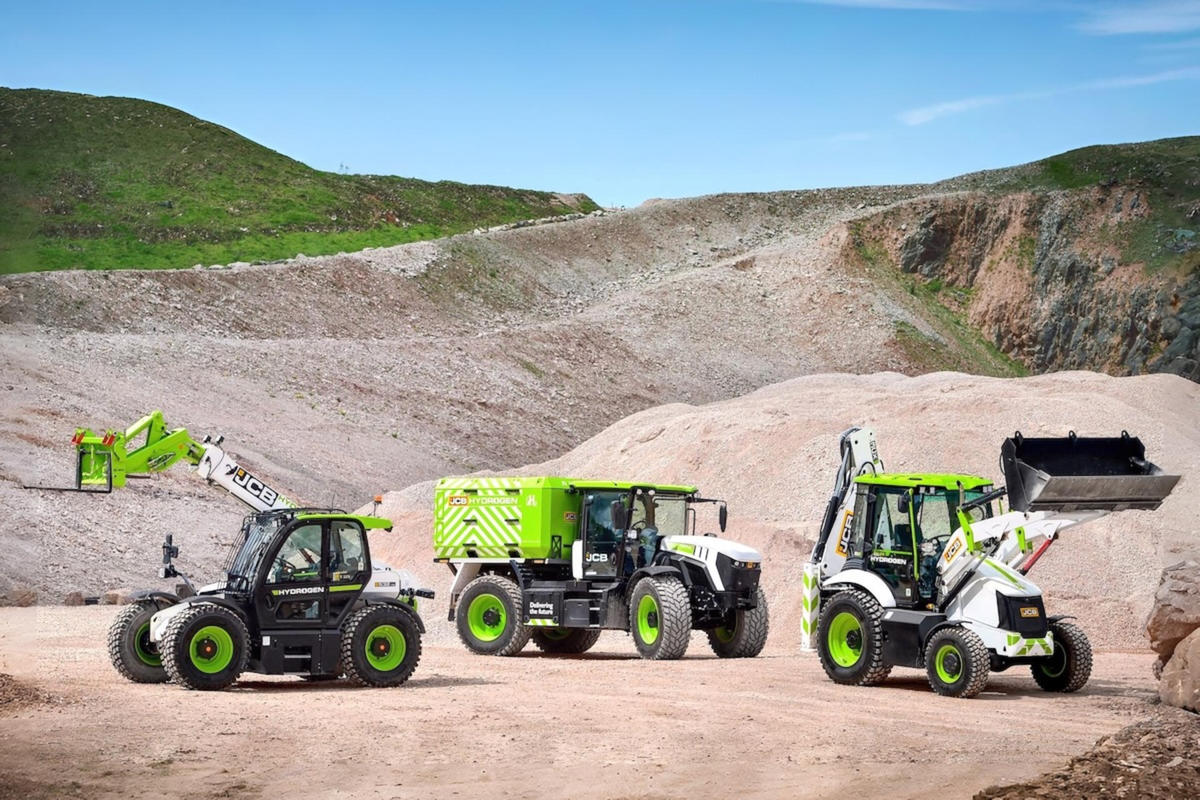
As regards internal combustion, the most advanced case is represented by the English company JCB, which has developed a hydrogen engine derived from its 4,800 cm³ JCB 448 diesel unit. It is a 4-cylinder in-line engine that delivers 55 kW (75 Hp) of power, with torque and performance comparable to diesel engines in the same category. Around one hundred units have already been produced, installed on telehandlers, wheel loaders, excavators and experimental agricultural tractors. The overall objective is to keep operating modes and performance levels similar to those of the corresponding models, with refueling times and operating autonomy compatible with the typical needs of work sites and farms.
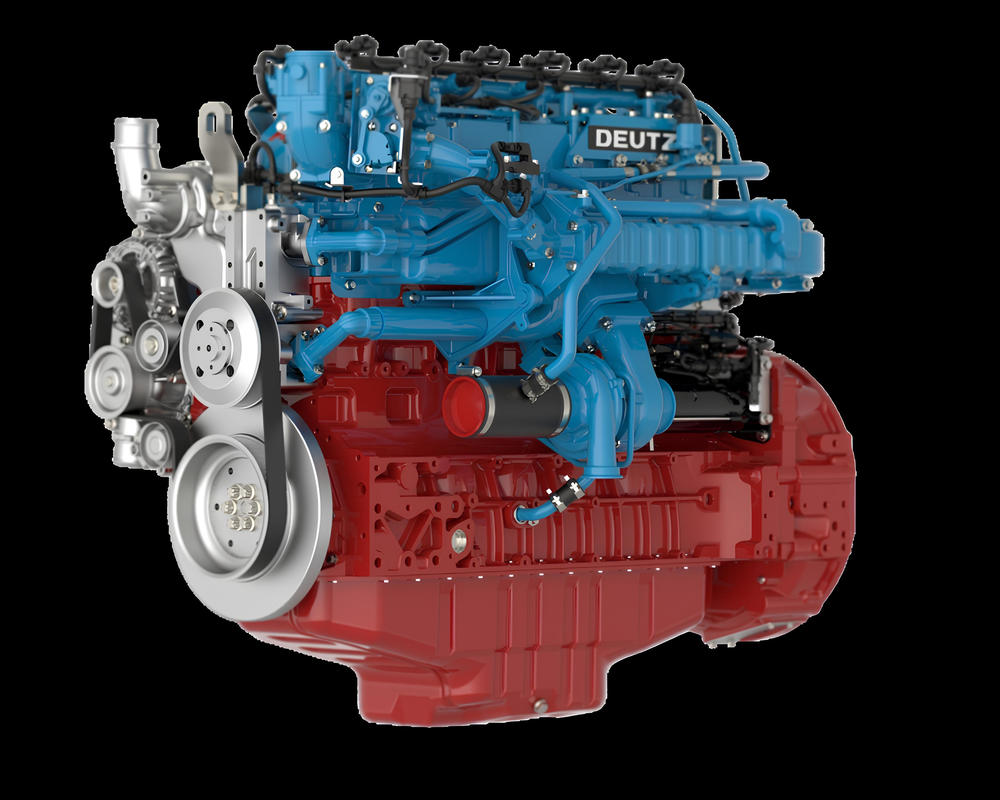
Also derived from a diesel model designed for self-propelled agricultural vehicles is the one proposed by the German company Deutz, which presented a 6-cylinder in-line 7,800 cm³ engine with 220 kW at 2,200 rpm of maximum power, with a torque of 1,000 Nm developed between 1,400 and 1,600 rpm. The fuel system is hydrogen at approximately 25–30 bar, with an engine configuration suitable for heavy duty cycles and continuous operation.
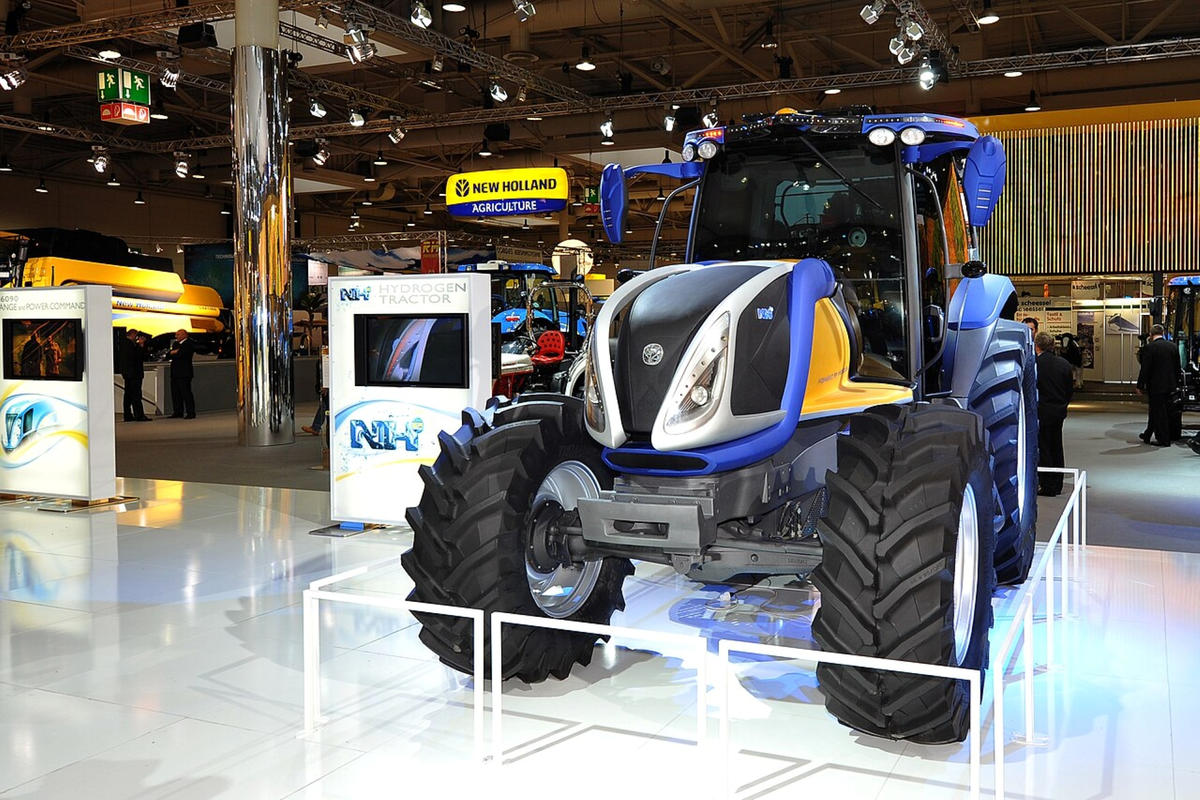
Conversely, on the fuel cell front, one of the first examples in the agricultural sector is New Holland's NH² project, presented in 2009 and based on the T6000 platform. The prototype replaced the diesel engine with a full-electric system powered by a fuel cell, supported by two separate motors, one for traction and the other for auxiliary services. The overall power available was approximately 106 Hp, for an operating autonomy of between 1.5 and 2 hours. In this configuration, the mechanical transmission has been eliminated as well as the internal combustion engine, significantly reducing noise and vibrations. Despite the lack of actual commercial development, the NH² project represented one of the first concrete demonstrations of the use of fuel cells in the agricultural sector.
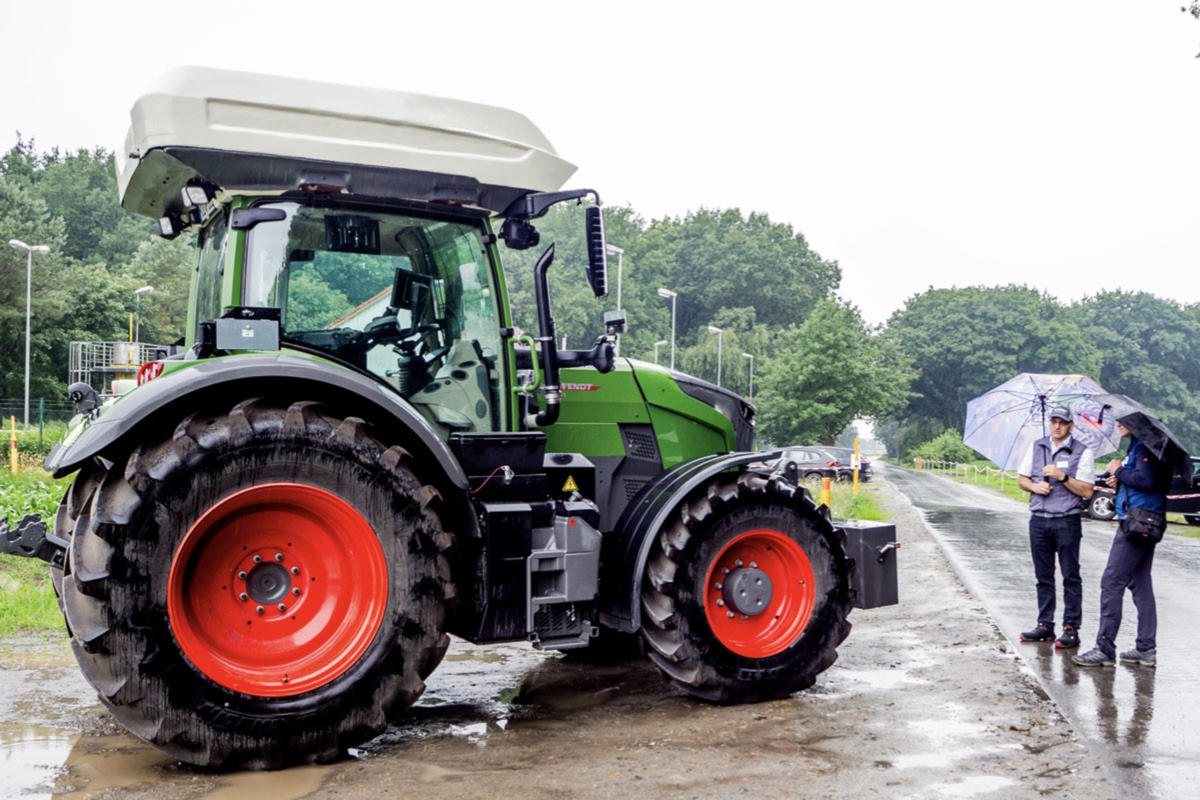
A more recent similar achievement is the one developed by Fendt as part of the H2Agrar project. In this case, the goal was not just the development of the vehicle, but the design of the company's entire energy system. Built on the e100 Vario platform, the experimental tractor called Helios uses a 100 kW fuel cell to produce the necessary electrical energy, supported by a 25 kWh buffer battery to manage power peaks and auxiliary services. The hydrogen is stored in 5 tanks installed on the roof of the vehicle, each with a capacity of 4.2 kg for a total of approximately 21 kg stored at a pressure of 700 bar, and is generated through electrolysis using energy from renewable sources, with storage and refueling of the tractor at a special station. The overall objective is to verify not only the reliability of the machine, but also the sustainability of the entire energy chain under real operating conditions.
The hydrogen production system
Most of the hydrogen currently produced uses two distinct processes: steam methane reforming (SMR) and electrolysis. In the first, methane reacts at high temperature and pressure (700 °C and 20 bar) with two water molecules, generating 4 molecules of bimolecular hydrogen (H2) and one of carbon dioxide (CO2). Electrolysis, on the other hand, uses electrical energy to separate the atoms that make up water (H2O).
On farms where anaerobic digestion systems are already operational, SMR could be put into practice by taking advantage of the biogas produced, appropriately refined into biomethane. The final product is categorized as “gray hydrogen,” since the amount of carbon dioxide emitted into the atmosphere as a byproduct of the process is in equilibrium with the amount stored during biomass growth. The main critical issue with SMR is the energy consumption required to maintain optimal temperature and pressure conditions. Today, however, advanced technologies with lower energy input are available, capable of producing high-purity hydrogen even directly from biogas, without first separating the CO2. An example of this is represented by the “h2genio” systems developed by Hysytech S.r.l. in Orbassano (Turin).
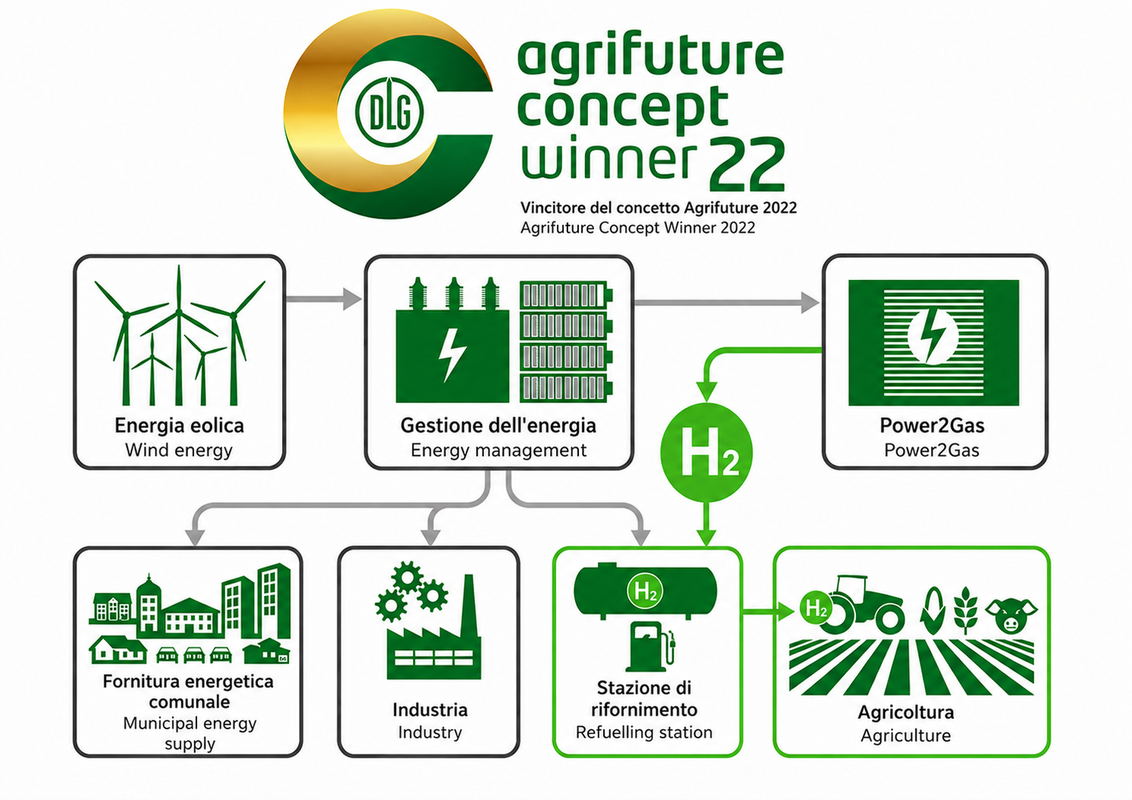
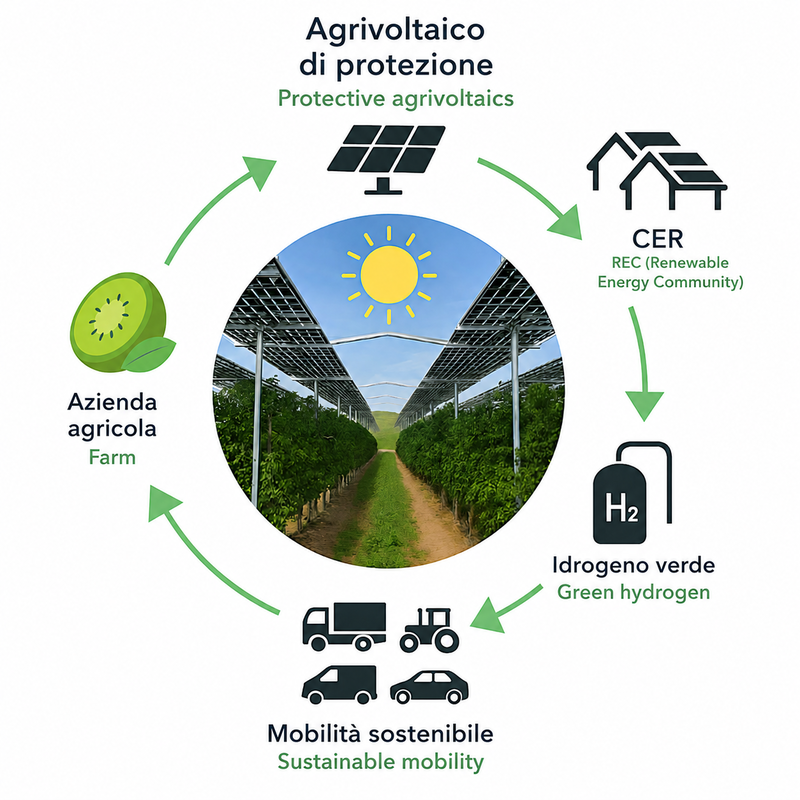
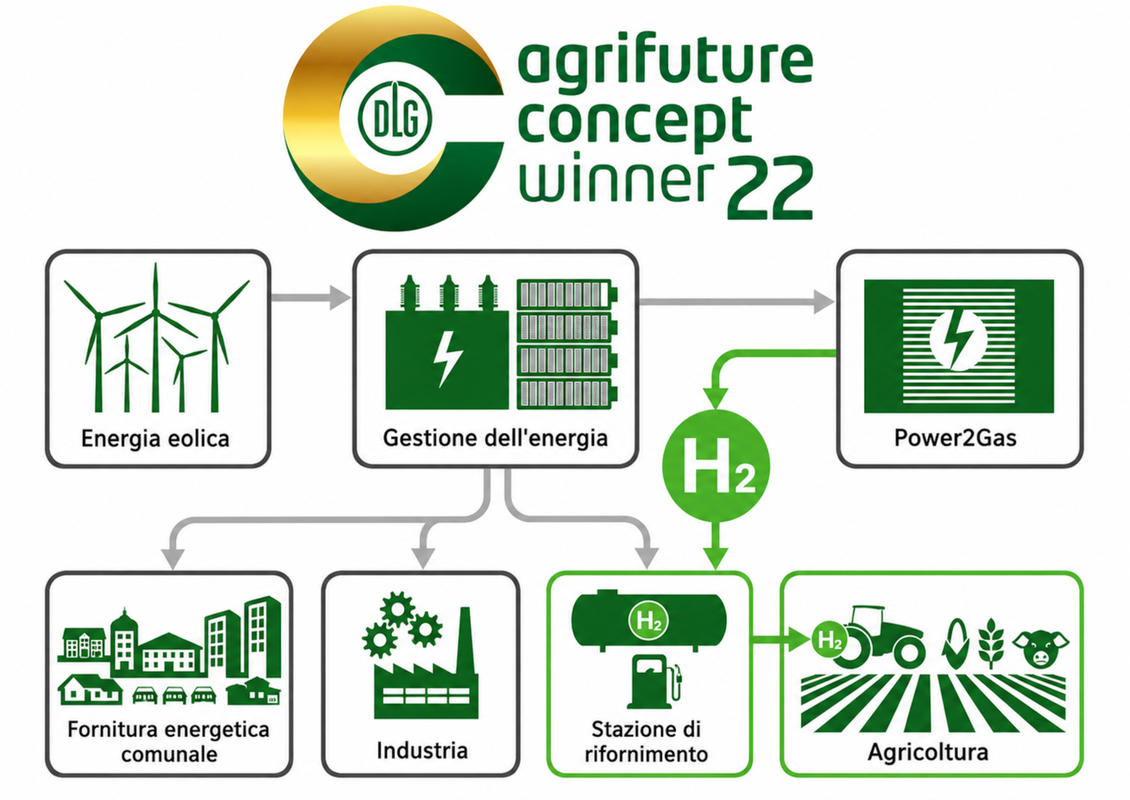
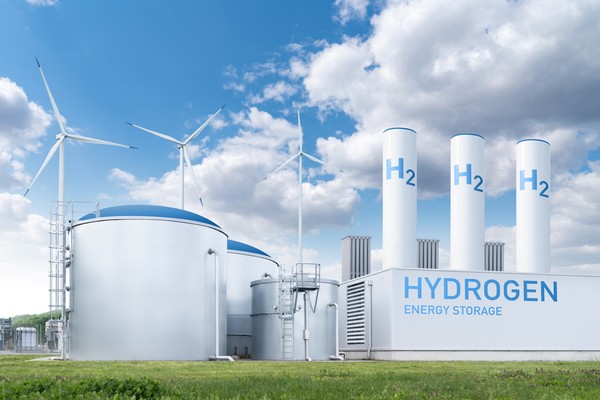
Electrolysis has two interesting aspects: it can be performed using energy produced from renewable sources and, at the same time, it makes it possible to take up the slack caused by the energy intermittency of renewable sources. The surplus energy can in fact be stored as hydrogen through electrolysis, and can then be used when needed without emitting carbon dioxide into the atmosphere. Combined with the recent development and market launch of electrolysers of various sizes and power ratings, this process represents a promising prospect for farms, also thanks to the spread of increasingly efficient agrivoltaic systems, designed to combine agricultural and energy production on the same land. An example of this electrolytic process has already been put into practice by IMI Remosa of Cagliari, which builds systems with a power output of 1 to 5 MW, capable of producing 200 to 1000 Nm³/h of hydrogen, with a purity of 99.9%.