Vineyards and orchards: super specialized tractors
Dedicated designs, multifunctional platforms, and specific solutions for working in narrow rows and on steep slopes: these are the emerging trends in the mechanization of high-value-added sectors
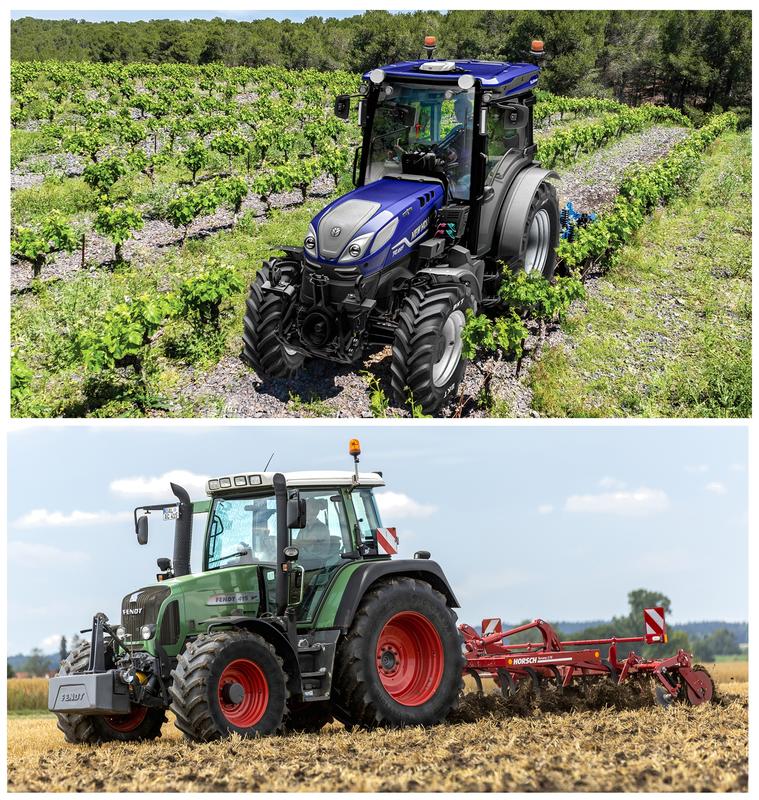
Compared to conventional open-field models, those designed for specialized crops are specifically engineered to operate effectively in confined spaces and close to vegetation, featuring compact dimensions, sleek profiles, and precise maneuvering between rows.
Their design therefore features a narrow track width, a short wheelbase, and a relatively low-slung engine compartment, enabling them to operate effectively in environments with dense, overhanging vegetation and minimizing the risk of damaging branches and shoots, while remaining sufficiently agile for headland maneuvers.
Specialized tractors are typically equipped with medium-to-low-power engines, ranging from 60 to 120 Hp, which are expertly designed and sized to ensure maximum efficiency when paired with specific implements for performing phytosanitary treatments, inter-row cultivation, pruning, mowing, and under-row management.
Mechanical transmissions feature gear ratios designed to facilitate frequent maneuvers (thanks in part to the reverse gear, which is often electro-hydraulic), while the hydraulic systems are adequately sized to power increasingly complex and demanding implements. For these vehicles, safety and ergonomics play a key role precisely because of the operating environment in which they are used. Approved ROPS structures can be a two-post roll bar (which can also be folded down to allow entry into crops with low and/or overhanging vegetation) or compact cabins with a rounded profile, often equipped with activated carbon filtration systems and various solutions designed to improve comfort and visibility.
The evolution of super-intensive crops, which more than any others require precision cultivation, has led to the development of even more specialized machines: these are super-specialized tractors, for which the design is effectively redefined based on the operational context, the specific cultivation methods of the crop, the terrain, and the level of integration with implements. In this context, the tractor tends to transform into an implement carrier, that is, a multifunctional machine capable of performing multiple operations in a single pass.
The structural layout, weight distribution, driver’s station, and integration with implements are specifically designed to suit the operating environment, to improve - in highly specialized production contexts - not only compactness but also to optimize stability, operational precision, and performance.
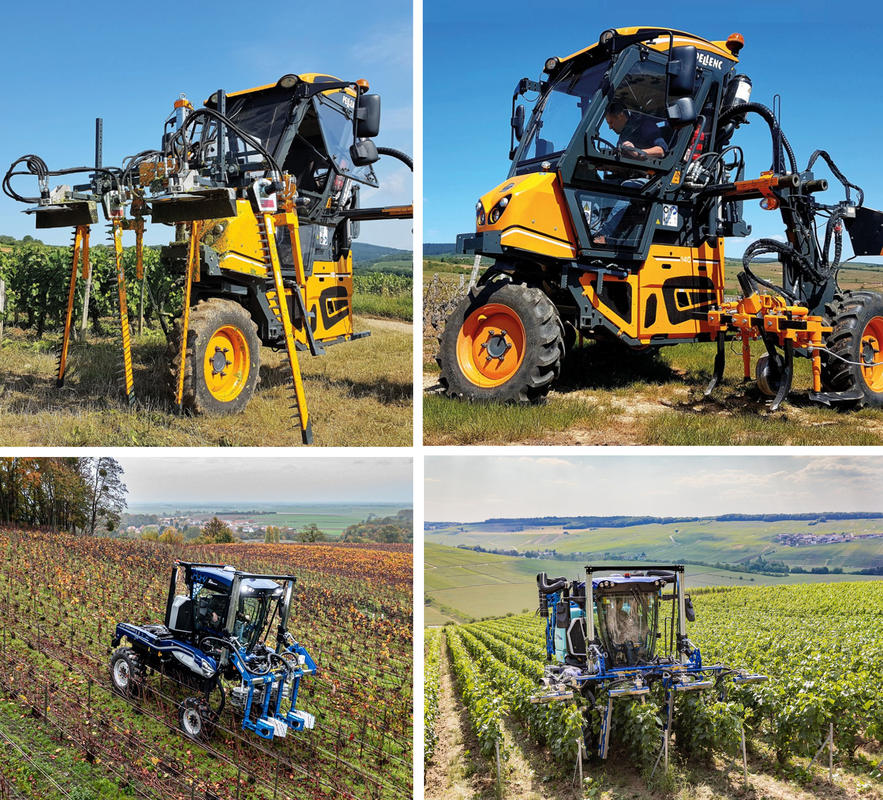
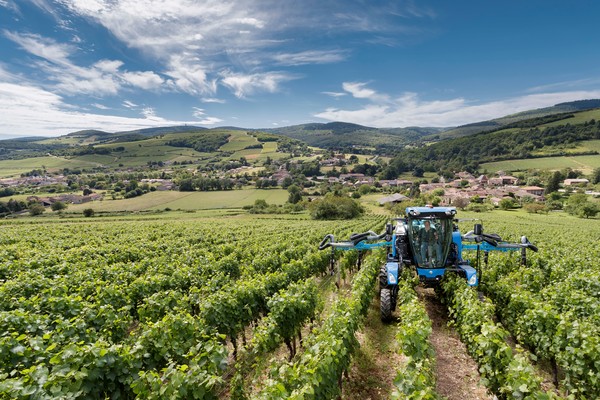
Straddle tractors: multifunctional platforms for specialized viticulture. Straddle tractors fit perfectly into this scenario; their supporting structure is designed primarily for height, with the entire vehicle operating above the vine row. In essence, they are tool carriers capable of performing phytosanitary treatments, pruning, defoliation, and, in some cases, even mechanized harvesting. This machine has become particularly widespread in highly specialized French viticulture, where the uniformity of planting patterns has favored the development of highly automated equipment. The concept behind these machines is, in fact, to consolidate various operations into a single unit by mounting interchangeable attachments powered by high-capacity hydraulic systems.
In this category, Pellenc offers an innovative solution with the Optimum 140 straddle model, which features a three-wheel drive configuration, with the front wheel equipped with steerable front wheel capable of an extremely high steering angle, ensuring excellent maneuverability.
The hydrostatic transmission provides smooth, progressive propulsion control, an important feature for precise work between rows. The lightweight chassis has a low center of gravity, providing satisfactory stability, even on steep slopes. The track width and operating height are adjustable to adapt the machine to different vineyard layout geometries.
New Holland's TE6 series is an evolution of the Straddle Tractor Concept, developed in collaboration with Pininfarina. It features a raised driver's seat that improves visibility along the row. The vehicle is characterized by advanced digital integration, incorporating various precision farming solutions, advanced connectivity, and continuous monitoring of operating parameters.
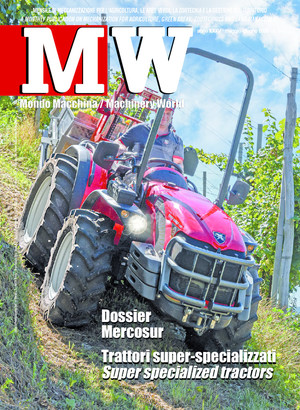
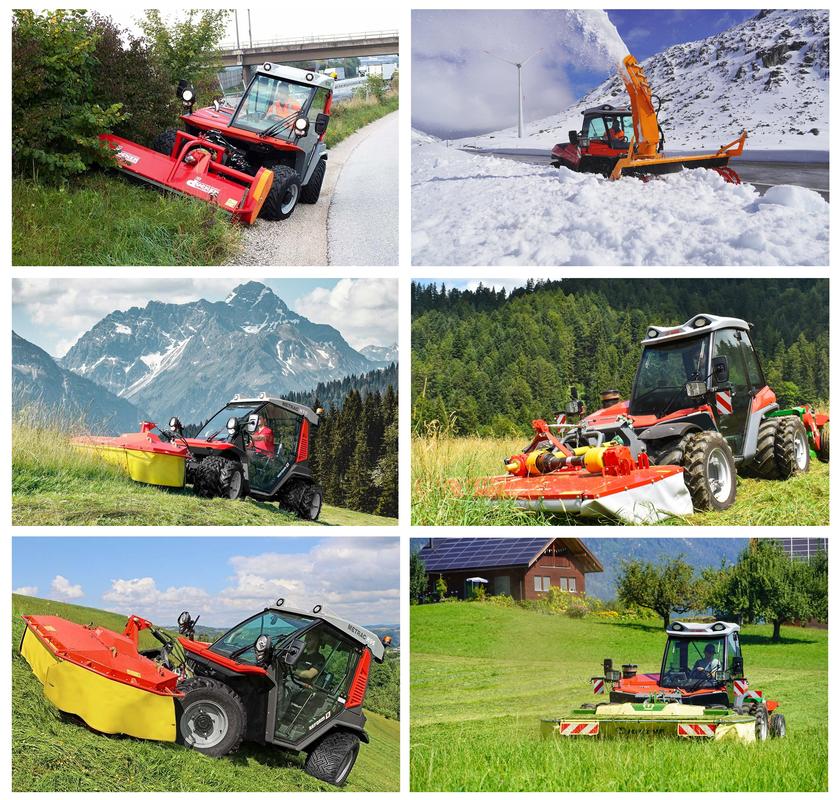
Tractors for extreme slopes. Another category of highly specialized tractors is designed for work on extreme slopes, which are typical of mountainous terrain. In such a context, the main issue is not so much the vehicle's compactness as its stability (especially lateral stability) and a very high level of safety against the risk of rollover. For these reasons, these vehicles feature configurations characterized by an extremely low center of gravity, wide track widths, permanent all-wheel drive, wide-section tires, and carefully optimized weight distribution.
The leading manufacturers in this sector are the Swiss company AEBI and the Austrian company Reform, which offer models specifically designed for alpine operations. These machines feature a low-profile design, advanced suspension systems, and hydrostatic transmissions—features ensuring excellent traction even on steep slopes. The hydrostatic transmission has been specifically designed to provide smooth, progressive forward motion, with optimal pulling power. These features are essential for haymaking operations in alpine pastures, where continuous tire-to-ground contact is critical for operational safety. The compact chassis, however, is adequately designed to attach to front, rear, and under-frame implements, allowing these machines to be used not only for agricultural work but also for road maintenance, forestry management, and snow removal, thereby expanding the range of applications for these vehicles.
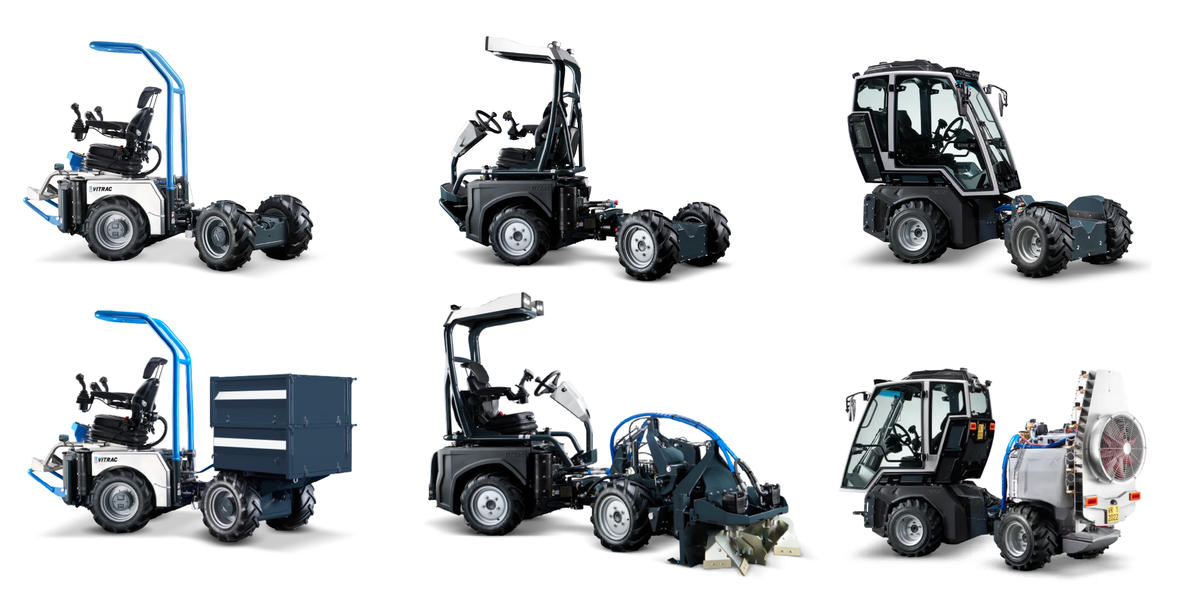
Originally founded to manufacture machinery for ice surface maintenance and urban applications, WM Technics from Prato all’Isarco (Bolzano) now also produces a range of multifunctional vehicles for specific agricultural sectors. In the latter case, the catalog features the Vitrac and Viroc models, two compact platforms designed primarily for specialized viticulture and maintenance in complex environments, characterized by high modularity and the ability to integrate or be combined with different types of equipment. The design is based on an articulated vehicle with a central articulation point, isodiametric wheels, and a fully reversible driver’s cab, featuring a low center of gravity and compact dimensions, which ensures optimized weight distribution when the tractor is equipped with an attachment.
The compact dimensions and 4-wheel drive allow effective operation even in hilly vineyards with steep slopes, or terraced ones, where stability and precision are paramount. Essentially, these are vehicles for which the traditional concept of a tractor as an exclusive power unit is progressively evolving toward a multifunctional implement carrier, capable of integrating agricultural work, green space maintenance, and land management.
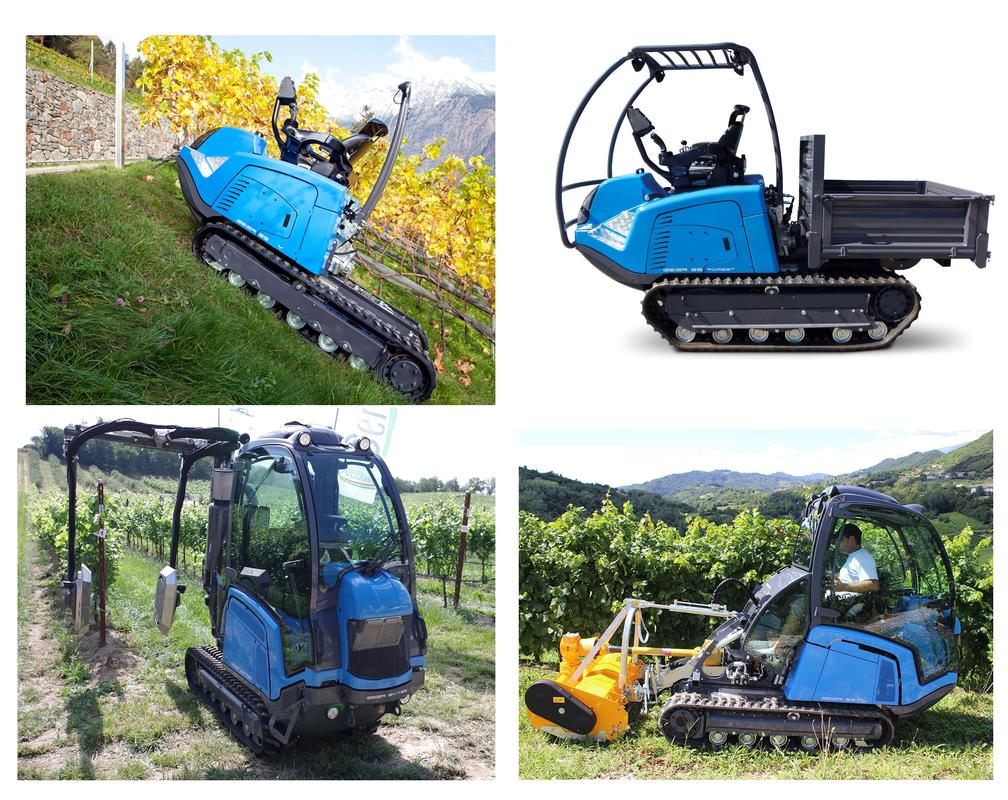
Geier from Marlengo (Bolzano) also produces a range of fixed-carriage tractors equipped with rubber tracks and reversible driving position for orchards and vineyards cultivated on steep slopes. These tractors feature a forward-mounted engine and a rear loading platform and are available with engines ranging from 45 to 85 Hp. The design of these models was also optimized for maximum compactness and reduced ground pressure thanks to the tracks. Due to their large contact surface, the tracks ensure good pulling capacity even in difficult operating conditions while minimizing soil compaction. The tracked undercarriage enhances the machine’s stability and continuous traction, aspects particularly important for inter-row work and in environments with extremely confined spaces. Nevertheless, it is worth noting the machine’s maneuverability, achieved through steering control based on the difference in peripheral speed between the two tracks.
The Compact Tractor 4.0
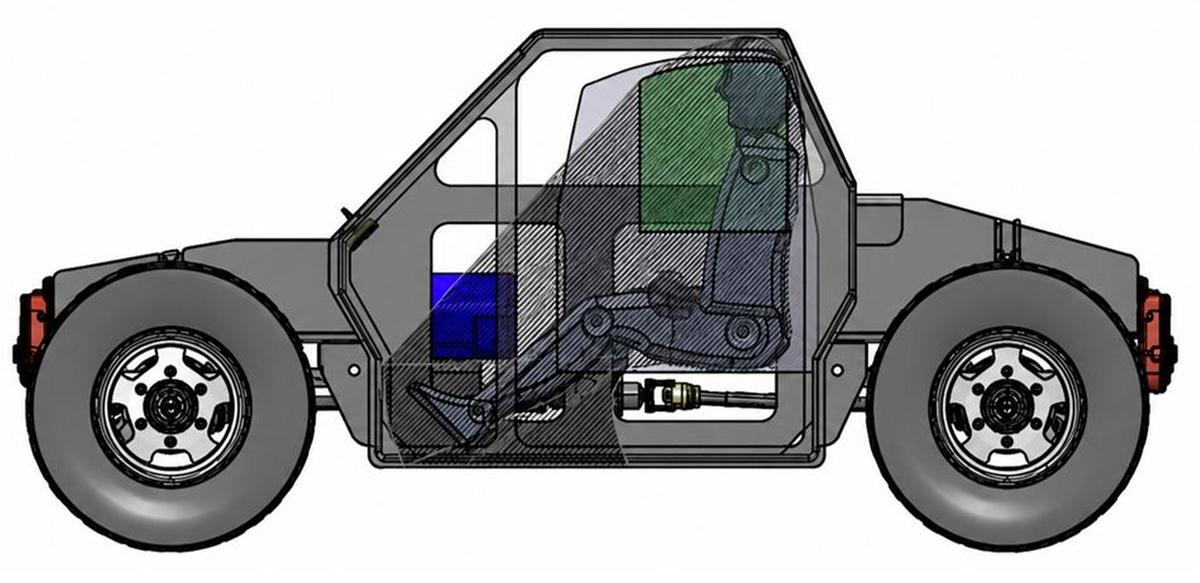
The result of a project funded by INAIL under the BRiC INAIL 2022 call for proposals and developed by four university research units, this is a fully electric compact tractor designed for work in vineyards and orchards. The main objective was to increase safety levels during under-canopy operations, reducing the risk of rollover typical of narrow-track tractors operating in severely limited spaces. In addition, the prototype is equipped with a low-profile ROPS featuring four fixed posts, with a total height not exceeding 1.6 m—a solution designed to address the challenges associated with the two-post folding roll bars frequently installed on tractors of this type. The electric propulsion system required a major redesign of the machine’s layout, eliminating the bulk of the conventional mechanical transmission to lower the center of gravity and thereby improve stability and maneuverability. The project also included the study of electric traction systems, a modular battery pack, and the sizing of the power required to perform the main specialized tasks, as well as the integration of sensors and monitoring systems compatible with advanced Agriculture 4.0 technologies.