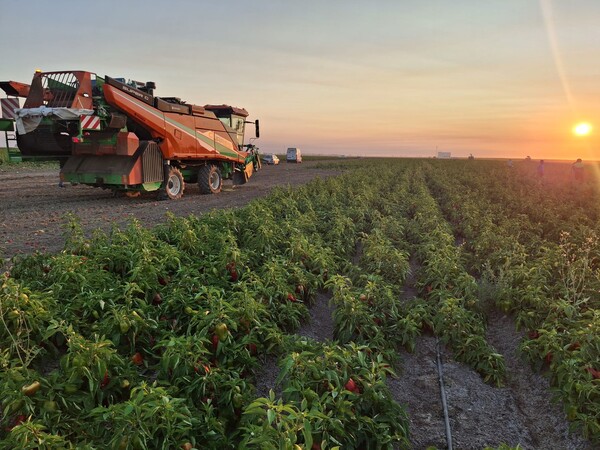
Guaresi, innovative harvesting solutions
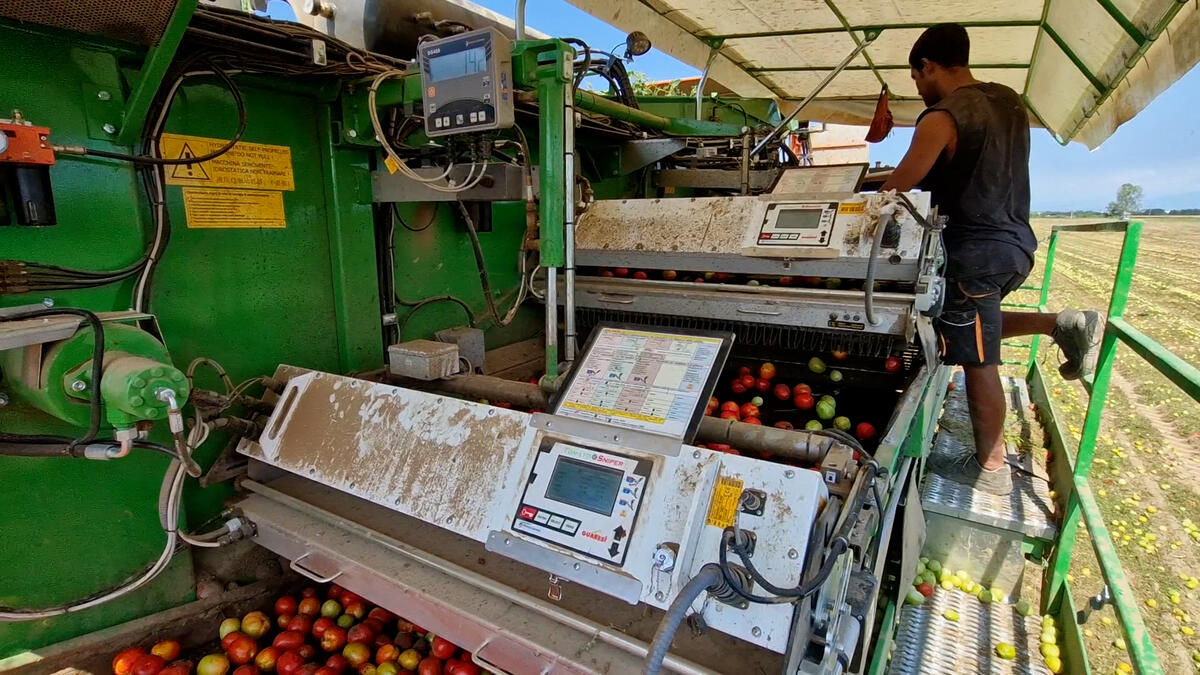
Guaresi is bringing two new products to Bologna for EIMA International: a self-propelled harvester designed for industrial-scale tomato harvesting but adapted for mechanized pepper harvesting, and a new device for product weighing. The Super G PepPer - this is the name of the first model - was designed with the aim of reducing the percentage of fruit breakage, thanks to a new shaker equipped with a double protective cover on the tine, three counterweights and two hydraulic controls (the first for vibration, the second for rotation). The harvesting mechanism is equipped with newly developed combs, designed not to damage the fruit. The cleaning of the product is performed by aspirators and adjustable fans to reduce the presence of leaves and impurities. The system also has an optical sensor that can sort the fruit according to different colors and the quality of the crop.
The second innovation presented in Bologna (recognized with a “Technical Evolution” award in the Technical Innovations competition) is a technology for weighing agricultural products on board self-propelled vehicles. The device was designed by Guaresi technicians for harvesting tomatoes or tubers. Traditional machines have load cells associated with a roller placed under the conveyor belt, however the movement of the belt in contact with the roller can disrupt weight detection, making the measurement unreliable. The solution developed by the Emilia-based manufacturer (headquartered near Ferrara) includes a conveyor suspended on the frame with load cells that identify the overall weight of the belt and the product. By subtracting the unladen weight from the empty conveyor, the system determines the net value of the product, consequently yielding a more accurate measurement. An actuator allows the user to adjust the inclination of the belt in relation to the ground. Another strong point of the technology is automatic calibration. When the device's optical sensor detects the lack of product, it updates the tare value, so as to determine whether any liquid residues or material is still on the conveyor. During the passage, the processing unit acquires several values and calculates their average and, depending on the speed of the belt, can determine the weight capacity. The data can be corrected based on the percentage of unripe product ascertained by a second selector that estimates only weight of the ripe fruit. The data, displayed on a screen in the harvester's cab, can be associated with the position provided by the geolocation system, generating a map that measures the quality of the product harvested in different areas of the field.