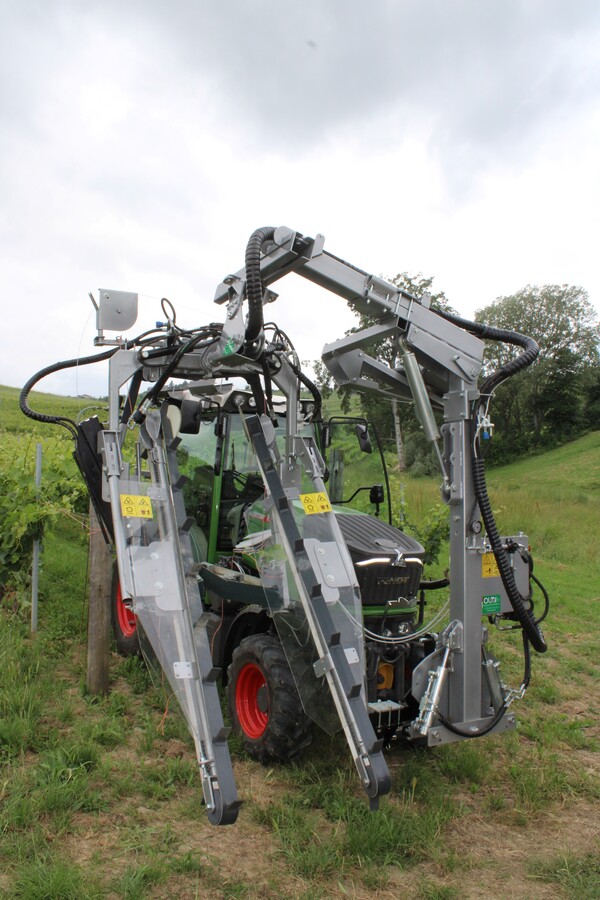
Revolution, Olmi's high-performance vine binder
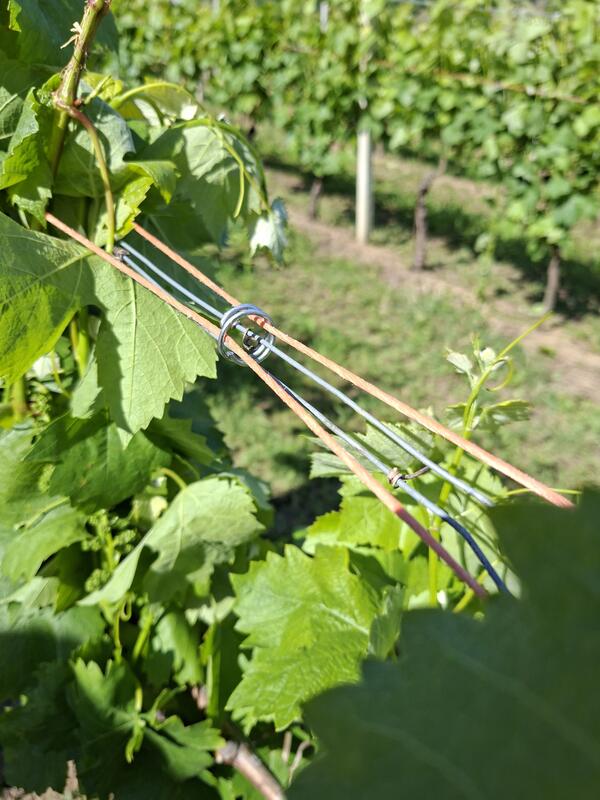
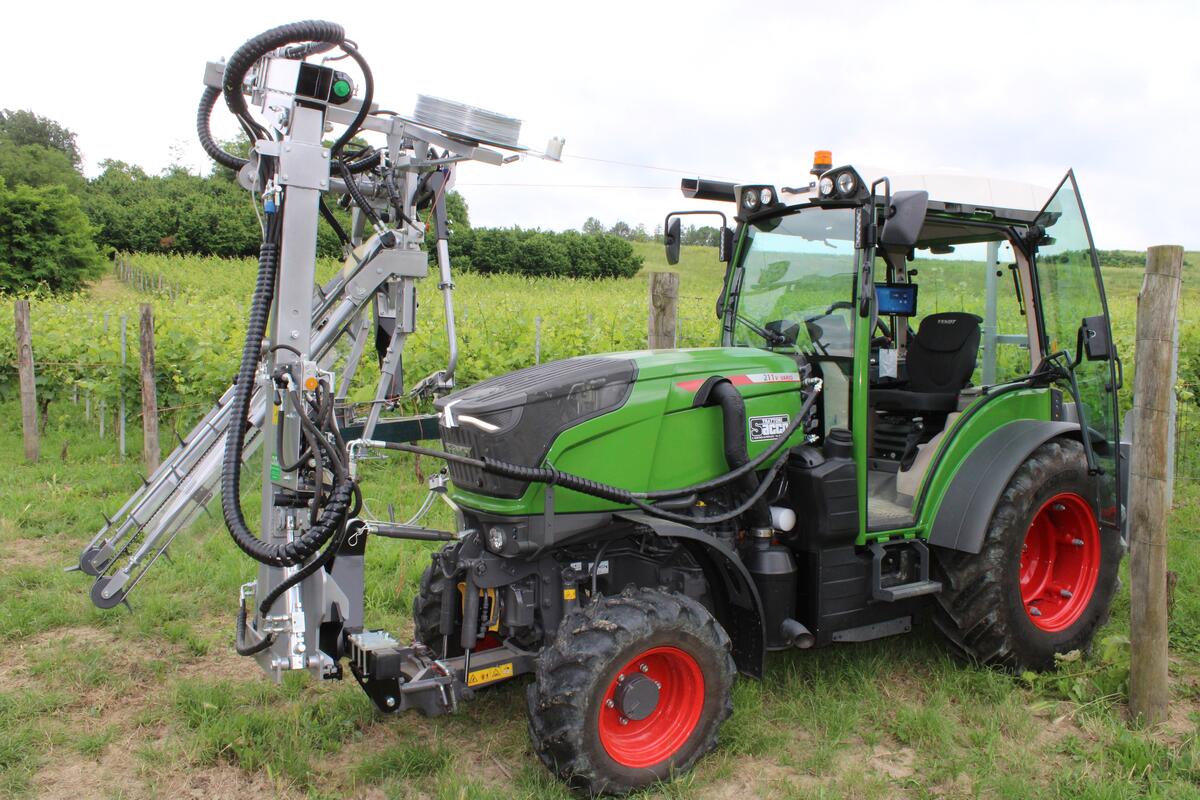
Managing the green wall in vineyards is a basic agronomic task to ensure proper canopy development and to promote aeration and exposure of the bunches to light. Binding shoots to support wires is thus a strategic practice, which in recent years has been the subject of increasing technological evolution aimed at reducing manpower and increasing operational efficiency. To optimize green wall management operations, Olmi offers the Revolution automatic vine binder machine designed to continuously gather and tie shoots. The equipment consists of a main structure on which the plant collection and guidance systems and the tying systems are installed. The operating process makes use of shoot-collecting belts that grab and convey the plant towards the binding system, ensuring the shoots are properly positioned close to the supporting wire in the row. The binding system, designed and patented by Olmi, creates fastening rings using continuous iron wire, taken from a 1,000-meter coil loaded directly onto the machine's head. Production capaci-
ty is approximately 10,000 rings per reel. Unlike other machines already on the market, binding with metal wire provides a significant increase in operating capacity, allowing the operator to reduce machine downtime and manual operations for refilling consumables during use. The machine's movements are controlled by a hydraulic system powered directly by the tractor with four main movements, via an electro-hydraulic joystick. From a structural point of view, the front frame dimensions are 200 x 1,900 x 2,250 mm and weighs approximately 580 kg. The rear wire box dimensions are 1,100 x 500 x 1,650 mm and weighs approximately 108 kg. The forward speed varies between 2 and 5 km/h according to the working conditions. The operational process is continuous as the tractor advances and can be divided into three main phases: gathering the plants, guiding them towards the support wire and tying. In essence, the Asti-based company points out that the Revolution allows for continuous and mechanized tying of plants along the row, working faster than manual operations and ensuring uniform and repeatable results.