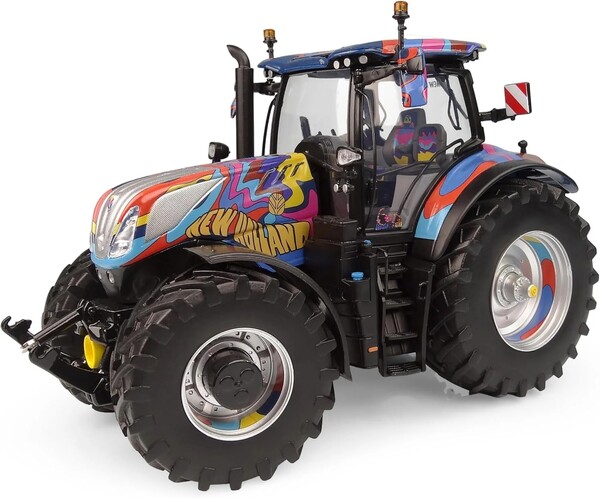
Style and identity: tractor livery
Attention to aesthetics has become increasingly important in the agricultural machinery industry. Visual appeal is a valuable marketing tool, a message about product innovation and a key element of brand recognition
For several decades, the livery of farm tractors, or rather their aesthetic design, was considered a completely secondary element compared to the technical characteristics of the vehicle. The performance of the engine, transmission, hydraulic system, etc. represented the main evaluation criteria, while the bodywork appeared as a simple finish, painted with products suitable to protect it from corrosion caused by atmospheric agents and particularly aggressive agricultural materials, such as livestock waste, mineral fertilizers and pesticides.
Today, this view has changed profoundly: given that the contemporary tractor is the product of a multi-disciplinary design process involving engineers, designers, materials specialists, ergonomics experts, and marketing managers, the livery is one of the tools through which the manufacturer defines the product's identity, strengthens its market positioning, and creates stylistic continuity between models from different segments.
The so-called “family feeling”, now widely consolidated in the automotive industry, is a factor that has now also firmly entered the agricultural mechanization sector. It's not just a question of color: the visual perception of a tractor is created through the interaction of numerous elements: the shape of the hood and the passenger compartment, the design of the air intakes, the placement and geometry of the headlights, the finish (matte and glossy) of the surfaces, the contrast between metal and plastic components, right down to the appearance of the decals and brand names. The livery represents the common thread that harmonizes these elements, transforming a set of mechanical components into a highly recognizable product. The increased spread of three-dimensional modeling with virtual simulations has allowed the development of increasingly complex shapes that are difficult to achieve with traditional sheet metal stamping techniques. The livery has thus transformed from a simple protective covering to an important component of the design language, helping to communicate values such as robustness, innovation, reliability and sustainability. Even before seeing the logo on the hood, the user identifies a vehicle by means of a set of visual references built up over time and consolidated by the continuity of the livery.
This is why manufacturers today invest significant resources in developing the stylistic identity of their ranges, in the belief that this will provide a guaranteed return in terms of perceived value.
From paint to the tractor's "skin". In the first farm vehicles of the last century, the paints used for the bodywork were formulated with natural or synthetic binders that offered limited resistance to ultraviolet rays, temperature changes and the chemically aggressive products used in agricultural activities. The choice of colors responded more to production criteria than to communication: many manufacturers used a few standard shades, selected for their industrial availability and ease of application.
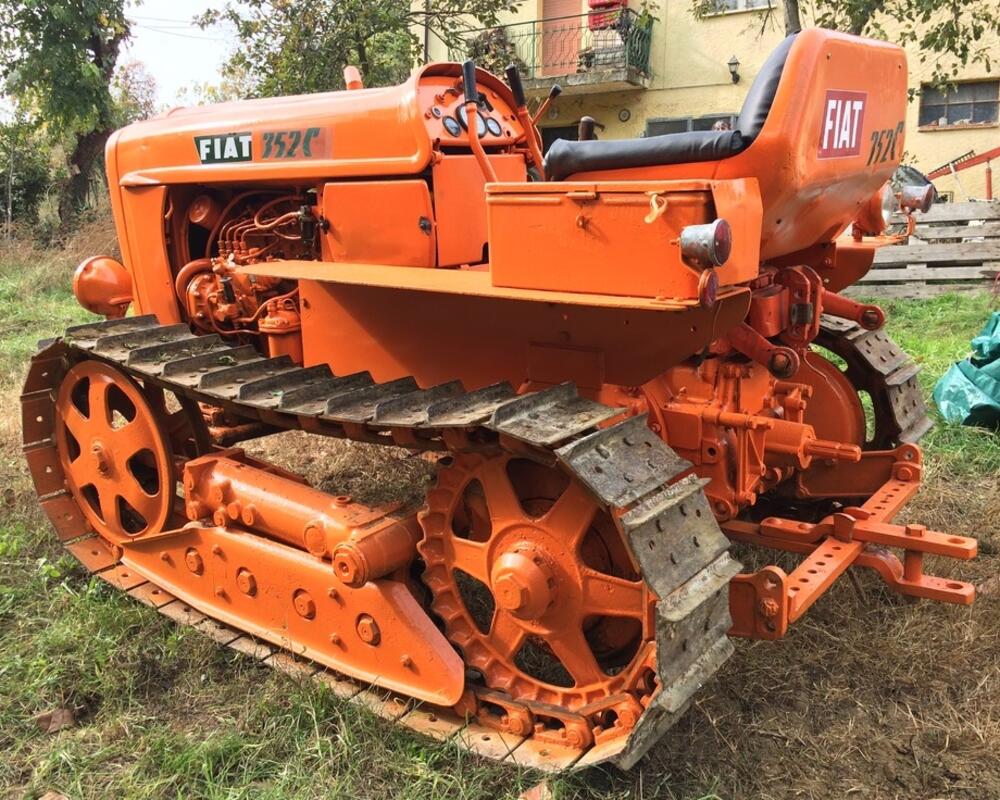
Although it was a true finishing paint, the famous “Fiat orange” that characterized, for example, many ranges of tracked vehicles produced by the historic Italian brand, recalls the shade of the so-called “red lead”, a very intense orange pigment (mainly made up of lead oxide, Pb₃Oâ‚„), which for many decades in the past was used mainly as an anti-rust paint on iron and steel. Thus, the color of Fiat crawler trucks is obviously not exposed rust-proof paint, yet it somehow recalls the solidity and resistance of the vehicle to degradation and corrosion due to use and aging.
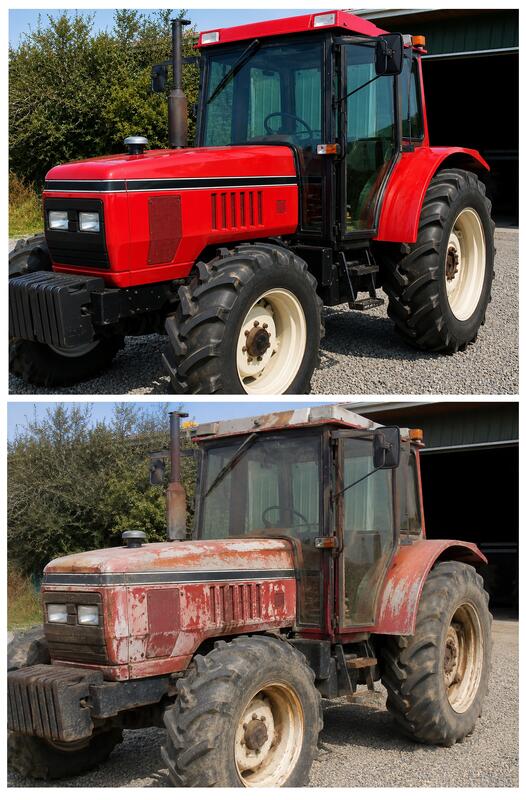
The significant evolution of painting techniques, with the introduction of, for example, cataphoresis, the laying on of high-performance primers and enamels and/or powder coatings, has made it possible to adequately protect even components made from materials other than steel, which often have very complex shapes.
At the same time, the performance requirements for surface finishes have become increasingly challenging: tractors commonly operate in environments subject to the action of atmospheric agents and with strong temperature variations, continuous exposure to sunlight, contact with fertilizers, plant protection products, fuels and lubricants, as well as dust and debris, inert and organic materials. Under these conditions, the external coating must therefore maintain its brilliance, adhesion and chromatic uniformity over time, limiting phenomena such as discoloration, flaking or loss of gloss.
It should also be emphasized that even (and perhaps above all...) in this sector, sustainability needs to be one of the main development concerns: paints with low volatile organic compound content, paint dust recovery systems, washing water recycling processes and more energy-efficient plants are now the norm.
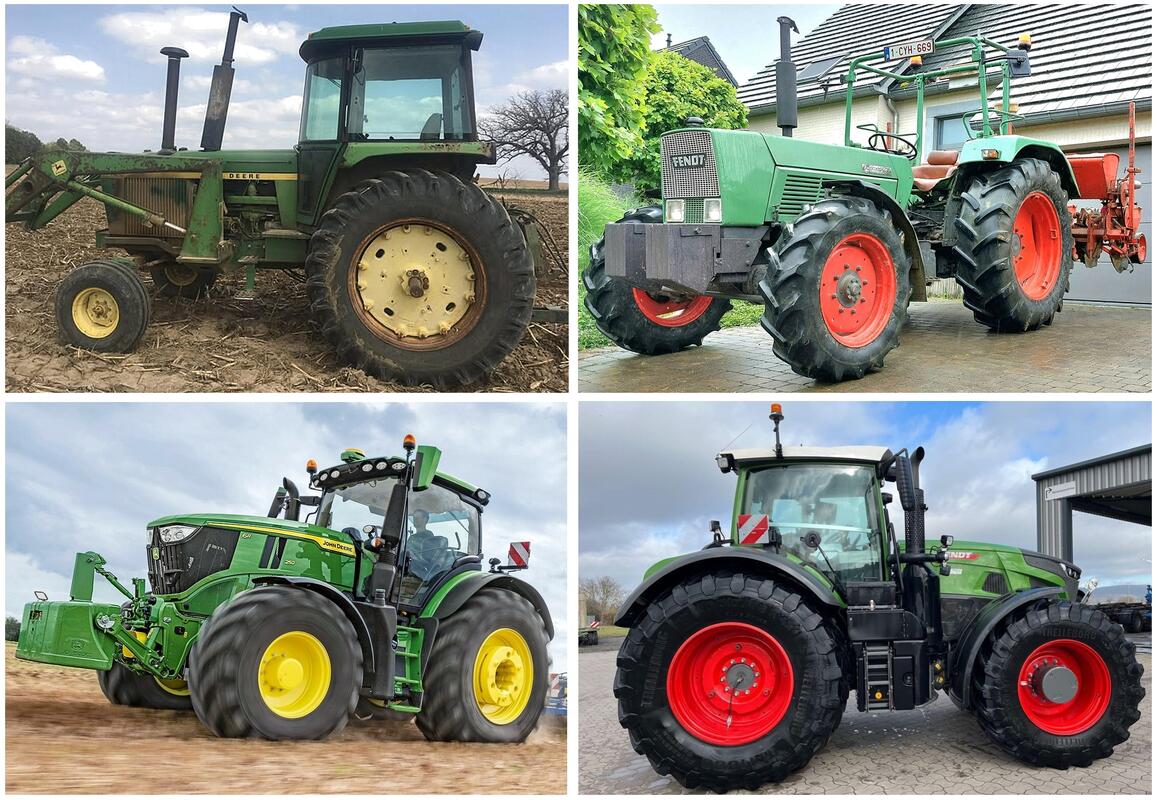
The color language of manufacturers. In agricultural mechanization, color takes on particular importance, because the tractor is called upon to represent the brand in extremely diverse contexts, from field work to trade fairs, from advertising campaigns to digital platforms. An effective color choice needs to be able to span product generations without losing recognizability, while adapting to changes in design and construction technologies. For this reason, color tones often see gradual evolutions rather than radical transformations. From this point of view, John Deere is probably the most emblematic case: the combination of green and yellow represents one of the most consolidated visual identities. Over the decades, the color has been updated to adapt to new painting technologies and the different materials used, but the principle has remained unchanged, strengthening a continuity that constitutes one of the brand's main assets. A similar path has characterized Fendt: the traditional green, combined with the red wheel rims, has been progressively reinterpreted through more sophisticated finishes and greater integration between metal elements and plastic components.
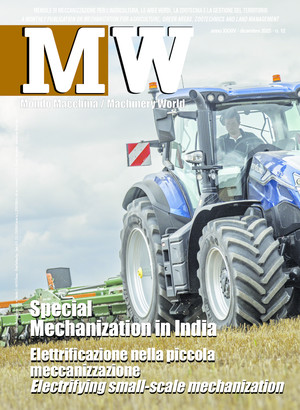
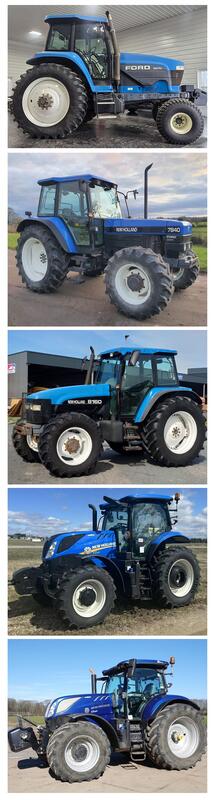
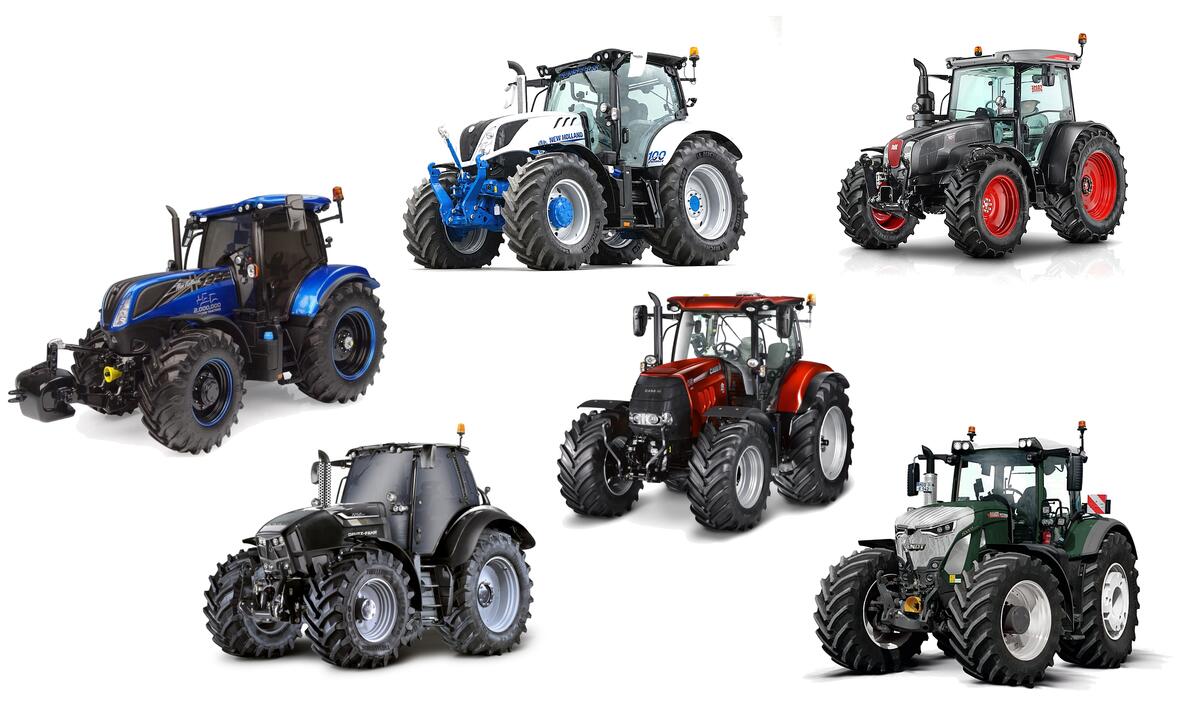
New Holland, on the other hand, had a different approach and built its image around the color blue. Taken from the Ford legacy, this color was maintained even after the creation of the new brand, becoming an element of continuity in a phase of profound industrial reorganization. In recent years, the livery has been updated with the introduction of black surfaces, anthracite grey inserts and more striking light clusters, following a stylistic language more closely aligned with the automotive sector.
Massey Ferguson has also maintained red as a distinctive element over time, despite profoundly modifying the design of its vehicles, towards a cleaner and more contemporary livery, in which the base color is combined with anthracite details and matte black finishes.
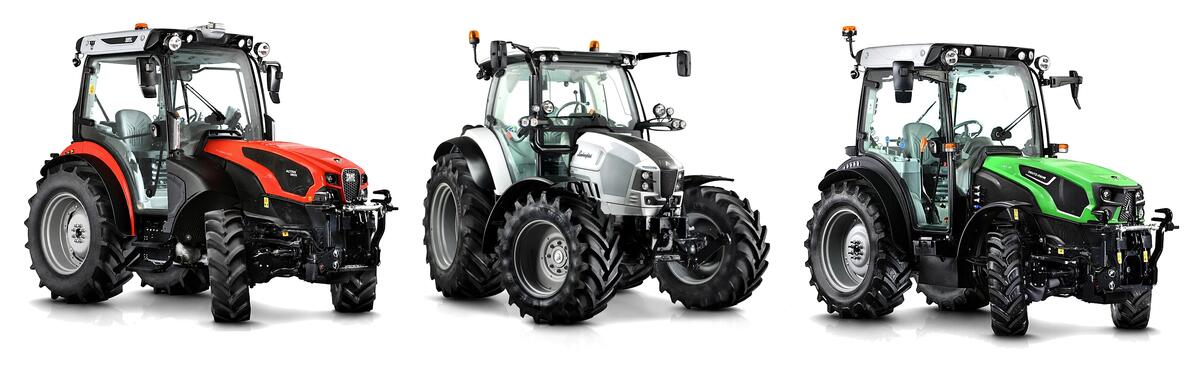
The SDF group decided some time ago to progressively differentiate the identities of its brands, including through color: Same continues to be identified by the traditional red, Deutz-Fahr by green, while Lamborghini Trattori has identified white as its characterizing element, reinterpreting it through an increasingly dynamic and elegant design. The coexistence of three color identities within the same industrial group demonstrates how the livery represents a commercial asset to be preserved even in the presence of shared technical platforms.
Valtra, on the other hand, has built a large part of its identity on customization. While maintaining a corporate livery, the Finnish manufacturer has for years offered a program that allows customers to choose alternative colors directly from the factory, sometimes even very unique ones. This is an almost unique approach in the agricultural landscape, which transforms color from an exclusively corporate element to a tool for product customization.
Graphic details and finishes. In recent years, the importance of secondary surfaces, graphic details, and finishes has grown: details clearly taken from automotive design that allow models to be differentiated without altering their chromatic identity. For example, glossy black is often used to emphasize grills and air intakes; anthracite gray distinguishes frames, pillars, and structural components; satin or metallic inserts give greater depth to surfaces.
The graphics make use of dedicated typographic characters, lines, color contrasts and studied positioning, which contribute to strengthening the dynamic perception of the vehicle, becoming an integral part of the stylistic language.
Corporate Design and Family Feeling. These are actual programs to establish not only the official colors, but also the proportions between the surfaces, the application of the finishes, the graphics of the commercial names, the design of the air intakes and the shape of the light clusters.
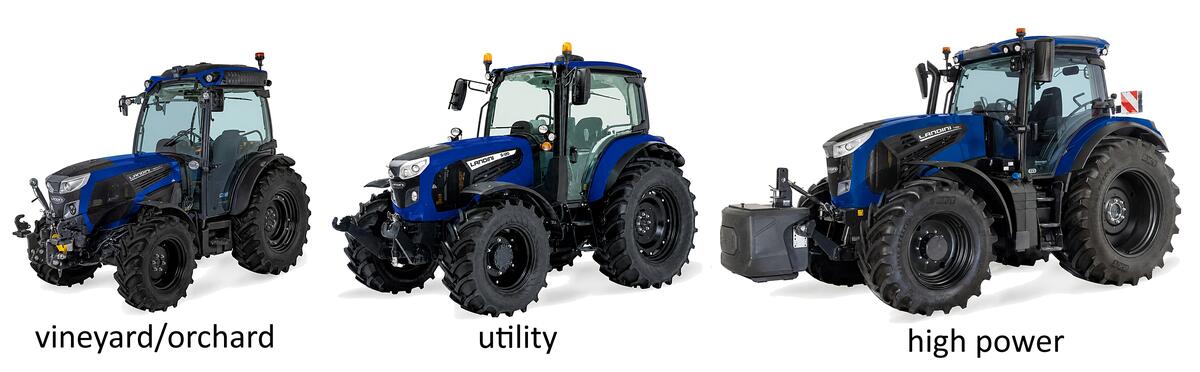
The goal is to establish a solid visual continuity between all product families: despite responding to completely different operational needs, a specialized tractor, a multi-functional utility vehicle and a top-of-the-line model must share a common stylistic identity. This is the so-called "family feeling”, which allows individuals to recognize a vehicle of a brand even when observing only the front or some details of the bodywork.
In the agricultural sector, this need has become even more evident with the birth of large international industrial groups. CNH Industrial, AGCO, SDF, Kubota and other global manufacturers manage extremely broad ranges, distributed across numerous markets and often produced in different facilities. The livery therefore represents one of the most effective tools for ensuring image uniformity, regardless of the place of manufacture or the technical platform used.
Special series. Celebratory editions, commemorative models, company anniversaries, production milestones, or the anniversaries of iconic models increasingly offer the opportunity to temporarily reinterpret traditional livery through dedicated finishes, exclusive inserts, specific rims, and commemorative decals. Although they represent limited production runs, these versions play an important role in enhancing a brand's historical identity and contribute to fueling the interest of enthusiasts and collectors. They sometimes also serve as testing grounds for new stylistic solutions, which are subsequently transferred to series production after customer acceptance.
A fundamental role in the affirmation of the image is played by large international events, such as Agritecnica, EIMA International, Lamma Show, and the Farm Progress Show: these are no longer just simple trade shows, but rather constitute the stage on which manufacturers present their vision of the future and where design takes on strategic importance.
It should also be emphasized that the growing popularity of social media has further amplified this phenomenon: in this context, livery takes on even greater importance, with reflections, color contrasts, and graphic details that need to be effective not only in person, but also on computer screens and mobile devices.
The future goes beyond color. The changes underway, from electrification to digital technologies, from environmental sustainability to automation, are also changing the way the visual identity of tractors is designed.
Given that manufacturers will maintain the color identities on which they have built their reputation over decades, they are more likely to try to reinterpret their application.
One of the most evident trends concerns the progressive simplification of surfaces, with simpler hoods and fairings and a reduction in the impact of graphics and decorative elements. The contrast between materials and finishes often replaces the complexity of forms.
A very interesting and rapidly evolving area concerns materials: the growing use of technical polymers and composite materials makes it possible to integrate aesthetic and functional characteristics directly into the component. Mass-colored plastics, textured surfaces, and materials with varying levels of opacity allow for the use of traditional paint to be limited on some parts of the vehicle, with advantages in terms of weight, maintenance, and sustainability.
Digital design. Today, designers can virtually assess the effect of natural light, different atmospheric conditions, and the aging of materials even before the first prototype is created. Using photorealistic rendering software and 3D simulations, it is possible to compare numerous color solutions, seeing how the vehicle will appear in the field, at a trade show stand, or in images intended for commercial communication. The livery is then optimized well before production starts. Furthermore, paints with high abrasion resistance, self-cleaning treatments, scratch-resistant coatings, or coatings with greater solar radiation reflectivity to limit the heating of closed passenger compartments are options already being tested in other industrial sectors and potentially transferable to agricultural mechanization.
A more distant, but not unrealistic, goal is the use of intelligent surfaces, in which integrated sensors, functional materials or monitoring systems can coexist with the aesthetic finish of the vehicle. In this scenario, the “livery” would no longer be just the external covering of the tractor, but a fully-fledged integral part of its operational and diagnostic functions.