The role of greenery in urban redevelopment
Tackling the effects of climate change begins in urban environments. Green infrastructure, draining surfaces, and climate shelters can help mitigate the impact of heat waves in urban centers. Technologies and solutions for the regeneration of urban areas
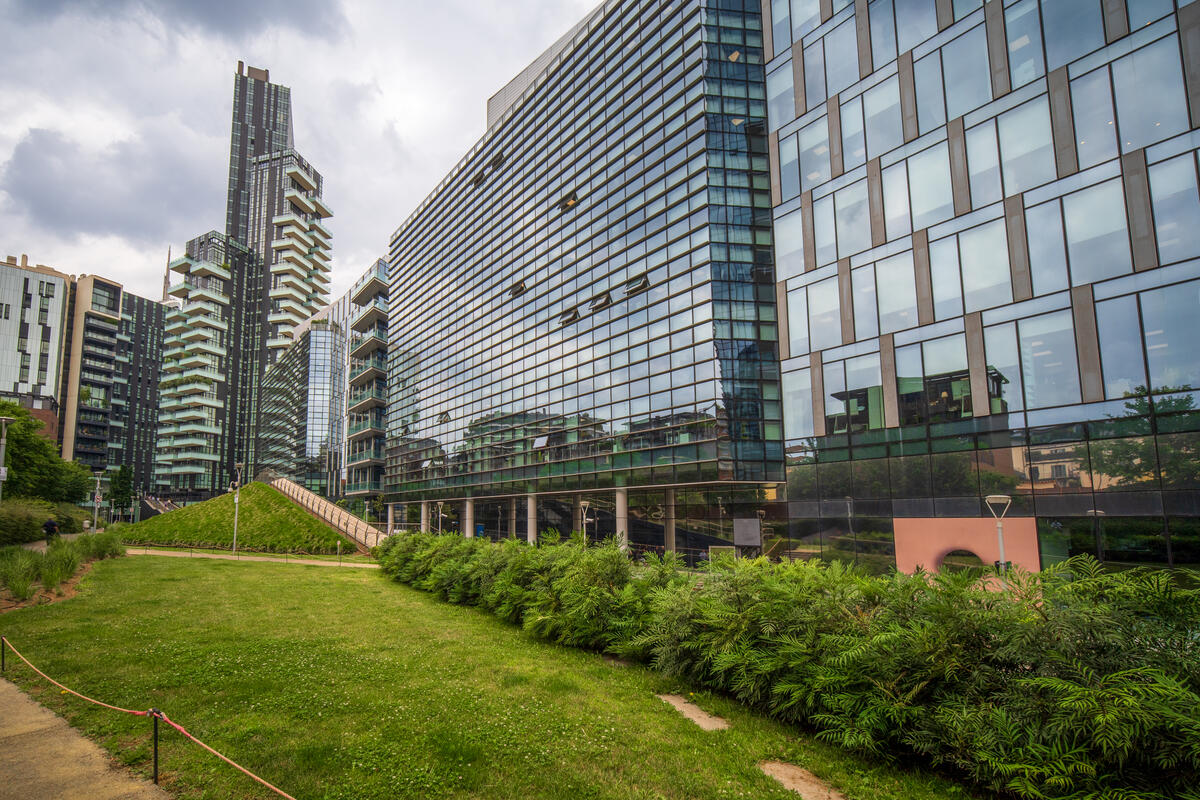
Today, more than half of the world's population lives in cities, which are responsible for approximately 70% of global CO2 emissions, and have a significant influence on the climate. Nature-based urban solutions, as the name suggests, are solutions based on the inclusion of natural elements aimed at urban redevelopment. They represent an effective response to mitigation and adaptation to the effects of climate change, such as droughts and prolonged heat waves. Various urban redevelopment projects are being implemented to reduce these effects. Here are some of them.
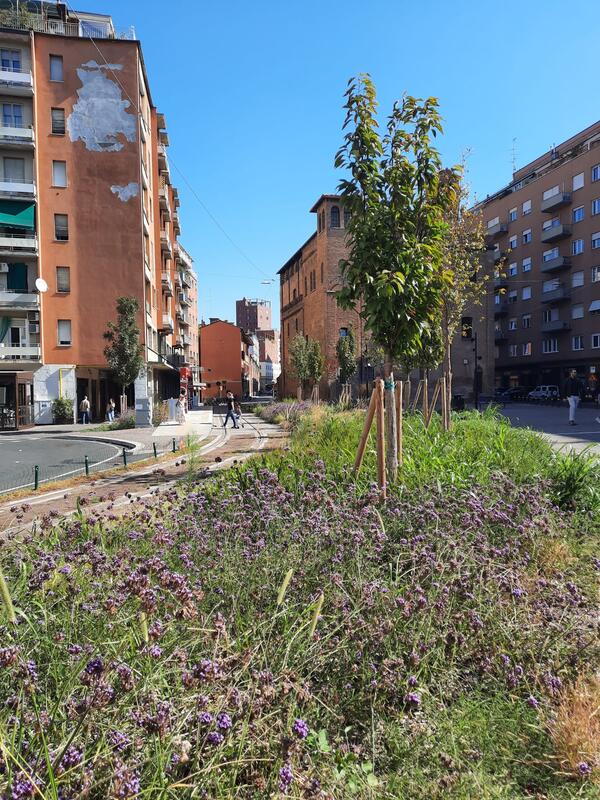
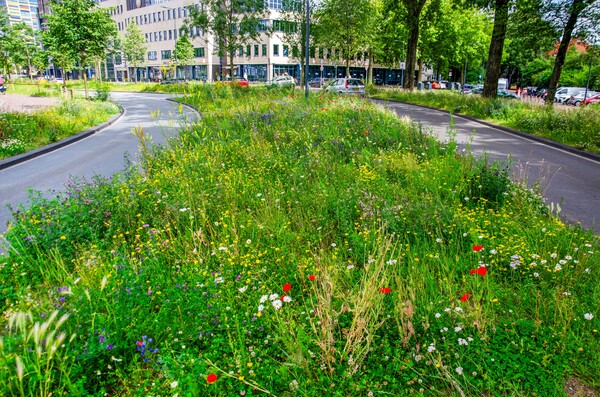
Creating green infrastructure. The effects of green infrastructure on temperature achieved by new tree plantings, as well as the creation of green roofs, facades, and corridors, are due not only to shading but also to evapotranspiration, which reduces temperatures by using the heat of the air to transform water produced by the transpiration of leaves into steam (the change in state produces cooling). The perceived difference between a shaded area and a sunny asphalt surface can exceed 10°C. However, for the cooling effect to be noticeable, a neighborhood's vegetation cover must be at least 30%.
The process of evapotranspiration, however, is linked to the water conditions of the soil in which the greenery and plants in particular are rooted. In the absence of sufficient soil water availability due to prolonged drought, plants react by closing the opening of the stomata, thus reducing the amount of water transpired and, therefore, also the evaporative effect. For this reason, it is necessary to combine the increase in greenery with good water availability and new drainage systems that allow rainwater to penetrate the soil.
In Turin, between June and August of this year, 253 trees died due to high temperatures and prolonged drought. The same fate befell a significant number of trees from the new plantations financed with National Recovery and Resilience Plan (PNRR) funds. Thus, with climate change, irrigation has become indispensable in the maintenance and management of trees and greenery in general. Furthermore, in new plantings, preference should be given to drought-resistant species and varieties. In Turin, for example, compared to the traditional maples and beeches, interest has shifted to hornbeam and previously unconsidered species, such as mulberry and hazelnut.
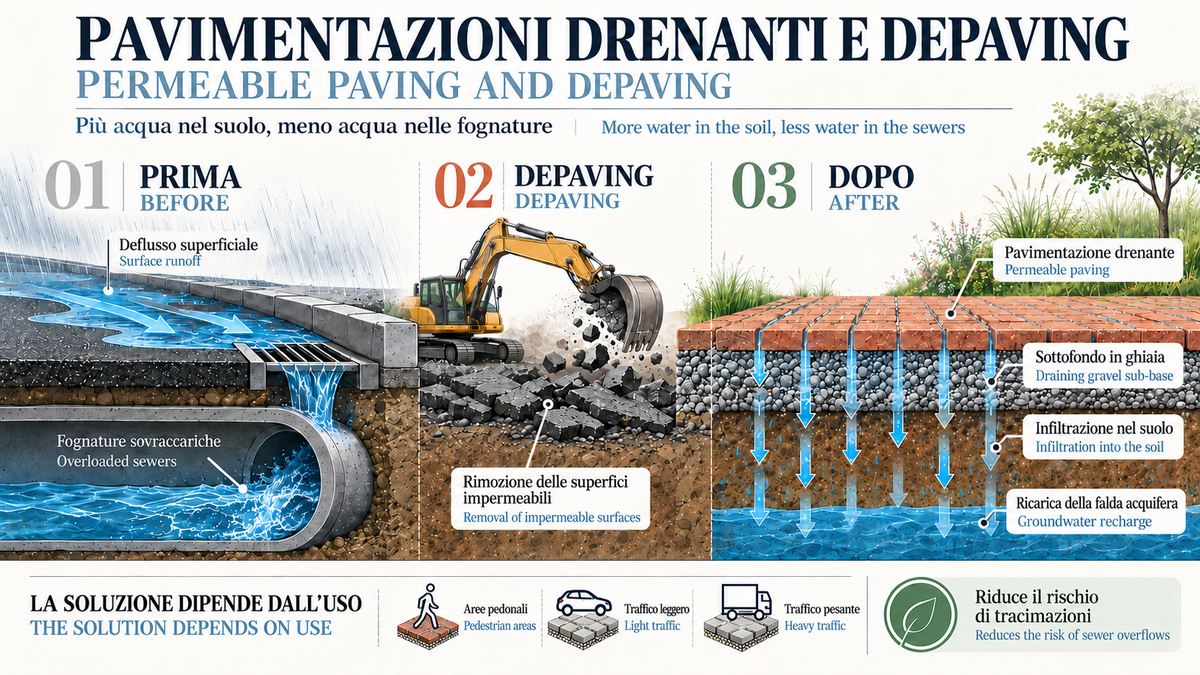
Draining surfaces. Actions here involve not only the creation of draining surfaces but also the removal of existing impermeable surfaces, such as concrete and asphalt (depaving). This allows water to penetrate the soil and recharge the aquifer, rather than being lost through surface runoff. Such flow causes the overloading of traditional sewers, with the related risk of overflows. The construction of new surfaces should be oriented towards those of a draining type, meaning that they are capable of allowing rainwater to percolate into the soil. A compact and draining sub-base must be placed at the base of each type, however, usually made with a layer of gravel. The type of drainage covering to be created depends on the specific use of the surface and the type of traffic.
Pervious concrete surfaces are the solution normally used for areas subject to heavy traffic such as high-traffic roads, industrial car parks, public squares, etc. This surface, in addition to having high mechanical resistance (up to 25 N/mm2), also allows for the management of large volumes of rainwater (up to 100 liters/min per square meter). It also ensures a long service life (20 years or more). The material used consists of a mixture of cement, gravel with a grain size of 5-10 mm, and water. Drainage does not compromise the load-bearing capacity of the surface, provided that the installation and sub-base have been carried out correctly. Polyurethane resin and aggregate surfacing can be installed over existing concrete or asphalt sub-surfaces. It is elastic and offers good grip and non-slip safety. It is customizable by color. However, it is not suitable for supporting heavy loads and its porosity is linked to the type of resin and the grain size of the aggregates. It is mainly used on cycle paths, pedestrian areas, private driveways, pool edges, etc. It is produced by mixing polyurethane resin with washed and dry grit and pebbles. It is installed with a thickness of 1 cm for pedestrian areas and 2 cm for driveways. Stabilized earth paving is obtained by mixing environmentally friendly binders and stabilizers with the soil on site, which give the mixture drainage capacity and mechanical resistance. The mixture produced is first spread on a well-prepared substrate and then compacted by rolling. The thickness varies from 20 to 40 cm. It is suitable for dirt roads, parking lots, cycle paths and pedestrian paths.
Grass gridding is a natural draining surface type. It consists of placing a honeycomb plastic mat on a flat surface covered with a 5-10 cm layer of gravel. The cells of the mat are filled with soil mixed with sand and peat, onto which grasses resistant to trampling (Lolium perenne, Festuca arundinacea, Poa pratensis, etc.) are sown and then irrigated, so that a lawn forms quickly. It is suitable for placement in gardens and urban parks.
Regeneration of public spaces and climate shelters. The activity must be aimed primarily at the recovery and regeneration of abandoned assets. This category includes former industrial areas and public buildings no longer in use, as well as public areas left to decay. Reclamation should be aimed at promoting cultural and social activities to bring citizens together and also to protect against heat waves, which particularly affect the most vulnerable, such as the elderly and children. Climate shelters have been created for this latter purpose. These are public spaces, both internal and external, accessible free of charge to all and equipped to provide refreshment during the hottest summer months, without losing their original purpose. Outdoor shelters include public gardens and parks that, in addition to providing well-shaded areas under trees or other structures, also feature comfortable seating, restrooms, drinking fountains, well-equipped children's play areas, cooling systems, and other amenities. Indoor shelters are small and medium-sized urban structures, such as libraries, schools, civic centers, and neighborhood homes - freely and easily accessible, including to the disabled - that must provide an adequate microclimate (26°C in summer) and be equipped with comfortable seating, toilets, drinking water, and possibly offer recreational activities.
They have existed in Europe for a long time. Among Europe's major cities, Barcellona was the first to establish a network of climate shelters. Today there are more than 400 of them. Here in Italy we are just beginning: Bologna, Milan, Turin and Rome are among the most active cities. From this perspective, it is not enough to create a few shelters, but rather we need to create a real network of centers and implement widespread communication, so that all citizens know where they are, how to reach them, and what they offer.
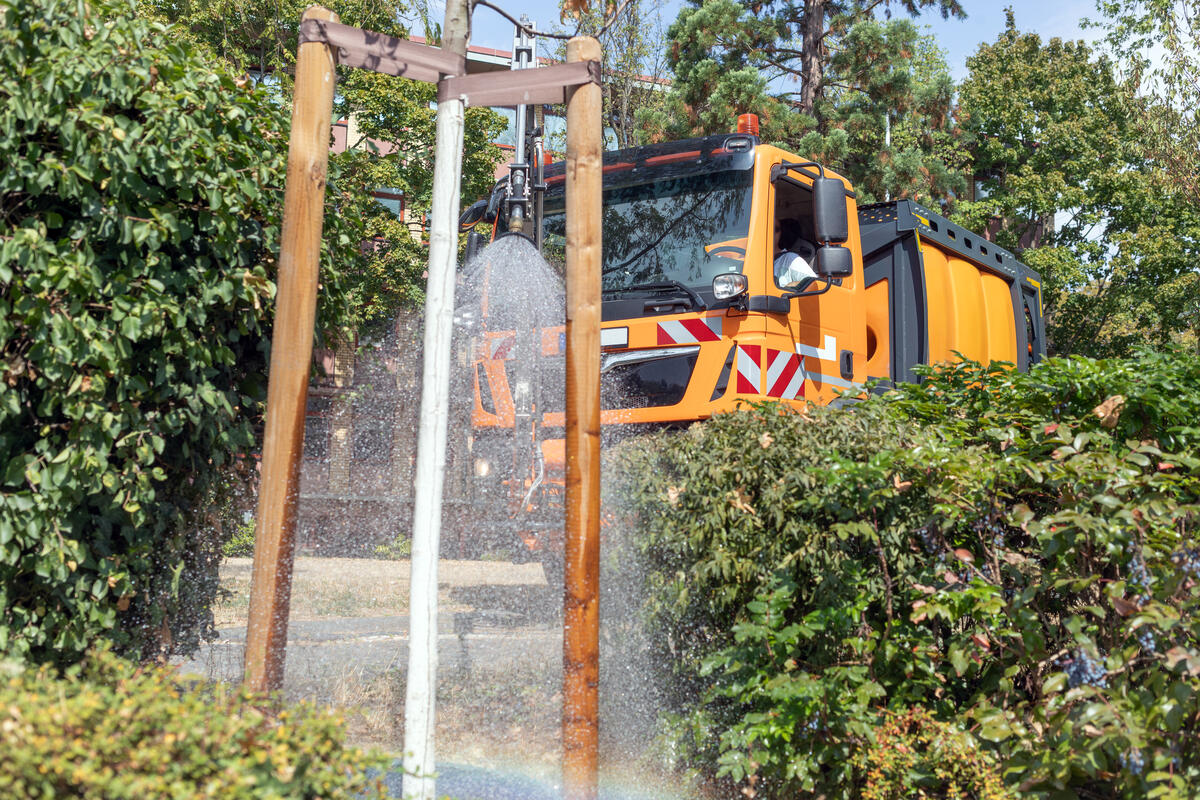
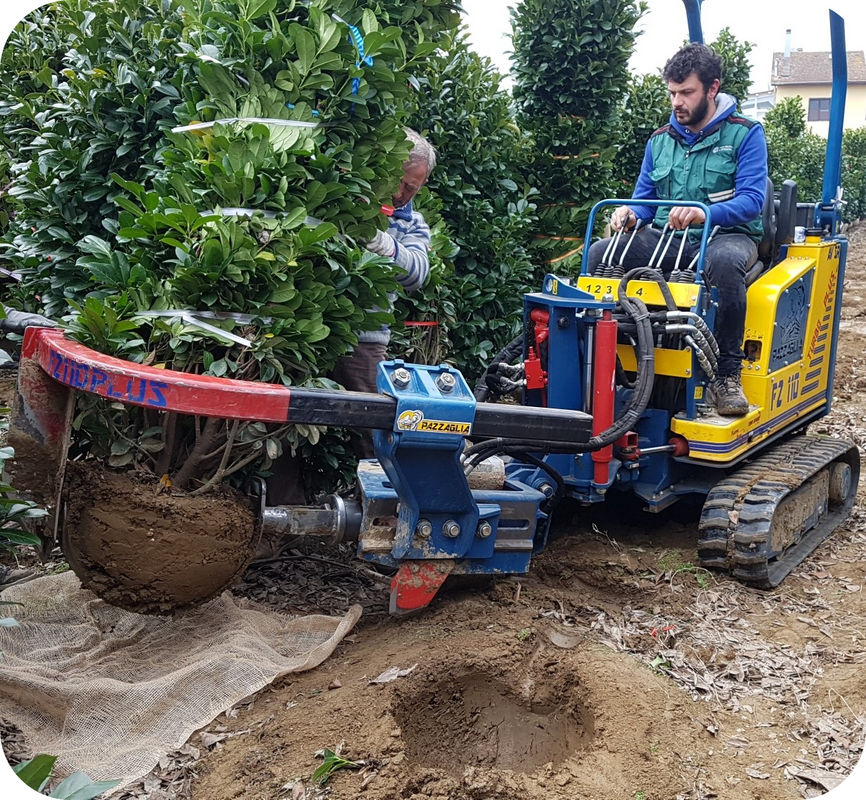
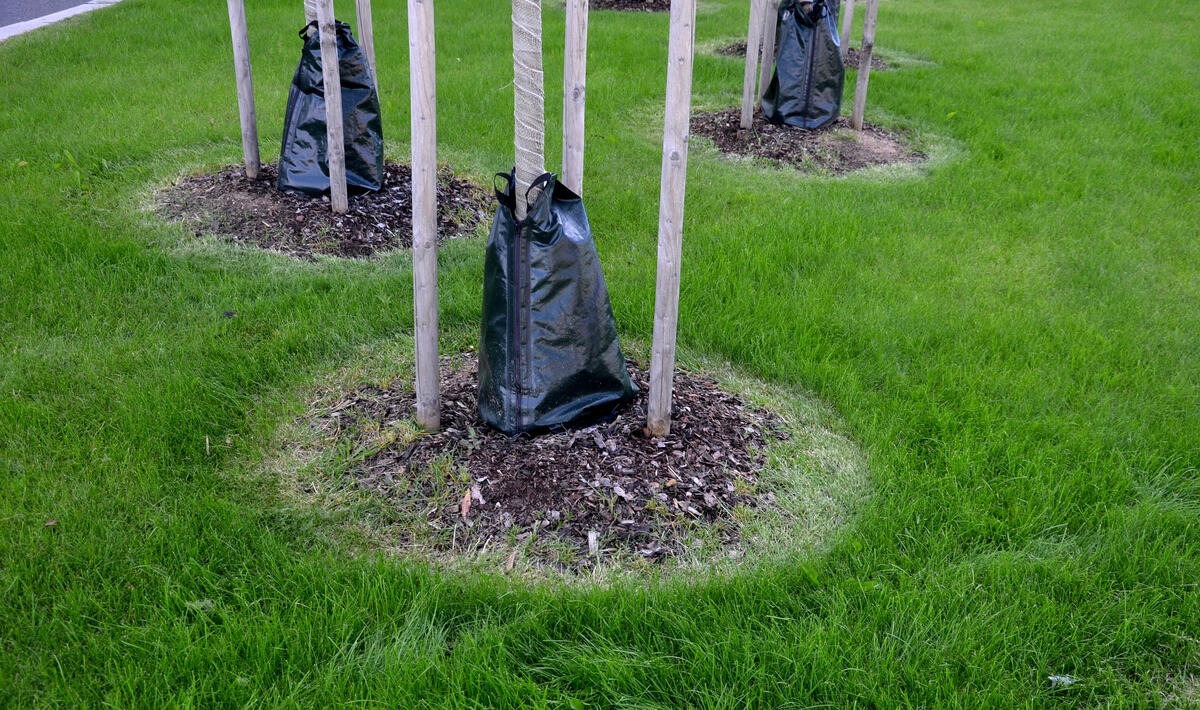
Machinery for urban regeneration. The technologies required depend on the type of redevelopment envisaged. Where redevelopment is based on greenery, the technologies used are those for greenery creation and maintenance. They range from lawnmowers for lawns to tree spades and transplanters for planting trees. Irrigation is essential and can be implemented with sprinkler systems or micro-irrigation systems controlled by control units. These are irrigation cycle programmers in terms of duration and water flow. Connection with rain sensors makes it possible to interrupt cycles in case of rain, while soil moisture sensors activate irrigation only when the plants need it. Connected models may be remotely controlled. If this is not possible, tankers and tank trucks may be used. The barrels are made of galvanized steel or polyethylene and have different capacities. They range from small capacity models of less than 1,000 liters, to medium-large ones from 5,000 to 10,000 liters, up to the largest capacity ones, which even exceed 25,000 liters. They have different spreading forms and allow for localized and uniform distribution. In 2026, the city of Turin doubled its irrigation efforts and experimented with the use of so-called tree bags in Rignon Park. These bags are filled with water that is gradually released onto a certain number of trees, increasing the efficiency of the operation. This is an interesting technology that could become increasingly widespread. Road milling machines (or scarifiers) are used for resurfacing operations, removing the road surface, whether asphalt or concrete, allowing the material to be recovered and the surface to be prepared for subsequent repaving. The working part consists of a rotating tungsten carbide drum that scrapes and removes the surface, conveying the material onto a conveyor belt, which unloads it. Lightweight milling machines remove just a few centimeters and are used for surface work, such as correcting pavement defects; heavy-duty milling machines, with drums exceeding 2 meters, are used for complete removal of the surface. Other machines that can be used are asphalt cutters equipped with diamond blades, which make clean cuts on the surface before its removal. Draining surface machinery differs according to the type of material used. For concrete paving, vibrating pavers are used to lay and compact the material, while mechanical equipment equipped with vibrating rollers is used for subsequent compaction. For resin paving, vibratory finishers are used. The operation can also be carried out manually, as is the case with grass grids.