Automotive applications in agricultural tractors
Tractors are fitted with a wide range of instruments for controlling functions in the field, but they are also vehicles that need to be able to travel on the road and therefore require specific systems. An overview of the innovations that have benefited the tractor fleet, with a look at what is likely to happen in the near future
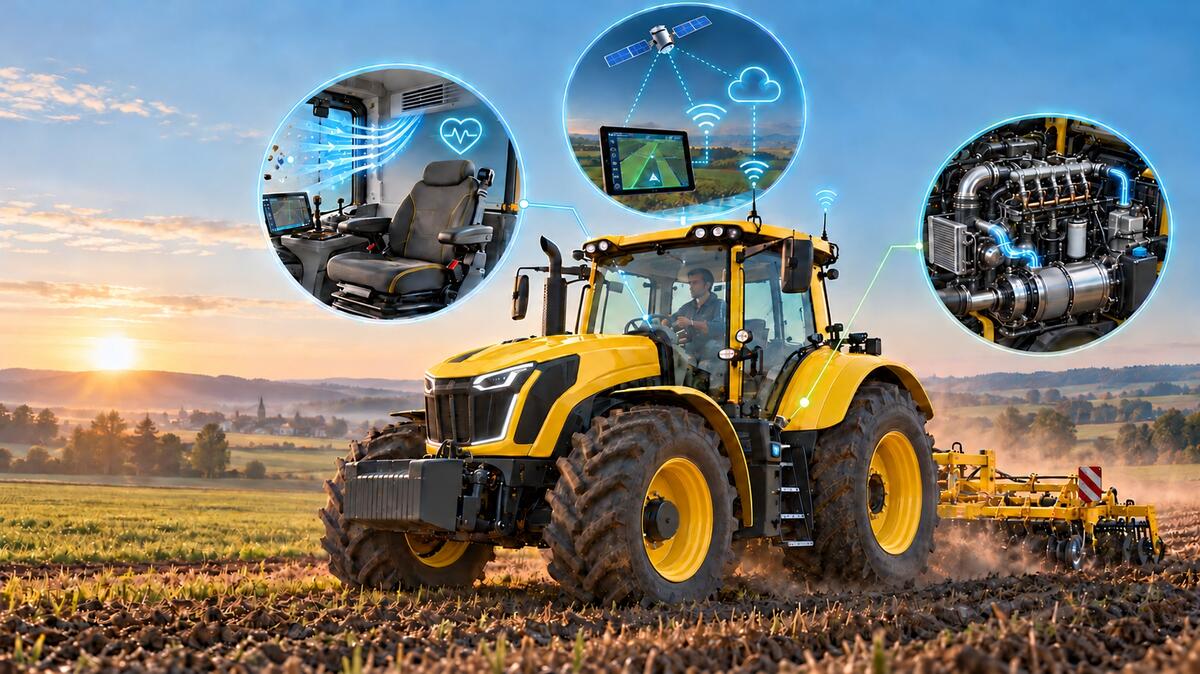
By its very nature, the agricultural tractor is a vehicle profoundly different from those designed solely for road travel. This is because it must control and transmit power to a virtually infinite range of mounted, semi-mounted, and towed implements, which are operated mechanically, hydraulically, pneumatically, and, increasingly, electrically. It is this exceptional versatility, even more than engine power, that defines the technical identity of the modern tractor. Power take-offs, hydraulic lifts and 3-point hitches, hydraulic outlets, electrical connectors, and data networks make up a set of interfaces with virtually no equivalent in “road” vehicles, and in fact form the backbone of the machine’s technical design, not peripheral accessories. In this context, agricultural machinery has in recent years been increasingly adopting solutions initially conceived and developed for the automotive industry, particularly for operator health, connectivity, and energy efficiency. In some cases, the agricultural sector adopts technologies already mature in passenger cars; in others, it reworks them in an original way, turning the tractor into an even more versatile energy and digital platform.
Road safety: from isolated vehicle to vehicle in traffic. For many years, tractor safety focused primarily on field working conditions: protection via ROPS and a properly fastened seat belt in the event of a rollover, preventing accidental contact with moving parts, and optimal visibility of equipment. These aspects remain absolutely central, but the growing size of farms, land fragmentation, and the rise of agricultural contracting have increased the amount of time spent working on public roads open to traffic, often with heavy trailers or large equipment in tow.
The tractor thus enters an environment characterized by high relative speeds, mixed traffic, vulnerable road users, and infrastructure that is not always suited to the dimensions of the tractor-implement combination. In this scenario, many automotive solutions become particularly relevant. High-efficiency LED lighting and improved vehicle conspicuity are now widespread; equally important are advanced braking systems for tractors and trailers, stability control for the tractor-trailer combination, electronic management of four-wheel drive and differential locks, as well as the integration of rear and side cameras.
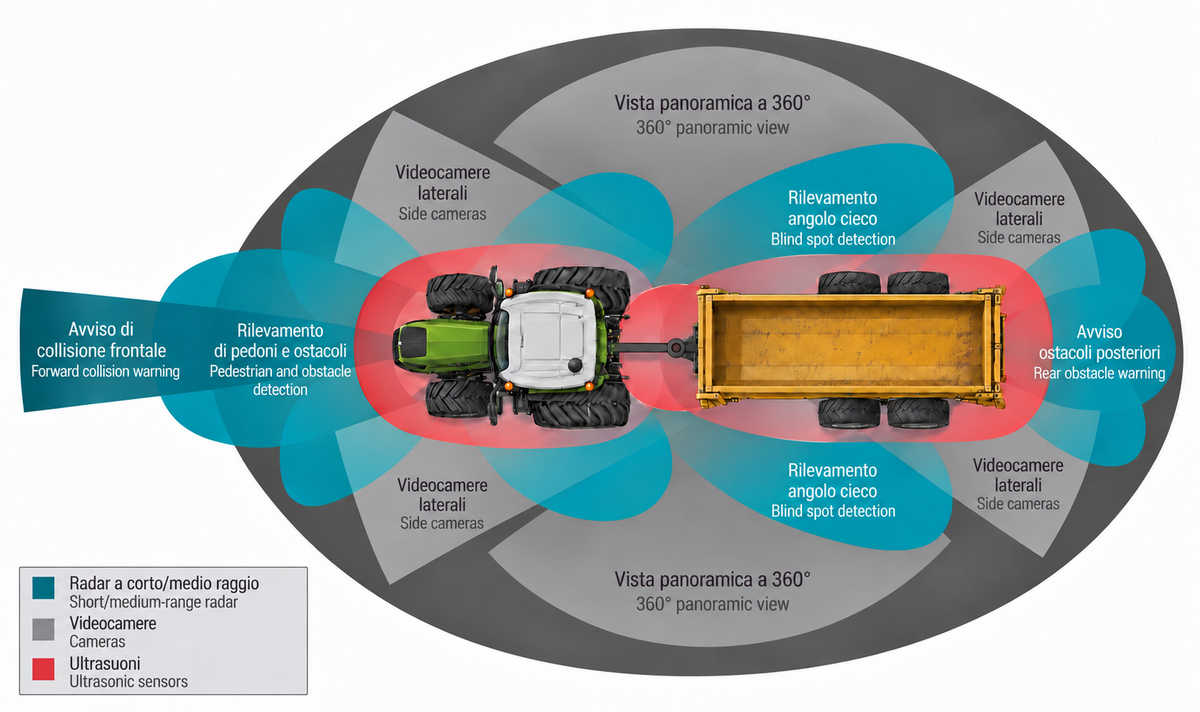
The next step involves advanced driver assistance systems (ADAS). In passenger cars, these include, among other things, automatic emergency braking, collision warning, traffic sign recognition, lane-keeping assist, adaptive cruise control, and blind-spot monitoring. Extending these systems to tractors cannot be a simple transposition, because attached equipment, especially when towed, radically alters the tractor’s overall dimensions, mass and its distribution across the axles, field of view, and so on. The principle, however, is fully transferable: sensors and control units must help the driver perceive danger, not indiscriminately replace the driver’s judgment. Wide-angle cameras, SRR (Short-Range Radar), and, in the future, Lidar sensors can help detect obstacles, overtaking vehicles, and people in blind spots, especially at the sides and rear. Warning systems could alert the driver to excessive proximity to an obstacle during maneuvers, the presence of a vulnerable road user on the right side, or a potentially critical situation when merging onto the roadway. Similarly, electronic brake control can improve the stability of the tractor-trailer combination, provided it is designed to account for load variations and grip conditions typical of agricultural use.
It is also not difficult to imagine an evolution in speed control. Today, the driver can precisely adjust travel speed during field operations; tomorrow, thanks in part to digitized maps, speed limit recognition, and vehicle-to-vehicle communication, the tractor could suggest, or better yet set, speeds compatible with the vehicle’s dimensions, towed load, curve radius, and gradient.
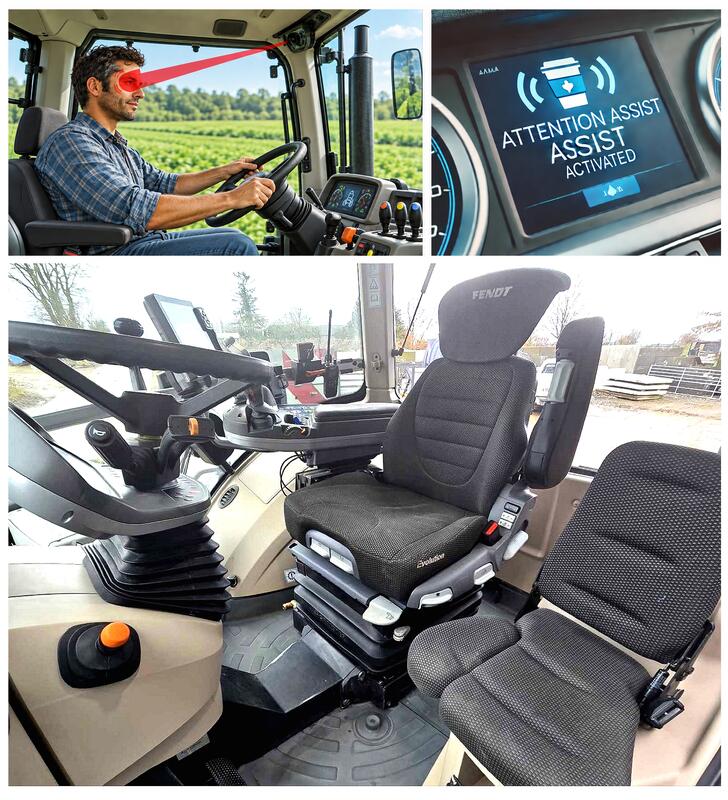
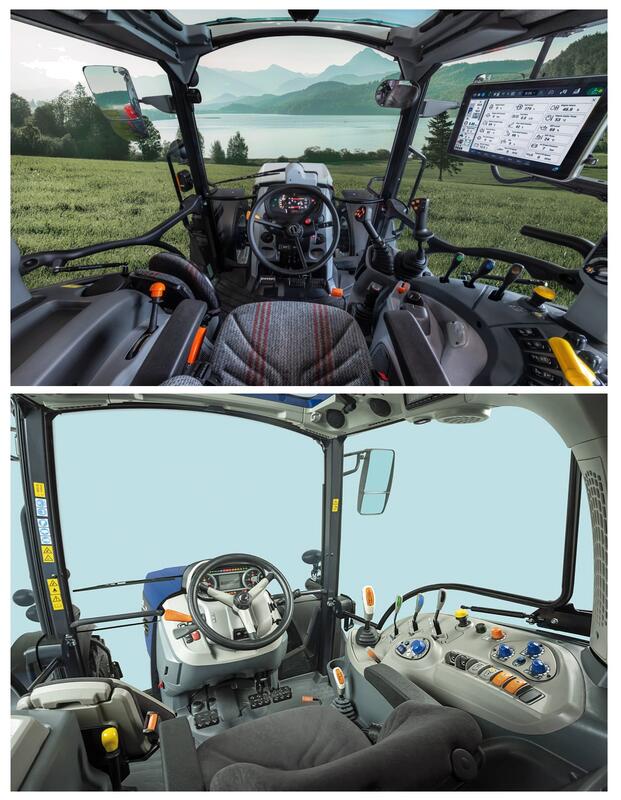
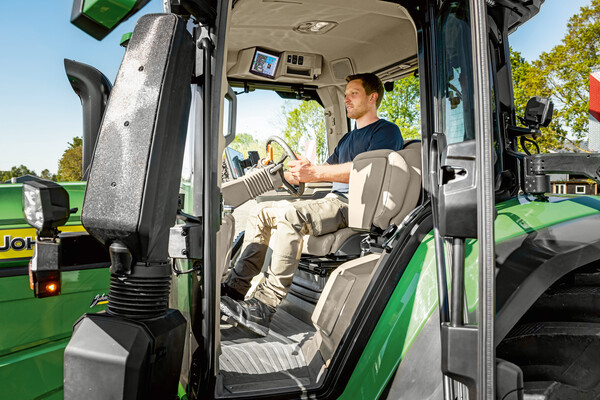
The cab as a work environment, not just a driving position. The transformation over the past few decades has been remarkable: suspended cabs and front axles, air-suspended or semi-active seats, automatic climate control, increasingly efficient physical and chemical filters, multifunction joysticks, and touchscreen terminals have substantially improved operating comfort. The focus now shifts to reducing fatigue, especially cognitive overload: the operator must control the vehicle’s trajectory and speed, manage the transmission, operate the implement via the PTO, the lift, and the hydraulic spool valves, and pay attention to satellite guidance. This represents a growing flow of information, making the quality of the human-machine interface crucial: consistently placed controls, logically grouped functions, displays readable in sunlight, non-intrusive alerts, and the ability to customize screens based on the task at hand are essential requirements. The automotive industry offers many solutions: steering wheel controls, head-up displays, multi-adjustable seats, attention monitoring systems, voice recognition, and centralized management of onboard functions. Some of these technologies have already been adopted, while others, here too, undoubtedly require adaptation to the specific nature of agricultural work. For example, a device that signals a drop in attention may be useful during long transfers or night work. Still, it must distinguish between a normal torso rotation, needed to check the implement, and behavior indicative of fatigue or distraction.
A new development concerns the cab’s second occupant. In the past, the passenger seat was often meant only for occasional use and offered little protection; in more advanced cabs, however, it is becoming a full-fledged workstation, useful for the farm’s technician, the instructor, the contractor training an employee, or anyone who needs to monitor an operation. This entails more stringent requirements for space, accessibility, visibility, suspension, seat belts, and integration with the cab’s structure. The goal is not to transform the tractor into a two-seater car, but to recognize that the cab is increasingly becoming a place for professional collaboration.
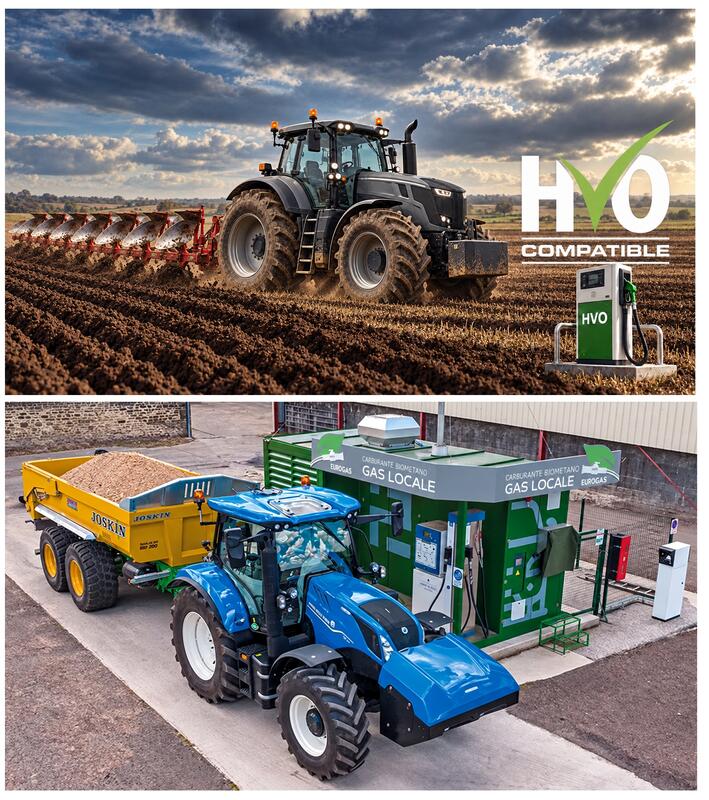
Beyond Stage V: reducing impact before switching fuels. The limits set by current European regulations for diesel engines installed in “non-road” machinery require an almost complete absence of pollutants in exhaust emissions. Alongside sophisticated electronic combustion management, this has driven the widespread adoption of fairly complex aftertreatment systems. However, the current Stage V should not be viewed as a technical endpoint, but rather as a starting point for achieving the lowest possible impact on the overall climate footprint. Indeed, a distinction must be made between local air quality and reducing climate-altering emissions: a modern Stage V tractor engine is highly effective at limiting exhaust pollutants, but it still runs primarily on fossil diesel fuel. In this context, the know-how transfer from the automotive sector above all involves increasingly precise in-use monitoring through on-board sensors, remote diagnostics, and connectivity to identify and correct combustion anomalies, excessive fuel consumption, and incorrect filter regenerations, thereby keeping the machines constantly in optimal operating condition. The connected tractor provides a wealth of data, which, however, must be readily available and meaningfully interpreted without becoming an additional bureaucratic burden for the user. Options already under development include renewable paraffinic fuels, such as HVO, and biomethane, for applications with high local availability, in connection with a short on-farm supply chain where an anaerobic digestion plant is present.
Electrification: not just propulsion. In the automotive industry, electrification is often interpreted as directly replacing the internal combustion engine with one or more battery-powered electric motors. For tractors, the picture is more complex, because they must deliver electrical power externally to replace the functions of the PTO, lifts, hydraulic outlets, air compressors (if any), and so on.
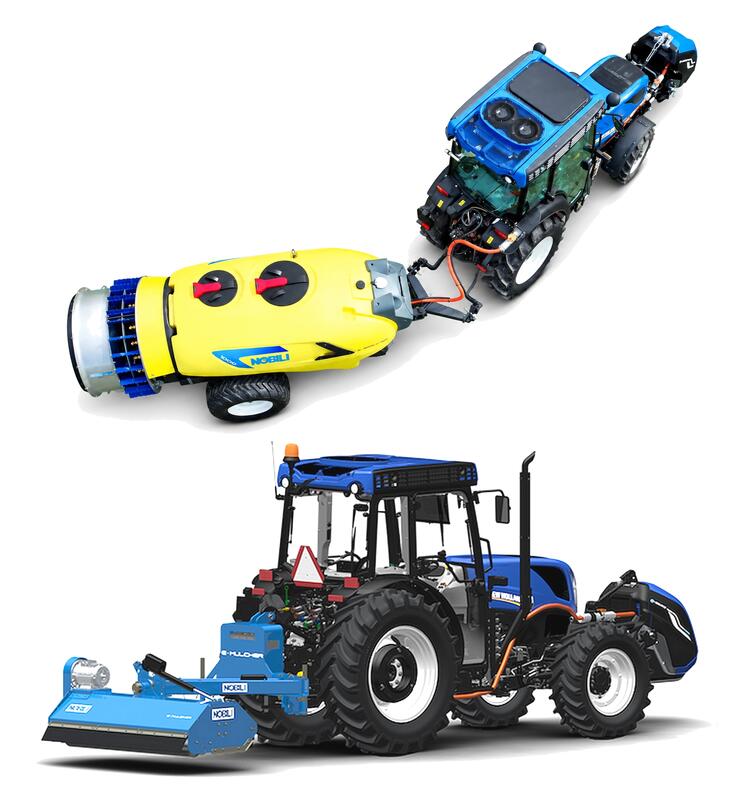
In compact tractors, this scenario is already a reality, but in higher-horsepower models, the weight and volume of the batteries required for acceptable range remain a significant constraint at this time. In any case, the most substantial added value remains the ability to power implements electrically, because an electric power take-off eliminates the need for a cardan shaft, complicated mechanical drives, and expensive hydraulic components. The electric motors powering the implements can be precisely controlled via sensors and power electronics, and they are easily integrated with precision farming systems. Hydraulics, however, is not destined to disappear: especially for functions requiring high forces and precise actuation, this solution remains the first choice. In other words, the farm tractor of the future will likely evolve into a “multi-energy” vehicle: mechanical where direct drive is the most efficient option, hydraulic where great force but precise control are needed, and electric where adjustment, modularity, automation, and individual control of the working components are key.
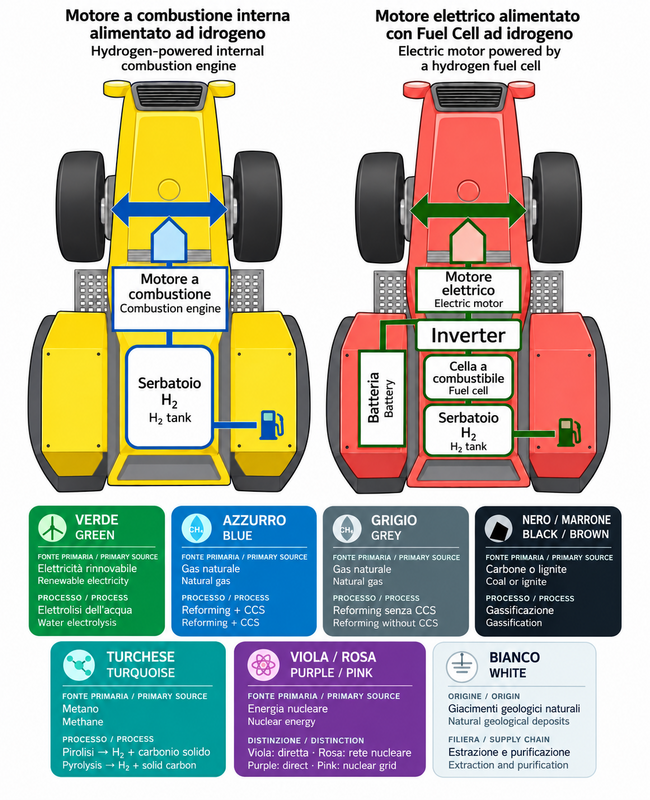
In the debate on decarbonizing non-road machinery, hydrogen currently remains largely a future prospect: the two main solutions are fuel cells and the “traditional” hydrogen-powered internal combustion engine. Both solutions currently offer the potential for faster refueling compared to fully charging large battery packs, but they require tanks capable of withstanding extremely high pressures, as well as infrastructure and safety procedures that still pose a significant obstacle in the agricultural sector. Fuel cells offer the advantage of a quiet, CO2-free electric powertrain; conversely, the hydrogen-powered internal combustion engine can draw on industrial expertise established over decades and offer models even for high power outputs. However, it is not entirely “zero-emission,” because combustion can generate nitrogen oxides, which must be controlled using well-established engine strategies and aftertreatment systems. The future direction will likely once again be modeled after the automotive sector and will not depend solely on the technology installed on board. In fact, the origin of the hydrogen will be decisive: hydrogen produced using entirely renewable energy (“green” hydrogen) has a very different environmental profile from that obtained from fossil fuels without carbon capture (“gray” hydrogen). For agriculture, local supply chains, energy consortia, production facilities connected to renewable sources or to multiple uses of the same infrastructure could become of interest. However, it will be necessary to demonstrate, beyond a doubt, the reliability, economic viability, and compatibility of these systems with farms’ day-to-day operations.
A more open market, but not necessarily a simpler one. Following the trend in the passenger car sector, the question is whether Chinese manufacturers could enter the European electric tractor market at scale. The Chinese supply chain undoubtedly has strong production capacity in batteries, power electronics, electric motors, and digital components, all factors that can create a competitive advantage, particularly in specialized tractor segments. But to succeed, manufacturers need uncompromising reliability under the most demanding conditions, compatibility with a wide variety of equipment, an extensive service network, readily available spare parts, strict compliance with type-approval and safety regulations, updatable software, and the ability to integrate with the farm’s digital ecosystems. In agricultural mechanization, user confidence depends largely on after-sales service quality: repeated, prolonged machine downtime, when operational timeliness is critical, can cost far more than the savings realized at purchase. Chinese competition, however, could accelerate the market’s evolution, pushing traditional manufacturers to shorten development times and promote the wider adoption of standardized electrical components. The real test will come in practical use: real-world range, ease of charging, ability to power implements, durability under stress, ergonomics, safety, and service. The tractor of the next decade will certainly be closer to the automotive world in terms of electronics, safety, comfort, and energy strategies. It will, however, remain a profoundly different machine: not a “larger” car, but an intelligent hub connecting operator, equipment, energy, and terrain.