Snow chains, when tires aren't enough
Snow chains are a matter of course on vehicles used for winter services, but according to the Traffic Code they are mandatory, even on ordinary tractors, in cases of poor grip. They are heavy and expensive. Here are some different types and lower-cost alternatives
For a tractor, there is probably no more seasonal accessory than snow chains. Other devices may serve a seasonal purpose, but components like the refrigerator or air conditioning, while essential in summer, are also useful from mid-spring to late autumn. Especially in years with temperatures like 2026.
For snow chains, the situation is different, since they are used mainly in winter (we are talking about normal latitudes, not extreme mountainous areas) and in particular when it snows, or in icy conditions. This might only be a few days each year. But in that very short time, they are indispensable, required by the traffic code and above all by common sense, because not having them means running serious risks, for yourself and for others.
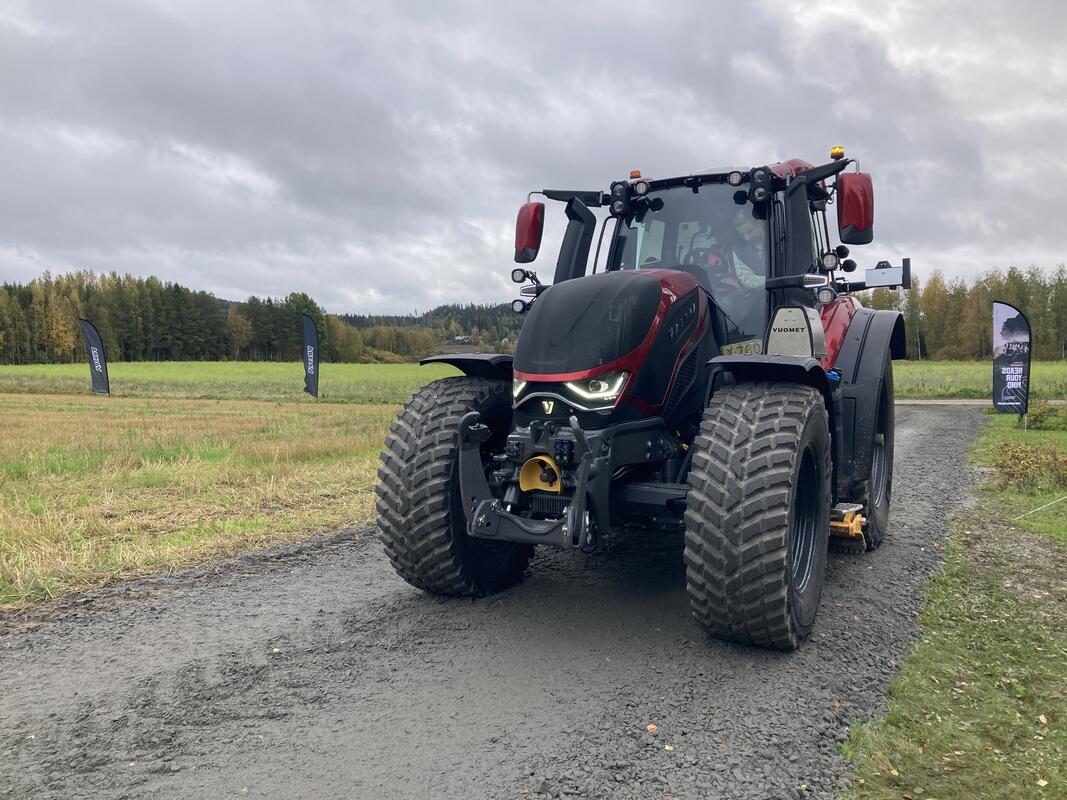
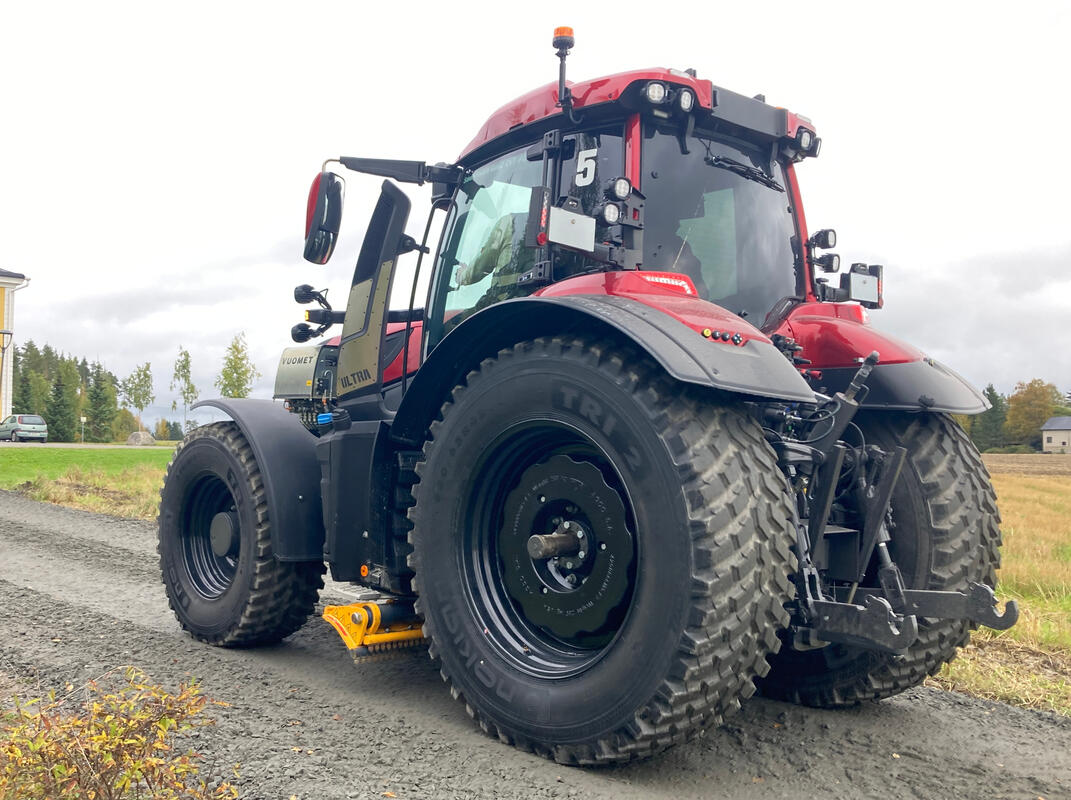
Tread blocks aren't enough. At first glance, tractor tires might seem suitable for moving safely even on snow. After all, they are made to work in low-grip conditions. In the mud, for example. However, it is not so much a question of the contact surface as of the compound. Farm tires are designed to work primarily in the summer season and, if we are talking about action based on temperatures, may be called "summer" tires. When it gets cold, they harden more than they should and lose their grip. They may work well on fresh snow, thanks to the heel-and-toe, but on packed snow or, even worse, ice, they fail and become dangerous, especially when cornering.
The law says so. From a regulatory perspective, nothing is left to doubt: when traveling on public land, tractors are subject to the rules of the Traffic Code, just like all other vehicles. And the Traffic Code (article 6) states that in case of snow or ice vehicles may only drive with special tires or chains, which should be kept on board throughout the autumn-winter period. The duration of this period varies from area to area and is established by the road owners and local governments. Clearly, the obligation to carry snow chains on board will be more widespread in the mountains than in the plains, and in the North rather than the South of Italy. Thus, tractors that travel on asphalt roads during the winter should have snow chains on board. This is a very complex task, given that they weigh between 100 and 300 kg each.
Despite this disjunction, it is clear that in case of snow or ice, chains are a must, for safety even without the Traffic Code. They are particularly important for all those vehicles that carry out so-called winter services (snow + salt, for example), but it is important to clarify that even a normal tractor performing transport or transfer operations on precarious asphalt conditions should be equipped with them.
There are chains and there are chains. This very distinction creates, so to speak, two different categories of snow chains. The first are those for occasional use, that is, for a use completely similar to that for heavy vehicles or cars: they are mounted when necessary and disassembled immediately afterwards. One of the first requisites for this category is low cost, since they may not be used even once during the year. For this reason, there are chains on the market that are very similar to those for heavy vehicles, but with dimensions suitable for tractor wheels, which now exceed 2 meters in diameter. These are single or double mesh devices, made from wire rods (coils of steel wire) with a diameter of 6 mm or slightly more, as they do not have to withstand continuous use over time.
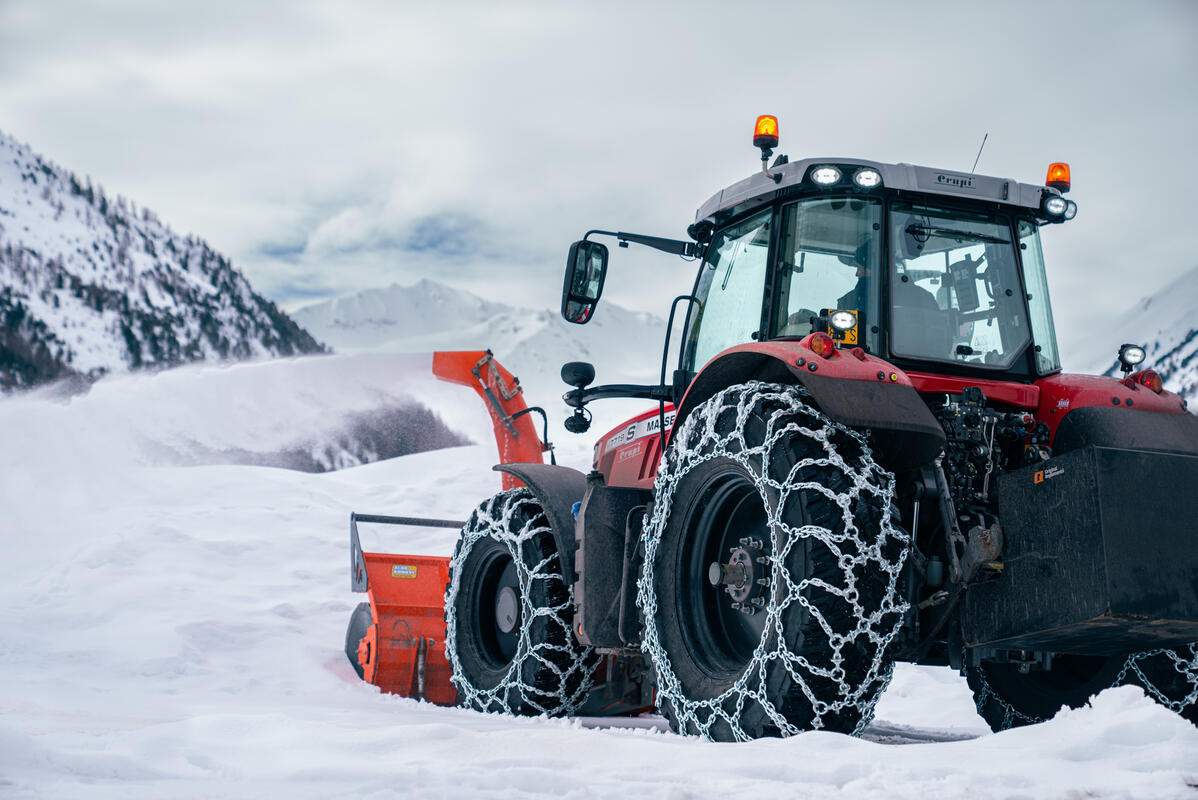
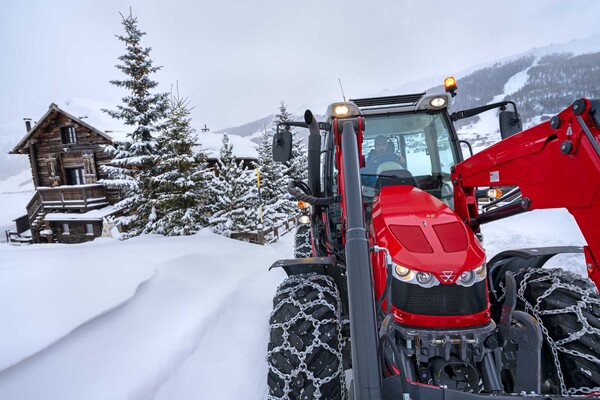
The situation is different for chains that we might define as professional, that is, intended for application on snowplows, be they tractors, shovels or telescopic handlers. In this case, and especially in mountainous areas, the chains are often installed at the beginning of the season and left in place until the end of winter. If for no other reason than because fitting a chain that weighs 100 kg or more is not very easy.
Thus, it is clear that they are subjected to much greater stress than a chain used for a few hours during bad weather.
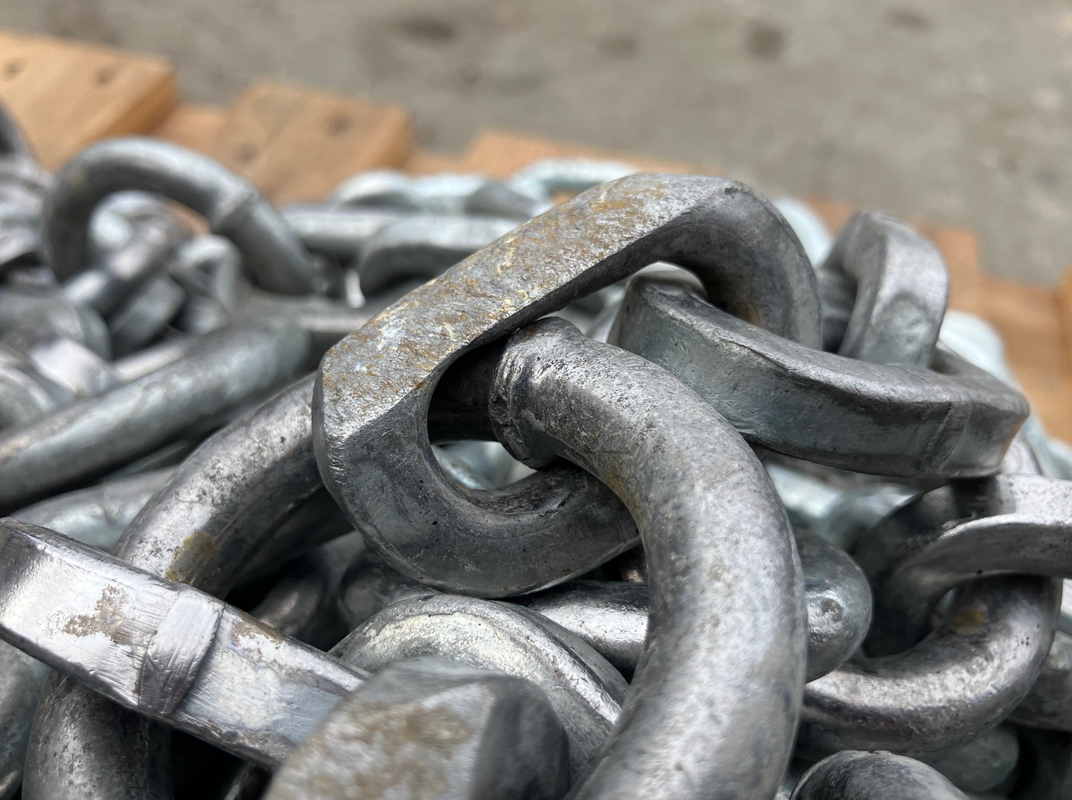
"A tractor with a snow blade can travel hundreds of kilometers with chains on the tires. In order to withstand such stresses, it is essential to use special techniques and large wire diameters", explains Andrea Anghileri, manager of Konig. For this reason, professional-type chains are made with tighter links and thicker steel wire, with a square or D-shaped section, for greater potency on ice. They are also made in such a way that many links are in contact with the asphalt. "This is also a matter of stress. Truck chains are subjected to significant pressure but do not have a great deal of tensile stress once the vehicle is in motion. If we're talking about snowplows – adds Anghileri – whether they are tractors or shovels, the situation is different: in this case the force on the ground is continuous, as the vehicle moves at low speed pushing the snow or loading it onto carts".
Reinforcements on beads and shoulders. An important aspect, when talking about tractor chains, is the particular shape of the tread. Tires of agricultural vehicles are notoriously made up of large tread blocks (up to 5 cm thick). Standard chains, with horizontal crosspieces that attach to two lateral belts, risk being ineffective, as the transverse chain ends up in the recess between the treads and no longer rests on the asphalt. For this reason, professional chains use a diamond-shaped weave, which prevents the risk mentioned above. There are therefore single, double or triple diamond chains, depending on the number of diamonds that cover the tread. This number is clearly proportional to the number of links touching the asphalt, ensuring greater grip and less wear.
But let's look beyond the mesh. A larger diameter wire, such as that used for professional solutions, ensures longer life, but is not sufficient for difficult, if not extreme, working conditions. Therefore, special reinforcements are used, such as a fixed horizontal ring connecting two rings in series. Its function is to improve grip on the ground, breaking up any layers of frozen snow, and for this reason it is also called an ice-breaking tread. It also increases the life of the chain (but also its weight). If the ice-breaker tread is not enough, there are also chains with an additional bar welded onto the horizontal ring. In this case, the stated goal is to increase the useful life of the chain: the links, in fact, do not touch the asphalt until the bars have been completely filed down and this, if it does not double the life, nevertheless significantly extends it.
Professional chains are also distinguished from common ones by the part that rests on the sides of the wheel, known in jargon as shoulders. While car snow chains use rubber cables and plastic tensioners, heavy-duty snow chains are made entirely of steel, with ratchet tensioners, also made of high-strength steel.
Let's close out with a discussion about steel, or rather its composition. Each manufacturer uses its own alloy, the secret of which is jealously guarded. A process common to all quality products, however, is carburizing, which involves heating in a furnace, at very high temperatures with hydrocarbon gases. This places a carbon deposit on the surface of the mesh (i.e. carburizing). This creates chains that are highly resistant to abrasion but at the same time not so hard as to be fragile and break at the first impact with a stone or hitting a pothole.
Alternative solutions. When it comes to cars, snow chains are a bit of a last resort, used by drivers who don't usually have to deal with snow and ice and want to comply with the Traffic Code without spending too much. Alternatively, of course, winter tires or, much more recently, so-called “all-season” tires also exist. Is there something similar for farm vehicles too? We asked an agricultural tire expert: Agostino Provana, owner of a well-known tire service center in the Crema area. "There are no real snow tires for tractors, but there are tires with tractor sizes and a tread pattern similar to snow tires. Grip, then, depends above all on the compound and this varies depending on the brand: there are tires that grip well and others that are much more for summer than winter use". However, some specific snow tires can be found in the product ranges for public work vehicles offered by various manufacturers, from Michelin to BKT, without overlooking Nokian Tyres, a Scandinavian company specializing in the sector. A relatively simple solution to avoid the cost of chains (which can sometimes cost more than EUR 2,000 per pair) is to stud the tires, which is done by screwing special studs onto the tread of industrial tires or onto the lugs of agricultural tires. There may be removable studs, which allow the tire to also be used in summer, or fixed studs. Generally, up to 200 studs can be mounted on an agricultural tire, obviously above the treads. It's not a quick and easy job, but it definitely costs less than a good snow chain.